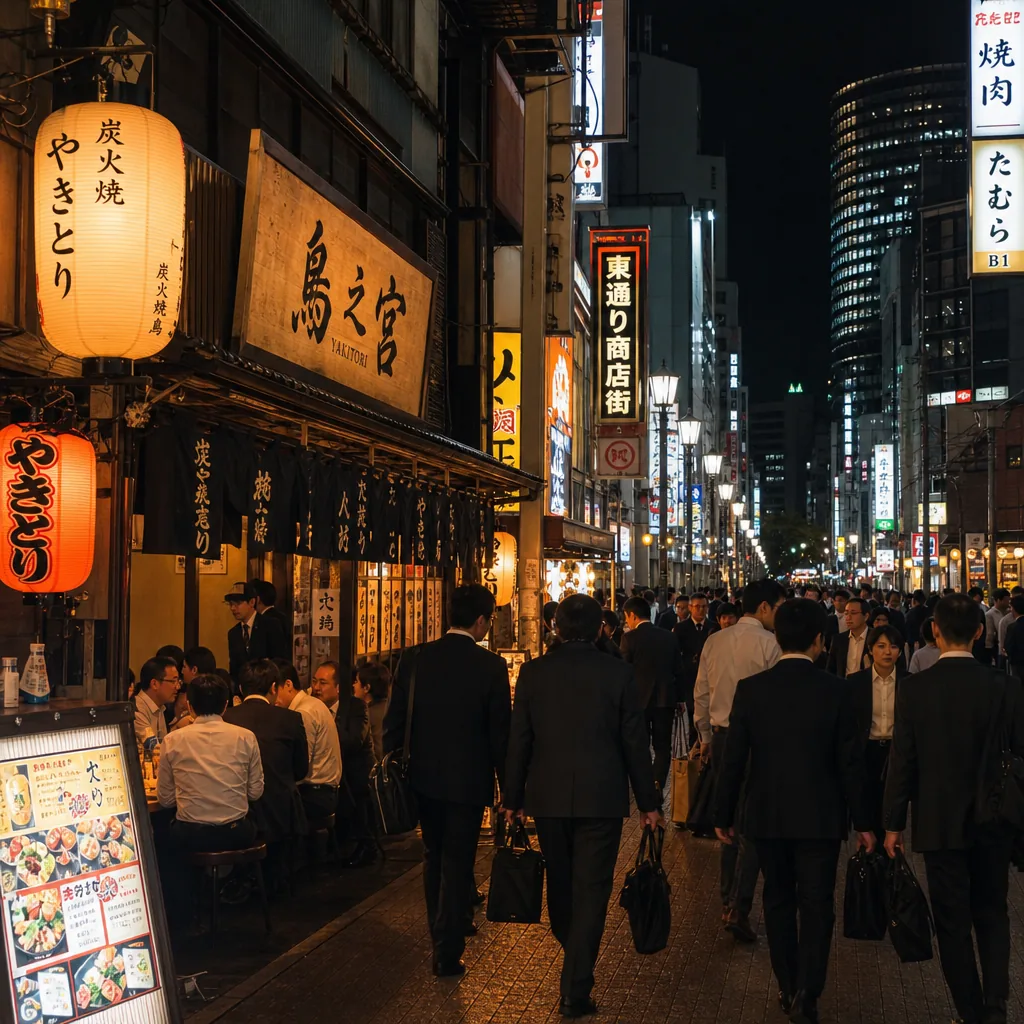
Where can I find english-friendly yakitori in Osaka after work?
Find English-friendly yakitori in Osaka after work by targeting Umeda, Namba, and Honmachi, plus booking sites and multilingual menus.
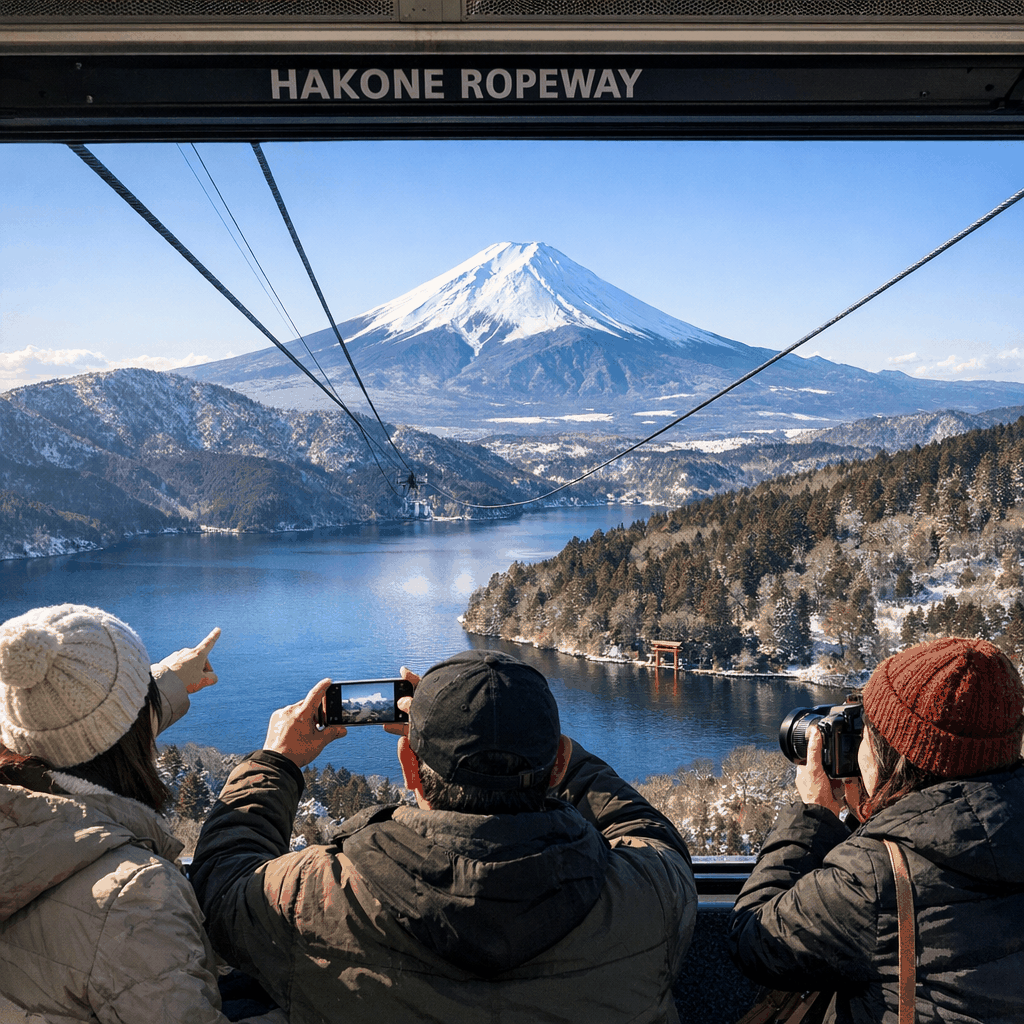
The best views from the Hakone Ropeway come from three distinct stretches: the Ubako–Togendai section for Mount Fuji, the cabins and short walks around Owakudani Station for the volcanic vents, and the Togendai end for Lake Ashi panoramas. Ride direction, cabin side and weather determine what you actually see, so plan your time and seat choice accordingly.
The Hakone Ropeway runs on the Sounzan—Owakudani—Ubako—Togendai alignment, linking the Hakone Tozan Cable Car at Sounzan with the Lake Ashi area at Togendai [1][2]. The ropeway operates as a single continuous aerial gondola system with Owakudani and Ubako as intermediate stations; it is a common leg in the Hakone round-trip itinerary that also includes the Hakone Tozan Railway and the Hakone Sightseeing Cruise [1][4].
Mount Fuji is most consistently visible from the ropeway on the Ubako–Togendai segment, especially when you are traveling toward Togendai and can look northwest out of the cabin windows [2]. Winter and early spring tend to offer the clearest viewing conditions because of lower humidity and fewer clouds—Japan Guide and the Hakone Tourist Association note seasonal visibility patterns for Mt. Fuji from ropeway viewpoints [2][3].
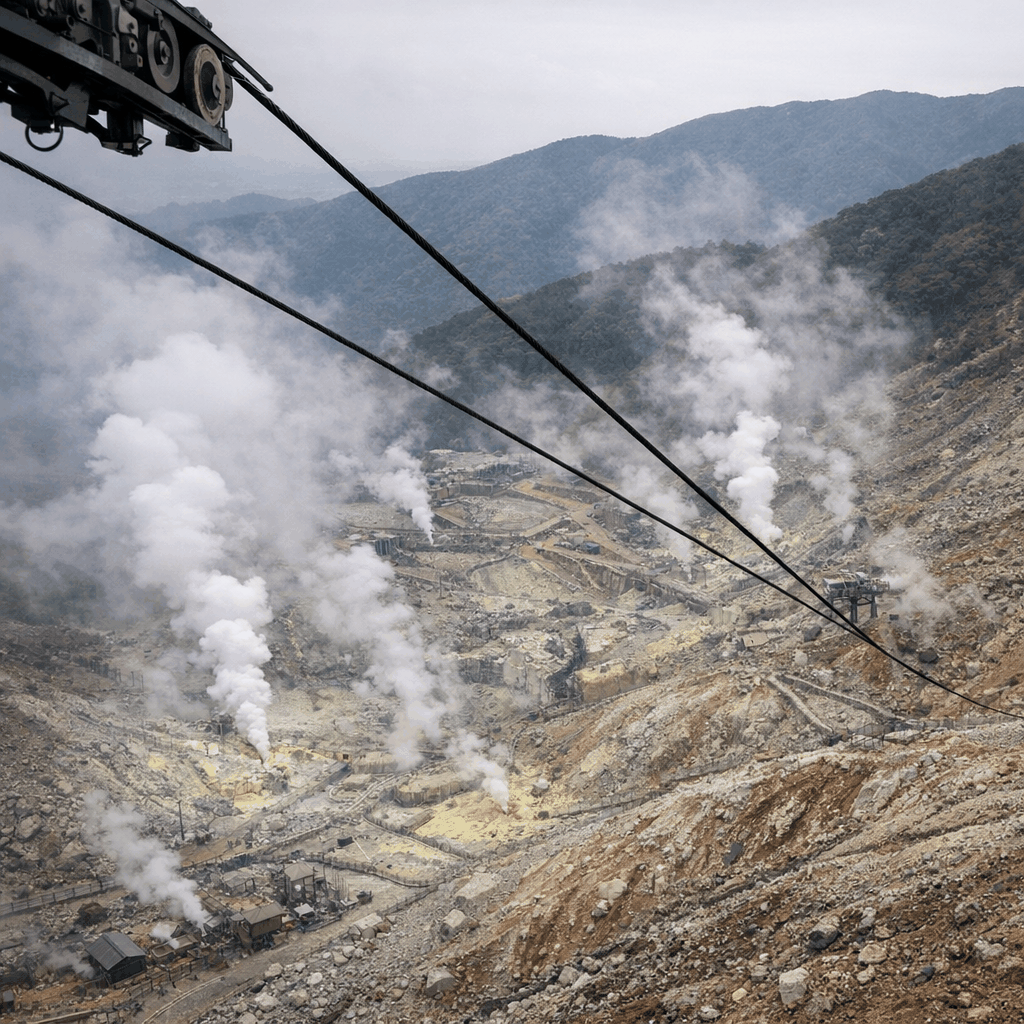
Owakudani (Great Boiling Valley) is the ropeway’s most dramatic volcanic landscape: steaming sulfur vents, black volcanic rock and the valley’s distinctive fumaroles are best seen from cabins when passing Owakudani Station and from the short walking areas immediately around that station when the walking trails are open [2][3]. The ropeway’s vantage offers a panoramic look down into the crater that you cannot get from lower trails.
The western end of the ropeway at Togendai opens into sweeping vistas of Lake Ashi and the tree‑lined ridges of western Hakone. From the final approach to Togendai you get wide-angle lakeside views that pair well with a short visit to the Togendai dock and the Hakone Sightseeing Cruise (pirate-ship boats) for a broader lakeshore perspective [4][1].
Because the ropeway cabins are enclosed and offer panoramic windows, simple seat choice can affect what you see:
Visibility is entirely weather-dependent. Winter and early spring generally provide the clearest views of Mount Fuji because of lower humidity; summers are often hazy and typhoon season (late summer to autumn) brings rain and low visibility [2][3]. Weekdays and early mornings have fewer crowds and often cleaner air. Always review operator advisories: the ropeway can close for strong winds, heavy rain or elevated volcanic gas at Owakudani [2][3].
Use a short telephoto (70–200mm) for compressing Mount Fuji into the mid-distance, and a wide-angle lens (24–35mm) for Lake Ashi panoramas from Togendai. Shoot through the cabin windows with a small circular polarizer to reduce reflections; press your lens as close to the window as possible and use spot metering on the mountain to retain detail [2].
Accessibility: the ropeway is wheelchair-accessible at main stations (Sounzan and Togendai) and connects directly with the Hakone Tozan Cable Car at Sounzan for visitors transferring from Gora [1][3]. Owakudani’s walking areas are short but can be uneven; check station advisories for temporary closures when volcanic gases exceed safe levels [2][3].
Access the ropeway via Sounzan (connects with Hakone Tozan Cable Car from Gora) or from Togendai (Lake Ashi sightseeing boats and road access). The Hakone Free Pass, sold by Odakyu, covers the ropeway along with the Tozan Railway and many other local services—this pass simplifies transfers and is recommended if you plan to combine ropeway views with the cable car, Gora, Lake Ashi cruise or local buses [4][3]. Check Odakyu and the Hakone Ropeway site for current fares, operating hours and combined pass options before you travel [4][2].
With these station-specific tips, seat choices and timing considerations you can maximize your chances of seeing Mt. Fuji, Owakudani’s vents and Lake Ashi from the Hakone Ropeway—always check live operator advisories and local forecasts before you go [1][2][3][4].
CallButler is a multilingual concierge service that handles research, coordination, and bookings so you do not have to navigate language barriers or unfamiliar systems alone. If you need help related to Where are the best views from the Hakone Ropeway in Hakone? or the tasks around it, our team can step in to manage the details and keep things moving smoothly.
Find English-friendly yakitori in Osaka after work by targeting Umeda, Namba, and Honmachi, plus booking sites and multilingual menus.
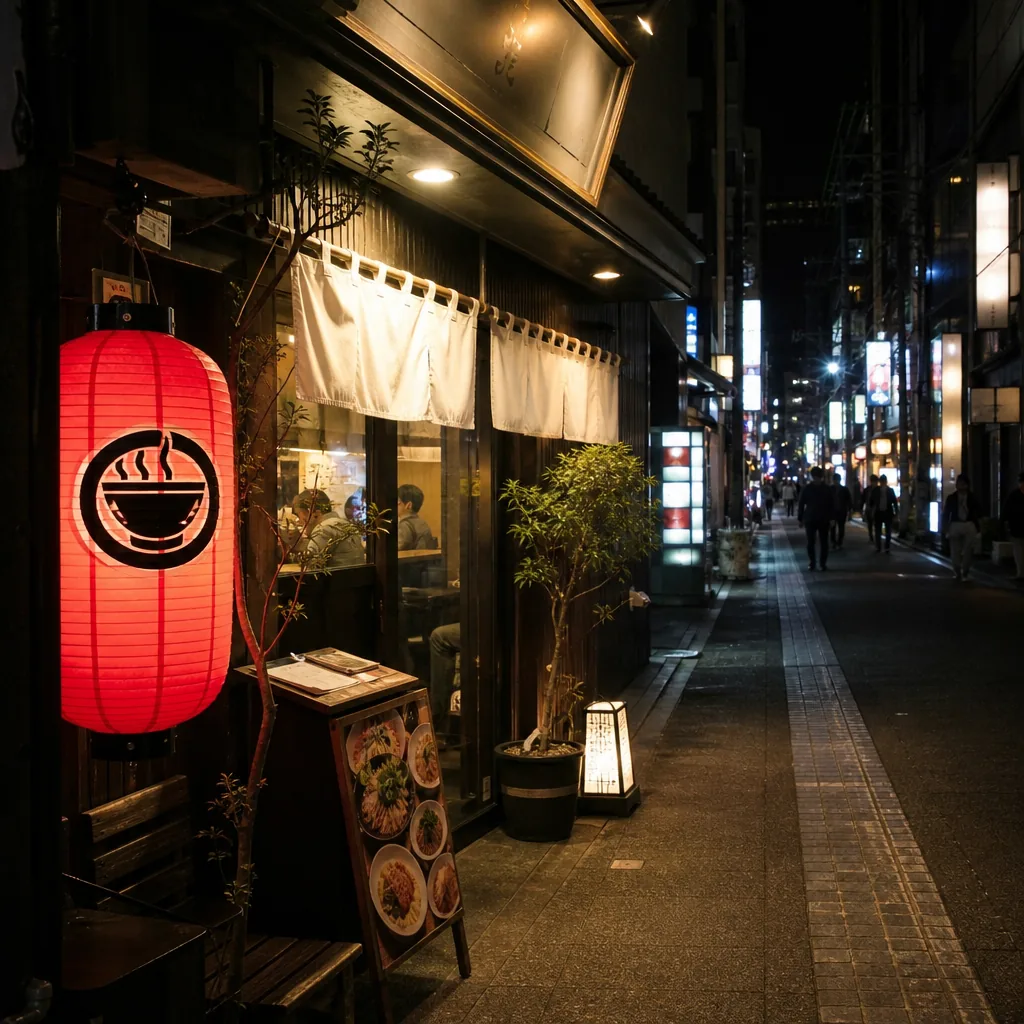
Looking for halal ramen in Kyoto after 10 p.m.? Here’s where to check, which areas are most practical, and how to verify hours and halal status.
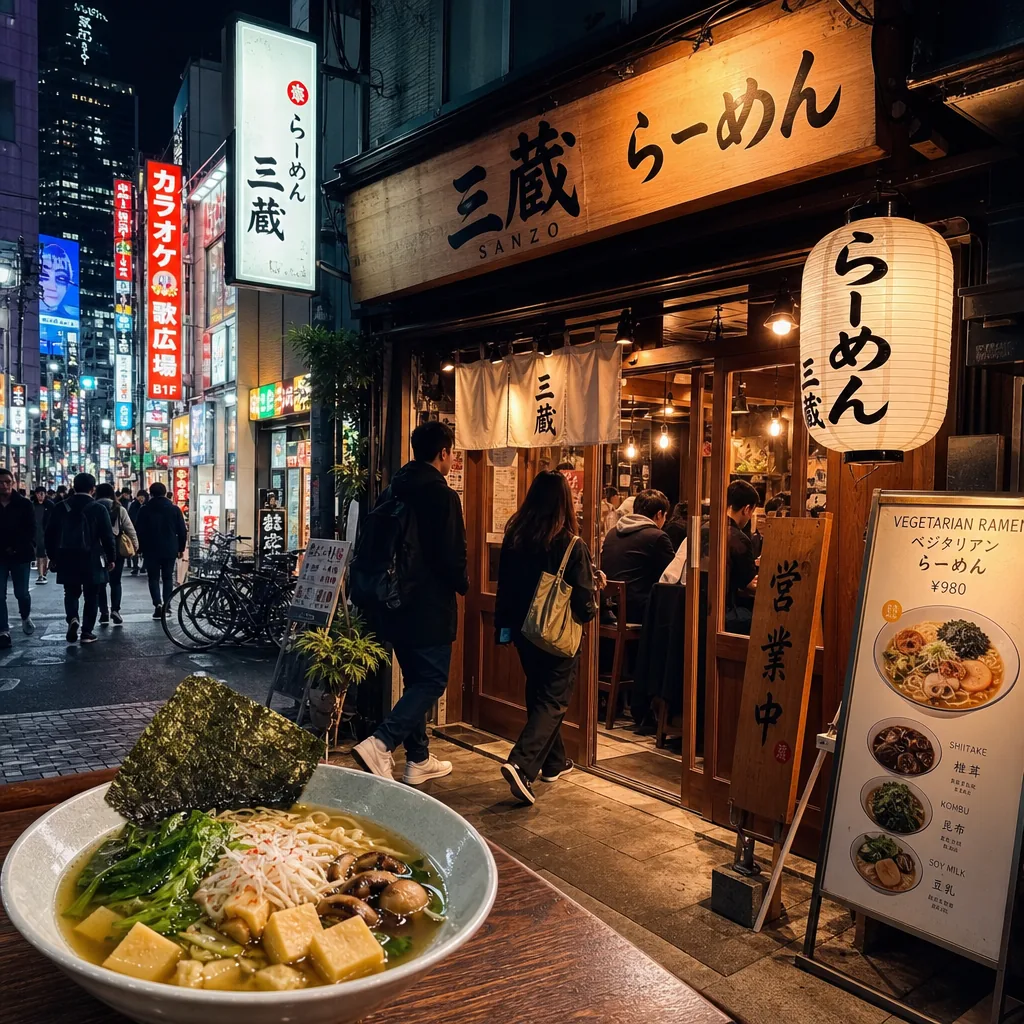
Find late-night vegetarian ramen in Tokyo by focusing on Shibuya, Shinjuku, and Roppongi, then verify broth, hours, and vegan menu details.