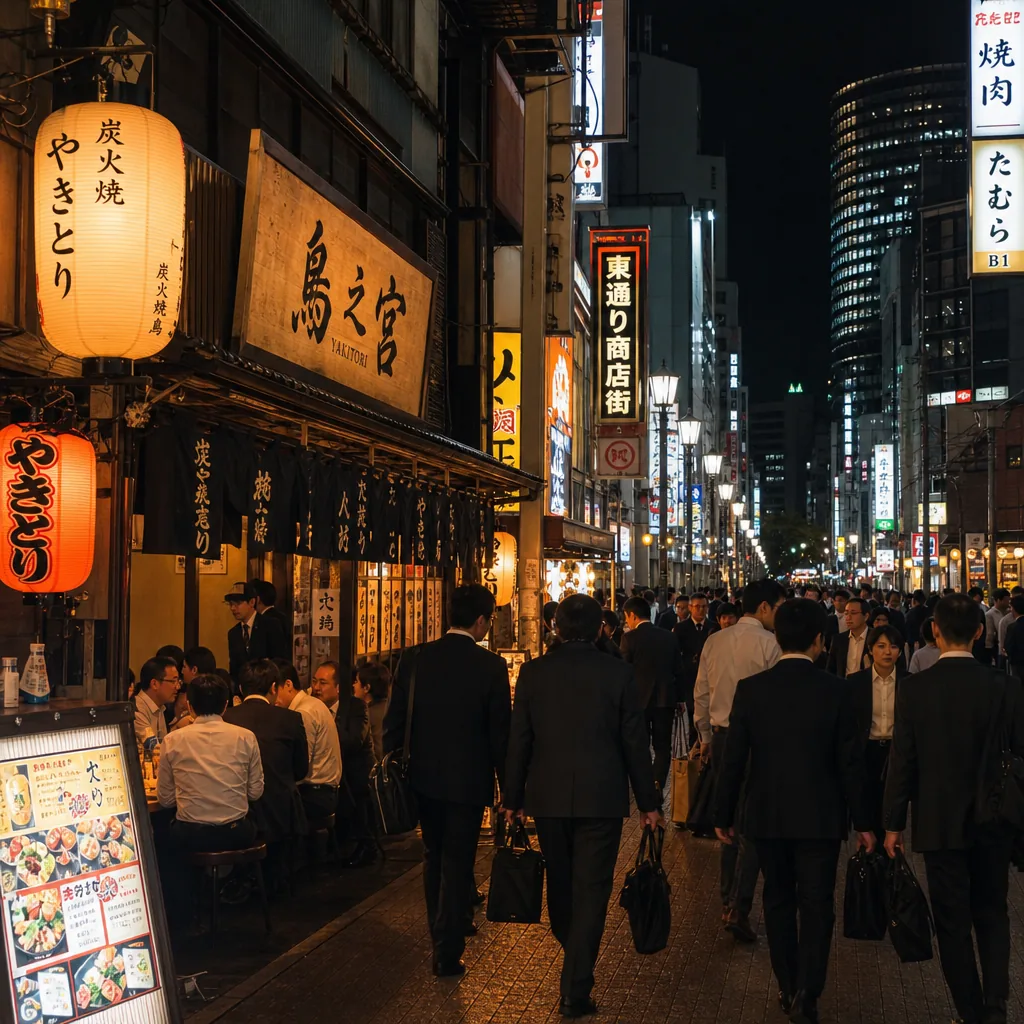
Where can I find english-friendly yakitori in Osaka after work?
Find English-friendly yakitori in Osaka after work by targeting Umeda, Namba, and Honmachi, plus booking sites and multilingual menus.
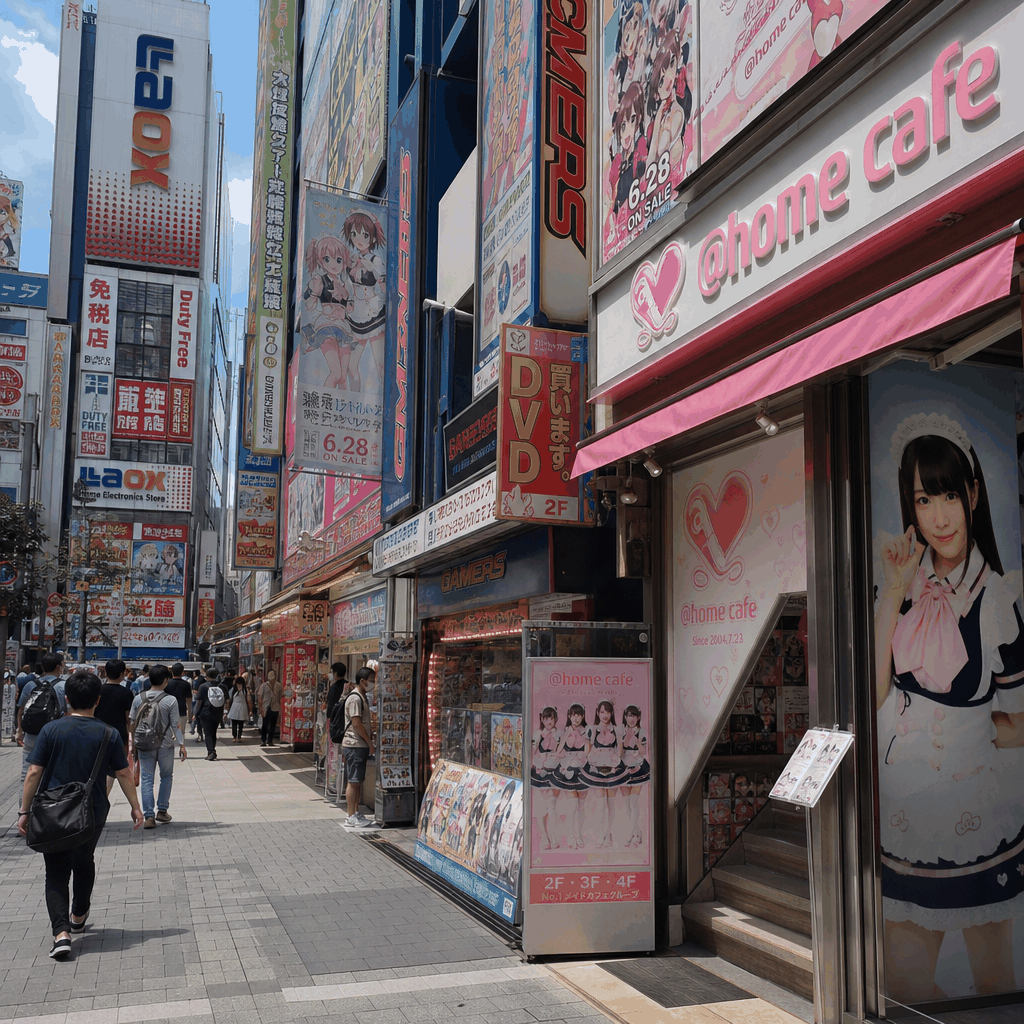
An Akihabara maid cafe is a themed restaurant where staff in maid-style costumes deliver playful, scripted service built around otaku pop culture, and yes, you should expect it to feel more like a performance than a normal café. In Tokyo’s Akihabara district, the experience usually includes greetings, chants, photo opportunities, and decorated menu items, with prices and rules that are often stricter than in ordinary cafés [1][2][4].
Maid cafés are part of Akihabara’s broader pop-culture identity, which Tokyo tourism organizations describe as a major center for manga, anime, games, and related businesses [1][4]. The core idea is simple: the staff’s role is not just to serve food, but to create a character-driven experience with bows, catchphrases, and friendly interaction. Japan Guide notes that the appeal is less about culinary quality and more about the novelty of the atmosphere and service style [2].
That means first-timers should arrive expecting a highly stylized environment rather than a conventional café. In practice, the “product” is the whole interaction: the greeting, the rules, the menu presentation, and any short performances or photo service offered by the shop [2].
Akihabara is the best-known place in Tokyo to try a maid café, and the district’s tourism materials position it as a walking area filled with entertainment-oriented businesses and pop-culture landmarks [1][3][4]. You will find cafés near the station area and around the neighborhood’s main shopping and entertainment streets, where the themed experience fits into a larger concentration of anime, gaming, and collector culture [1][3].
Expect the atmosphere to be lively, a little theatrical, and often busy with tourists. Some cafés use loud, cheerful greetings or call-and-response style welcomes, while others keep the tone softer and more tourist-friendly. The exact vibe varies by shop, so one café may feel more playful and interactive, while another may feel polished and reserved [2].
Many maid cafés start with a table charge or entrance fee in addition to whatever you order, which is one reason the total bill can be higher than at a standard Tokyo café [2]. After being seated, staff typically explain the menu, time limits, photo rules, and any current promotions. If you are unsure what to do, ask before ordering; the staff are used to first-time visitors, especially in Akihabara’s tourist-heavy cafés [1][2].
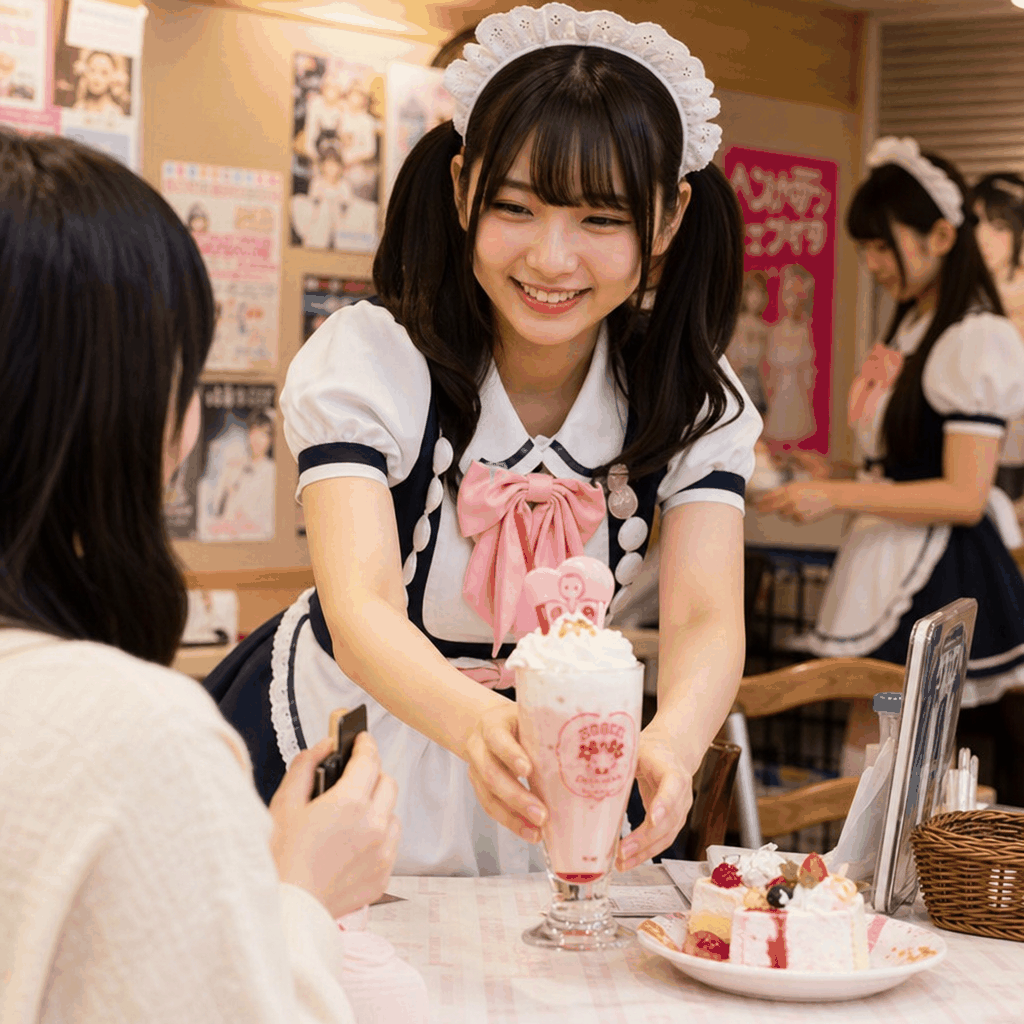
Service is often more interactive than at an ordinary restaurant. A maid may decorate your drink or meal, write a message on a plate, or teach you a small chant or gesture to “complete” the order [2]. Some shops also offer brief stage performances or a chance to take a photo with staff, though the details depend entirely on the café and may require an extra fee [2].
For example, Akihabara’s tourism map and guides highlight the district as a cluster of sightseeing spots and themed businesses, which is why a maid café visit often fits neatly into a larger day of browsing arcades, anime stores, and character shops [1][3][4]. If you are planning to visit multiple places, it is better to treat the café as one timed stop rather than a long lunch break.
Menus usually center on simple café fare with a whimsical presentation: curry rice, omelet rice, dessert plates, parfaits, soft drinks, and themed lattes are common in the genre [2]. The presentation matters as much as the food itself, and some cafés add drawings, sauce messages, or cute toppings to complete the effect [2].
Because every shop sets its own pricing, exact costs vary, but Japan Guide’s overview makes clear that visitors should expect prices to be above ordinary café levels once table charges and add-ons are included [2]. A practical way to budget is to assume you are paying for an experience package, not just a snack or drink. If you want photos, performances, or special menu items, ask about extra charges before ordering.
Maid cafés in Akihabara usually have more rules than standard restaurants. The most important ones are straightforward: do not touch the staff, do not take unauthorized photos, and follow any time or interaction limits set by the shop [2]. These are not just politeness rules; they protect the performance-style format that makes the café work.
Here are the basics to keep in mind:
These etiquette rules matter even more in a busy district like Akihabara, where cafés often see a mix of local fans and foreign tourists [1][4]. If you are unsure, watching what other guests do is usually the fastest way to understand the flow.
Many maid cafés in Akihabara are tourist-friendly, especially those that advertise multilingual menus or welcome first-time visitors, but policies vary by shop [2]. Some locations are easy for casual travelers to enter, while others cater more specifically to repeat fans of the maid-café scene. If you are traveling with children, it is best to check the café’s age policy and tone in advance because the experience is themed, not child-oriented by default [2].
For tourists, the biggest benefit is that maid cafés are one of Tokyo’s most distinctive hyper-local experiences. Akihabara’s official and tourism resources consistently frame the district as a place to experience Japan’s pop-culture energy firsthand, which makes a maid café visit a natural fit for visitors looking for something uniquely Tokyo [1][3][4].
If this is your first maid café, keep your plan simple and realistic. Choose a café near Akihabara Station, go with a small group, and budget for one drink plus any table charge so you are not surprised by the bill [2][4]. If you want photos or a performance, ask about the rules before ordering so you can decide whether the extra cost is worth it.
Useful first-time tips include:
If you go in with the right expectations, an Akihabara maid café can be a memorable part of a Tokyo trip: not a place to linger for an ordinary meal, but a compact, highly choreographed slice of the city’s pop-culture scene [2][4].
CallButler is a multilingual concierge service that handles research, coordination, and bookings so you do not have to navigate language barriers or unfamiliar systems alone. If you need help related to What should I expect at an Akihabara maid cafe in Tokyo? or the tasks around it, our team can step in to manage the details and keep things moving smoothly.
Find English-friendly yakitori in Osaka after work by targeting Umeda, Namba, and Honmachi, plus booking sites and multilingual menus.
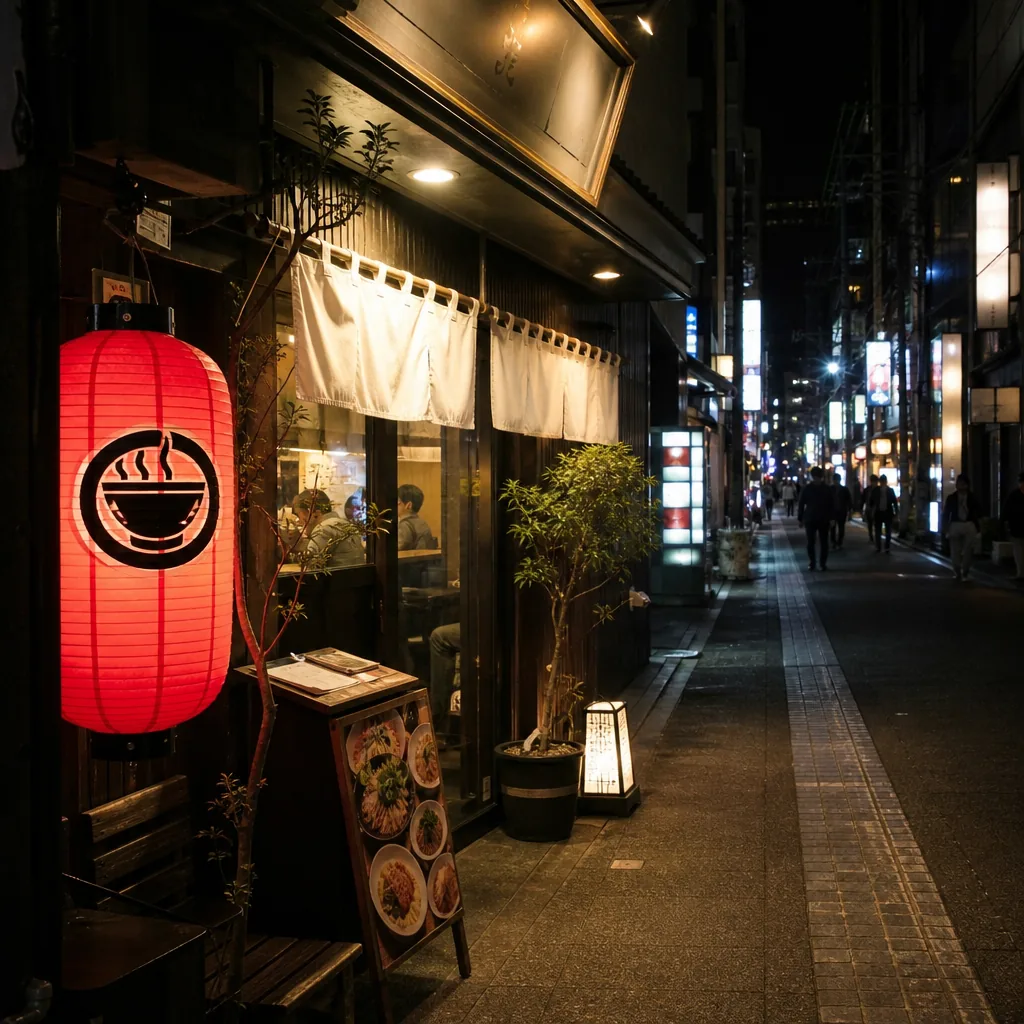
Looking for halal ramen in Kyoto after 10 p.m.? Here’s where to check, which areas are most practical, and how to verify hours and halal status.
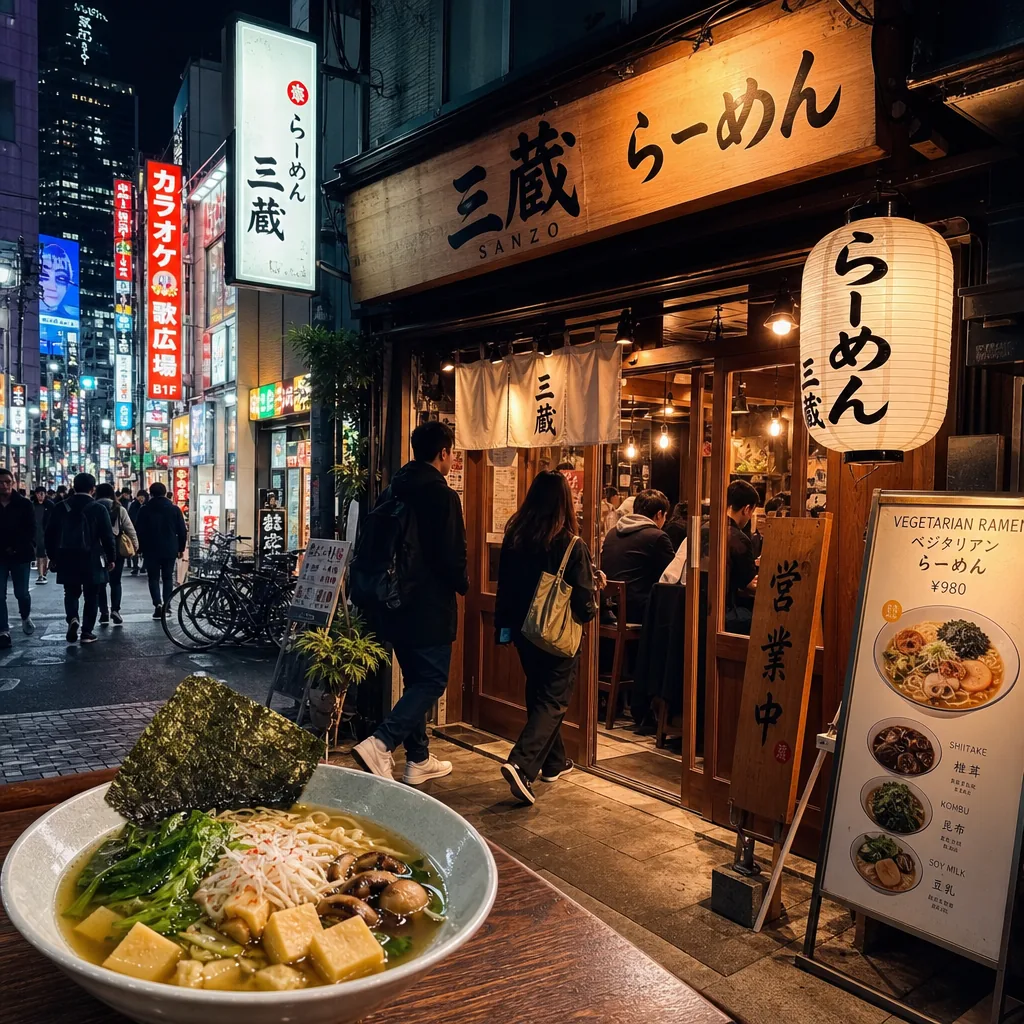
Find late-night vegetarian ramen in Tokyo by focusing on Shibuya, Shinjuku, and Roppongi, then verify broth, hours, and vegan menu details.