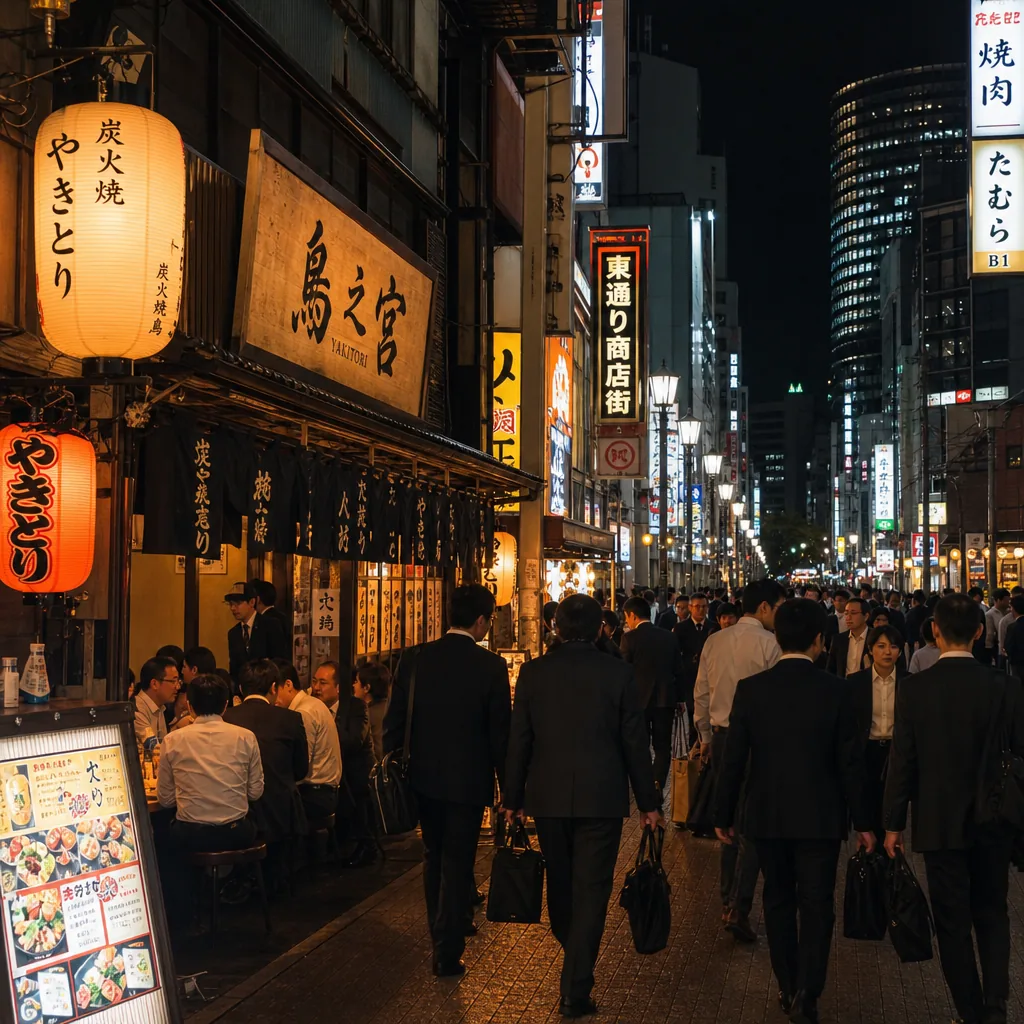
Where can I find english-friendly yakitori in Osaka after work?
Find English-friendly yakitori in Osaka after work by targeting Umeda, Namba, and Honmachi, plus booking sites and multilingual menus.
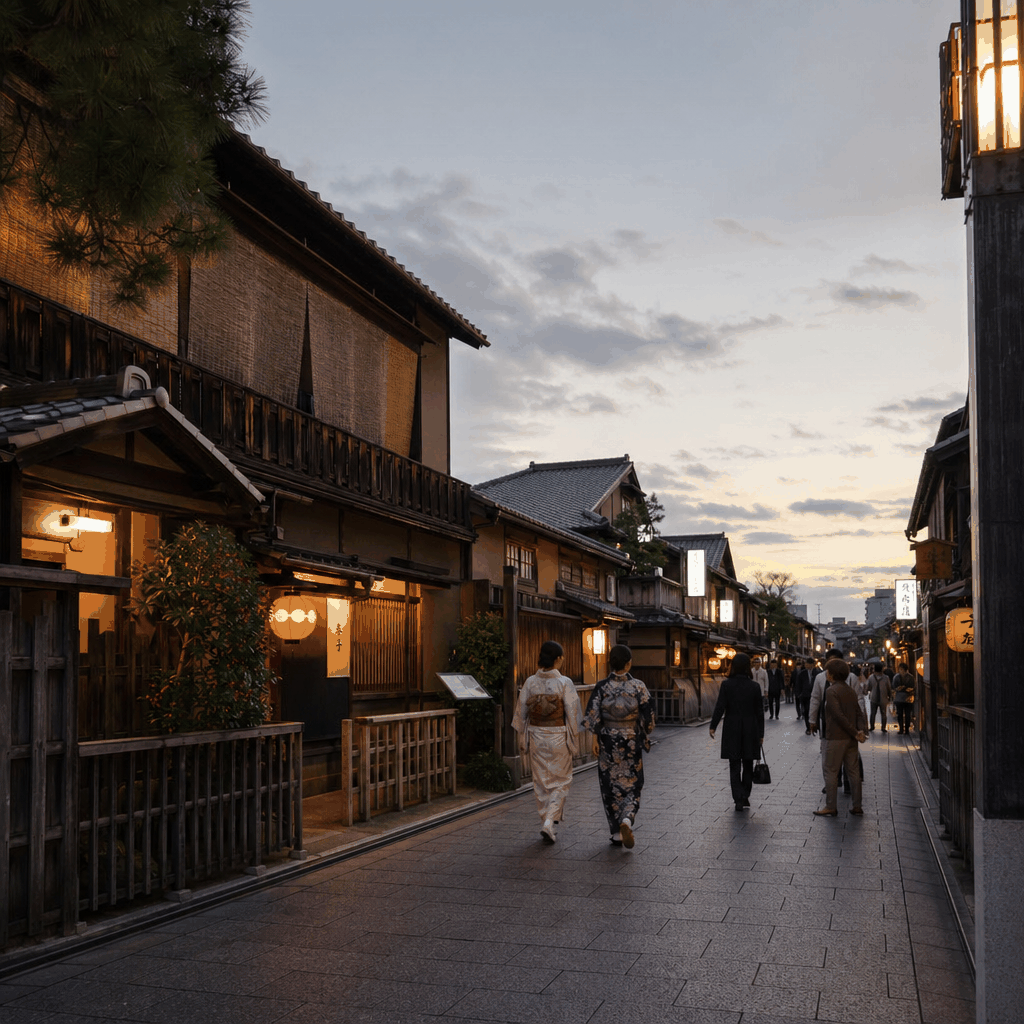
When visiting Kyoto’s geisha district, you should do so as a respectful guest, not as if it were a theme park, and here's why. Gion is a historic entertainment district, but it is also a living neighborhood where geiko and maiko may be working or moving between appointments, so the right approach is to stay on public streets, keep quiet, and give people space [1][3].
When people say “the geisha district” in Kyoto, they usually mean Gion, especially the Hanamikoji Street area near Yasaka Shrine and Shijo-dori [1]. The district is known for traditional wooden buildings, ochaya (tea houses), and evening streets where geiko and maiko may appear, but it is not a performance park. The Gion Kobu area is still a working part of Kyoto’s cultural life, and that means visitors are moving through someone else’s neighborhood and workplace [3].
That distinction matters. Kyoto City and local tourism bodies repeatedly frame respectful behavior as part of nuisance-tourism prevention, especially in crowded districts like Gion [2][4]. In practice, that means you can admire the atmosphere, but you should not act as though every alley, doorway, or person is there for your camera.
Kyoto has made it clear that disruptive sightseeing—blocking streets, entering private spaces, or pressing too closely around locals—creates real problems for residents and businesses [2][4]. In a district like Gion, where narrow lanes are already crowded, a few people stopping in the middle of the road can quickly affect foot traffic and daily work. That is why the city promotes manners such as avoiding obstruction, keeping voices down, and following posted rules [4].
For a visitor, the simplest test is this: if your behavior would be unwelcome in a quiet residential street at home, it is probably unwelcome in Gion too. Treat the district as a neighborhood first and a sightseeing spot second.
Photography is one of the biggest sources of tension. Kyoto’s official guidance says visitors should not photograph people without permission and should avoid behavior that disturbs residents or workers [4]. In Gion, that means no chasing geiko or maiko, no surrounding them with a crowd, and no stepping into the street to get a closer shot [1][4].
If you want a good photo, stand still on the public sidewalk, let people pass, and keep your distance. Never follow someone down a lane, and do not treat private entrances or teahouse doorways as photo backdrops. If a person does not want to be photographed, the respectful response is to lower the camera immediately.
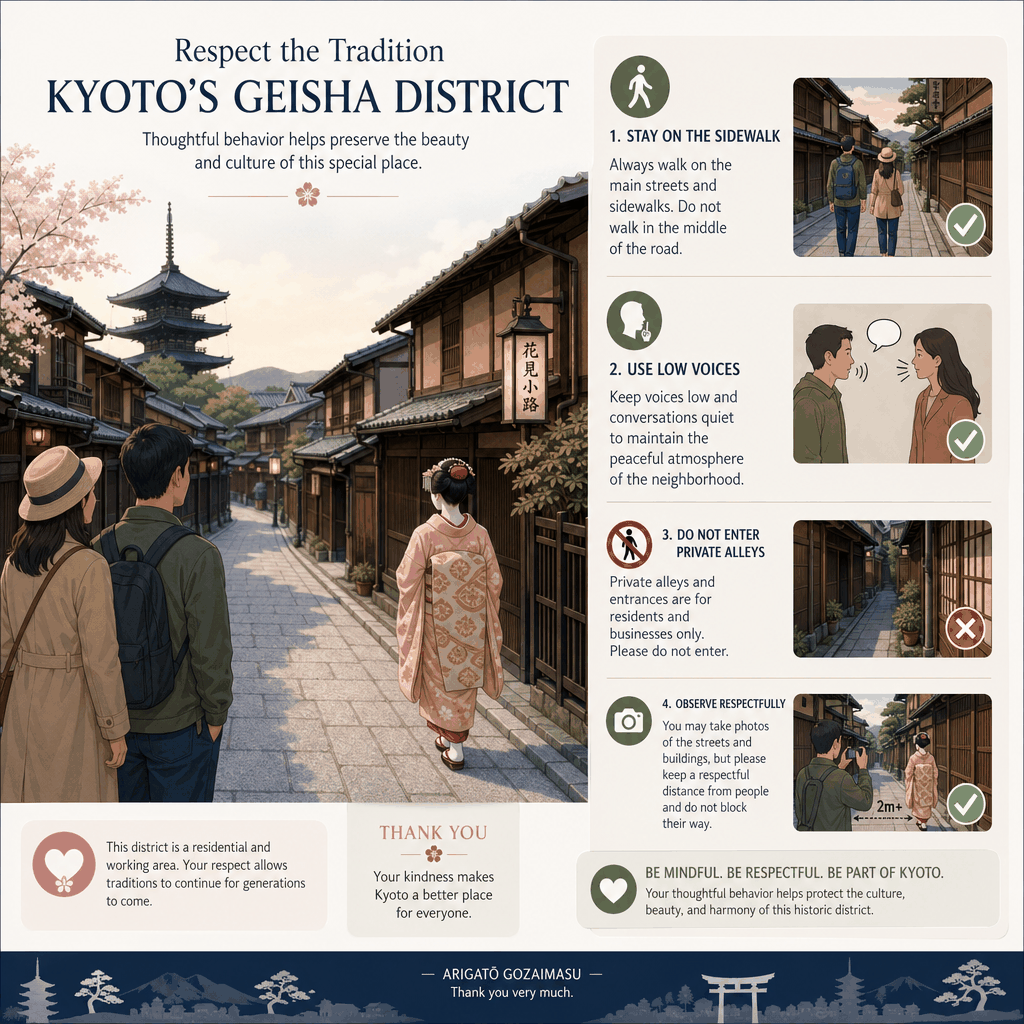
Local campaigns against nuisance tourism are specifically aimed at reducing exactly this kind of behavior—unwanted pursuit, blocking, and intrusive photography in busy areas [2]. In other words, the rule is not just “be polite”; it is “do not make locals change their movement because you want a better image.”
Stick to public streets and clearly open sightseeing routes. The most practical areas for a respectful walk are the public parts of Gion around Hanamikoji Street, Shijo-dori, and the approach near Yasaka Shrine [1]. These are the places where the district’s architecture and atmosphere are easiest to appreciate without crossing into private spaces.
Do not enter private alleys, narrow laneways, or the grounds of ochaya unless you have an invitation or a legitimate reservation. Many of the most beautiful-looking lanes are private or semi-private spaces used by businesses and residents. Even if a lane looks photogenic, it is not automatically open to tourists.
Signs matter. If you see no-entry markers, photography restrictions, or instructions to keep out of certain passages, follow them immediately [4]. Kyoto’s official tourism guidance is straightforward: observe local rules, respect the environment, and do not go where you are not meant to go [4].
A good visit in Gion is usually quiet, short, and observant. You do not need a complicated plan; you need restraint. Here are the basics:
These habits sound simple, but they make a big difference in a district where people are living and working at the same time. A calm visitor is much more welcome than a loud one, and a visitor who keeps moving is less likely to disrupt others.
If you want a practical way to experience Gion respectfully, start near Yasaka Shrine and walk along the public streets toward Hanamikoji Street, taking your time to look at the wooden facades, shopfronts, and lanterns from a distance [1]. This route gives you the district’s atmosphere without requiring you to step into private spaces. Then continue along open public roads rather than trying to hunt for hidden lanes or “secret” photo spots.
A good rule is to spend more time observing than photographing. Kyoto’s Gion is especially rewarding when you notice details like latticework, stone paving, and the rhythm of a working neighborhood. If you do happen to see geiko or maiko, the most respectful response is to let them pass naturally and continue on your way.
Kyoto City’s anti-nuisance efforts and tourism manners guidance make the same point from an official perspective: enjoy the city, but do so in a way that protects residents’ daily life [2][4]. That is the right mindset for Gion. The district’s beauty is strongest when visitors treat it as a real community, not a stage set.
CallButler is a multilingual concierge service that handles research, coordination, and bookings so you do not have to navigate language barriers or unfamiliar systems alone. If you need help related to How should I respectfully visit the geisha district in Kyoto? or the tasks around it, our team can step in to manage the details and keep things moving smoothly.
Find English-friendly yakitori in Osaka after work by targeting Umeda, Namba, and Honmachi, plus booking sites and multilingual menus.
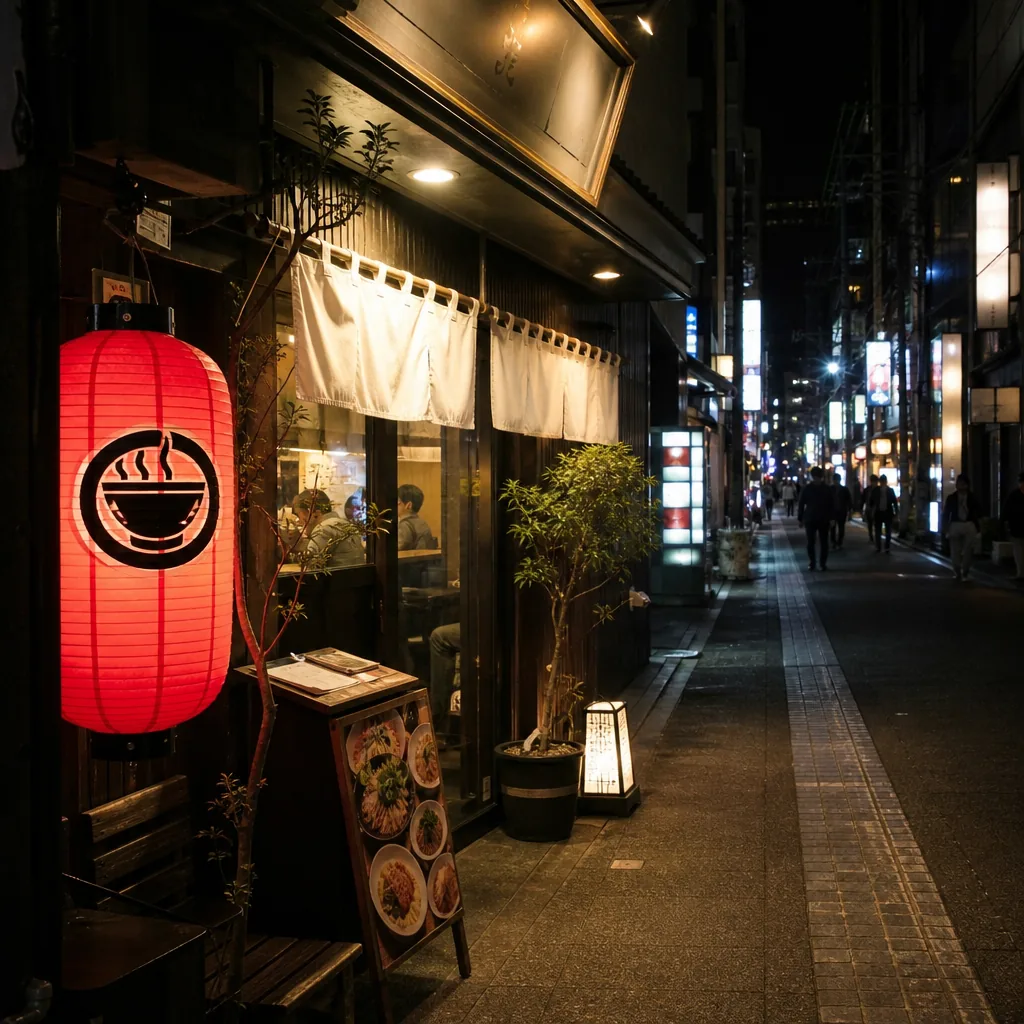
Looking for halal ramen in Kyoto after 10 p.m.? Here’s where to check, which areas are most practical, and how to verify hours and halal status.
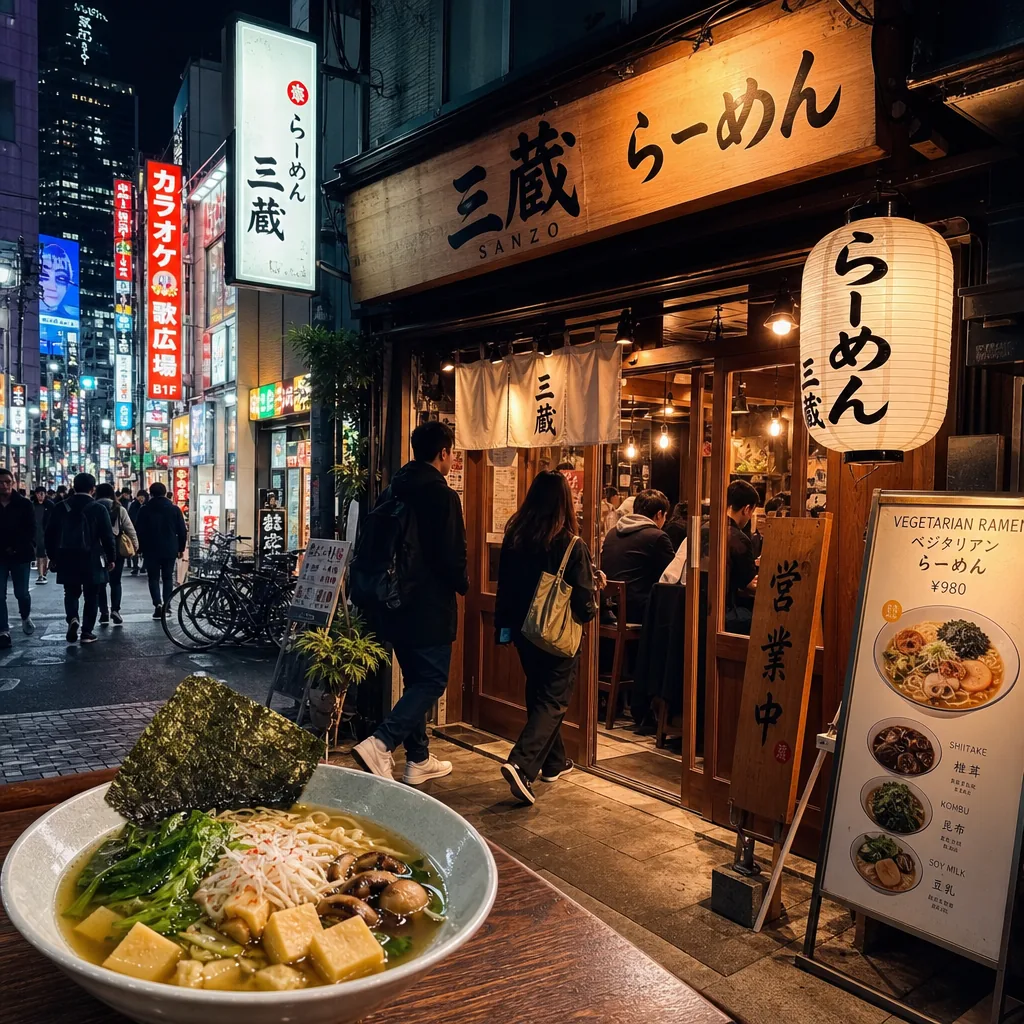
Find late-night vegetarian ramen in Tokyo by focusing on Shibuya, Shinjuku, and Roppongi, then verify broth, hours, and vegan menu details.