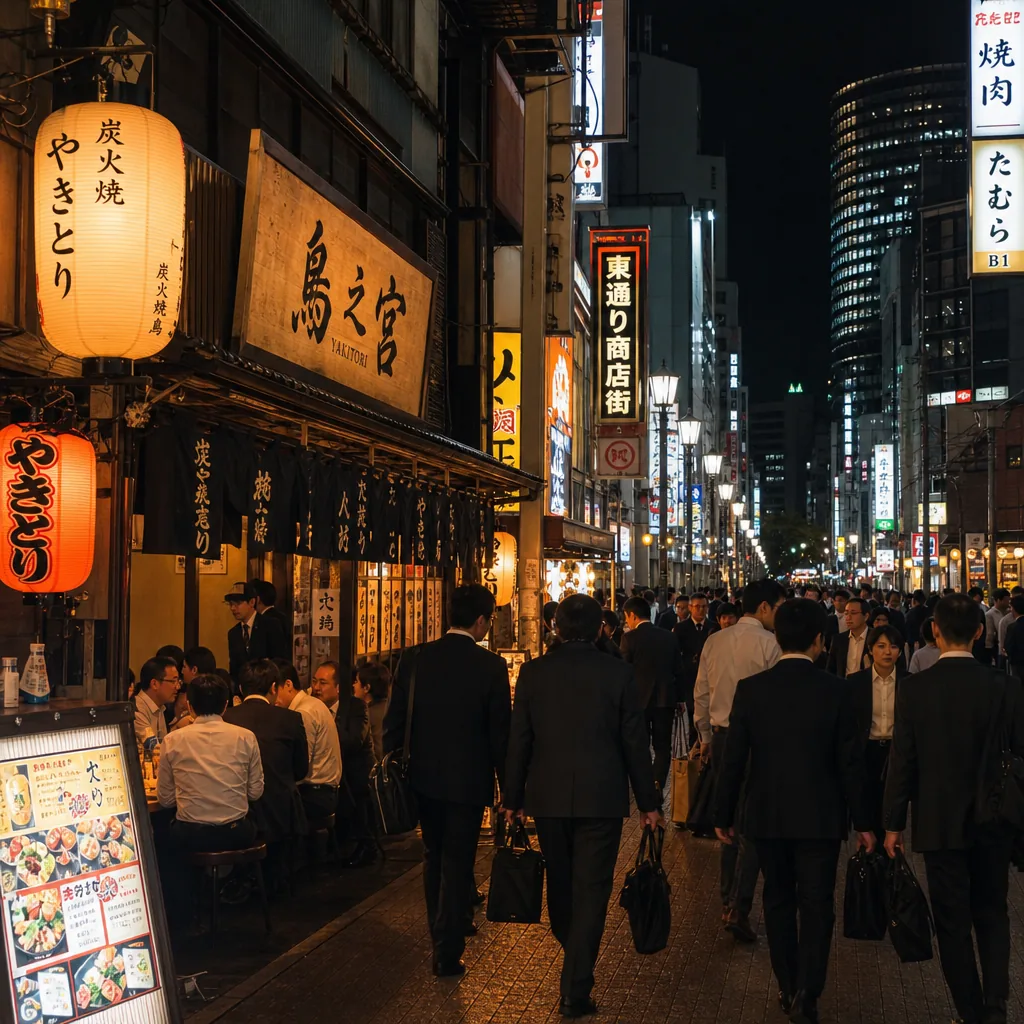
Where can I find english-friendly yakitori in Osaka after work?
Find English-friendly yakitori in Osaka after work by targeting Umeda, Namba, and Honmachi, plus booking sites and multilingual menus.
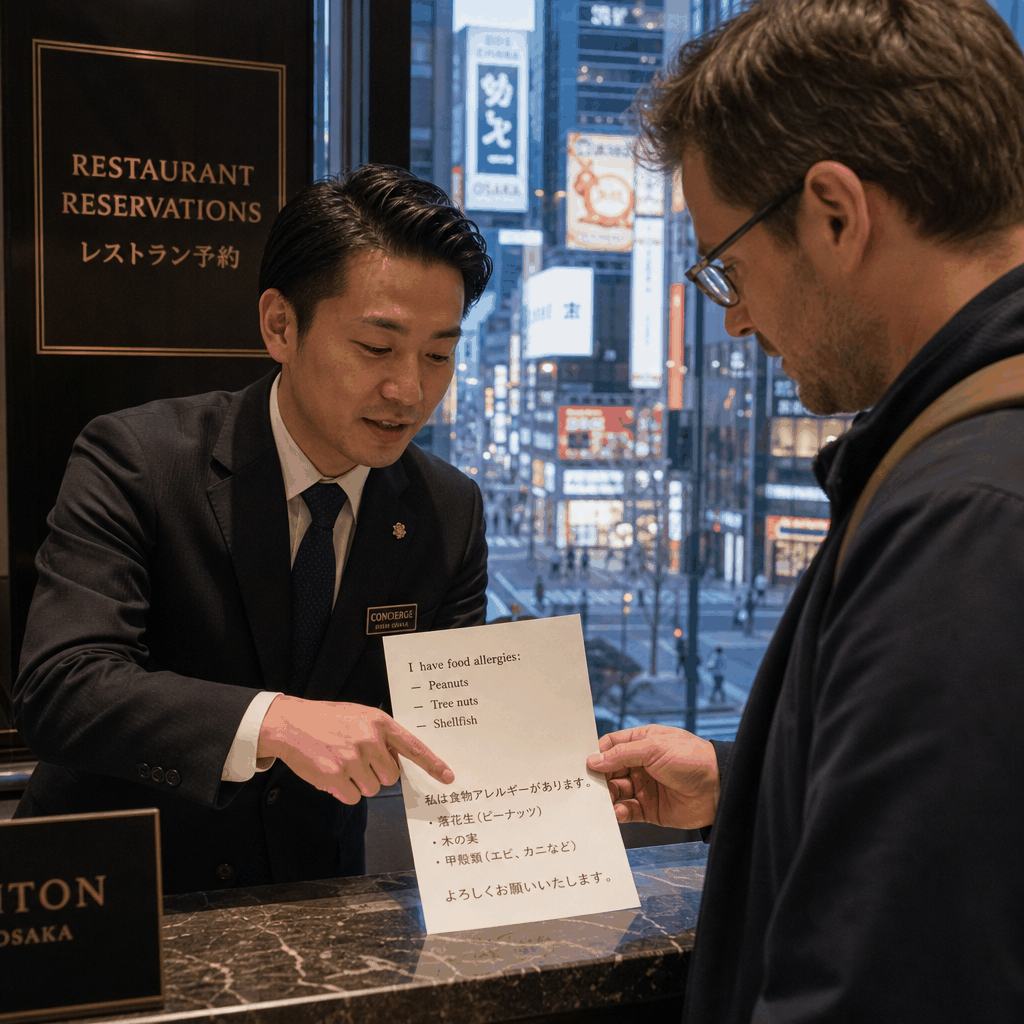
Yes, a concierge in Osaka can often help arrange allergy-friendly dining by identifying suitable restaurants, making reservations, and explaining your needs in Japanese. But the answer is only “yes” if the restaurant can confirm ingredients and handling in advance, because Osaka’s tourism guidance says travelers should contact restaurants before visiting and not assume substitutions will be possible on arrival [1][2].
In practice, a hotel concierge or travel desk can act as a bridge between you and the restaurant. They can call ahead, ask whether the kitchen can check ingredient lists, and confirm whether a meal is possible for your specific allergy. This is especially useful in Osaka, where many restaurants focus on a narrow menu and may need time to verify sauces, broths, marinades, and garnish ingredients [1][4].
Concierge support is most helpful when you are staying in a hotel near major dining areas such as Umeda, Namba, or Shinsaibashi, where there are many restaurants but also many smaller independent spots that may not be able to improvise at the table. Larger hotels and chain restaurants are often better positioned to handle requests because they have more standardized procedures and can check information more reliably [3][4].
For example, the Osaka tourism guidance for special dietary needs encourages advance communication rather than last-minute requests, and Japan’s Ministry of Agriculture, Forestry and Fisheries also advises foreign travelers with food allergies to explain the allergy clearly and confirm details beforehand [1][3]. A concierge can do that translation work for you, but they cannot replace the restaurant’s own confirmation.
Osaka’s official travel guidance is consistent: tell the restaurant before you go, give specific allergy information, and expect that not every venue can safely adjust a dish. Osaka Info notes that travelers should share dietary restrictions in advance so the restaurant can check whether ingredients are used and whether any alternative is available [1]. The Japan National Tourism Organization adds that written communication is useful because it reduces misunderstandings around hidden ingredients and cross-contact risk [4].
This matters in a city like Osaka, where famous food venues often specialize in dishes that use shared equipment or long-simmered bases. At Kuromon Ichiba Market, for instance, many stalls prepare seafood, grilled items, and skewers in close quarters, so a concierge may be able to help you identify safer stalls, but the market environment itself still requires careful verification [1][4]. Likewise, in busy areas such as Dotonbori, popular restaurants may be willing to explain ingredients, but the speed and volume of service can make advance coordination even more important.
Official allergy guidance from Osaka Prefecture also emphasizes that the level of response depends on the business and the menu structure, which means there is no universal guarantee. That is why the most practical approach is to use the concierge for shortlisting and communication, then confirm directly with the venue before you commit to eating there [5].
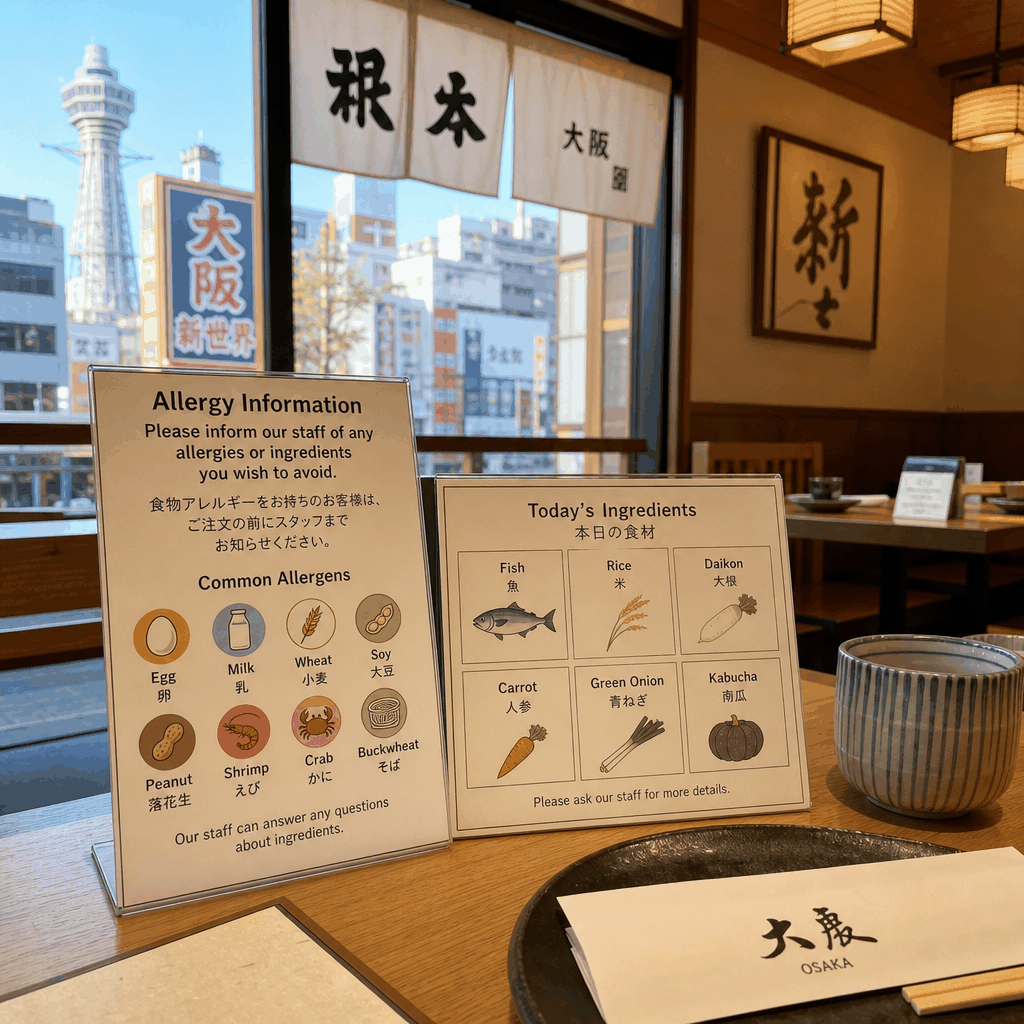
The more specific you are, the more useful the concierge can be. A short list in Japanese is ideal, because it helps avoid confusion over terms like wheat, egg, milk, shrimp, crab, peanut, and sesame. Japan’s food-allergy guidance recommends carrying written allergy information, and Osaka tourism materials also point travelers toward clear written communication [1][3].
Give the concierge these details:
It also helps to ask the concierge to confirm three separate points with the restaurant: ingredient use, preparation method, and whether cross-contact can be avoided. The Ministry of Agriculture, Forestry and Fisheries notes that ingredient checks alone are not enough if the cooking surface, utensils, or oil are shared [3].
Concierge help is valuable, but it has limits. A restaurant may say it can remove an ingredient, yet still be unable to prevent cross-contact in the kitchen. That is why travelers with severe allergies should not rely on a polite “yes” from the front desk alone; they should verify the exact procedure with the venue before arrival [3][4].
Another risk is that menu items in Osaka often include hidden components. Soups, sauces, tempura batter, curry roux, and dressings can contain allergens that are not obvious from the dish name. Official guidance from Osaka Prefecture and Japan’s tourism agencies highlights this issue and recommends ingredient confirmation in advance rather than making assumptions from the menu description [2][4][5].
Small independent venues may be especially difficult if they do not keep detailed English documentation or if staff members cannot check every ingredient quickly. By contrast, chain restaurants and larger hotels are more likely to have standardized allergen lists, though they still need to confirm availability on the day [3][4].
If you want the best chance of a safe meal, use the concierge as part of a step-by-step plan rather than as the only safeguard. Start by asking your hotel to suggest restaurants with written allergen information, then contact the chosen venue several days in advance. Osaka tourism guidance strongly favors this timeline because the restaurant may need time to check suppliers or prepare a separate method [1][2].
Here is a practical approach:
If you are planning meals near Osaka Station, around Shinsaibashi, or in the Dotonbori area, it is smart to let the concierge narrow the options first and then confirm directly with the venue. That extra layer of checking is exactly what official Japanese guidance recommends: use support services, communicate clearly, and verify before you eat [1][3][4].
So, can a concierge arrange allergy-friendly dining in Osaka? Yes—often very effectively, especially for translating needs and making advance reservations. But the safest results come when you combine concierge support with direct restaurant confirmation, written allergy information, and a realistic understanding that not every kitchen can promise zero cross-contact [1][3][5].
CallButler is a multilingual concierge service that handles research, coordination, and bookings so you do not have to navigate language barriers or unfamiliar systems alone. If you need help related to Can a concierge arrange allergy-friendly dining in Osaka? or the tasks around it, our team can step in to manage the details and keep things moving smoothly.
Find English-friendly yakitori in Osaka after work by targeting Umeda, Namba, and Honmachi, plus booking sites and multilingual menus.
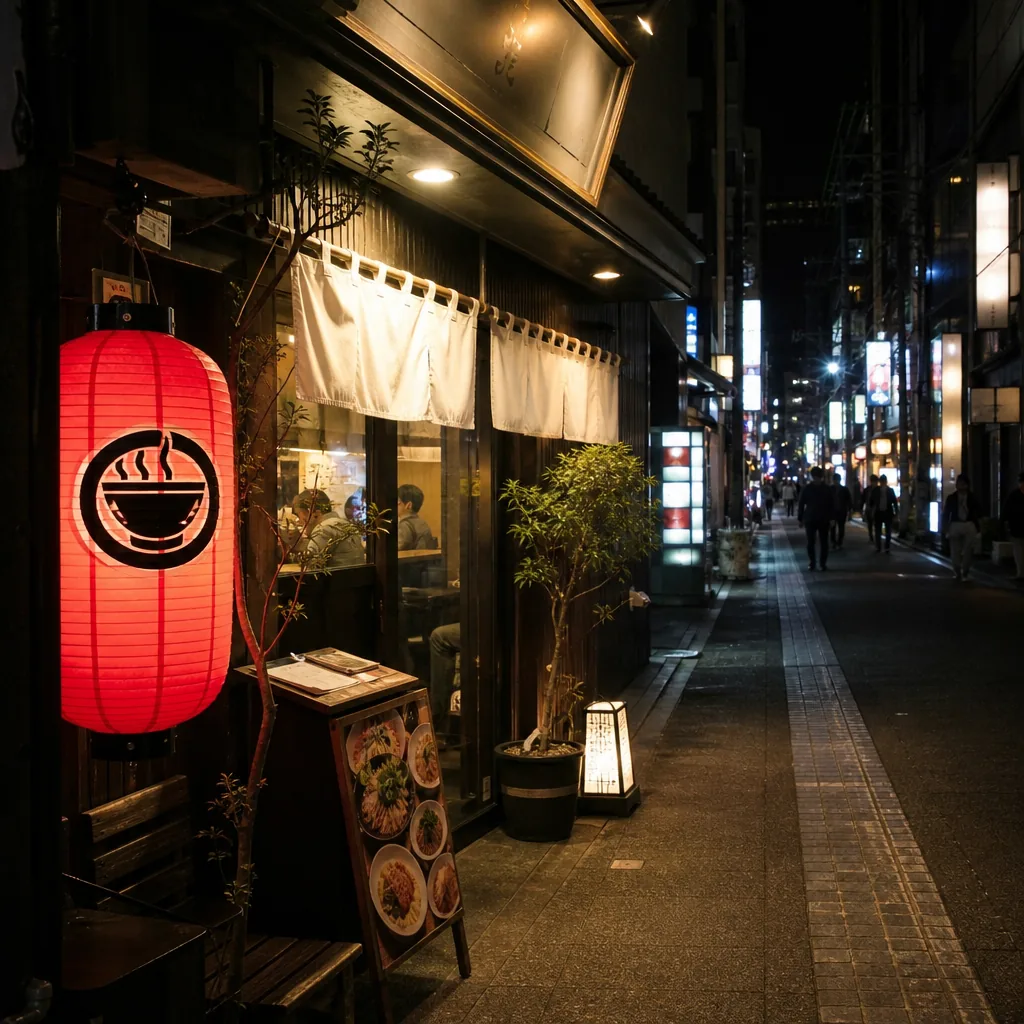
Looking for halal ramen in Kyoto after 10 p.m.? Here’s where to check, which areas are most practical, and how to verify hours and halal status.
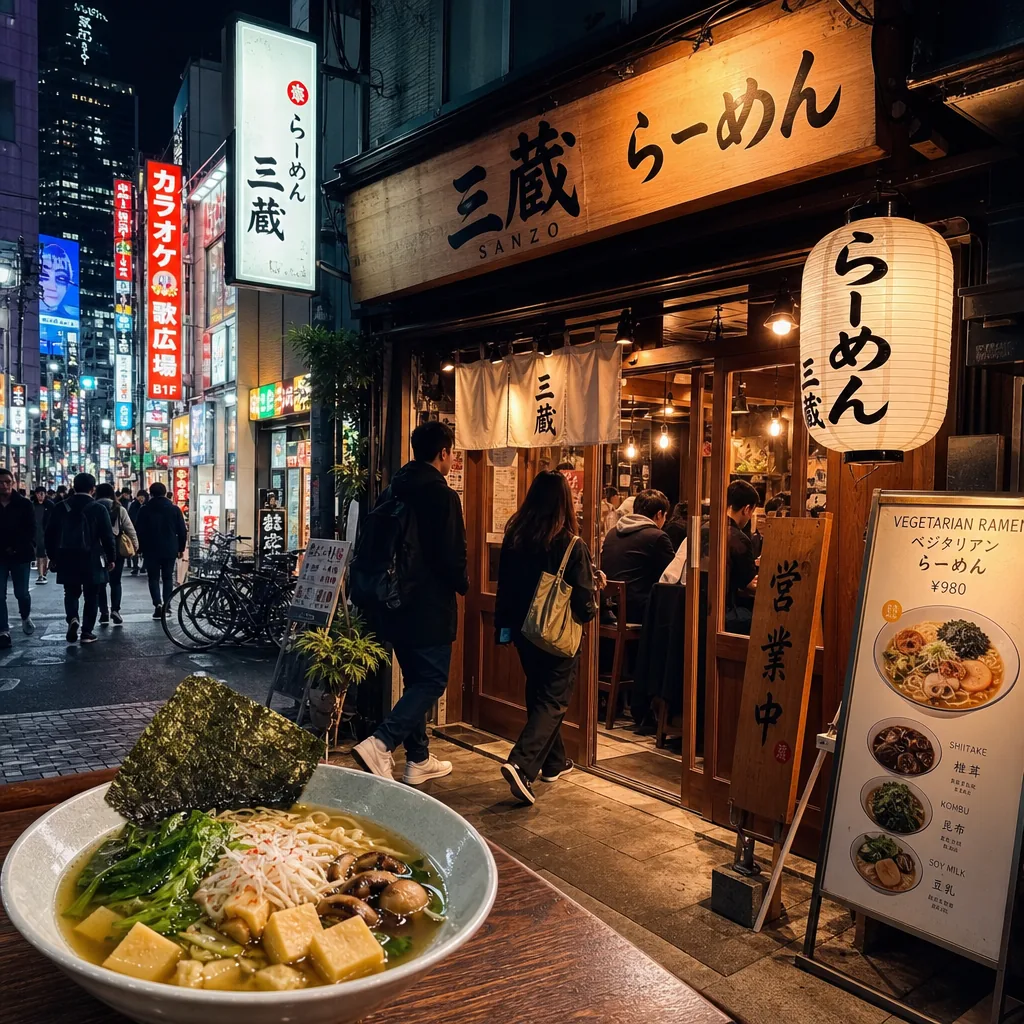
Find late-night vegetarian ramen in Tokyo by focusing on Shibuya, Shinjuku, and Roppongi, then verify broth, hours, and vegan menu details.