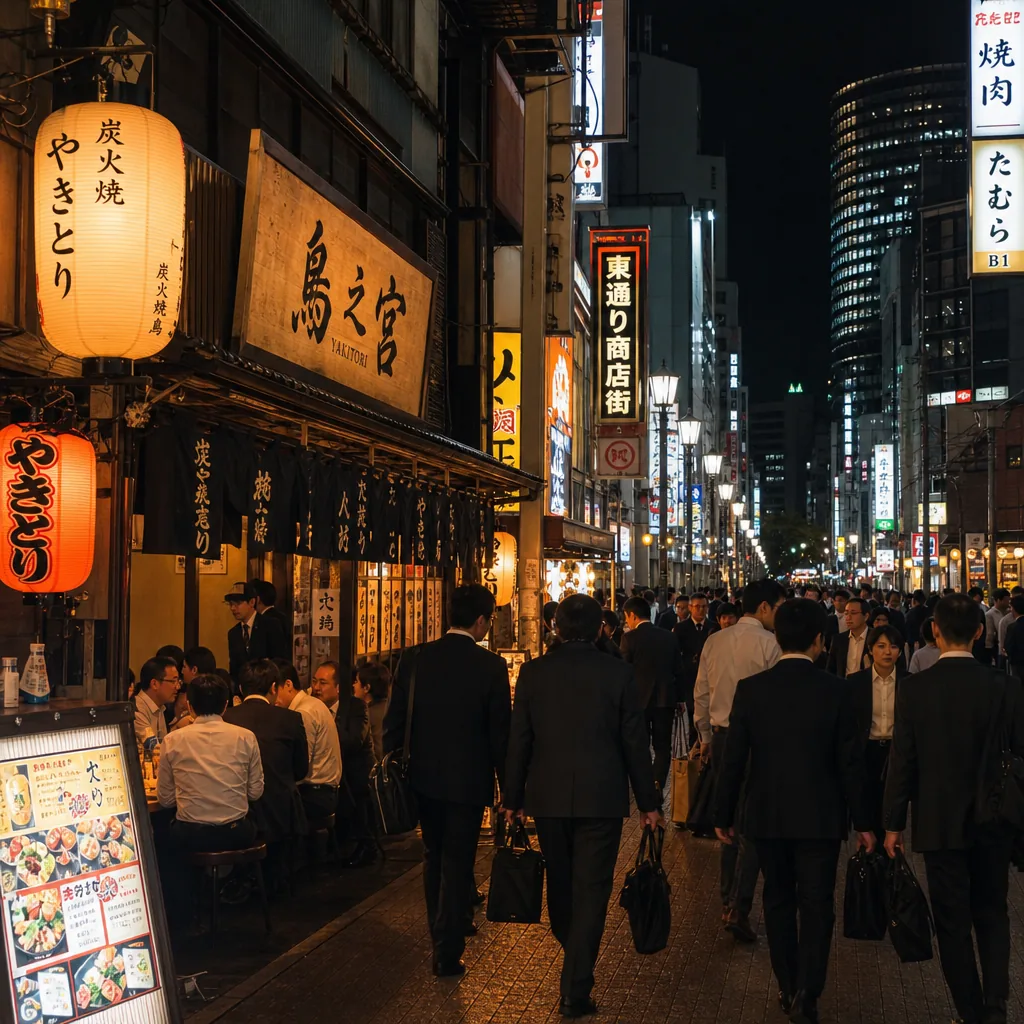
Where can I find english-friendly yakitori in Osaka after work?
Find English-friendly yakitori in Osaka after work by targeting Umeda, Namba, and Honmachi, plus booking sites and multilingual menus.
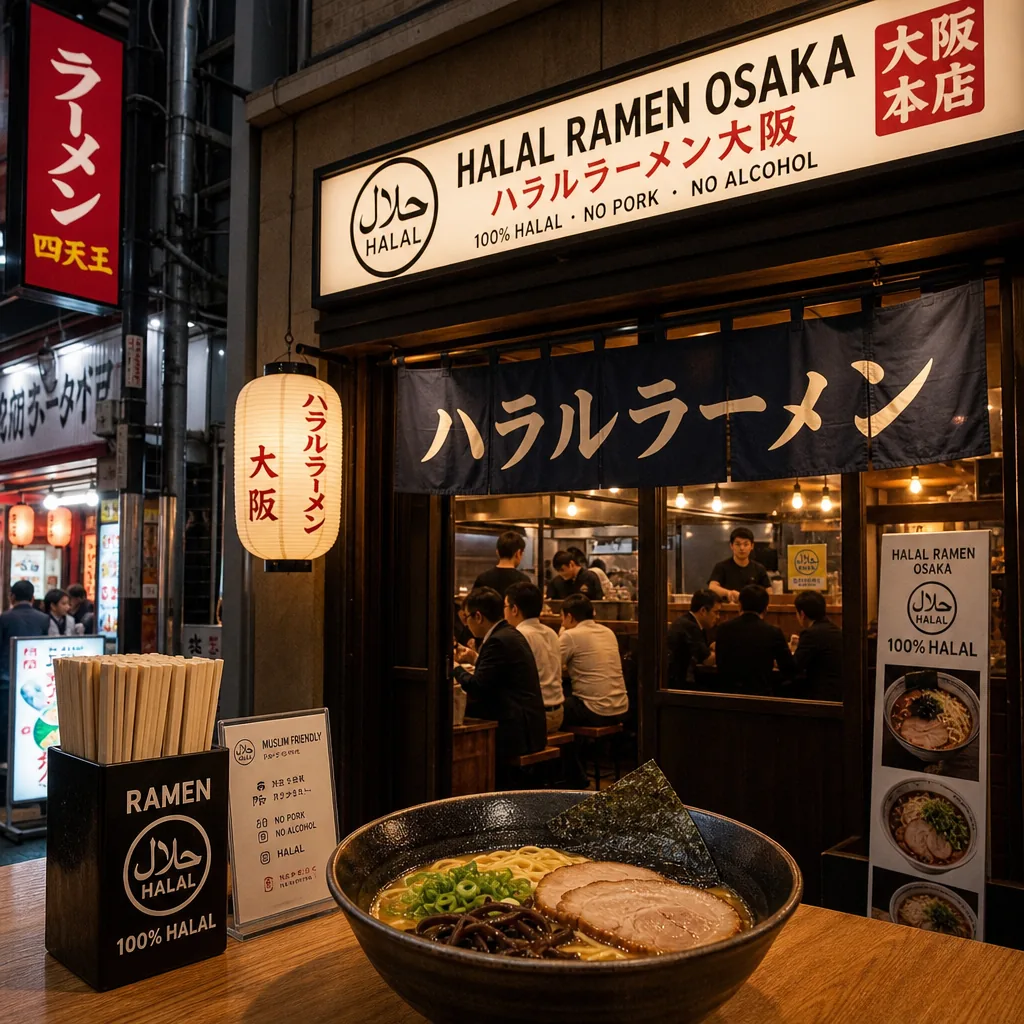
Yes—expats can find halal ramen in Osaka, but the best options are concentrated in central tourist districts like Namba and Umeda rather than spread evenly across the city. The safest approach is to use Osaka’s official halal dining lists, then confirm each shop’s current certification, broth ingredients, and kitchen setup before you go [1][2].
In Osaka, “halal ramen” can mean different things, and that distinction matters. Some restaurants are fully halal, some are Muslim-friendly with halal menu items, and others only separate certain ingredients or cooking tools. Osaka Info and the Osaka Convention & Tourism Bureau both emphasize checking current restaurant status rather than assuming every noodle shop labeled “halal” is fully certified [1][2].
For ramen, the key issues are usually the broth, tare, and toppings. A bowl is much more likely to be halal if it contains no pork, no alcohol-based seasoning, and no cross-contact with non-halal cookware. JNTO also advises Muslim travelers to verify ingredients and preparation methods directly, since policies can change [5].
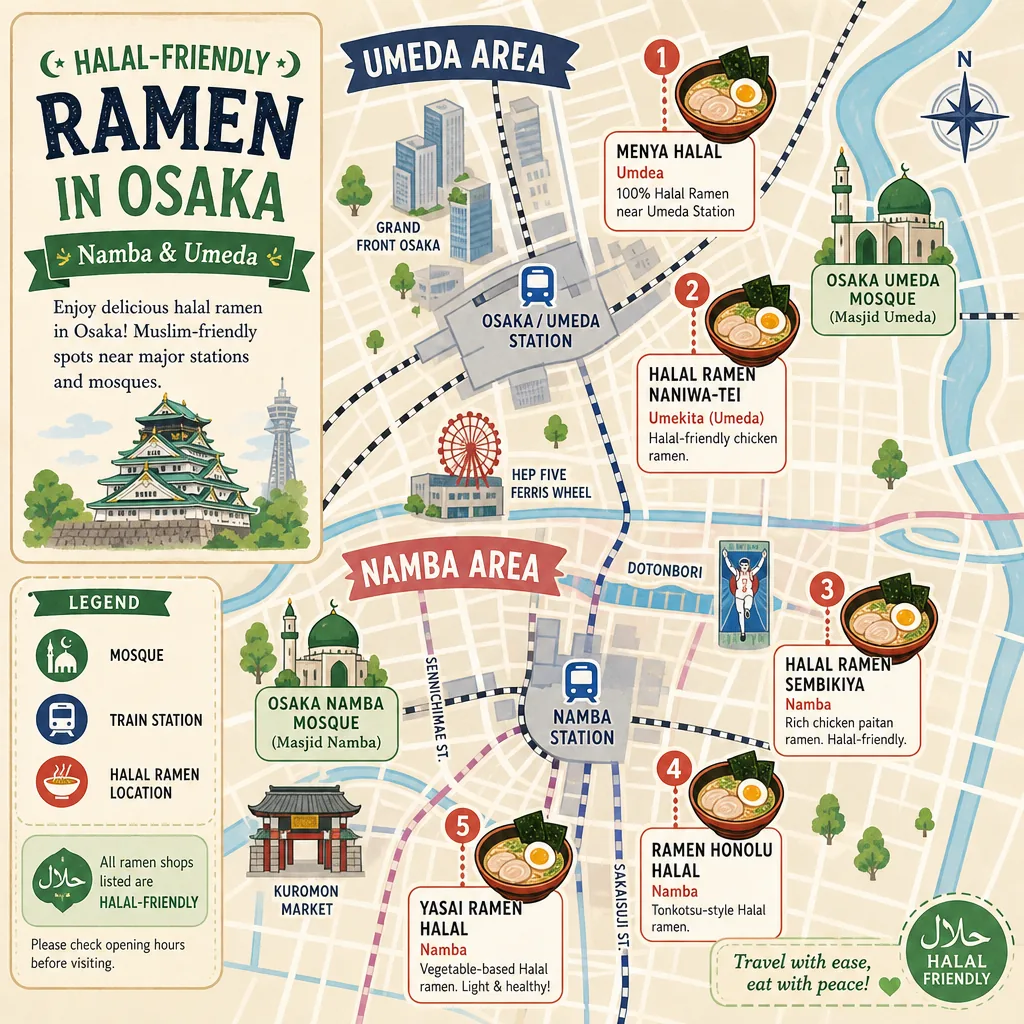
The strongest halal ramen options are in high-traffic areas where Osaka’s tourism infrastructure is most developed. Official and specialty halal directories consistently cluster listings in Namba, Dotonbori, Shinsaibashi, and Umeda, which makes sense because these neighborhoods already attract many international visitors [1][2][3]. If you are staying near a major train station or shopping street, you are more likely to find a vetted bowl nearby.
One useful example is Ninja Ramen Osaka, which presents itself online as a halal ramen destination and is frequently used by Muslim travelers looking for clear menu information in central Osaka [4]. Because it is positioned for international diners, it is the kind of shop expats often choose when they want English-facing information before arriving [4].
Another practical route is to use Osaka Info’s halal restaurant directory, which is maintained by the city’s tourism side and lets you search for Muslim-friendly dining in the Osaka area [2]. The Osaka Convention & Tourism Bureau’s Muslim-friendly guidance also points visitors toward area-based dining support instead of relying on random search results [1].
For broader choice, Halal Gourmet Japan’s Osaka area listings are helpful when you want to compare shops across neighborhoods and see which ones are explicitly halal-oriented [3]. That is especially useful if you are planning around sightseeing stops and want ramen without making a long detour.
Do not rely on the word “halal” alone. In Osaka, the most reliable shops usually provide a certificate, a clear ingredient statement, or a detailed note about separate preparation. Osaka Info and JNTO both recommend confirming details directly, because restaurant menus and sourcing can change [2][5].
A quick verification checklist can save you from guesswork:
This matters because some restaurants may offer a halal bowl but still use shared equipment for other menu items. For expats who need strict compliance, fully halal certification is better than a vague Muslim-friendly claim. For travelers who are comfortable with clear ingredient separation, a carefully managed halal menu may be enough—but only if the restaurant explains the process plainly [1][2][5].
You do not need fluent Japanese to order safely, but a few simple phrases help. In Osaka, staff at tourist-friendly restaurants often understand basic English, yet confirming ingredients in Japanese can avoid misunderstandings. Osaka’s halal guides specifically highlight the importance of clear communication for Muslim visitors [1][2].
Useful phrases include:
If you are unsure, ask whether the ramen broth is made separately from non-halal dishes. That one question often tells you more than the menu title does. Also, if a shop has English support or a clearly labeled halal menu, that is a good sign—but still confirm the specifics of soup stock and toppings before ordering [2][4][5].
Osaka’s official tourism resources are the best starting point because they are searchable and updated for visitors. The Osaka Convention & Tourism Bureau’s Muslim Friendly Osaka page and Osaka Info’s halal restaurant directory are both designed to help travelers narrow down options by area and dining style [1][2]. If you want a broader map of the city’s halal scene, Halal Gourmet Japan also organizes Osaka-area listings in a way that is easy to scan from a phone [3].
For expats, this means you can plan meals around where you already are, instead of crossing the city for dinner. If you are staying in Namba, look there first. If your hotel is closer to Umeda, search that district first. And if a restaurant looks promising, verify it on the shop’s own site the same day you visit. That simple habit is the best way to keep halal ramen in Osaka both practical and stress-free [1][2][3][5].
In short, Osaka does have halal ramen for expats—you just need to be selective. Stick to central districts, use official halal directories, and confirm broth, ingredients, and kitchen practices before you sit down. With that approach, you can find a reliable bowl without wasting time or compromising your dietary requirements [1][2][4][5].
CallButler is a multilingual concierge service that handles research, coordination, and bookings so you do not have to navigate language barriers or unfamiliar systems alone. If you need help related to Where can expats find halal ramen in Osaka? or the tasks around it, our team can step in to manage the details and keep things moving smoothly.
Find English-friendly yakitori in Osaka after work by targeting Umeda, Namba, and Honmachi, plus booking sites and multilingual menus.
Looking for halal ramen in Kyoto after 10 p.m.? Here’s where to check, which areas are most practical, and how to verify hours and halal status.
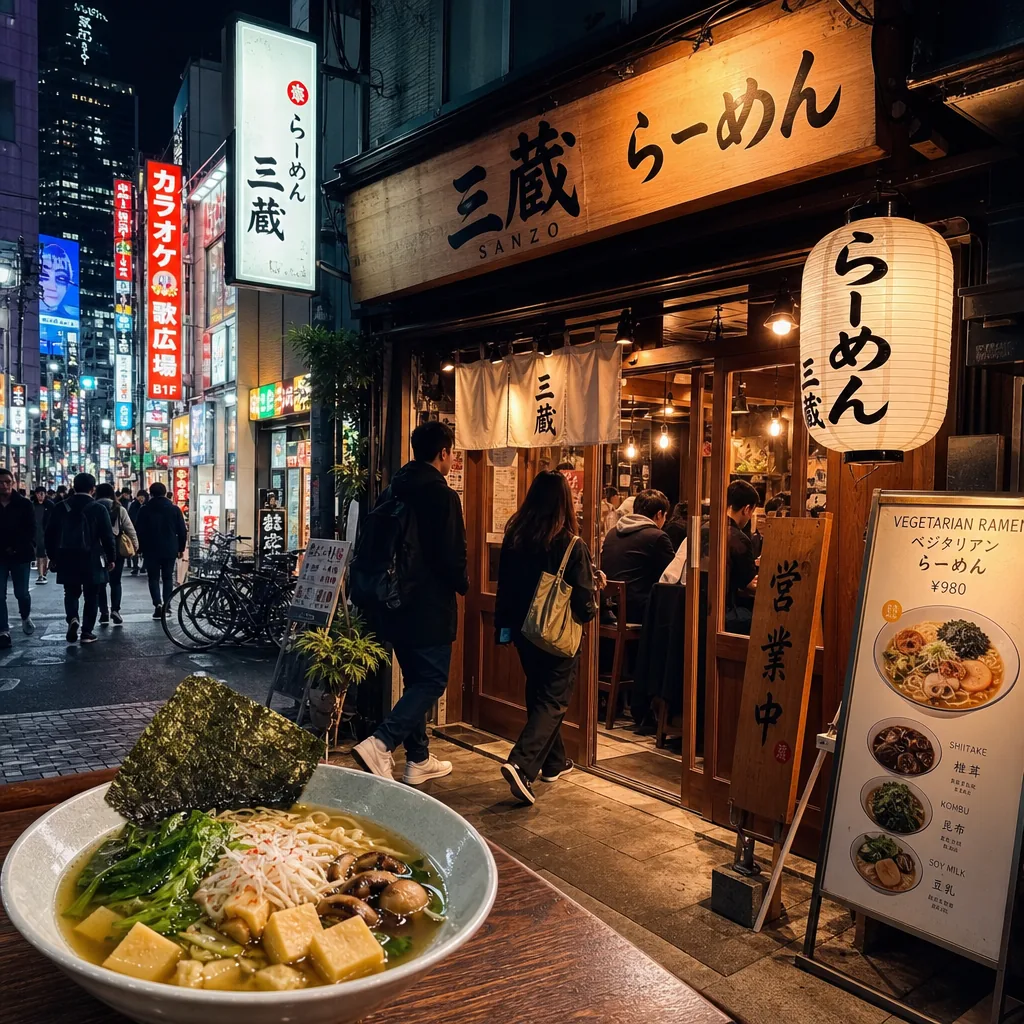
Find late-night vegetarian ramen in Tokyo by focusing on Shibuya, Shinjuku, and Roppongi, then verify broth, hours, and vegan menu details.