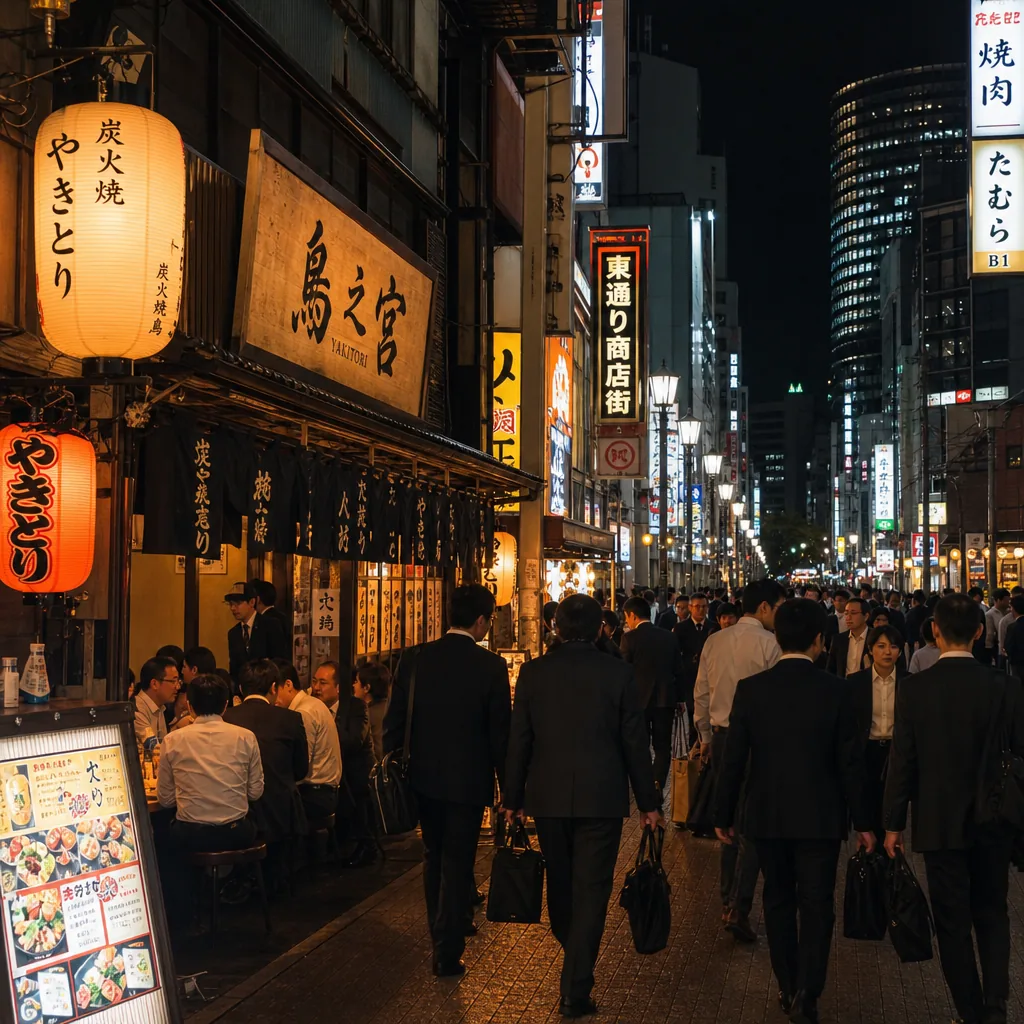
Where can I find english-friendly yakitori in Osaka after work?
Find English-friendly yakitori in Osaka after work by targeting Umeda, Namba, and Honmachi, plus booking sites and multilingual menus.
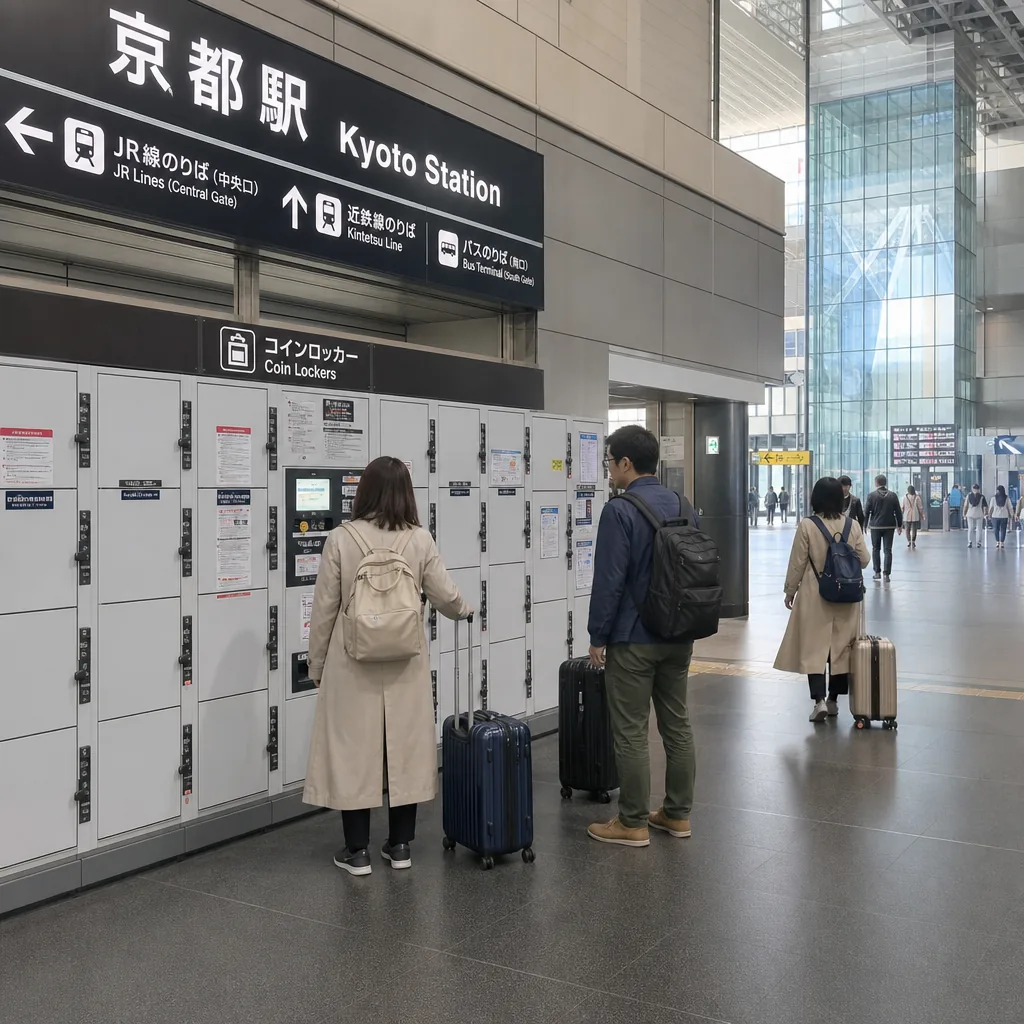
The best way to store luggage at Kyoto Station is usually the option that matches your schedule: coin lockers if you want the fastest hands-free stop, staffed baggage counters if your bag is too large or lockers are full, and takkyubin delivery if you prefer to send luggage to your hotel or next destination [1][4][5]. In practice, the “best” choice depends on when you arrive, how big your bags are, and whether you are sightseeing in Kyoto Station area or leaving the city the same day.
Kyoto Station is a major rail hub, so travelers have more than one workable storage option. JR Kyoto Station has locker locations shown on the station map, and the Kyoto Station Building also serves as a convenient area for visitors moving through the station complex [1][3]. The Kyoto City Tourism Association notes that Kyoto Station area services include luggage storage and baggage delivery help for visitors, which makes the station one of the most practical places in the city to drop bags before exploring [5].
In simple terms, you can usually choose among three approaches:
If you are headed to places like Kyoto Tower, Higashi Hongan-ji, or the Kyoto Railway Museum, the station area is convenient because you can store bags first and then continue on foot, by bus, or by train [1][3].
Coin lockers are usually the fastest and simplest option if you are arriving at Kyoto Station early and want to sightseeing immediately. The station map shows locker locations inside the JR station complex, and larger lockers are available in some areas for suitcases [1]. That matters because not every locker is the same size, and the larger ones can be concentrated in specific parts of the station rather than spread everywhere [1][3].
Coin lockers work best when:
They are less ideal if you are arriving in the middle of a busy travel wave, such as late morning or early afternoon, because locker availability can tighten quickly [1][5]. If you only have one carry-on, a locker is often the most efficient answer. If you are traveling with a large suitcase, check the station map first so you do not waste time walking to the wrong section [1].
For oversized luggage, multiple bags, or full lockers, staffed baggage services are the safest fallback. The Kyoto City Tourism Association specifically points visitors to luggage storage and delivery services around Kyoto Station, which is useful when coin lockers are unavailable or your item is too large [5]. These services are especially helpful if you are unsure whether your bag will fit, because a person can confirm the size rules on the spot rather than making you guess based on locker dimensions.
This is a strong option if you plan to spend the day in central Kyoto and do not want to return to the station for your bags. It is also more forgiving than lockers when you have stroller bags, sports gear, or awkwardly shaped items. If your trip includes a quick visit to Kyoto Station Building, the surrounding hotel district, or nearby sightseeing such as Higashi Hongan-ji, staffed storage gives you flexibility without forcing you to hunt for a specific locker [3][5].
Takkyubin is the best choice if you want to travel completely hands-free and do not need the luggage until later the same day or the next day. Yamato Transport’s takkyubin service is designed to send luggage from one place to another, including hotel-to-hotel or station-to-hotel transfers, and Kyoto tourism guidance highlights it as a practical option in the Kyoto Station area [4][5].
This is often the smartest solution if:
For example, if you arrive at Kyoto Station in the morning and plan to visit the Kyoto Railway Museum, To-ji, and the Kyoto Tower area before hotel check-in, sending your bag onward can save both time and energy [3][4][5]. The tradeoff is that delivery is not instant, so it is better for planned trips than for storage you need right away.
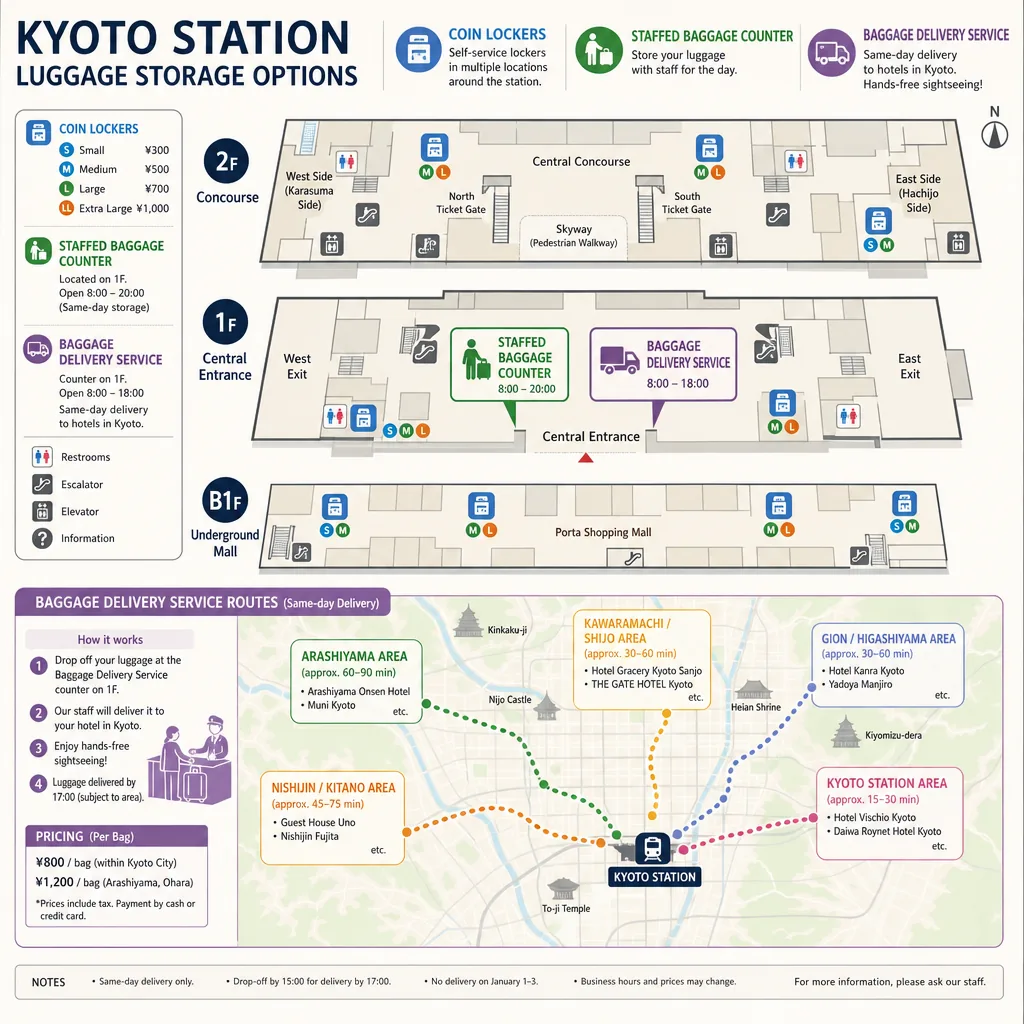
The best choice depends on timing and bag size more than anything else. If you only need a few hours and your luggage fits, coin lockers are usually the quickest answer. If your luggage is oversized or the station is busy, staffed storage is the safer backup. If you want to spend the whole day exploring without dragging bags around, takkyubin is often the most comfortable option [1][4][5].
A practical rule of thumb for Kyoto Station is this:
If your plans include neighborhoods farther from the station, such as Gion or Arashiyama, delivery or staffed storage can be more comfortable than returning to Kyoto Station later [5]. On the other hand, if you are staying close to Kyoto Station Building and just need a temporary drop-off before lunch or shopping, a locker is hard to beat [3].
Kyoto Station is busy, and the most common mistake is assuming lockers will be easy to find at the last minute. Because locker locations are spread across the station complex and larger lockers may be concentrated in specific areas, it is worth checking the JR station map before you arrive [1]. That small bit of planning can save a lot of backtracking.
Use these tips to avoid stress:
In short, the best way to visit Kyoto Station luggage storage is to match the service to your day. For quick visits, lockers are usually fastest; for oversized bags, staffed services are safer; and for maximum convenience, takkyubin is often the best hands-free choice in Kyoto [1][4][5].
CallButler is a multilingual concierge service that handles research, coordination, and bookings so you do not have to navigate language barriers or unfamiliar systems alone. If you need help related to What's the best way to visit Kyoto Station luggage storage? or the tasks around it, our team can step in to manage the details and keep things moving smoothly.
Find English-friendly yakitori in Osaka after work by targeting Umeda, Namba, and Honmachi, plus booking sites and multilingual menus.
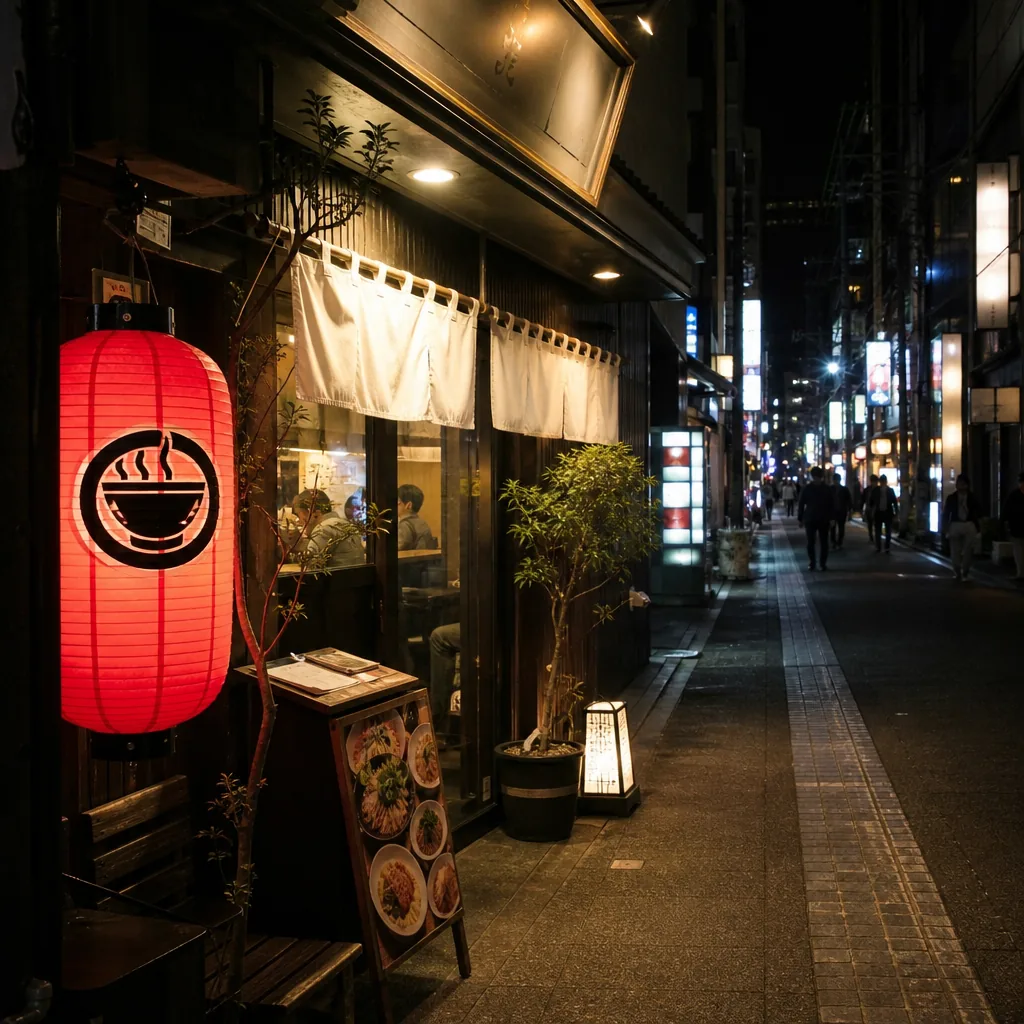
Looking for halal ramen in Kyoto after 10 p.m.? Here’s where to check, which areas are most practical, and how to verify hours and halal status.
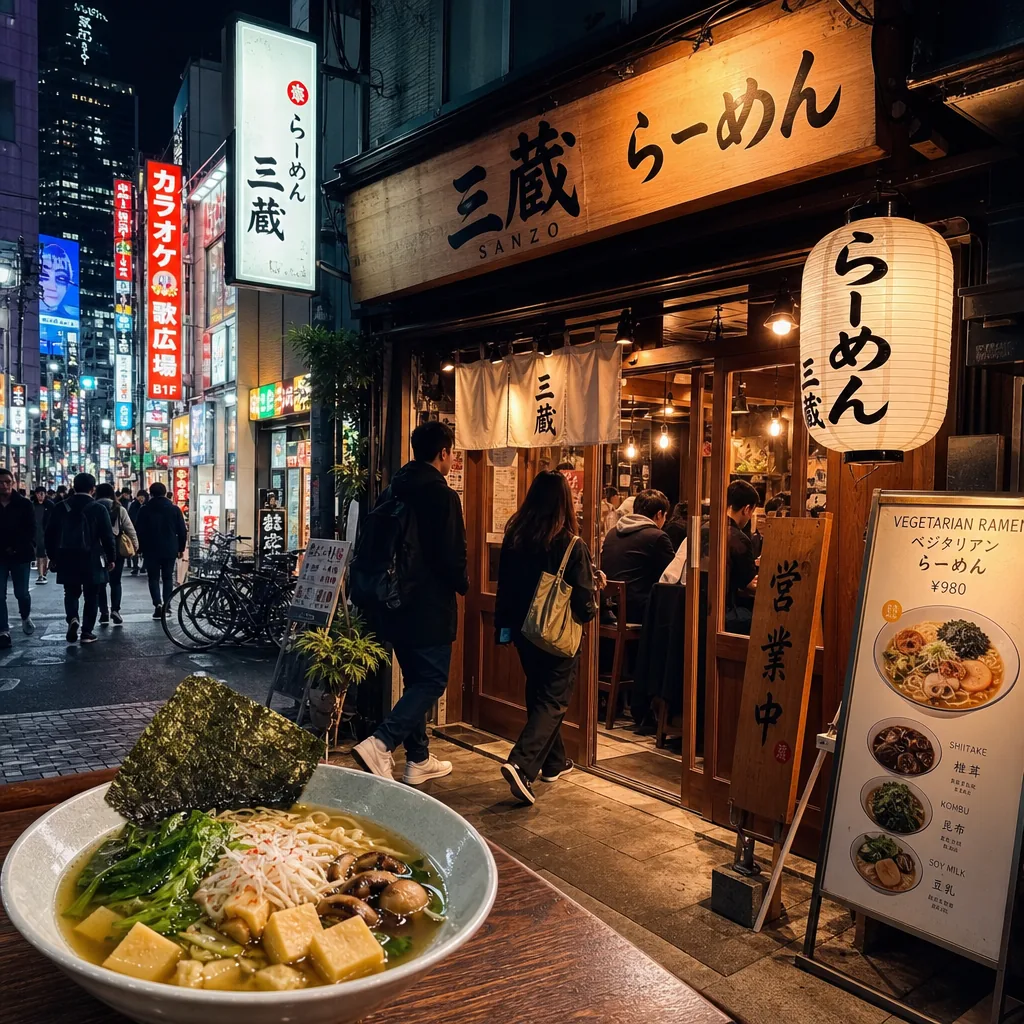
Find late-night vegetarian ramen in Tokyo by focusing on Shibuya, Shinjuku, and Roppongi, then verify broth, hours, and vegan menu details.