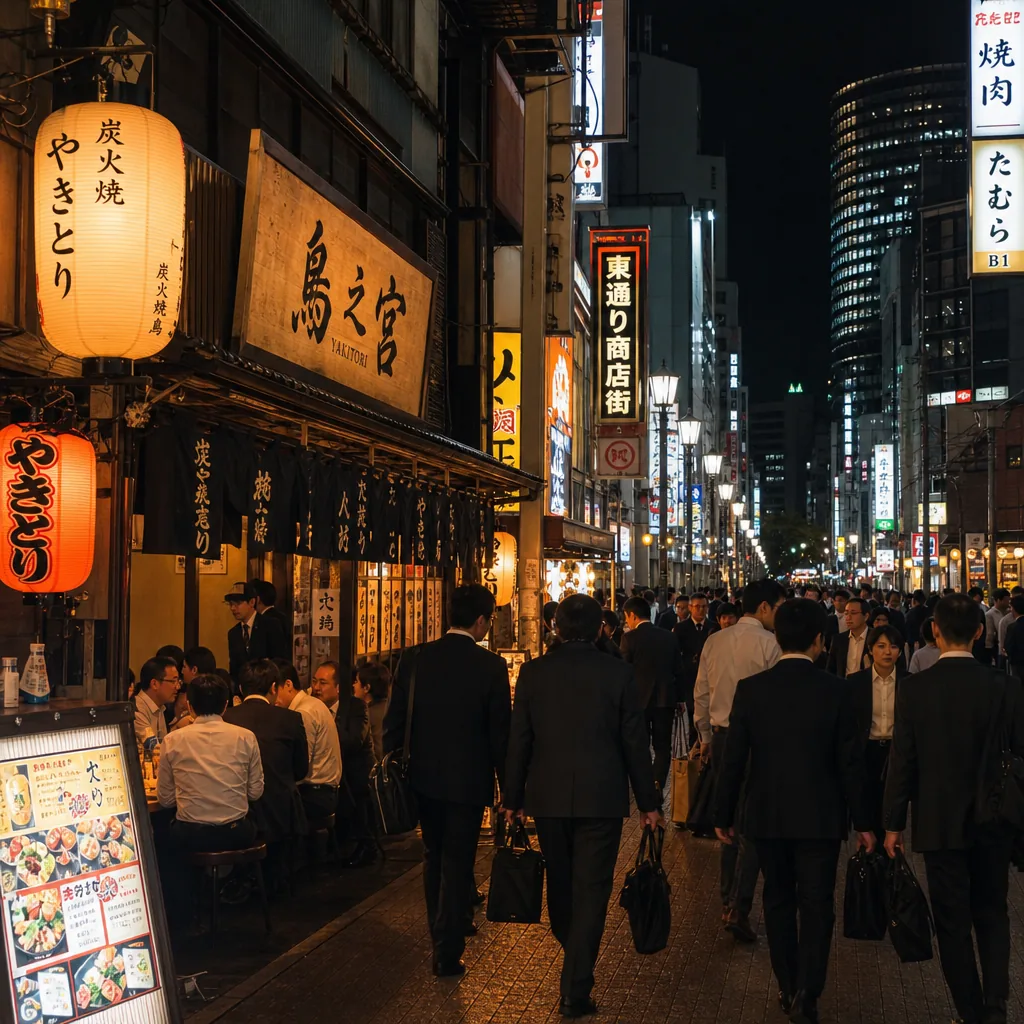
Where can I find english-friendly yakitori in Osaka after work?
Find English-friendly yakitori in Osaka after work by targeting Umeda, Namba, and Honmachi, plus booking sites and multilingual menus.
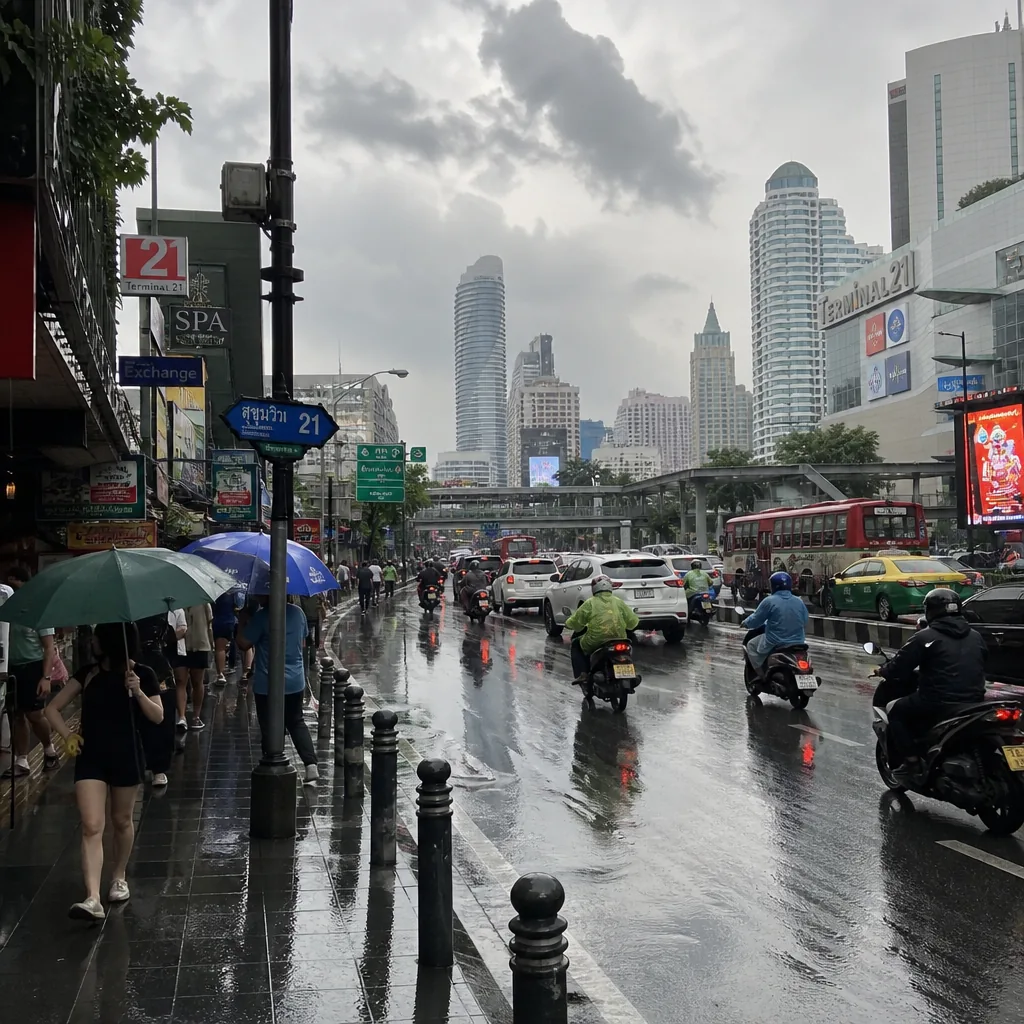
Bangkok’s rainy season usually runs from about May to October, and you should expect short, heavy showers, sticky humidity, and occasional street flooding rather than nonstop rain. The good news is that you can still visit comfortably if you plan around weather changes, use rail transit when possible, and build extra time into your day [1][2][3].
Thailand’s seasonal climate pattern places the rainy season roughly from May through October, although the exact start and end can shift by year [1]. In Bangkok, this matters because a trip in June can feel very different from one in early October: you may see several dry hours, then a sudden downpour, then sun again. That variability is why official Thai sources recommend checking daily forecasts and updates throughout the monsoon period [1][3].
For visitors, the practical takeaway is simple: do not assume a rainy-day plan means losing an entire day. Many Bangkok attractions remain accessible, and the rain often comes in bursts that last long enough to disrupt transport but not long enough to cancel every outing.
Bangkok’s rainy-season weather is usually warm and humid, with intense showers that can arrive quickly and leave just as fast [1]. Instead of an all-day drizzle, expect heavy rain that can soak clothes, flood sidewalks, and make intersections messy for a short time. The Tourism Authority of Thailand describes Bangkok as a city of temples, markets, and riverside sights, which also means many outings involve walking between stops where sudden rain matters more than it would in a compact indoor destination [2].
In practice, this means timing matters. If a weather app shows rain at 3 p.m., you may still get a clear morning and early lunch window. Keep your schedule flexible enough to move outdoor plans earlier and indoor plans later.
Bangkok traffic can slow significantly during heavy rain, and some streets can experience temporary flooding [3]. That is one reason rail transit is often the most reliable way to move around the city in wet weather. BTS Skytrain service is a major advantage because elevated rail avoids the worst road congestion and reduces time spent standing in rain at street level [4].
If your itinerary includes a hotel near a BTS station, this can make a real difference. Areas around Siam, Asok, and Silom are especially useful because they connect well to shopping, dining, and transfers by rail. For longer intercity movement or Bangkok departures, the State Railway of Thailand’s online ticket system is the official place to check train options and timings [5].
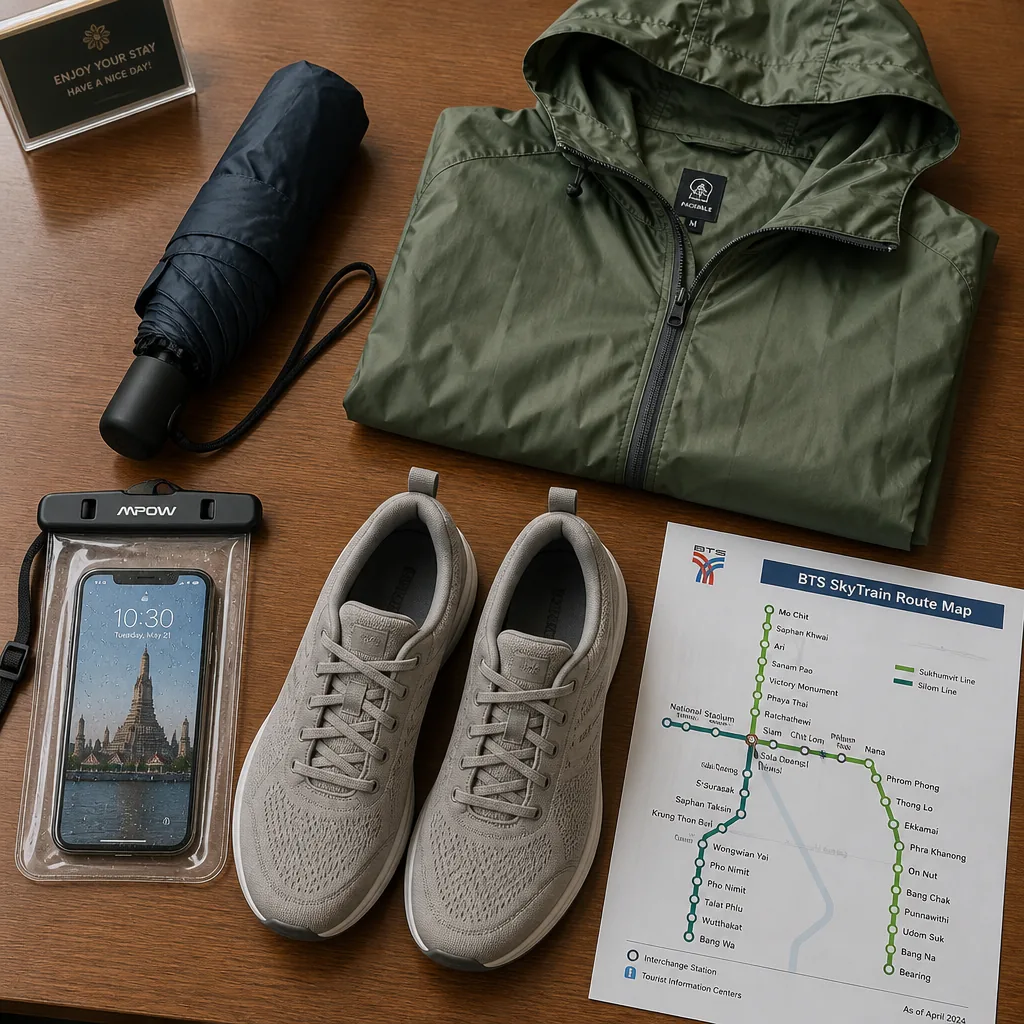
Because Bangkok stays warm even in the rainy season, a light rain jacket or compact umbrella is usually more useful than heavy waterproof gear. The goal is to stay dry without overheating. You will also want quick-drying clothing, comfortable sandals or shoes that can handle wet pavement, and a small towel or tissues for sudden splashes.
Waterproof protection for your phone and passport is a smart addition, especially if you plan to walk through markets or take boats. A simple zip pouch or dry bag can protect electronics from unexpected rain and puddle spray. If you are carrying a backpack, a rain cover can help during longer walks between stations or attractions.
The best rainy-season strategy in Bangkok is to group outdoor sights together and keep indoor backups nearby. For example, you can pair a temple visit with a nearby mall, museum, or café, then switch plans if the rain turns heavy. The city has plenty of indoor-friendly options, so a weather change does not have to end your day [2].
Named places help with planning. Wat Arun and the Grand Palace area are major Bangkok landmarks, but both are more comfortable when weather is stable because they involve open-air movement [2]. If the forecast looks uncertain, move those visits to the clearest part of the day. For a safer fallback, nearby riverfront and shopping areas such as ICONSIAM, Siam Paragon, and MBK Center let you stay inside while still seeing central Bangkok life [2].
Day trips need extra caution. If you are considering travel by rail, check official State Railway of Thailand ticket information in advance rather than assuming same-day flexibility [5]. Rain may not cancel your trip, but delays can make tightly scheduled plans stressful.
Bangkok Metropolitan Administration flood-control updates are useful during the monsoon because some streets and low-lying areas can flood temporarily after heavy rain [3]. That does not mean the whole city is unsafe; it means you should stay alert, especially when you are walking in unfamiliar neighborhoods or relying on road transport. Official guidance emphasizes checking flood and weather information regularly [1][3].
If you see rising water, do not wade through it unless you have no alternative. Floodwater can hide holes, debris, and live electrical risks. It is better to wait out a storm in a nearby café, station, or mall than to push through a flooded street.
Bangkok’s rainy season becomes much easier when you treat weather as part of the itinerary instead of an obstacle. Build slack into your day, prefer rail over road when you can, and keep your essentials protected. With that approach, the rainy season can still be a good time to experience the city’s temples, malls, and riverfronts without constant stress [2][4][5].
CallButler is a multilingual concierge service that handles research, coordination, and bookings so you do not have to navigate language barriers or unfamiliar systems alone. If you need help related to What should I know before visiting Bangkok in the rainy season? or the tasks around it, our team can step in to manage the details and keep things moving smoothly.
Find English-friendly yakitori in Osaka after work by targeting Umeda, Namba, and Honmachi, plus booking sites and multilingual menus.
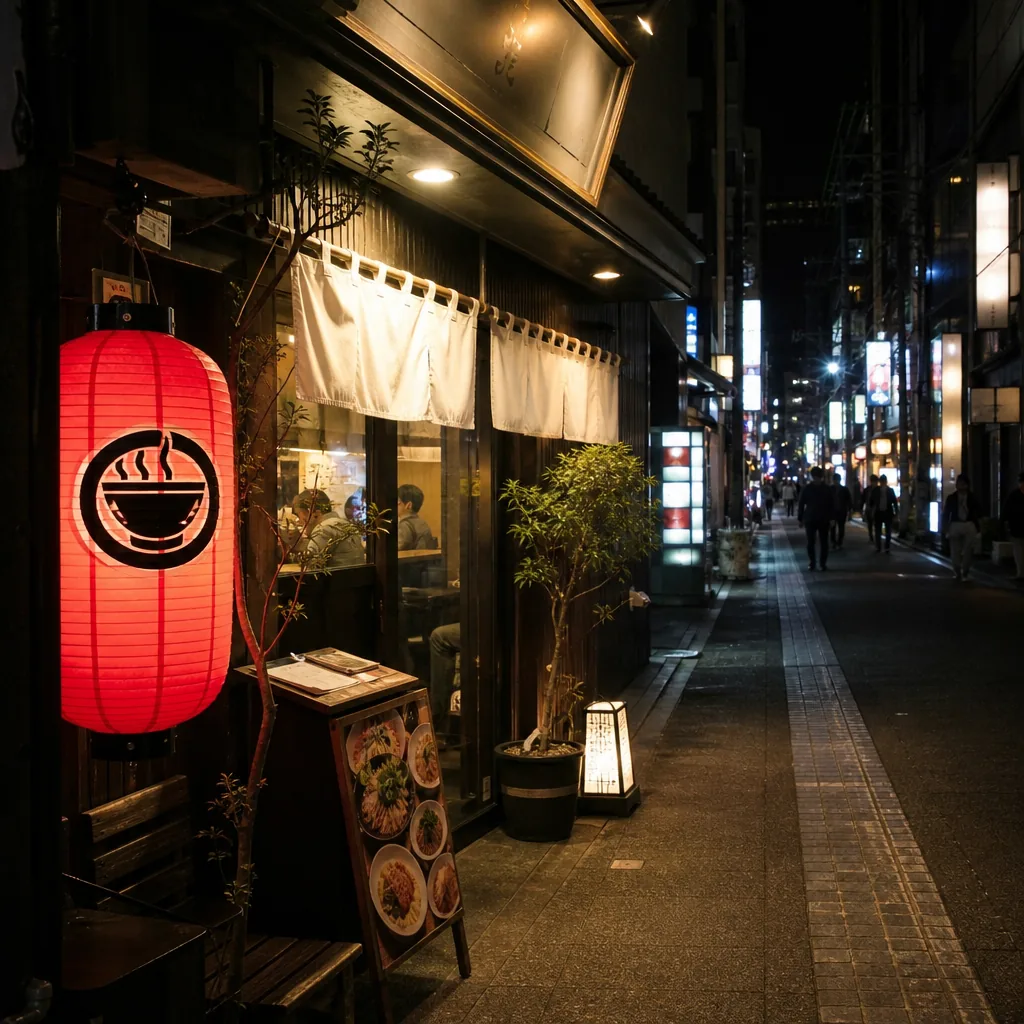
Looking for halal ramen in Kyoto after 10 p.m.? Here’s where to check, which areas are most practical, and how to verify hours and halal status.
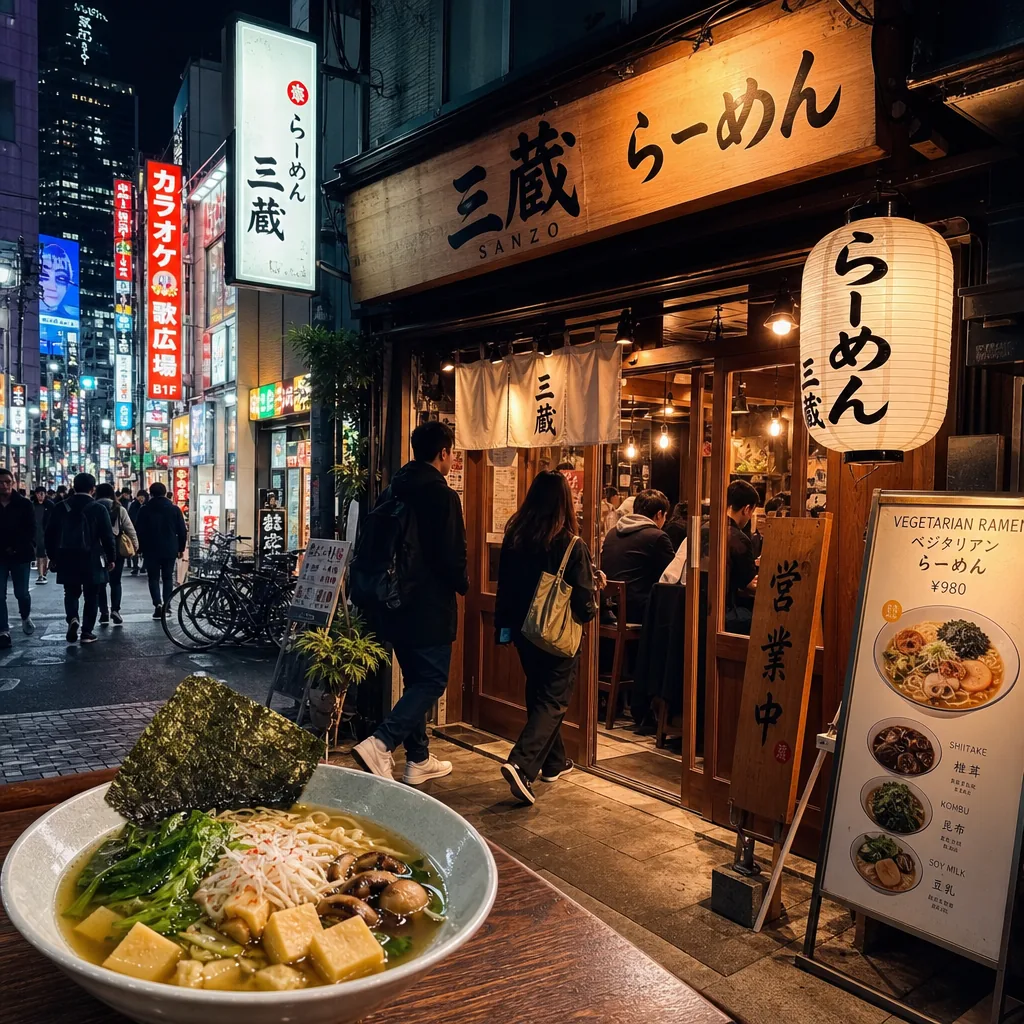
Find late-night vegetarian ramen in Tokyo by focusing on Shibuya, Shinjuku, and Roppongi, then verify broth, hours, and vegan menu details.