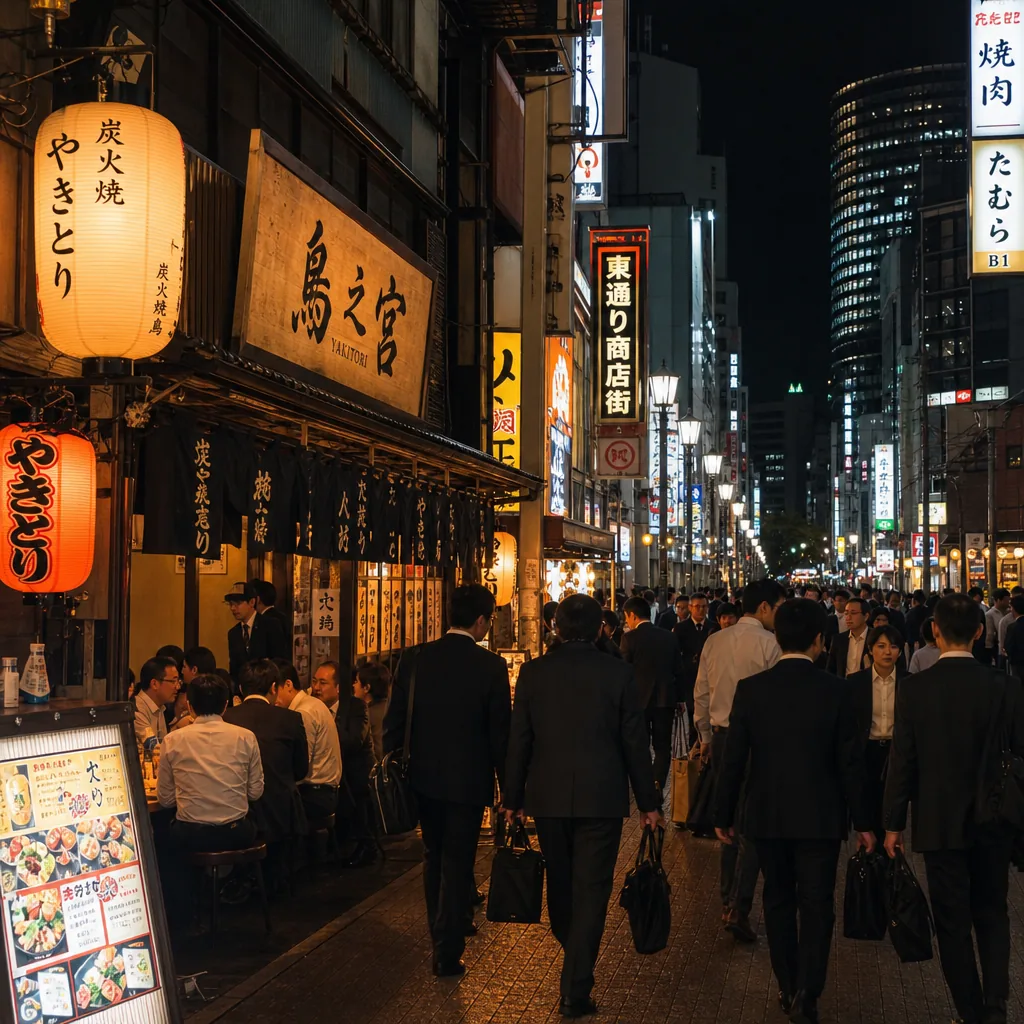
Where can I find english-friendly yakitori in Osaka after work?
Find English-friendly yakitori in Osaka after work by targeting Umeda, Namba, and Honmachi, plus booking sites and multilingual menus.
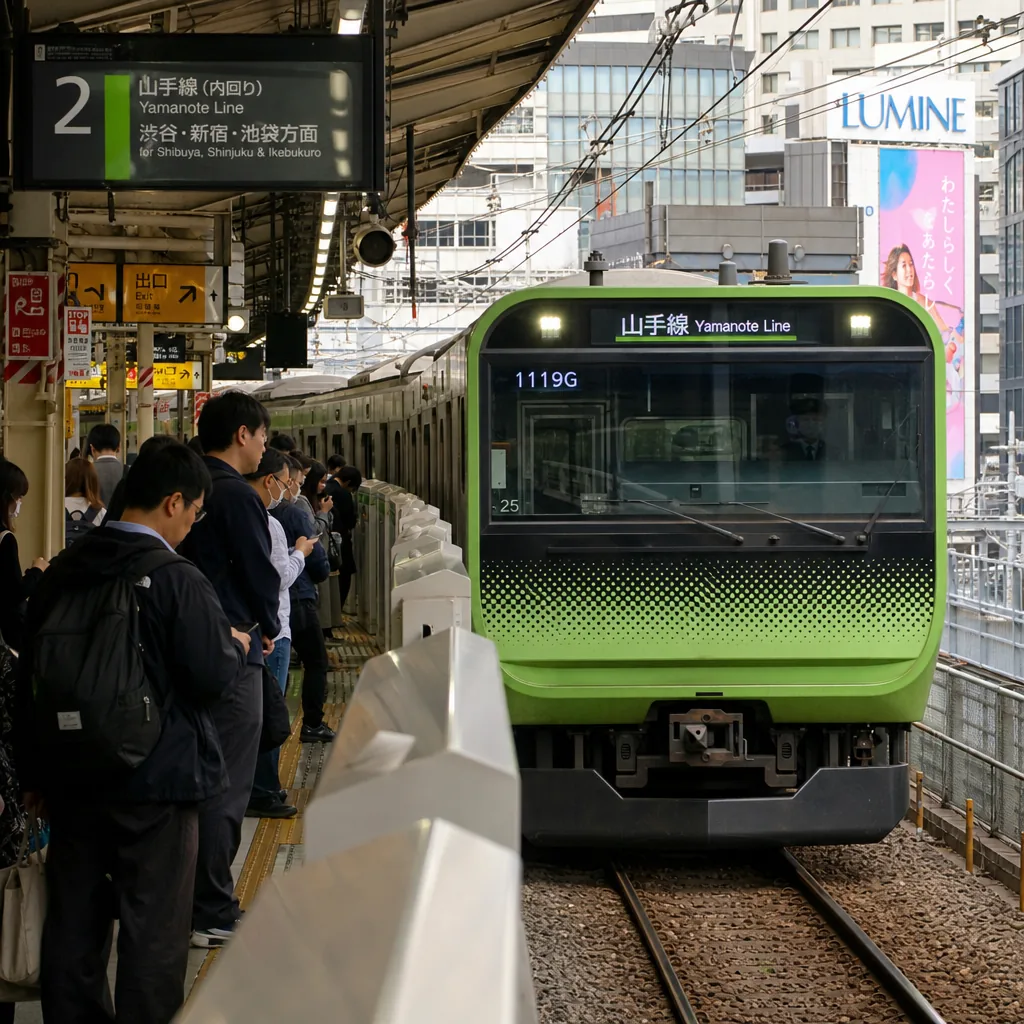
The Yamanote Line is the easiest way to move between many of Tokyo’s biggest districts, and yes, it is worth learning before your first ride. It is a JR East loop line that connects hubs such as Tokyo, Shinjuku, Shibuya, Ikebukuro, Ueno, and Shinagawa, so a little preparation can save time, money, and stress [1][2].
The Yamanote Line is one of Tokyo’s most useful rail lines because it forms a circular route around central Tokyo and stops at many of the city’s main transfer and sightseeing areas [1]. JR East operates it, and Tokyo’s official travel guidance highlights trains as the most practical way to get around the city for visitors [2]. If you are staying in Tokyo for even a few days, you will likely use it to connect neighborhoods rather than ride a taxi across the city.
For first-time visitors, the line is especially helpful because it reduces the number of separate rail systems you need to understand. One train can take you from the government and shopping cluster around Tokyo Station to nightlife and business areas like Shinjuku or Shibuya, then onward to Ueno for museums or Ikebukuro for shopping [1][2].
The Yamanote Line runs in both directions around the loop, so direction matters. JR East describes the line as a loop service, which means you can go clockwise or counterclockwise depending on which way gets you to your stop fastest [1]. If you board without checking, you may end up going the long way around the circle.
Before you board, confirm the direction on the platform display and look at the next few stations. That matters most when you are trying to reach a place like Shibuya or Shinjuku from a nearby station, because the “right” train can differ by only a few minutes but save you several extra stops [1]. JR East’s station and train status information is also useful if there is a delay or disruption [4].
Some of the best-known Yamanote stops for visitors include:
The simplest way to pay for Yamanote Line rides is with an IC card such as Suica or PASMO, which Tokyo’s official transport guidance recommends as a convenient option for rail travel [2]. JR East says Suica works as a rechargeable contactless card for travel and everyday purchases, making it a practical choice for visitors who plan to ride trains multiple times [3].
For most travelers, the process is straightforward: load money onto the card, tap in at the gate, and tap out when you arrive. This avoids buying a separate ticket each time and is especially useful when you are making frequent short hops between neighborhoods [2][3]. If you are arriving at a busy station like Tokyo or Shinjuku, using an IC card also helps reduce the time you spend in ticket lines.
Keep in mind that you still need enough balance before entering the gate. If the card is low, top it up first at a machine inside the station or at a staffed counter; otherwise, you may have to adjust your route or backtrack to add money before boarding [3].
Weekday peak periods on the Yamanote Line can be very crowded, especially in the morning commute and the evening return rush. Tokyo’s transport guidance emphasizes that rail is the main way to move around the city, which is one reason these trains become so busy during work hours [2]. On packed trains, you may need to stand shoulder to shoulder with commuters, and large luggage becomes much harder to manage.
If your schedule is flexible, travel outside the busiest hours. Even shifting your ride by 30 to 60 minutes can make a noticeable difference. This matters most at major stations such as Shinjuku and Tokyo, where station complexes are large and platform-to-exit walks can already take time before you even reach the train [1][2].
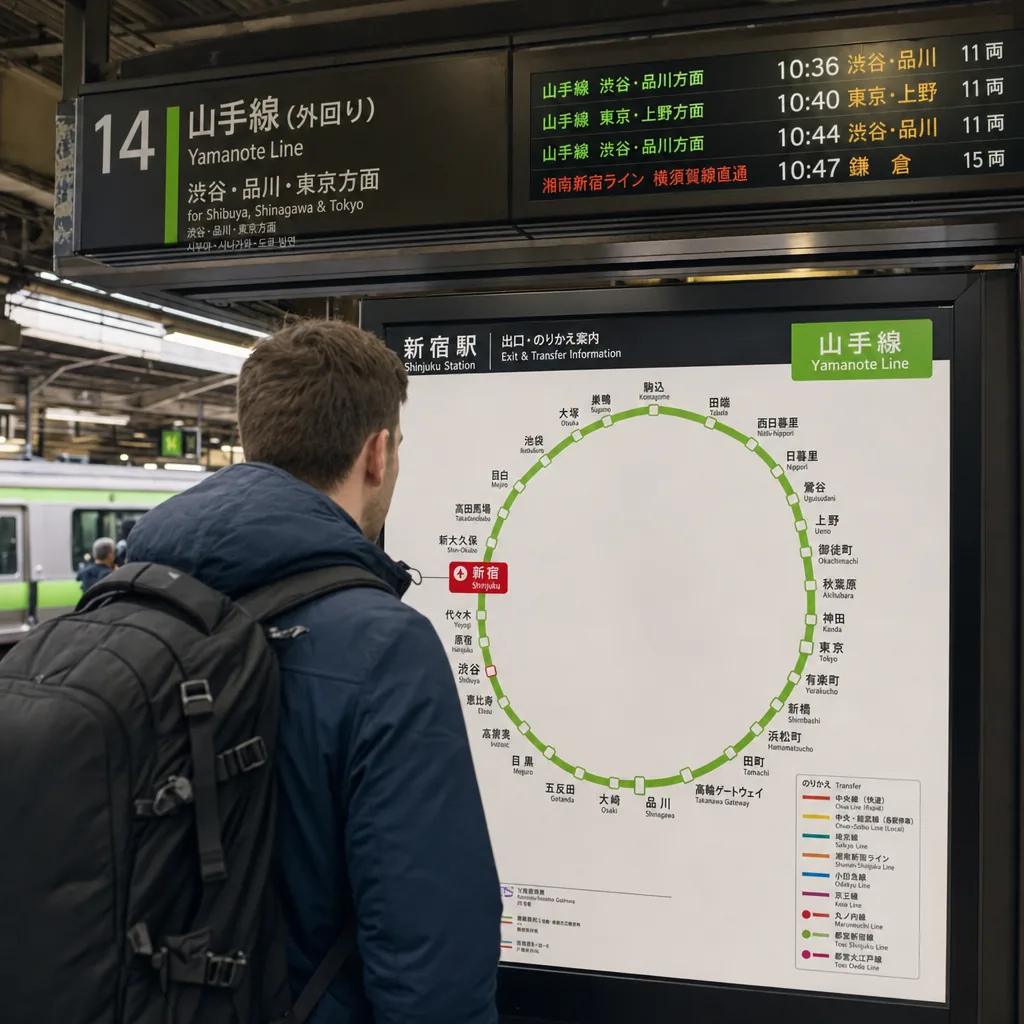
If there is a delay, check JR East’s train status page before changing plans. That can help you decide whether to wait, switch stations, or take another route [4].
Standard Japanese train etiquette applies on the Yamanote Line. Queue neatly where the markings indicate, let passengers get off before boarding, and keep your phone on silent and your voice low [2][5]. These habits are especially important on crowded trains, where even small interruptions can slow boarding.
Expect priority seating areas and accessibility features in some cars and stations, but do not assume every station will be easy to navigate quickly. Large station complexes can involve long corridors, stairs, and multiple exits, so allow extra time if you are transferring at a major hub [1][2].
A practical boarding checklist helps:
Tokyo Station, Shinjuku, Shibuya, Ikebukuro, Ueno, and Shinagawa are the most useful Yamanote Line stops for many travelers because they connect directly to other rail lines and major city districts [1][2]. If you are staying near one of these stations, the Yamanote Line can simplify nearly every day trip within Tokyo.
That said, transfer complexity is the biggest trap for newcomers. At Tokyo Station and Shinjuku especially, the station footprints are large enough that the transfer itself may take much longer than expected [1][2]. Build in extra time if you need to change trains, find the right exit, or move between different rail operators.
Use this simple rule: if your destination is near a Yamanote stop, the line is usually the easiest route; if you need a cross-city connection, the transfer may still be worth it, but check station maps first. Tokyo’s official transport pages and JR East station information are the best tools for verifying routes before you leave [2][4][5].
Most first-time problems are easy to prevent. The most common mistake is boarding the wrong direction on the loop, which can add many minutes to your trip [1]. Another is assuming every major station is easy to cross quickly; in reality, some station complexes are large and can be confusing even when the train itself is simple to use [1][2].
Other avoidable mistakes include arriving at rush hour with bulky luggage, forgetting to load your IC card, and not checking JR East’s service information when there is a delay [3][4]. If you avoid those errors, the Yamanote Line becomes exactly what Tokyo travelers want it to be: fast, frequent, and simple to use across the city’s biggest districts [1][2].
CallButler is a multilingual concierge service that handles research, coordination, and bookings so you do not have to navigate language barriers or unfamiliar systems alone. If you need help related to What should I know before riding the Yamanote Line in Tokyo? or the tasks around it, our team can step in to manage the details and keep things moving smoothly.
Find English-friendly yakitori in Osaka after work by targeting Umeda, Namba, and Honmachi, plus booking sites and multilingual menus.
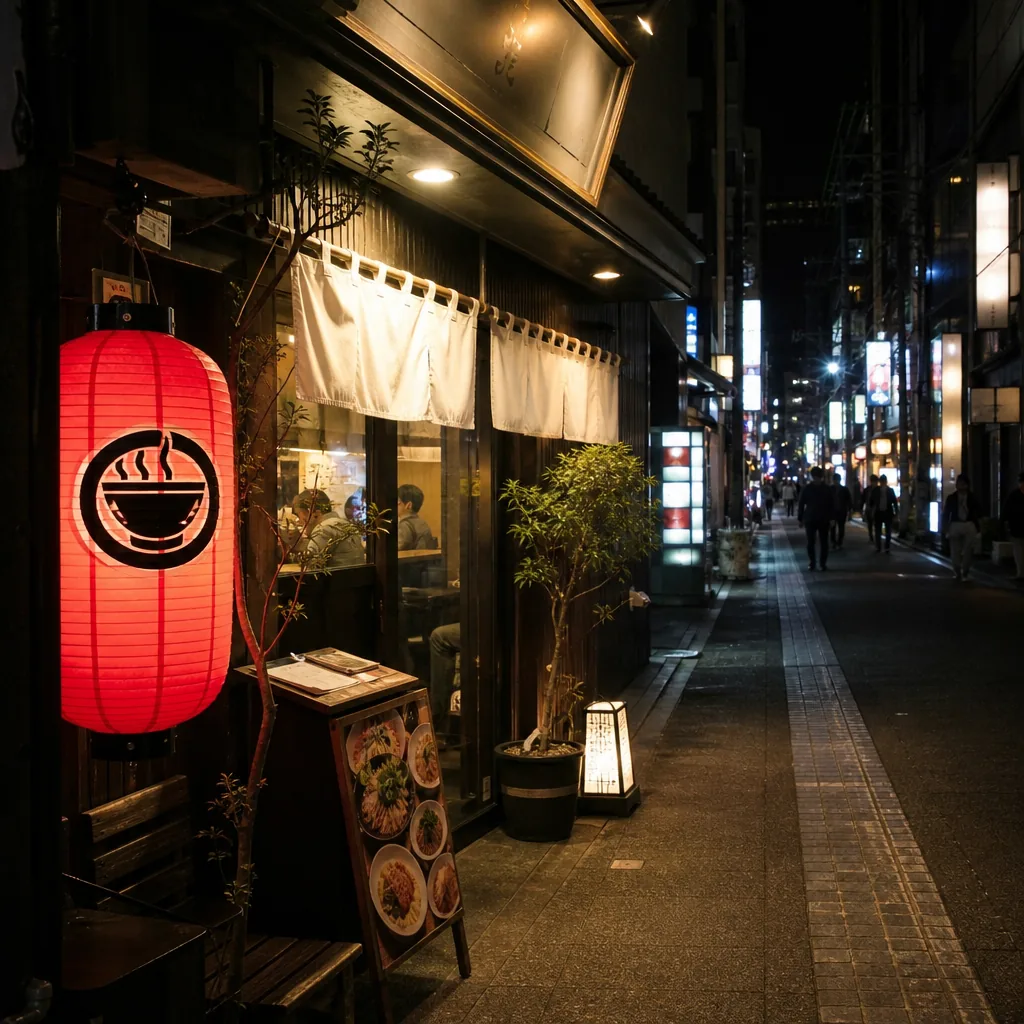
Looking for halal ramen in Kyoto after 10 p.m.? Here’s where to check, which areas are most practical, and how to verify hours and halal status.
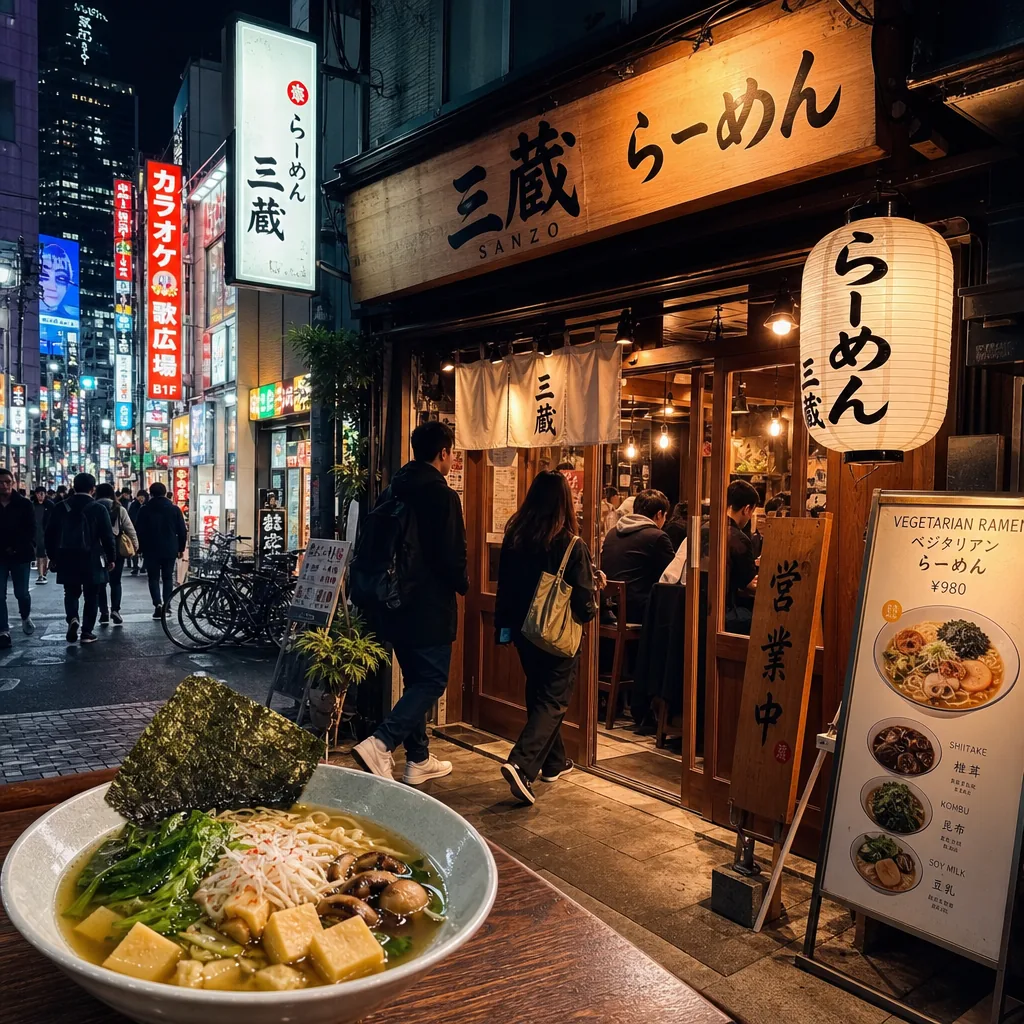
Find late-night vegetarian ramen in Tokyo by focusing on Shibuya, Shinjuku, and Roppongi, then verify broth, hours, and vegan menu details.