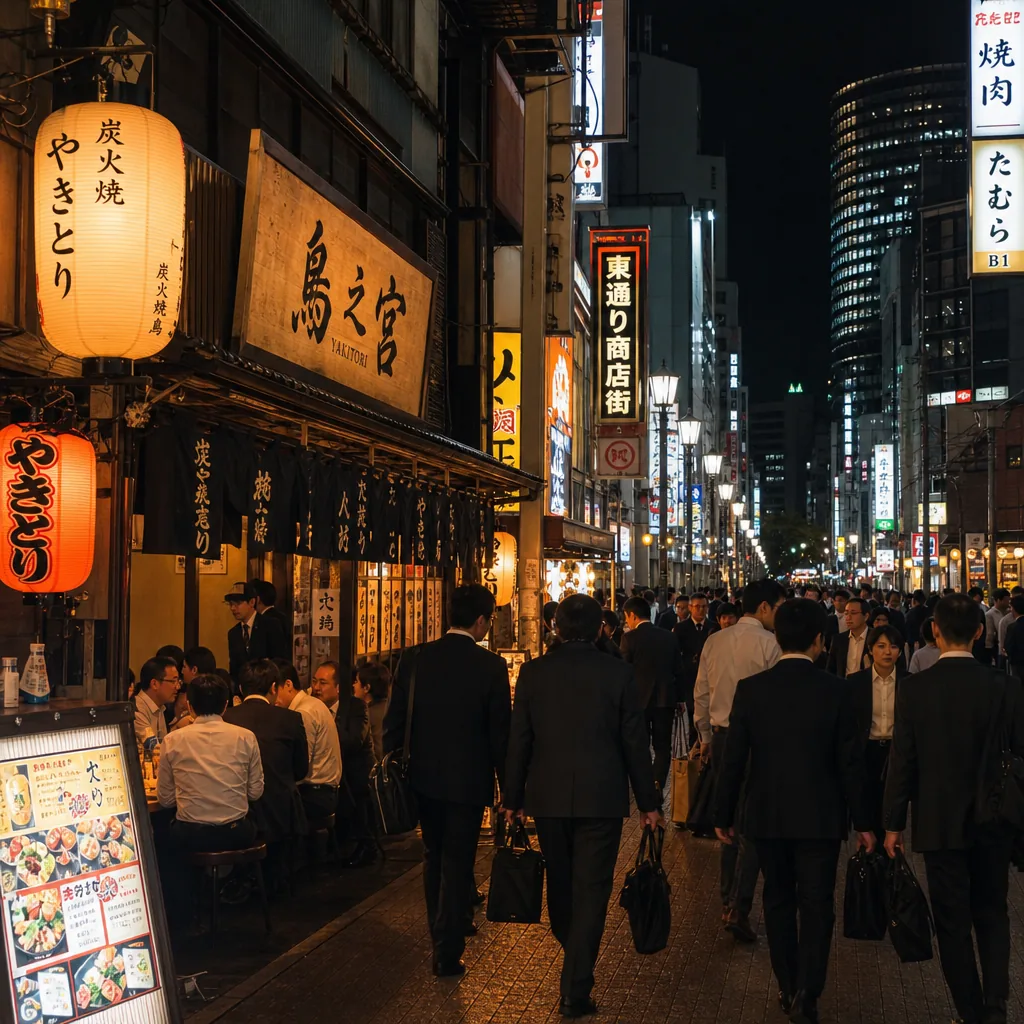
Where can I find english-friendly yakitori in Osaka after work?
Find English-friendly yakitori in Osaka after work by targeting Umeda, Namba, and Honmachi, plus booking sites and multilingual menus.
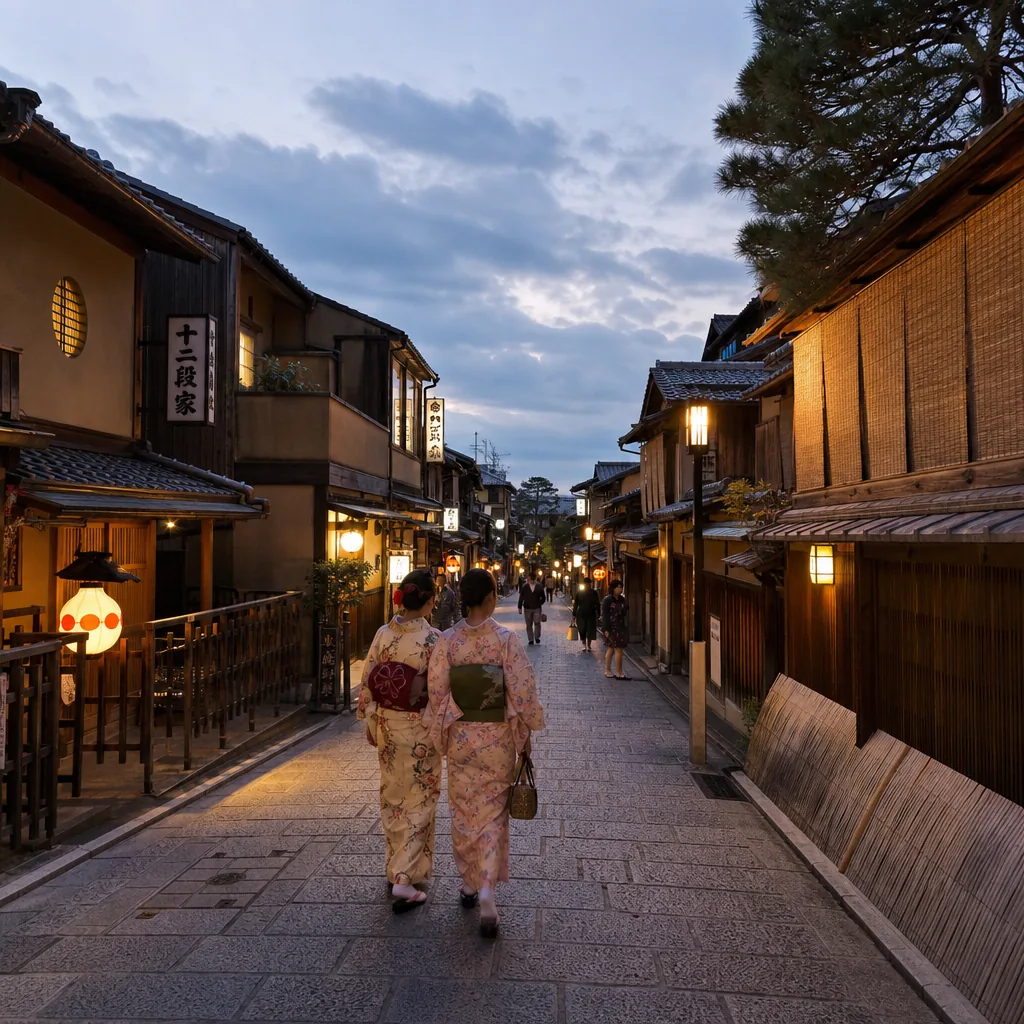
A Kyoto geisha district is not a theme park; it is a living neighborhood where geiko and maiko live, work, and move between appointments. In places like Gion and Pontocho, the best first-time visit is quiet, respectful, and brief: stay on public streets, do not block anyone’s path, and treat the area as a real residential and business district rather than a photo backdrop [1][3][5].
Kyoto’s famous geisha districts, especially Gion, are historic quarters where traditional entertainment culture still operates alongside everyday local life [1]. Kyoto City describes Gion as an area with traditional machiya townhouses, teahouses, and streets associated with geiko and maiko activity, but it also emphasizes that these are normal living spaces, not staged attractions [1].
That distinction matters because many visitors arrive expecting constant street performances. In reality, sightings are incidental: you may see a maiko or geiko walking to work, but you should not count on it, and you should never chase that experience at the expense of residents’ privacy or movement [1][5].
The two most common areas for first-timers are Gion and Pontocho. Gion is the better-known district for traditional streetscapes and geiko culture, while Pontocho is a narrow alley area lined with restaurants and bars, also noted by Kyoto City as a compact, atmospheric dining street near the Kamo River [1][3].
If you want a more structured cultural visit, Gion Corner at Yasaka Hall offers scheduled performances that introduce elements of Kyoto arts in a formal setting [4]. That is a better fit than trying to observe everything from the street, because it gives you a clear audience space and avoids disturbing local routines [4][5].
The simplest rule is to behave like you are walking through someone else’s neighborhood, because you are. Kyoto City’s visitor guidance stresses manners such as keeping noise down, respecting private property, and not interfering with daily life [5]. In Gion, that means staying alert, moving along without crowding sidewalks, and giving way immediately if someone is passing [1][2].
Do not stop geiko or maiko in the street for conversations or selfies. Kyoto City’s notice on tourist manners in Gion and surrounding areas specifically discourages nuisance behavior that disrupts local life, including entering private lanes and obstructing movement [2]. Even if someone is wearing kimono, do not assume they are available for photos or interaction; many people in Kyoto wear kimono for work, rentals, or personal style [5].
Useful street etiquette in practice:
Photography in Kyoto’s geisha districts requires restraint. Kyoto City explicitly warns against nuisance tourism behavior in Gion, including unauthorized photography and entry into private lanes, because these practices can intrude on residents and workers [2]. In practical terms, that means no flash, no following performers for repeated shots, and no blocking a doorway or alley for a perfect frame [2][5].
If you are lucky enough to see a geiko or maiko on the street, think of it as a brief public moment, not an invitation to create a photo session. A respectful snapshot from a distance is far better than a close-up taken after someone has clearly signaled that they want to move on [2][5].
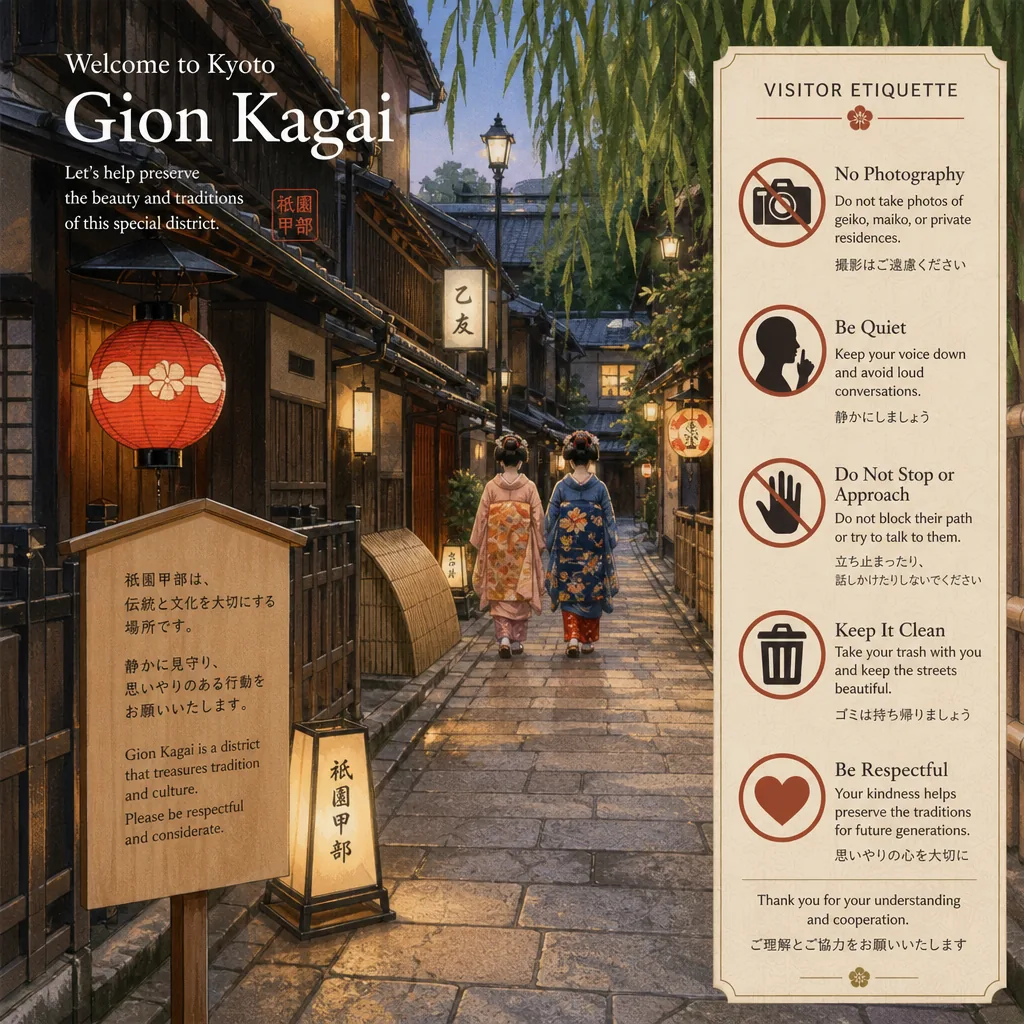
For a calmer visit, late afternoon or early evening is often the most atmospheric time, especially if you want to see lanterns, restaurant façades, and the transition from daytime quiet to evening service [1][3]. But those are also active times for residents and businesses, so the goal should be a short, careful walk rather than a long lingering stay [1][5].
Morning can be quieter for general sightseeing, but you are less likely to encounter geiko or maiko moving between appointments. If your priority is respectful observation of the district itself—rather than people-watching—earlier hours can be a good choice because sidewalks are less crowded [1][5].
For visitors who want a dependable cultural experience, booking a performance at Gion Corner is more predictable than waiting on the street. The venue presents scheduled programs in a formal setting, which removes the uncertainty and privacy concerns of street encounters [4].
Expect atmosphere first, sightings second. The district’s value lies in its preserved streets, traditional architecture, and ongoing local businesses, not in guaranteed performer appearances [1][3]. If you do see geiko or maiko, they are usually on their way to work, so the best response is to let them pass without comment [1][2].
If you want to pair your walk with a meal, Pontocho is one of the city’s best-known dining streets and a practical place for dinner after a quiet stroll [3]. For performance-based culture, Gion Corner at Yasaka Hall is the clearest first-time option because it turns a potentially intrusive street encounter into a planned, ticketed visit [4].
One of the biggest mistakes is assuming every kimono-clad person is a geiko or maiko. Another is lingering in narrow streets to try for a photo, which creates exactly the kind of congestion Kyoto City asks visitors to avoid [2][5].
Also avoid entering alleys or gates marked private, even briefly. In a district like Gion, those spaces are part of people’s homes and workplaces, and Kyoto City’s visitor notice makes clear that private-lane entry is not acceptable behavior [2].
Plan a short route before you arrive. A simple first-timer plan might be: walk through Gion for atmosphere, continue toward a scheduled cultural program at Gion Corner if you have a booking, and finish with dinner in Pontocho [1][3][4]. That sequence keeps your visit organized and helps reduce aimless wandering, which is often when visitors end up blocking traffic or entering sensitive spaces [2][5].
Carry small cash and arrive with realistic expectations. Kyoto’s geisha districts reward patience and courtesy more than effort to “collect” a sighting. If you move quietly, stay on public streets, and leave private spaces alone, you will have a better visit and help preserve the very culture you came to see [1][2][5].
CallButler is a multilingual concierge service that handles research, coordination, and bookings so you do not have to navigate language barriers or unfamiliar systems alone. If you need help related to What should first-time visitors know before a Kyoto geisha district? or the tasks around it, our team can step in to manage the details and keep things moving smoothly.
Find English-friendly yakitori in Osaka after work by targeting Umeda, Namba, and Honmachi, plus booking sites and multilingual menus.
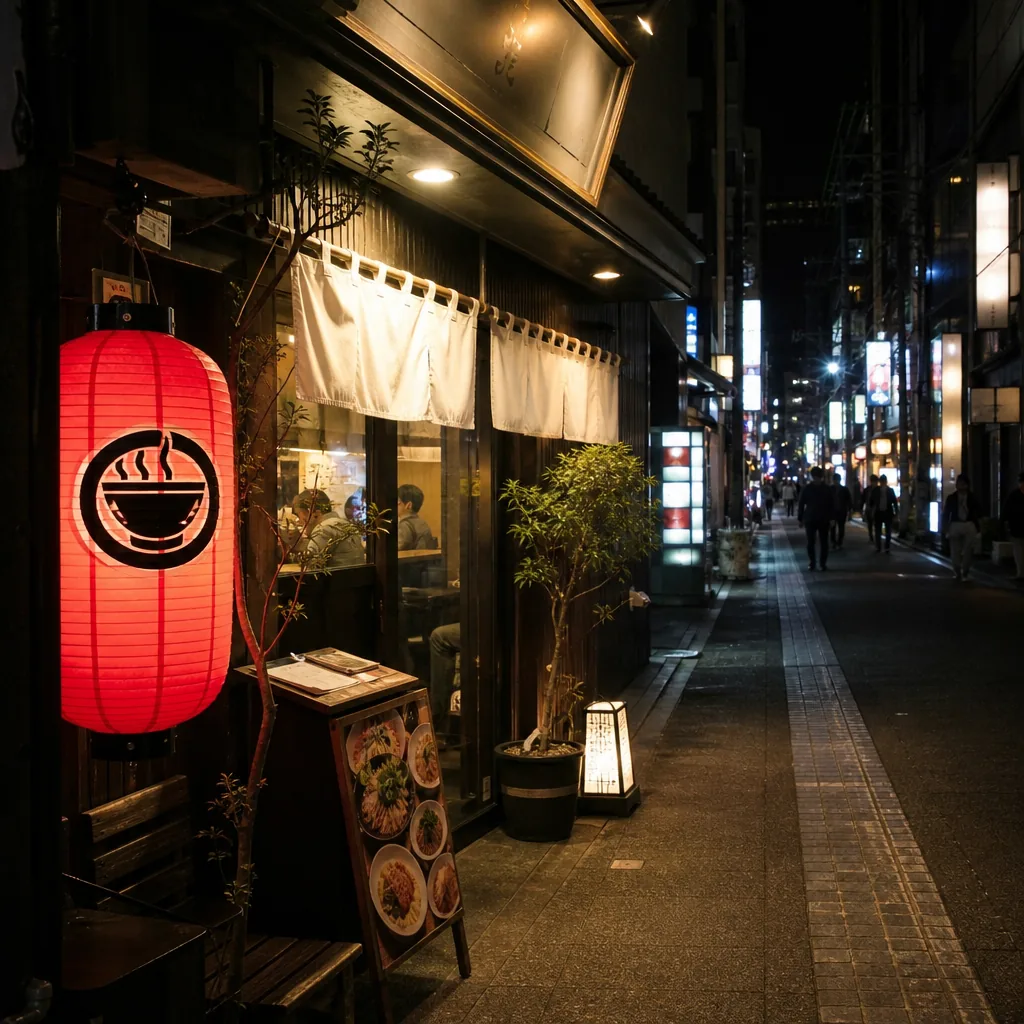
Looking for halal ramen in Kyoto after 10 p.m.? Here’s where to check, which areas are most practical, and how to verify hours and halal status.
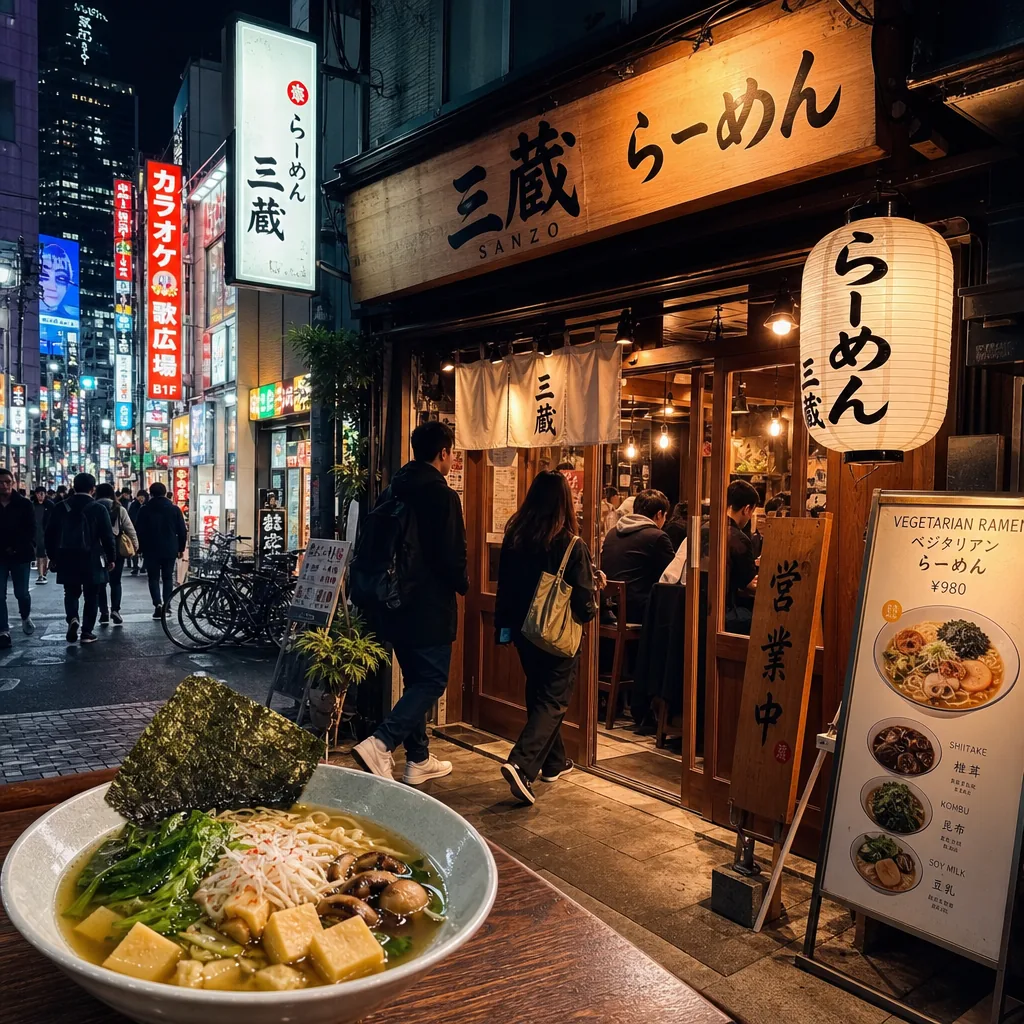
Find late-night vegetarian ramen in Tokyo by focusing on Shibuya, Shinjuku, and Roppongi, then verify broth, hours, and vegan menu details.