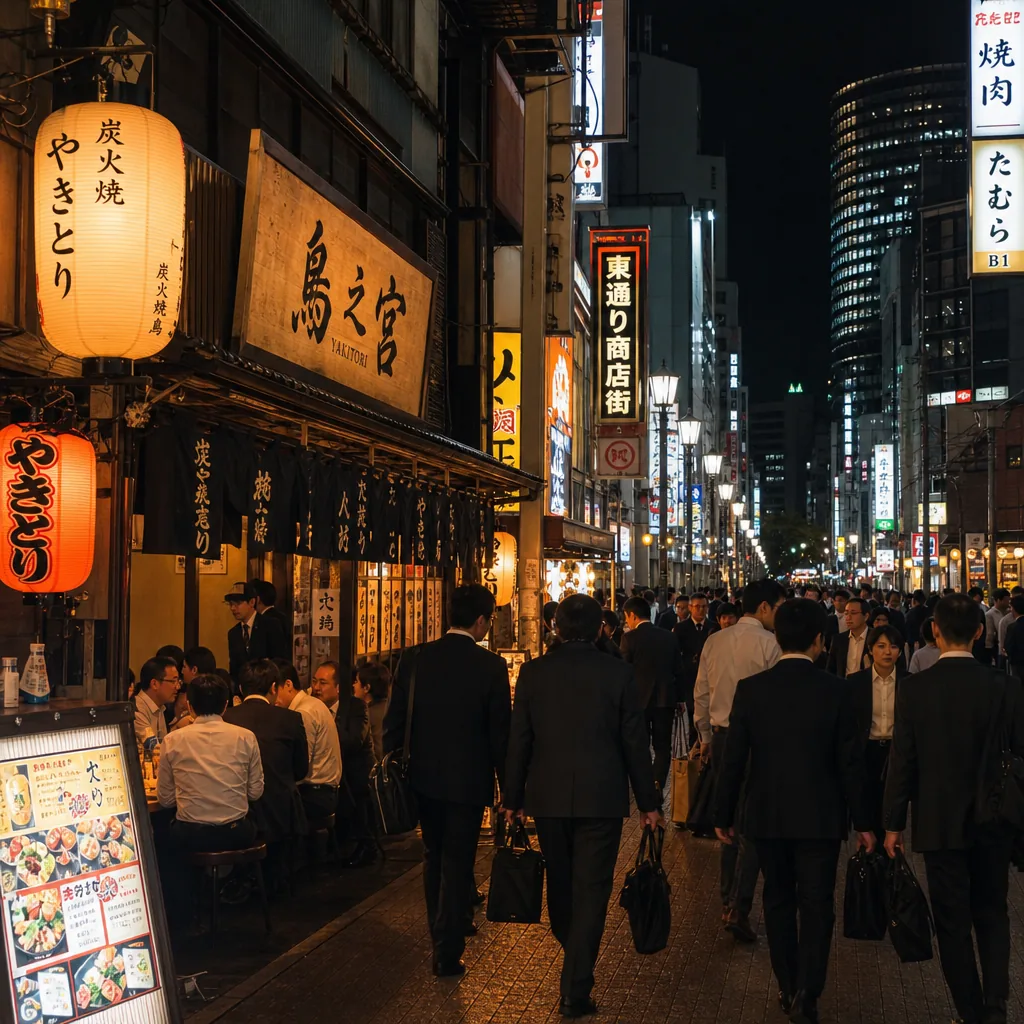
Where can I find english-friendly yakitori in Osaka after work?
Find English-friendly yakitori in Osaka after work by targeting Umeda, Namba, and Honmachi, plus booking sites and multilingual menus.
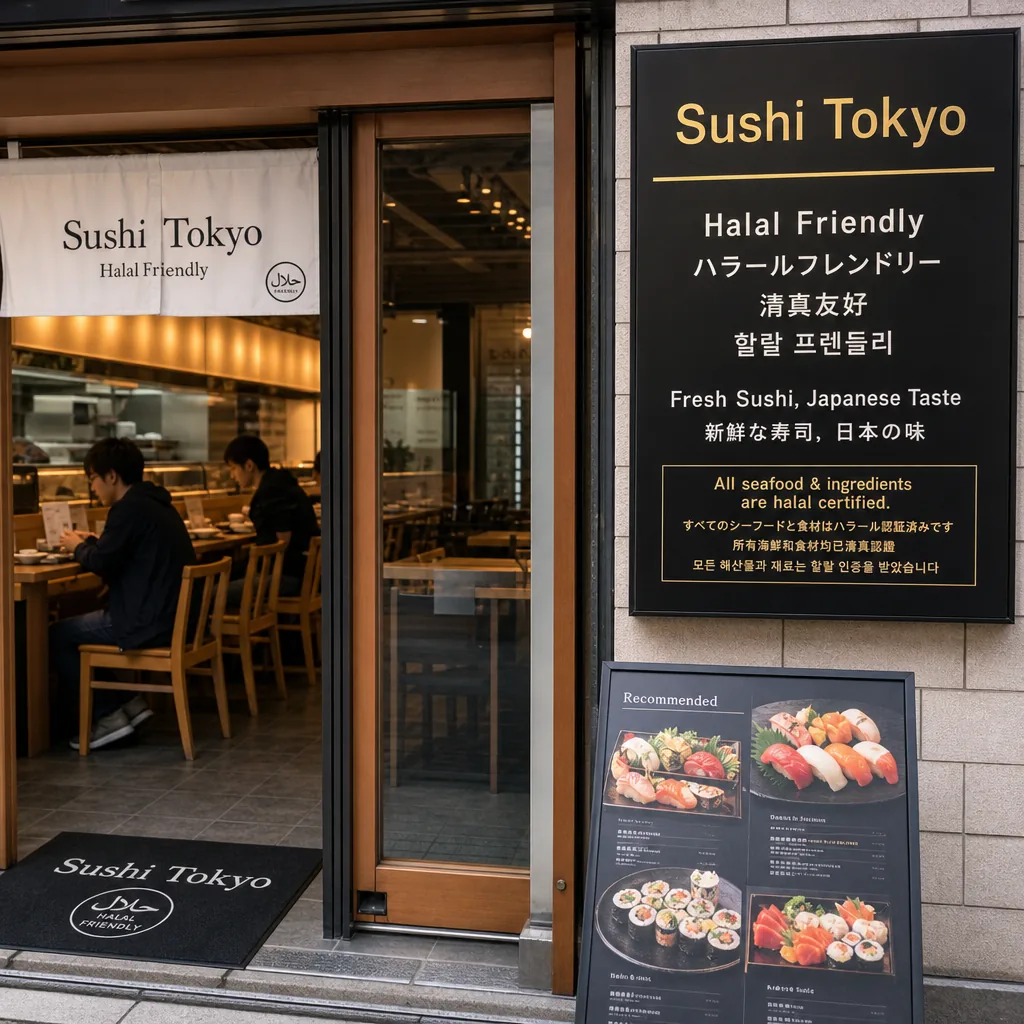
Tokyo does have halal-friendly sushi options, but the safest choices are restaurants that clearly state halal-certified ingredients, alcohol-free seasoning, or Muslim-friendly preparation. In practice, the best spots are usually in central tourist areas like Asakusa and Shibuya, where operators are more likely to post current ingredient and certification details [1][2].
Halal-friendly sushi is not just about the fish. In Tokyo, the main issue is often the seasoning and prep process: sushi rice is commonly flavored with vinegar and sometimes mirin, soy sauce may contain alcohol, and soups or broths can use dashi made with non-halal ingredients [1]. That is why a restaurant can look “seafood-only” and still not be fully halal-friendly.
The Tokyo Convention & Visitors Bureau advises Muslim visitors to check whether a restaurant uses halal-certified ingredients, avoids alcohol and pork-derived ingredients, and keeps tools or preparation areas separate when possible [1]. Tokyo Metropolitan Government also directs visitors to multilingual Muslim-friendly information, which is useful because policies can vary by restaurant and can change over time [5].
For travelers, the key question is not “Does this place serve sushi?” but “How are the rice, sauces, and prep surfaces handled?” That distinction is what separates a truly useful halal-friendly sushi stop from one that only happens to sell fish.
One of the most useful options is Sushi Ken Asakusa, which presents itself on its official site as a halal sushi restaurant in Asakusa and says it uses halal-friendly ingredients and caters to Muslim diners [3]. Asakusa is a practical base for food exploration because it is one of Tokyo’s most visited districts and already appears prominently in city halal guidance [1].
Tokyo Shokudo is another name worth knowing. Its official site positions it as a halal restaurant in Tokyo and highlights Muslim-friendly service, making it a reliable starting point for diners who want sushi or sushi-adjacent Japanese dishes with clearer ingredient standards [4]. Because the restaurant publishes its own information, it is a better reference than older blog posts that may be out of date [4].
For broader search-based planning, Halal Gourmet Japan maintains a Tokyo restaurant search that can help you confirm current listings before you go [2]. This is especially useful if you want to compare options by neighborhood rather than commit to one fixed restaurant. In a city where store policies can change, a current directory can help you avoid wasted travel time [2].
When you compare places, look for these visible signals on the official website or menu page:
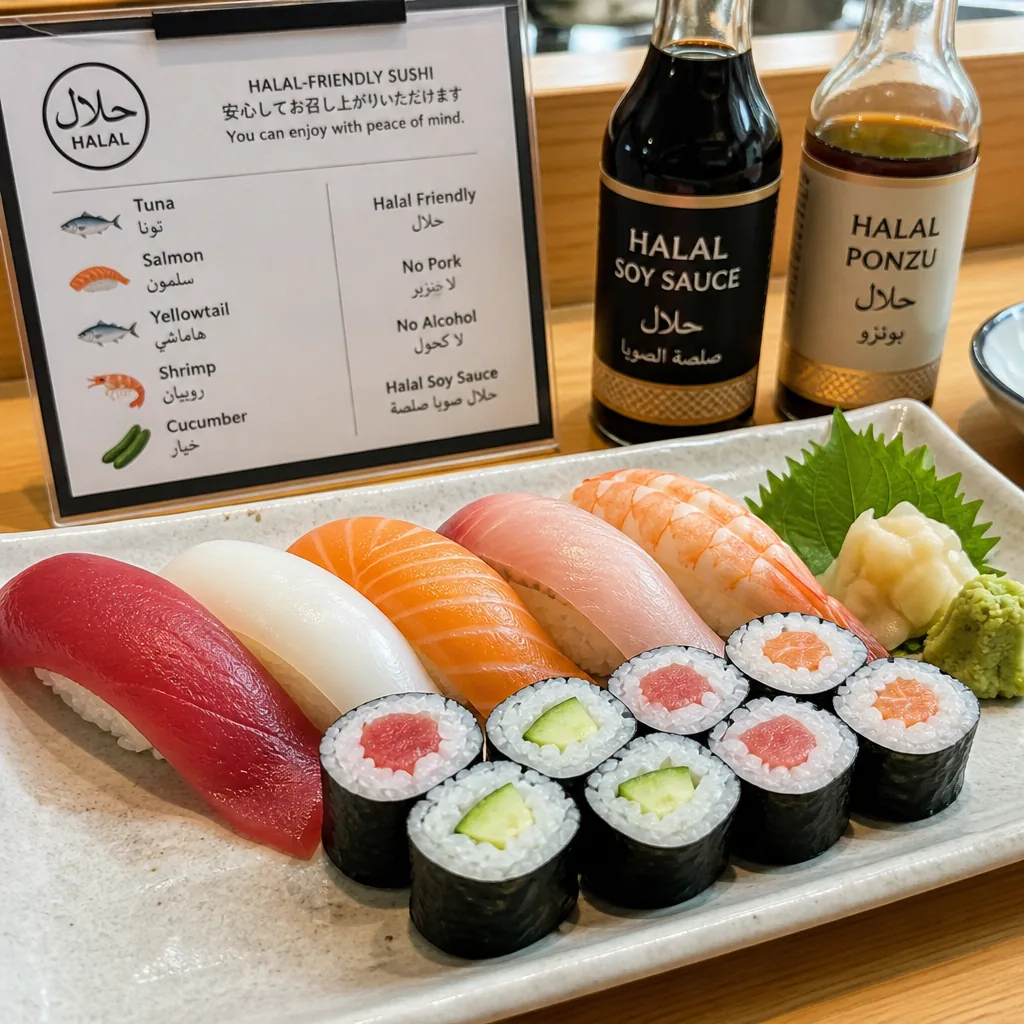
Before ordering, ask directly about the rice vinegar, soy sauce, mirin, and dashi. These are the most common ingredients that can affect permissibility, and they are easy to overlook if you only ask whether the fish is fresh. Tokyo’s official Muslim-friendly guidance specifically points diners toward verifying ingredients and asking about how food is prepared [1].
A simple checklist can help:
This matters especially in Tokyo because some restaurants are fully halal while others are only “Muslim-friendly.” A halal-certified menu usually gives more confidence, but a Muslim-friendly menu may still be suitable if you confirm the details directly. The Tokyo Convention & Visitors Bureau’s guidance is clear that travelers should verify current conditions, not assume every labeled option works the same way [1].
In Tokyo, the easiest way to avoid surprises is to plan around restaurants that publish their own halal or Muslim-friendly information. That means checking the official website before you go, saving a screenshot, and bringing a few short questions in English or Japanese. Tokyo Metropolitan Government’s multilingual travel resources are useful for this kind of practical trip planning [5].
If you are ordering in person, these questions are enough for most places:
It also helps to know which areas are easiest. Asakusa is strong for visitor-facing halal dining and is home to Sushi Ken Asakusa [3]. Shinjuku and Shibuya also appear frequently in halal restaurant search results and are convenient for travelers staying in central Tokyo [2]. If you are sightseeing in those districts anyway, you can keep travel time low and choose from the most current options.
One more practical point: don’t rely on the label “seafood restaurant” as proof of halal status. A sushi bar may still use mirin, sake-based sauces, or shared prep equipment. The safest approach in Tokyo is to treat official restaurant pages and current city guidance as the final word [1][2][5].
For visitors, Asakusa is usually the easiest neighborhood for halal-friendly sushi because it combines tourism infrastructure with restaurants that actively market Muslim-friendly service [1][3]. If you are spending a day around Senso-ji or nearby shopping streets, this is a logical place to eat.
Shinjuku and Shibuya are also practical because they are central, well-connected, and well represented in Tokyo halal restaurant searches [2]. Even when a specific sushi restaurant is not fully halal-certified, these districts tend to have more visible English-language menu information than less-touristed parts of the city [2].
For a smoother sushi experience in Tokyo, follow this sequence: choose a restaurant with current official halal or Muslim-friendly information, verify rice and sauce ingredients, and confirm prep practices before ordering. That approach gives you the best chance of enjoying sushi without guesswork, and it works especially well in Asakusa, Shinjuku, and Shibuya [1][2][3][4].
CallButler is a multilingual concierge service that handles research, coordination, and bookings so you do not have to navigate language barriers or unfamiliar systems alone. If you need help related to What are the best halal-friendly sushi spots in Tokyo? or the tasks around it, our team can step in to manage the details and keep things moving smoothly.
Find English-friendly yakitori in Osaka after work by targeting Umeda, Namba, and Honmachi, plus booking sites and multilingual menus.
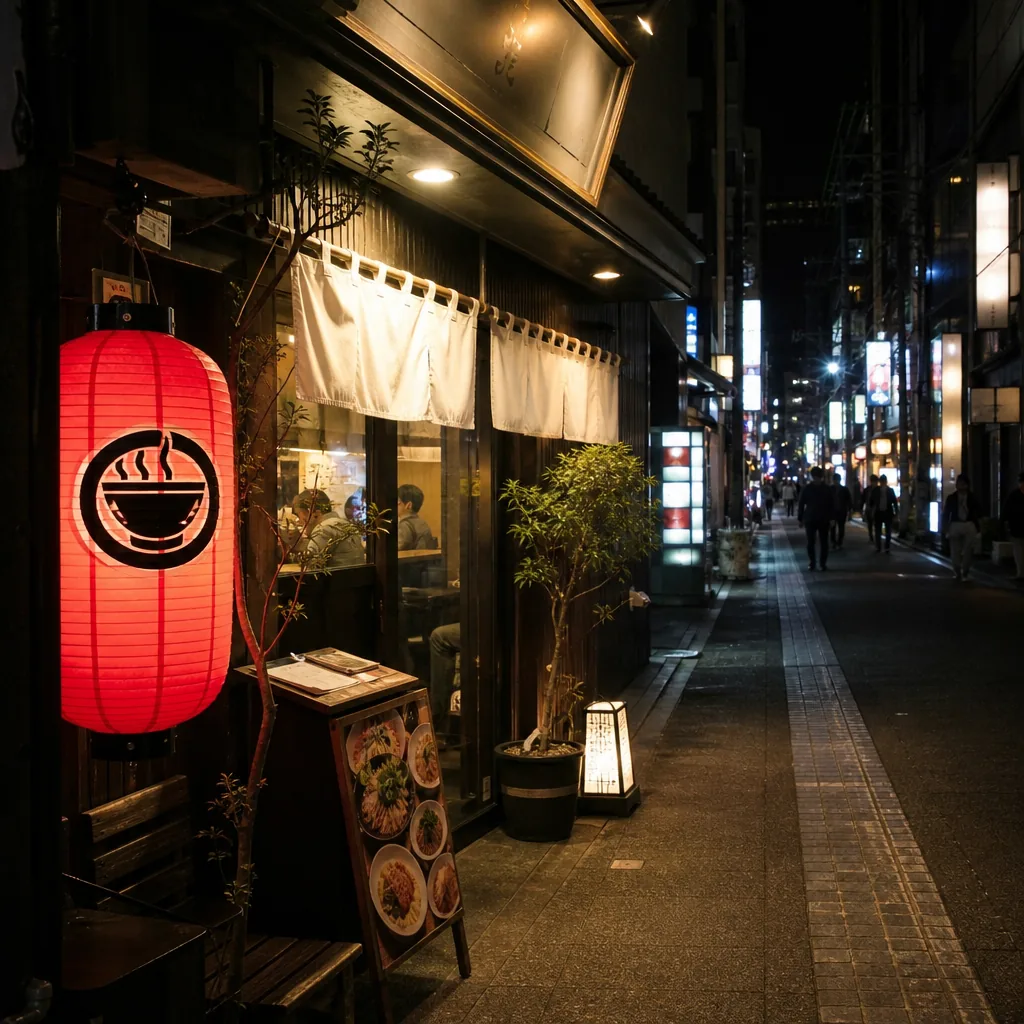
Looking for halal ramen in Kyoto after 10 p.m.? Here’s where to check, which areas are most practical, and how to verify hours and halal status.
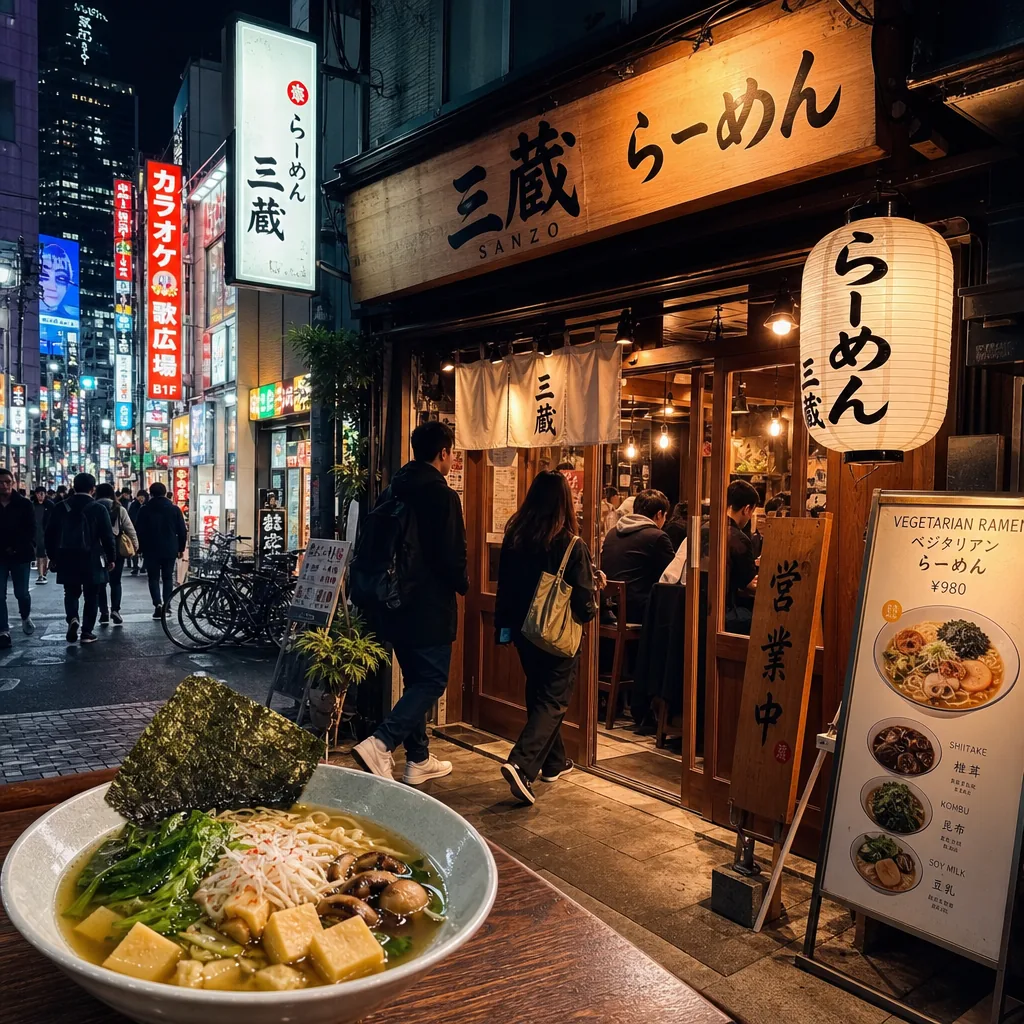
Find late-night vegetarian ramen in Tokyo by focusing on Shibuya, Shinjuku, and Roppongi, then verify broth, hours, and vegan menu details.