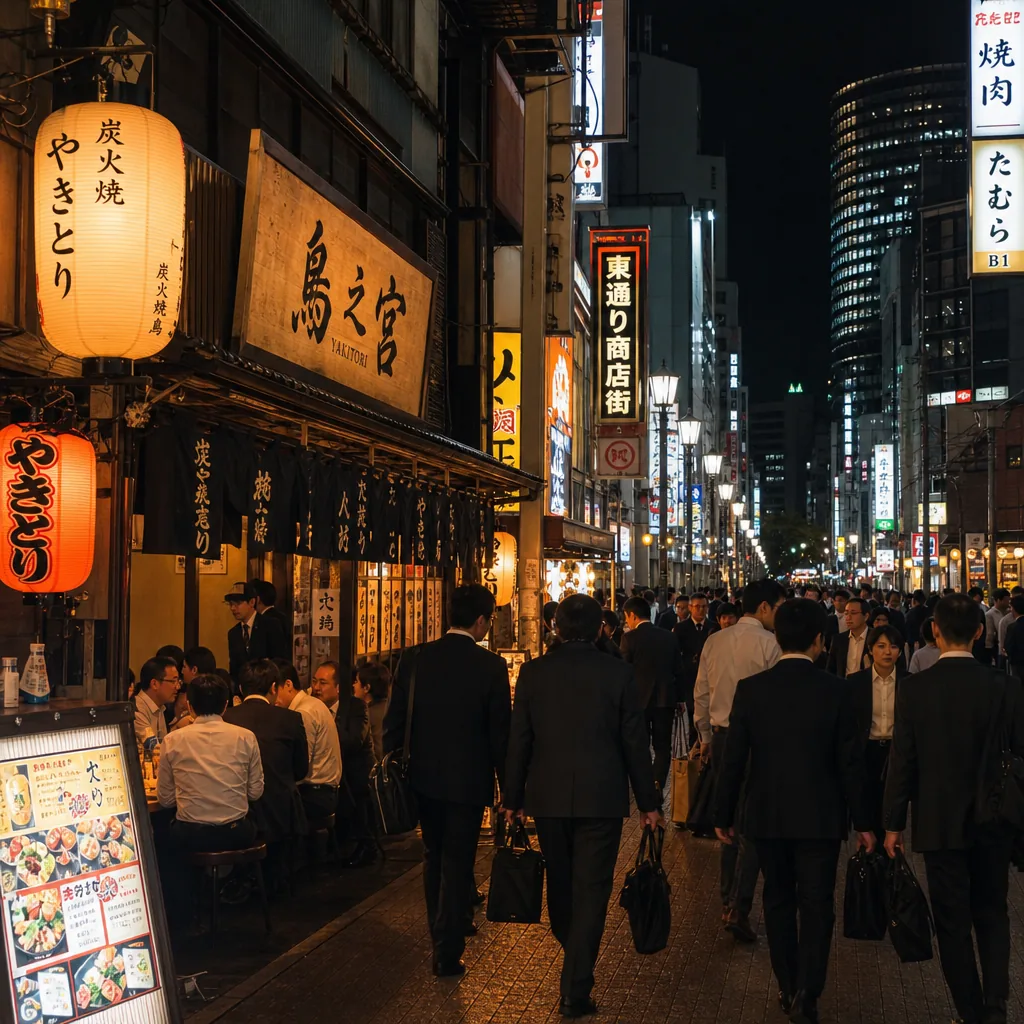
Where can I find english-friendly yakitori in Osaka after work?
Find English-friendly yakitori in Osaka after work by targeting Umeda, Namba, and Honmachi, plus booking sites and multilingual menus.
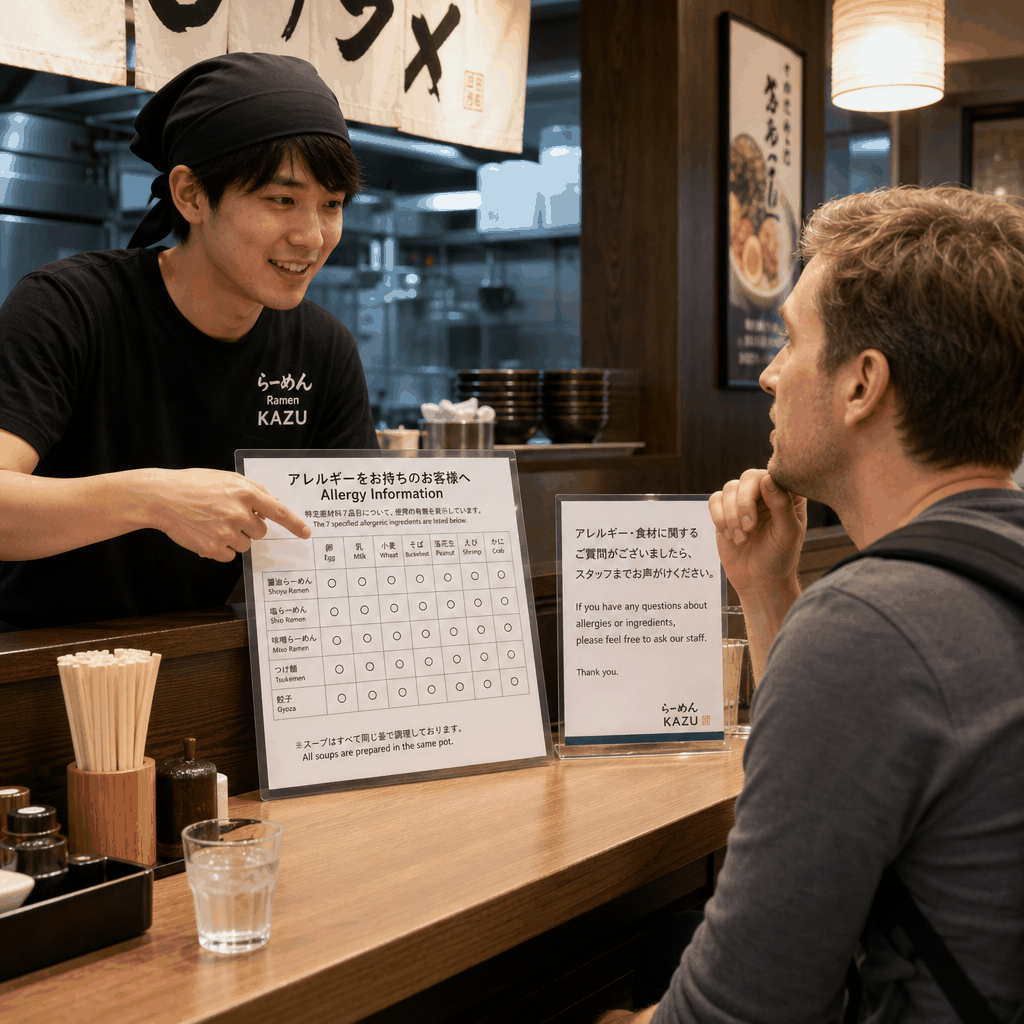
Yes—if you prepare a few exact Japanese phrases, check the restaurant’s allergen information first, and tell staff your specific allergen before ordering. In Tokyo, the safest approach is to confirm the noodles, broth, tare, and toppings one by one, because ramen often contains wheat, soy, sesame, egg, or seafood ingredients that are not obvious from the menu [1][2].
Before you sit down, look for a shop that publishes ingredient or allergen information on its website, menu, or official food guide page. Japan’s Consumer Affairs Agency requires labeling for eight mandatory allergens—shrimp, crab, wheat, buckwheat, eggs, milk, peanuts, and walnuts—so that is the first place to check [1]. The Ministry of Agriculture, Forestry and Fisheries also advises consumers to verify allergen details ahead of time and not rely on appearance alone [4].
In Tokyo, that means checking chain restaurant sites, tourist-friendly venue pages, and any posted allergen charts before you enter. JNTO recommends contacting the restaurant directly when possible, because policies vary and ingredient information may change by store or seasonal menu [2][5].
Simple Japanese works best. JNTO specifically recommends stating your allergy clearly and early, and asking direct questions about ingredients and preparation [2]. Start with a short declaration, then follow with the ingredient you need to avoid.
If your allergy is serious, say so plainly. For example: “Arerugī ga arimasu. Komeru no de, shokuzai o kakunin shitai desu” means “I have allergies. I want to confirm the ingredients before I order.” That extra sentence helps staff understand that this is a safety issue, not a preference [2][5].
Ramen is difficult because several parts of the dish can contain allergens. The noodles are commonly made with wheat, the broth may include soy sauce or seafood stock, and toppings often include egg, sesame, or fish-based items. Even when a menu looks simple, the hidden ingredients can be in the tare, seasoning oil, or soup base [1][2].
Cross-contact is another issue. JNTO and Japan Safe Travel both warn that kitchens may use shared pots, ladles, strainers, and prep surfaces, so a restaurant may not be able to guarantee an allergen-free bowl even if a topping is removed [2][5].
At many ramen shops, staff may be able to leave off a topping, but they may not be able to change the noodles or broth. That is why “no egg” is often much easier than “no wheat” or “no soy.” If you need a completely separate cooking process, ask before you sit down whether the kitchen can handle that request [2][5].
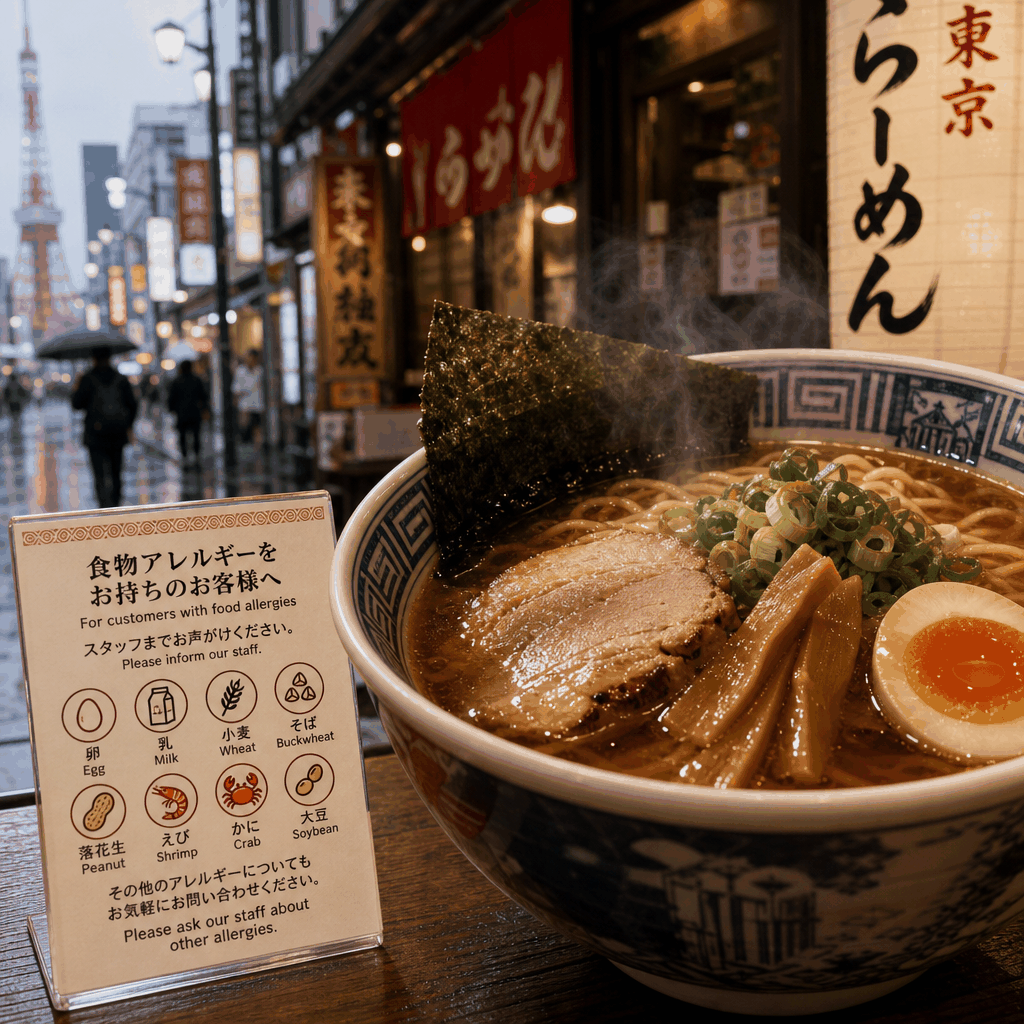
Tokyo has a broad range of dining options, from major chains to small neighborhood shops in areas like Shinjuku, Shibuya, and Asakusa. The Tokyo Metropolitan Government’s tourism guidance encourages visitors to use official information pages and visitor-friendly services, but it does not guarantee that every restaurant can accommodate every allergy [3]. In practice, the response you get will usually fall into one of three categories:
That last answer is not a failure—it is useful information. If the staff cannot confirm the broth, noodles, or shared equipment, it is safer to choose another meal. In Japan, official guidance from JNTO and the consumer authorities consistently emphasizes checking first and switching plans when confirmation is not possible [1][2][5].
Use this process before and during your order. It is short enough for a busy ramen counter and specific enough to reduce misunderstandings.
If you are unsure how to say the allergen, point to a written note on your phone in Japanese. JNTO recommends preparing the allergen name in advance and showing it to staff if needed [2]. That is especially helpful in busy Tokyo neighborhoods such as Ueno or Ikebukuro, where counters may be crowded and staff may not have time for long explanations.
Skip ramen if the shop cannot show ingredient information, cannot explain the broth, or sounds uncertain about cross-contact. That is especially important if you need to avoid one of the mandatory labeling allergens—wheat, eggs, milk, peanuts, buckwheat, shrimp, crab, or walnuts—or if your allergy is severe [1][4].
Choose another meal if the restaurant says the noodles and broth are shared, or if they only know the dish “usually” does not contain your allergen. In Tokyo, many restaurants are willing to help, but official guidance from Japan’s tourism and food-safety resources is clear: when ingredients or kitchen practices cannot be confirmed, it is safer not to eat the dish [2][5].
For a safer backup plan, look for places that publish allergen charts, use tourist-support pages, or offer simpler set meals with fewer hidden ingredients. The goal is not to avoid ramen forever—it is to ask enough questions that you can eat with confidence. In Tokyo, that usually means checking first, speaking plainly, and walking away when the answer is unclear [1][2][3][5].
CallButler is a multilingual concierge service that handles research, coordination, and bookings so you do not have to navigate language barriers or unfamiliar systems alone. If you need help related to How do I order allergy-friendly ramen in Tokyo? or the tasks around it, our team can step in to manage the details and keep things moving smoothly.
Find English-friendly yakitori in Osaka after work by targeting Umeda, Namba, and Honmachi, plus booking sites and multilingual menus.
Looking for halal ramen in Kyoto after 10 p.m.? Here’s where to check, which areas are most practical, and how to verify hours and halal status.
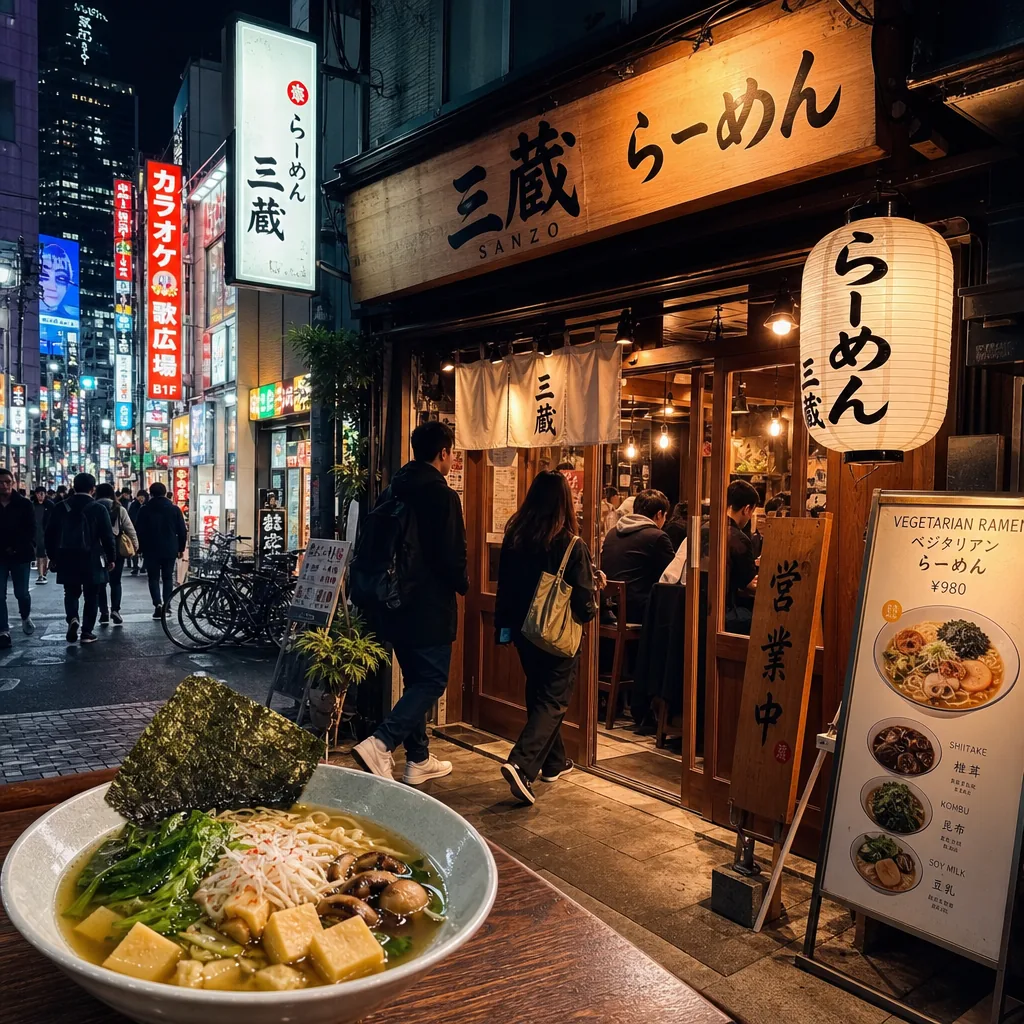
Find late-night vegetarian ramen in Tokyo by focusing on Shibuya, Shinjuku, and Roppongi, then verify broth, hours, and vegan menu details.