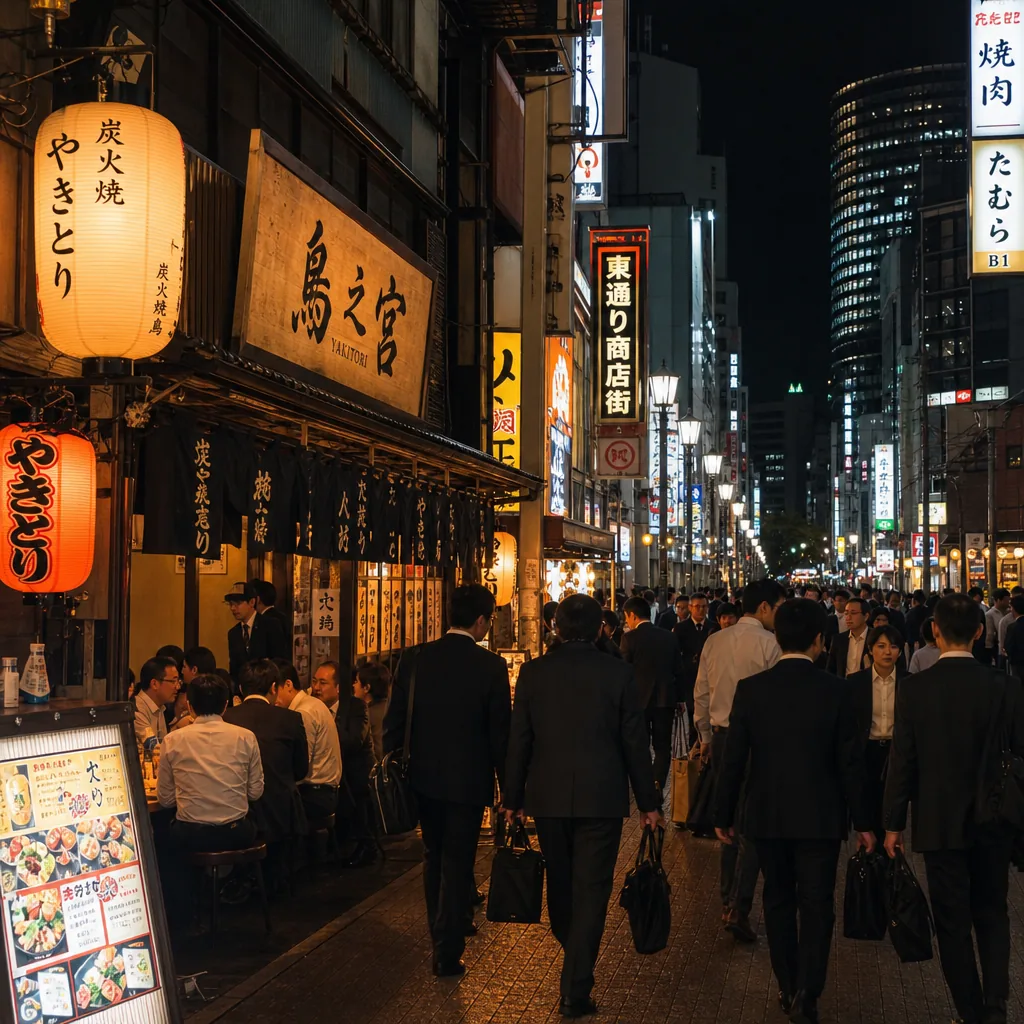
Where can I find english-friendly yakitori in Osaka after work?
Find English-friendly yakitori in Osaka after work by targeting Umeda, Namba, and Honmachi, plus booking sites and multilingual menus.
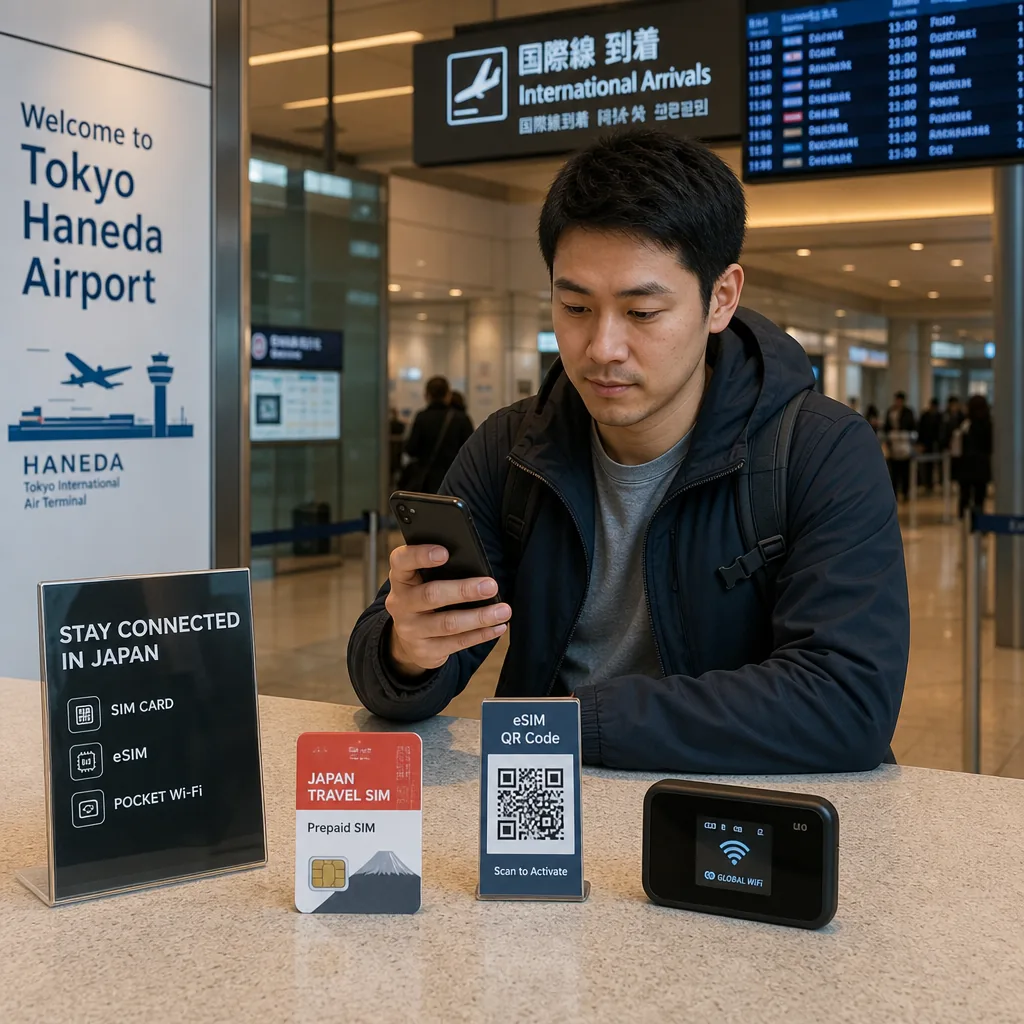
How can you set up mobile data in Tokyo as a new arrival? The fastest answer is to start with an eSIM, prepaid SIM, or portable Wi-Fi at the airport or online, then move to a long-term carrier plan only after you have the documents Japanese providers usually require [1][4]. If your phone is carrier-locked, check and unlock it before you buy anything, because that can block SIM or eSIM use [2].
For most newcomers, Tokyo mobile data falls into four practical options: prepaid SIM cards, eSIMs, portable Wi-Fi routers, and postpaid contracts from major carriers. Japan National Tourism Organization guidance says visitors commonly rely on SIM/eSIM or Wi-Fi rental for immediate access, while residents often switch to a regular phone plan later [1].
If you only need data for a short trip, an eSIM is often the quickest option because activation can happen before arrival or soon after landing, as long as your phone supports it and is unlocked [1][2]. A portable Wi-Fi router is useful if you want to connect several devices at once, but it adds another device to carry and charge [1]. For a longer stay, a postpaid plan can be better value over time, but it usually comes with more paperwork and identity checks [3].
Before you buy a SIM or sign a contract, confirm three basics: device compatibility, SIM lock status, and the documents you can provide. The Ministry of Internal Affairs and Communications says you may need to unlock a carrier-locked phone before it will work with a Japanese SIM [2].
For long-term mobile contracts, carrier application pages such as au’s require customer information and identity verification steps; in practice, that means the process is more involved than buying a visitor SIM at a counter [3].
Tokyo’s airports are the most convenient first stop. Haneda Airport lists visitor services that include SIM card sales, Wi-Fi rental, and related connectivity options, so you can get online immediately after arrival [4]. Narita Airport is also a common arrival point for the same type of travel-oriented products, and Tokyo travel guidance from GO TOKYO points newcomers toward airport and city options for internet access [5].
In the city, stores in major transportation hubs and electronics districts often sell short-term data products. A practical example is Akihabara, where large electronics retailers frequently stock prepaid connectivity gear aimed at visitors and new residents. If you are landing in central Tokyo and heading straight to a hotel or share house, an airport counter is usually the simplest choice because you can compare options before leaving the terminal [4][5].
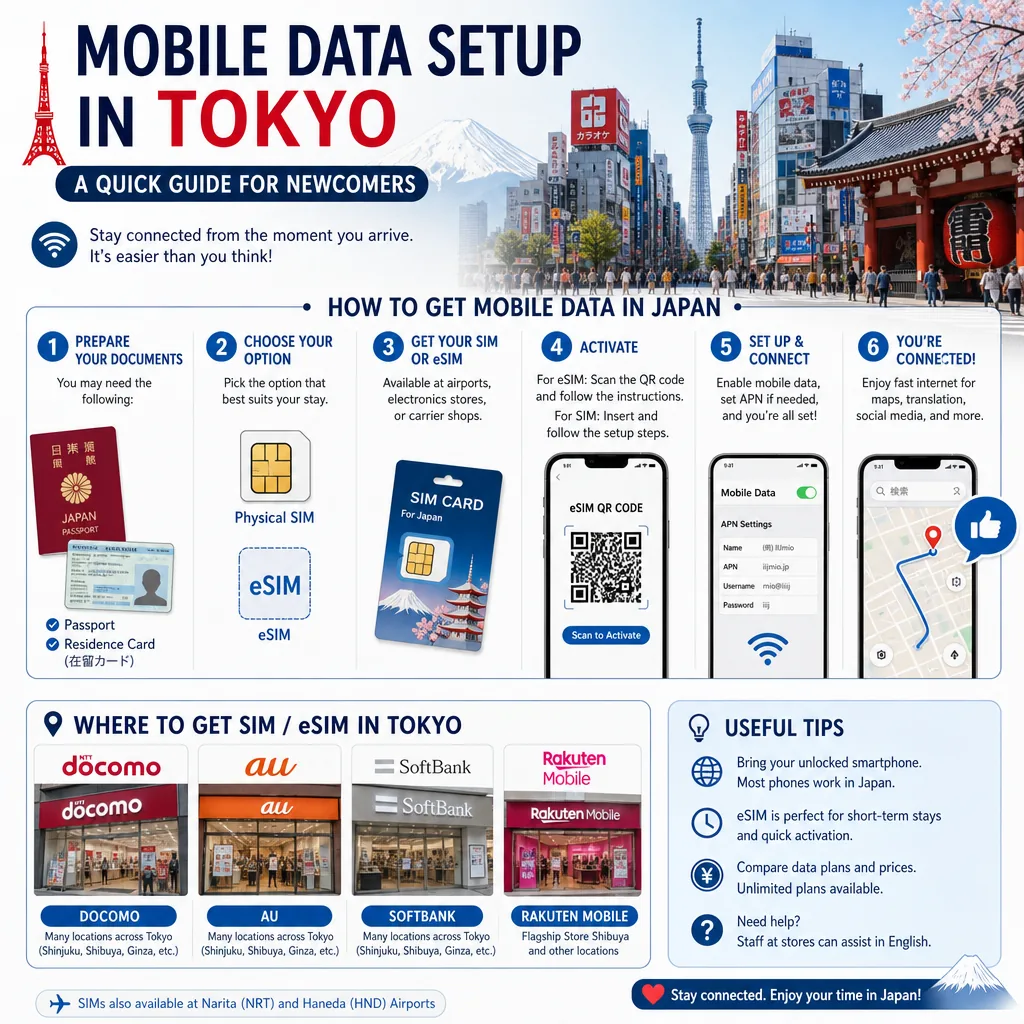
Online purchase is another strong option if you want to avoid queues. The Japan National Tourism Organization notes that visitors can arrange connectivity before travel, which is especially useful if you want to scan a QR code and activate an eSIM as soon as you land [1]. That can save time at busy arrival points such as Haneda Airport or train-linked neighborhoods like Shinjuku and Tokyo Station, where you may not want to stop for a search at all.
Temporary products are designed for speed: you pay up front, use the service for a set period, and avoid a long contract. Long-term plans are different. Japanese mobile carriers typically ask for identity verification, and for residents that can include a residence card and a Japanese payment method, such as a bank account or local card, depending on the provider [3].
That difference matters because many new arrivals do not have a local address or payment setup on day one. A short-term product can bridge the gap while you complete residence registration and get settled. After that, moving to a regular plan may make sense if you expect to stay in Tokyo for months rather than weeks [1][3].
For example, someone arriving to live in Setagaya or Koto Ward may use a prepaid SIM or eSIM during the first days, then upgrade after opening a local account and receiving the documents needed for a carrier application [3].
Many first-time arrivals run into avoidable problems. The most common one is buying a SIM or eSIM before checking whether the phone is unlocked [2]. Another is assuming every product is interchangeable; some plans are data-only, while others include voice service or require a more formal application [1][3].
It also helps to remember that coverage and convenience can vary by product rather than by city neighborhood alone. A data plan that works well in Shibuya may still be inconvenient if activation depends on a store visit in Ikebukuro, so always match the product to your actual arrival plan, not just the advertised price.
If you are arriving in Tokyo for a short visit, the easiest path is to buy or pre-order an eSIM or prepaid SIM and activate it right away [1][4]. If your stay is a few months, start with a visitor-friendly option, then switch after you have your residence card and address registration in place [3]. If you are moving long term, you can still use a short-term product first, but plan for the carrier application process once you have settled in [1][3].
A simple approach looks like this:
For most new arrivals, the best answer is not to search for the perfect forever plan on day one. Start with the fastest workable connection, get your first days in Tokyo handled, and only then choose a longer-term contract once your documents and routine are in place [1][3].
CallButler is a multilingual concierge service that handles research, coordination, and bookings so you do not have to navigate language barriers or unfamiliar systems alone. If you need help related to How can I set up mobile data in Tokyo as a new arrival? or the tasks around it, our team can step in to manage the details and keep things moving smoothly.
Find English-friendly yakitori in Osaka after work by targeting Umeda, Namba, and Honmachi, plus booking sites and multilingual menus.
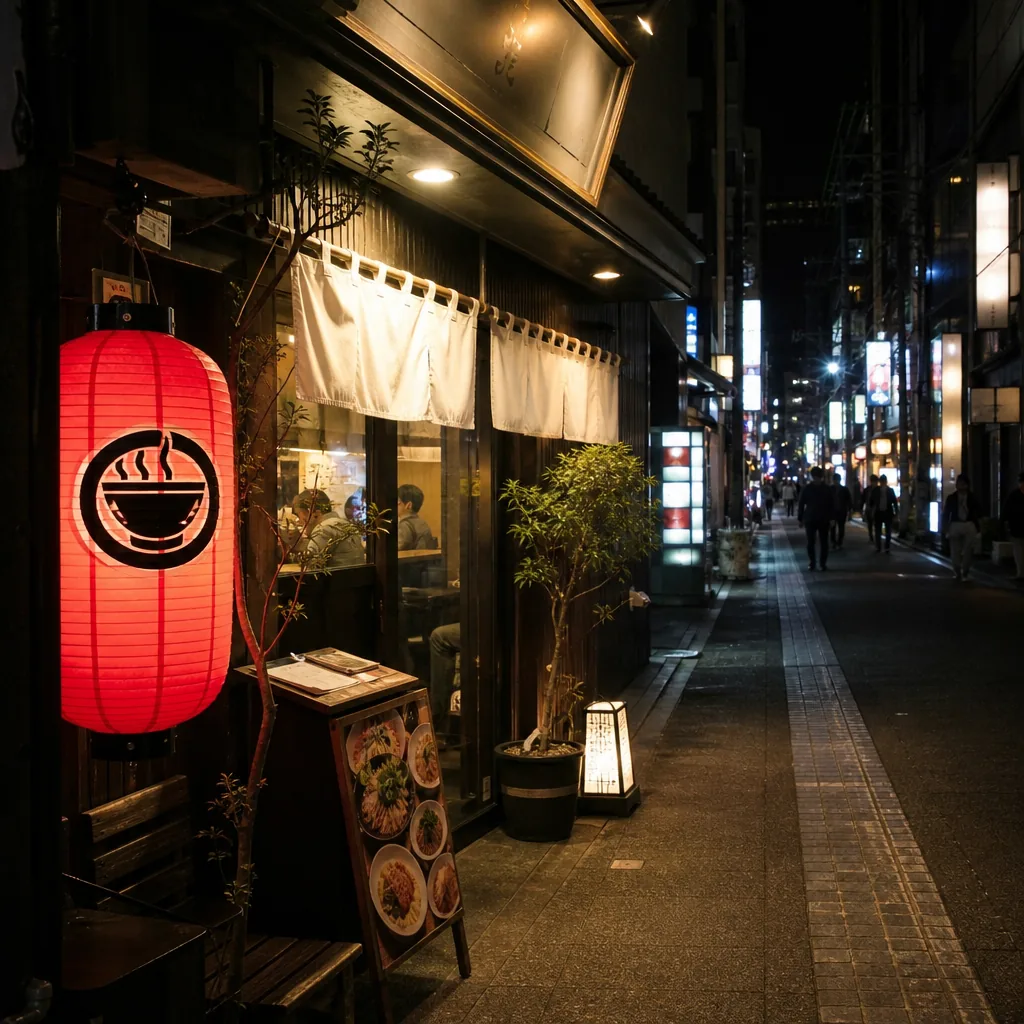
Looking for halal ramen in Kyoto after 10 p.m.? Here’s where to check, which areas are most practical, and how to verify hours and halal status.
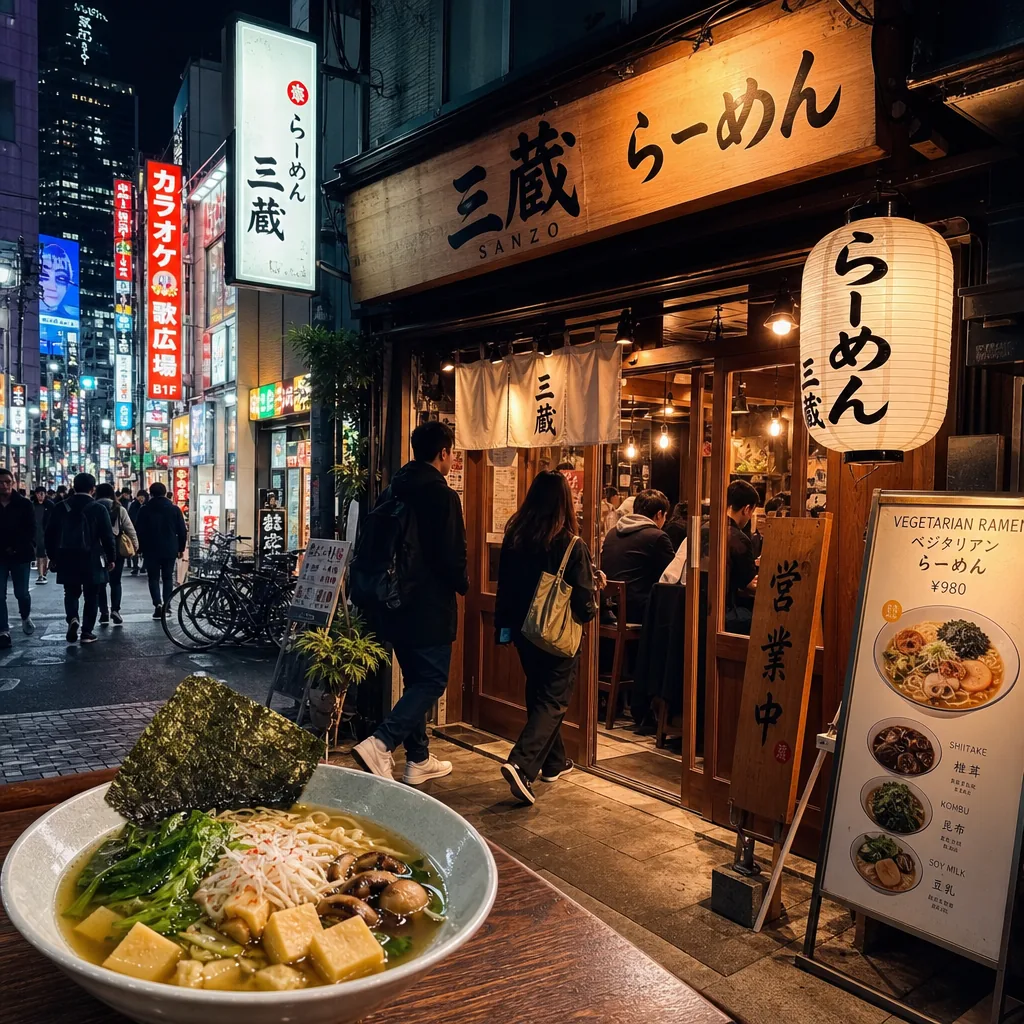
Find late-night vegetarian ramen in Tokyo by focusing on Shibuya, Shinjuku, and Roppongi, then verify broth, hours, and vegan menu details.