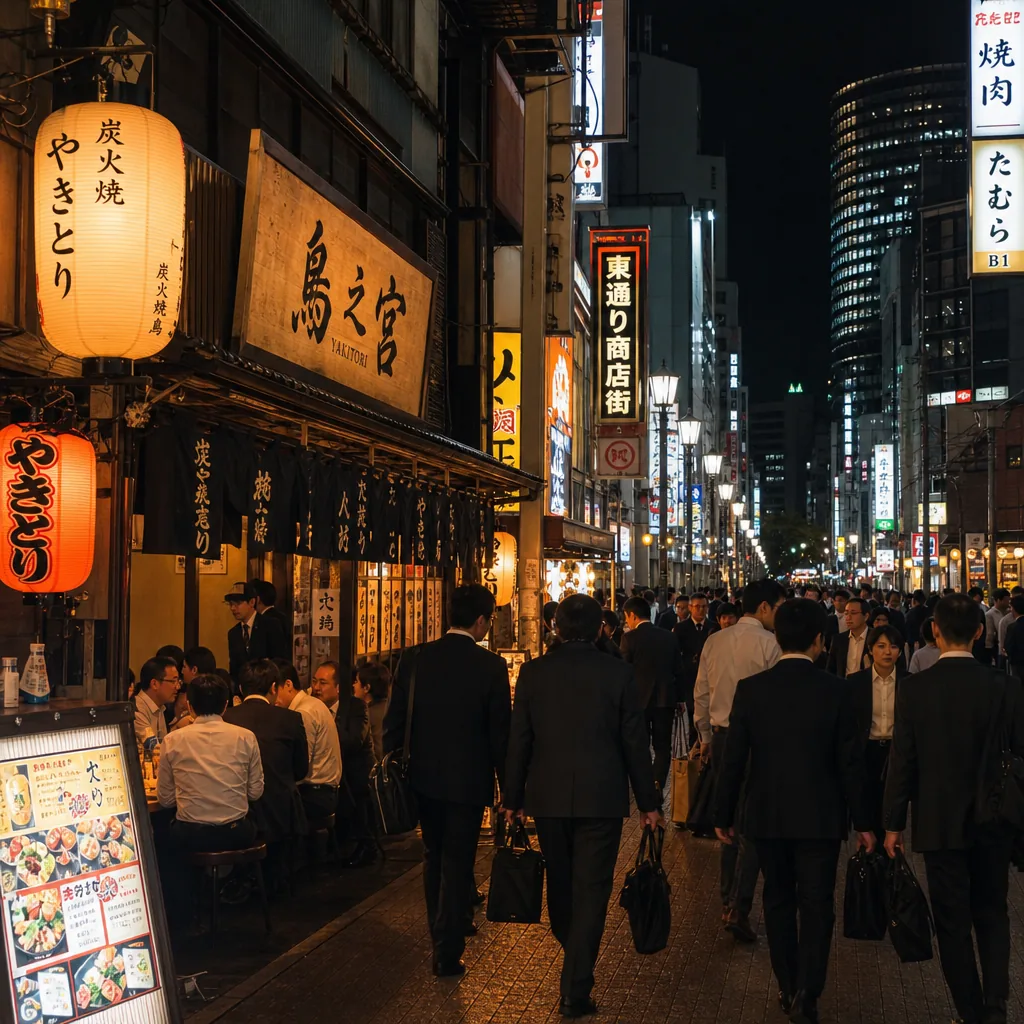
Where can I find english-friendly yakitori in Osaka after work?
Find English-friendly yakitori in Osaka after work by targeting Umeda, Namba, and Honmachi, plus booking sites and multilingual menus.
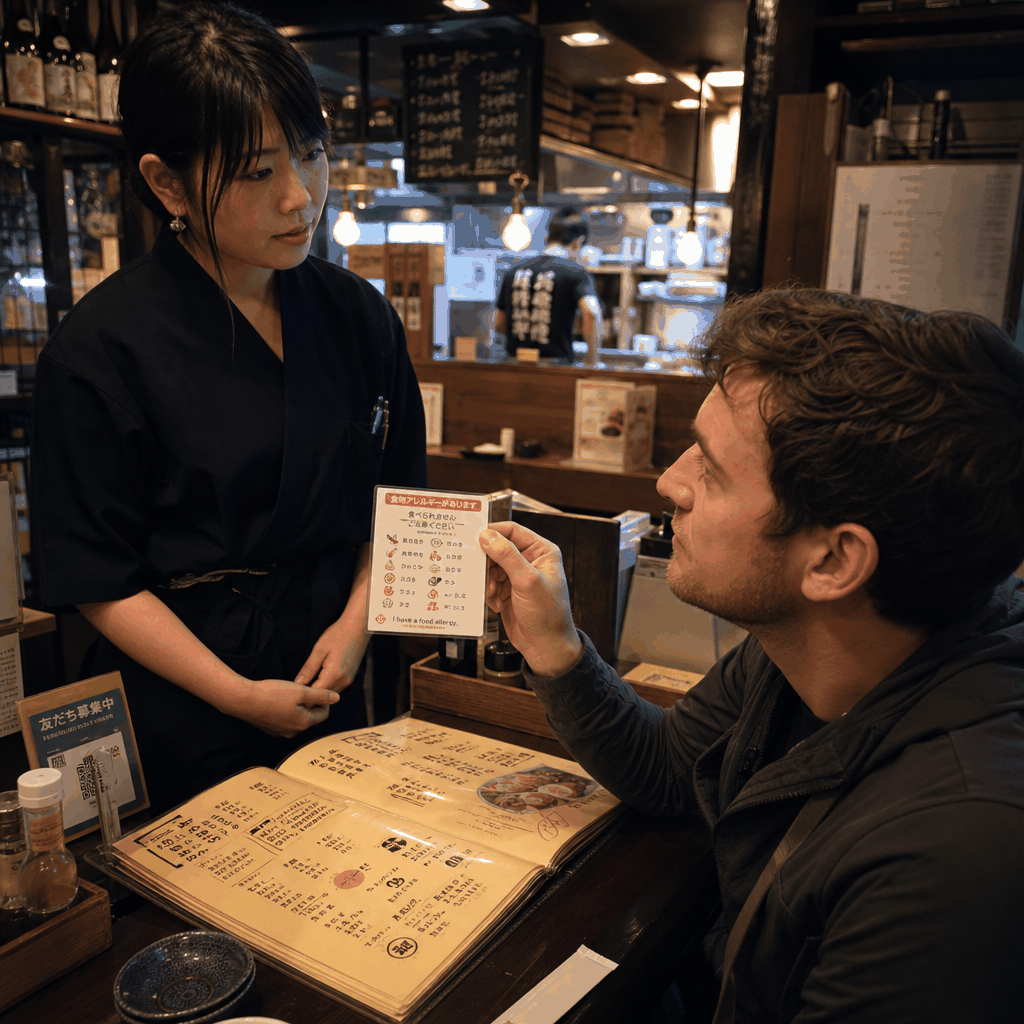
Yes—by preparing in advance, using a Japanese allergy card, and asking for ingredient confirmation before ordering, you can reduce risk at many Tokyo izakaya. The safest approach is to assume shared dishes may contain hidden allergens unless staff can clearly verify the ingredients and cross-contact risk [1][2].
Izakaya are designed for sharing, which makes them fun but less predictable for allergy-safe dining. Plates often arrive already seasoned, fried, or mixed with sauces, and staff may not know every component of a dish unless the restaurant keeps detailed ingredient records. In busy Tokyo neighborhoods such as Shibuya, Shinjuku, and Asakusa, this can be especially important because many izakaya are compact and service can be fast-paced [3].
The main problem is hidden ingredients. A dish that looks simple may contain wheat in soy sauce, egg in batter, milk in creamy dressings, sesame in seasoning, or seafood in soup stock. Shared fryers and communal serving utensils also raise the risk of cross-contact, which matters even when the listed ingredients look safe [1][4].
Japan requires disclosure of seven specified allergens in packaged foods: egg, milk, wheat, buckwheat, peanuts, shrimp, and crab. Five additional items are recommended for labeling, which means you may see more detailed information on some products, but not always on every menu item or restaurant dish [1].
For travelers, this means packaged sauces, snacks, and bottled condiments can be easier to verify than fresh restaurant dishes. At the restaurant level, however, allergen information may be incomplete or unavailable unless the business has an allergen chart or ingredient list. That is why checking ahead is useful, especially for chain restaurants that publish online menus or allergen tables [1][5].
In Tokyo, a written allergy card is often more effective than spoken English alone. It gives staff a chance to read your request carefully, show it to a manager, or compare it with an ingredient list without relying on memory. The Tokyo Metropolitan Government’s visitor information also points travelers toward practical preparation and communication when food restrictions are involved [3].
Keep the card short, clear, and specific. Include the allergen, the severity of the reaction, and a request for confirmation before serving. If you have multiple allergens, list them one per line.
You can also show the card before being seated, so staff know immediately that you need extra care. This is helpful in smaller izakaya where the menu may change daily and the team may need time to check with the kitchen.
No izakaya dish is automatically safe, but some choices are easier to verify than others. Simple, minimally processed items are usually better than fried or sauced dishes. In practice, that means plain grilled meat or fish, steamed rice, and basic salads can be possible options if each component is checked separately [1][2].
Be careful with common izakaya items that often contain hidden allergens:
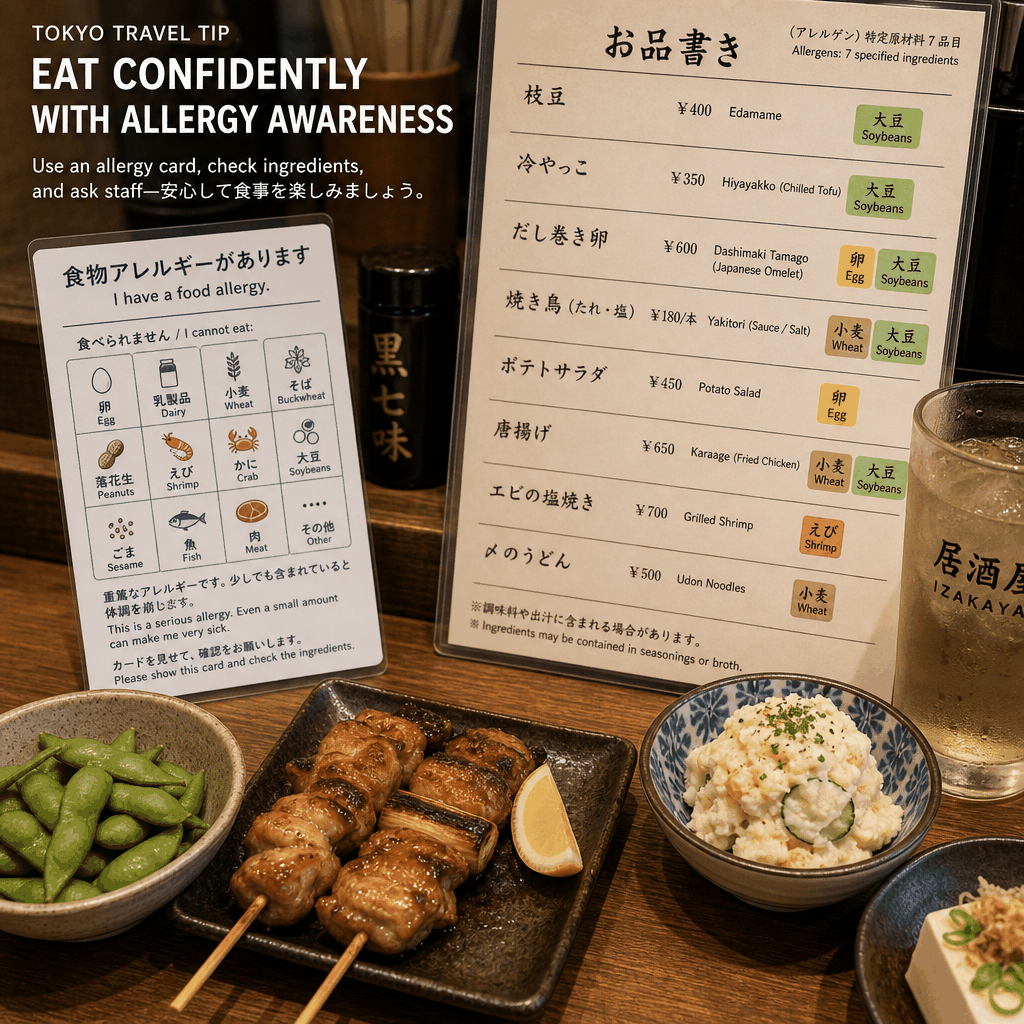
Tokyo has many chain restaurants that publish allergen information online, which can save time before you visit. Sushiro, for example, provides an English allergy information page and menu guidance on its official site, making it easier to review options in advance [5]. Even if you are not planning to eat sushi, this is a useful model for how major chains often present ingredient information in a clear format [5].
Use this approach before making a reservation or walking into an izakaya:
Tokyo’s large dining districts and transport hubs often have many similar options nearby, so it is practical to choose a second restaurant in the same neighborhood if the first one cannot answer your questions. Universal tourism guidance from Japan’s tourism authorities also encourages advance planning for food restrictions and allergy needs, which fits well with Tokyo’s busy dining scene [2][3].
If staff are unsure, do not treat uncertainty as a yes. A polite “I’m sorry, but I cannot eat it unless you can confirm the ingredients” is the safest response. If the kitchen cannot verify whether a sauce, broth, fryer, or garnish contains your allergen, skip the dish—or leave and choose another restaurant [1][2].
This may feel inconvenient, but it is the correct risk decision in an izakaya setting. Because these restaurants often rely on shared preparation areas and pre-made seasonings, a single uncertain item can affect the whole meal. Travelers with allergies usually do better in Tokyo when they keep expectations flexible, focus on restaurants that publish ingredient information, and treat verbal reassurance as helpful only when it is backed by clear confirmation [1][4][5].
In short, the best strategy is preparation plus verification: bring a Japanese allergy card, choose simpler dishes, use chain allergen charts when available, and walk away when answers are unclear. That approach gives you the best chance of enjoying Tokyo’s izakaya culture while staying safe.
CallButler is a multilingual concierge service that handles research, coordination, and bookings so you do not have to navigate language barriers or unfamiliar systems alone. If you need help related to How can I order allergen-free dishes at izakaya in Tokyo? or the tasks around it, our team can step in to manage the details and keep things moving smoothly.
Find English-friendly yakitori in Osaka after work by targeting Umeda, Namba, and Honmachi, plus booking sites and multilingual menus.
Looking for halal ramen in Kyoto after 10 p.m.? Here’s where to check, which areas are most practical, and how to verify hours and halal status.
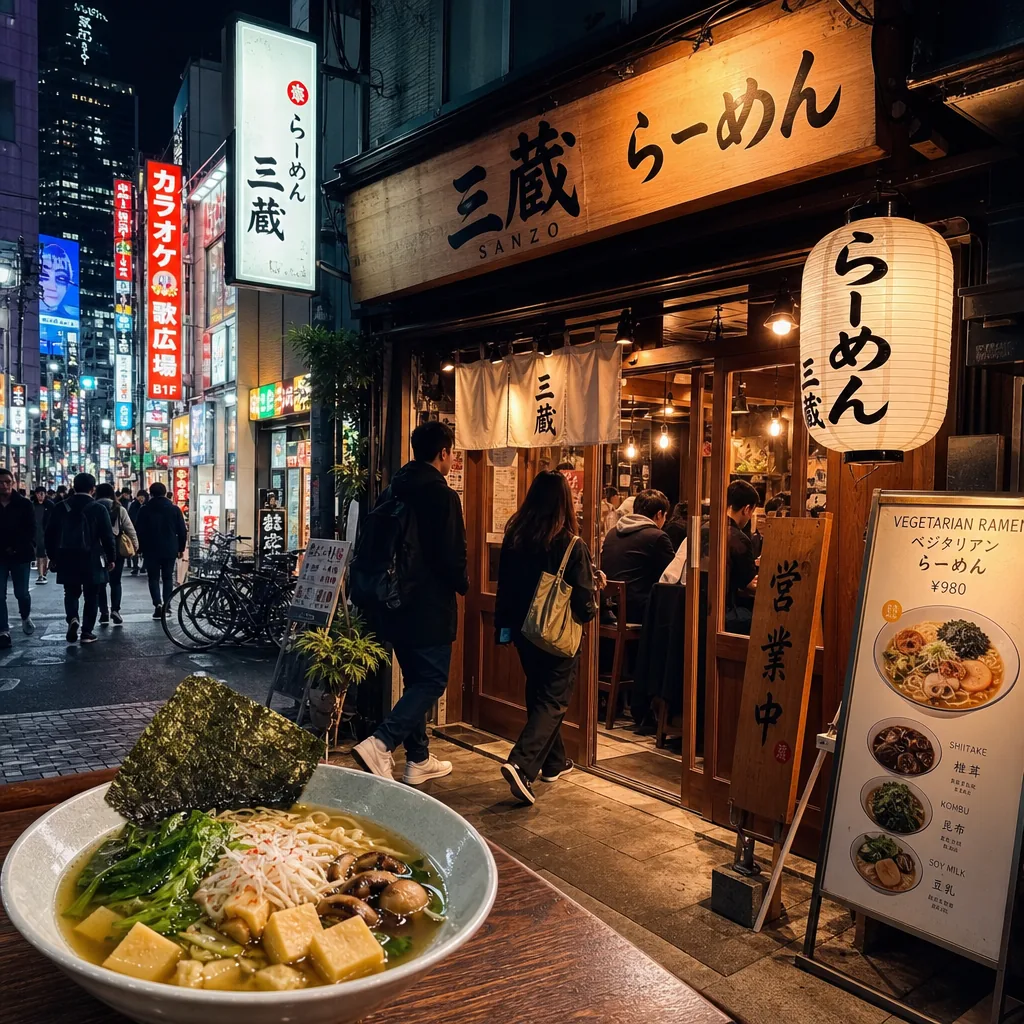
Find late-night vegetarian ramen in Tokyo by focusing on Shibuya, Shinjuku, and Roppongi, then verify broth, hours, and vegan menu details.