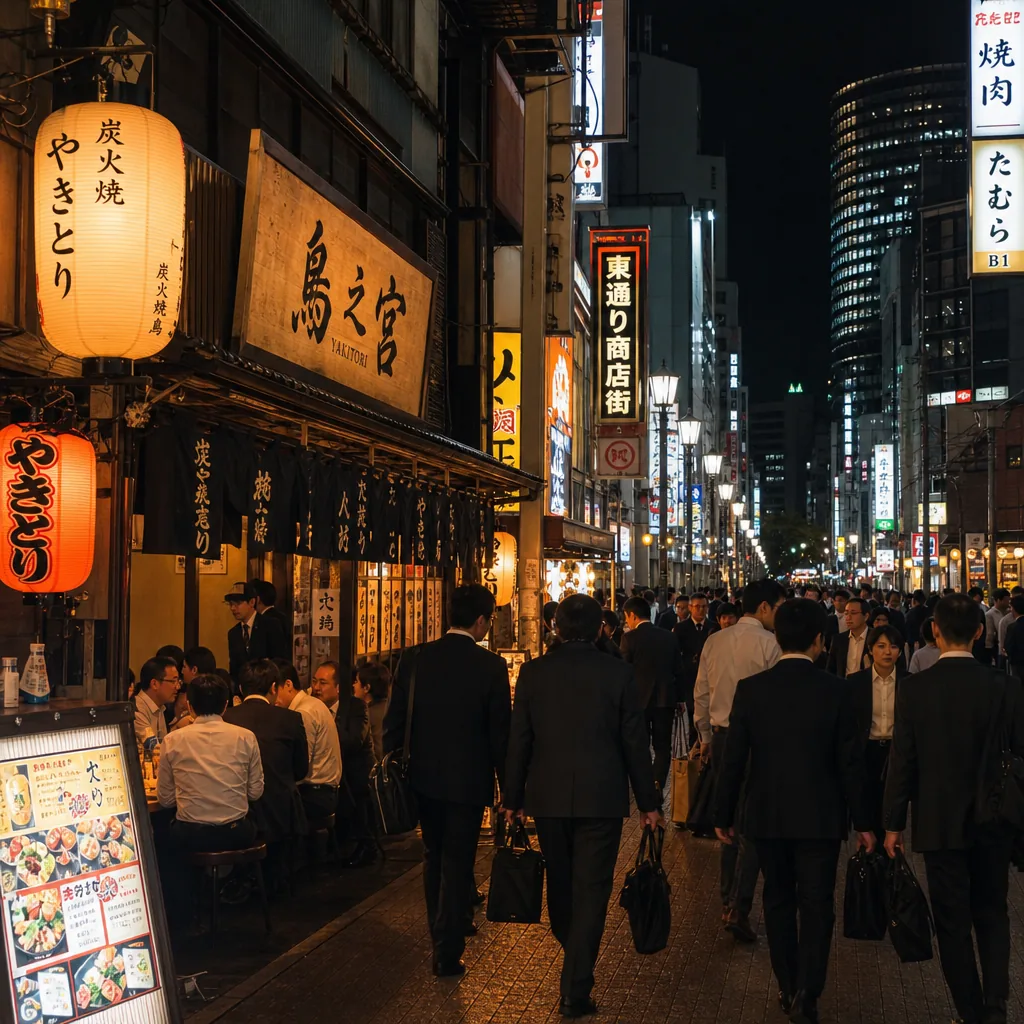
Where can I find english-friendly yakitori in Osaka after work?
Find English-friendly yakitori in Osaka after work by targeting Umeda, Namba, and Honmachi, plus booking sites and multilingual menus.
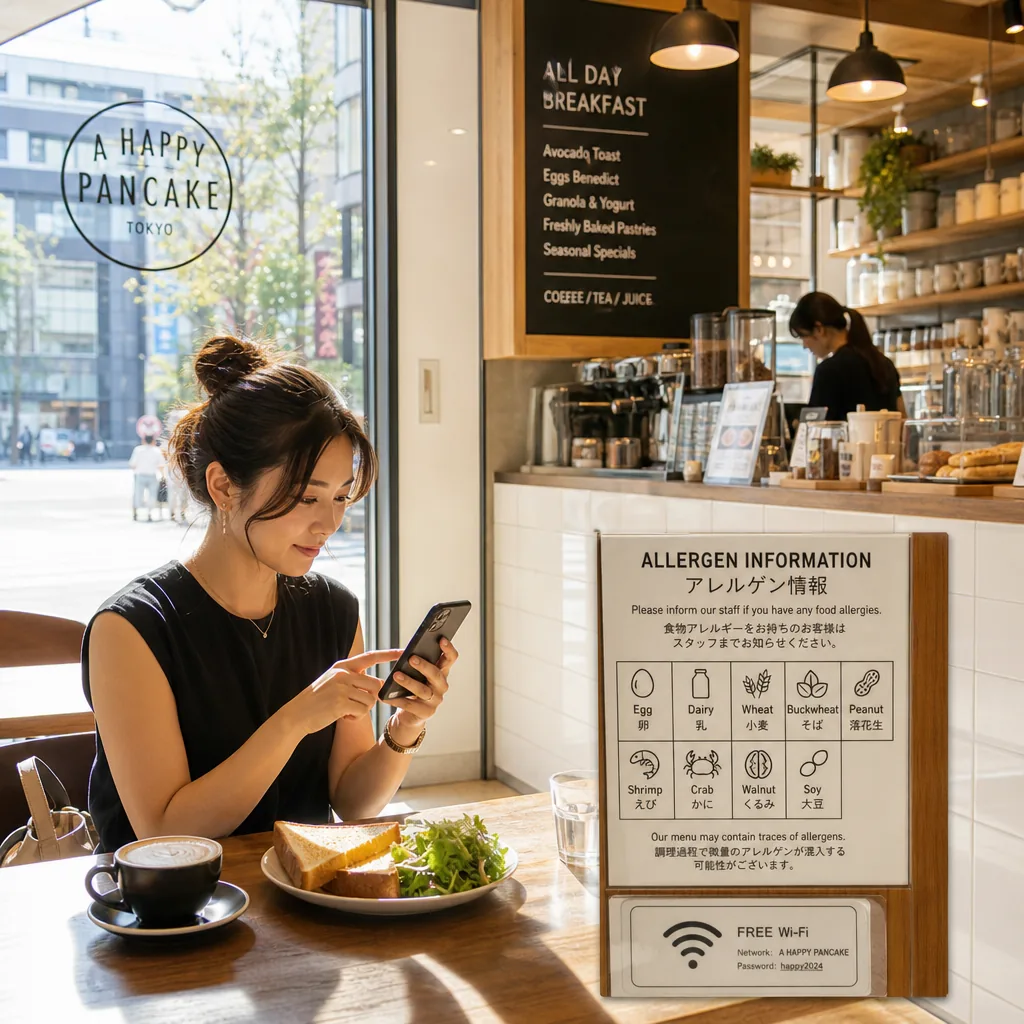
Yes—Tokyo has many allergy-friendly breakfast options if you start with restaurants that publish allergen charts, then confirm details directly before ordering. Chains like Denny’s Japan, MOS Burger, and Jonathan’s all provide allergen information online, and Tokyo tourism resources can help you narrow your search to hotel districts, station areas, and neighborhoods where international visitors are common [1][4][5][6].
The easiest place to begin is near major transit hubs and hotel-heavy areas, because staff there are more likely to handle dietary questions from overseas travelers. In practice, that means looking around Tokyo Station, Shinjuku, Shibuya, and the Ginza area, then checking whether a café or chain has a public allergen table before you go [1].
Tokyo Convention & Visitors Bureau resources are useful for planning around neighborhoods and transit, but the most reliable breakfast search strategy is to combine that city-level planning with restaurant-level allergen data [1]. If your hotel is in a busy district, ask the front desk for the nearest branch of a chain that posts ingredient and allergen details. That saves time and helps you avoid relying on a menu alone.
For a practical first list, focus on chains and cafés that are transparent about ingredients. Denny’s Japan, MOS Burger, and Jonathan’s each publish allergen information online, which makes them stronger starting points than small independent cafés that may not post detailed data [4][5][6].
In Japan, food labeling is governed by national rules, and the Consumer Affairs Agency explains the country’s allergen labeling framework. Japan requires certain allergens to be labeled, and official guidance also covers broader food-labeling expectations [2][3]. For breakfast planning, that matters because it helps you compare packaged items, café foods, and chain menus more confidently.
Before visiting a place, check three things:
For example, a chain café breakfast may look simple, but a sandwich, soup, or pastry can still include wheat, milk, egg, or soy in buns, sauces, or dressings. A quick online check is better than guessing from the menu name alone. If the restaurant’s allergen table is unclear or outdated, choose another location with a better-documented menu [4][5][6].
Direct communication helps a lot in Tokyo, especially when you need to ask about ingredients or cross-contact. Even a short, clear statement can make staff check with the kitchen faster. Japan tourism resources commonly recommend using simple phrases and writing down restrictions when necessary [1].
Useful phrases include:
If you are allergic to eggs, milk, wheat, nuts, or seafood, say the specific ingredient in English and Japanese if possible. For example, “egg” and “tamago,” “milk” and “gyūnyū,” “wheat” and “komugi,” “peanut” and “pirī natto,” “shrimp” and “ebi,” and “crab” and “kani.” A phone note with the phrase translated into Japanese can help at a busy counter.
Not every breakfast format is equally easy to manage, but a few types are usually simpler. Chain cafés and family restaurants are often the best first options because they may publish allergen charts online and have standardized recipes across branches [4][5][6].
Good breakfast types to prioritize in Tokyo include:
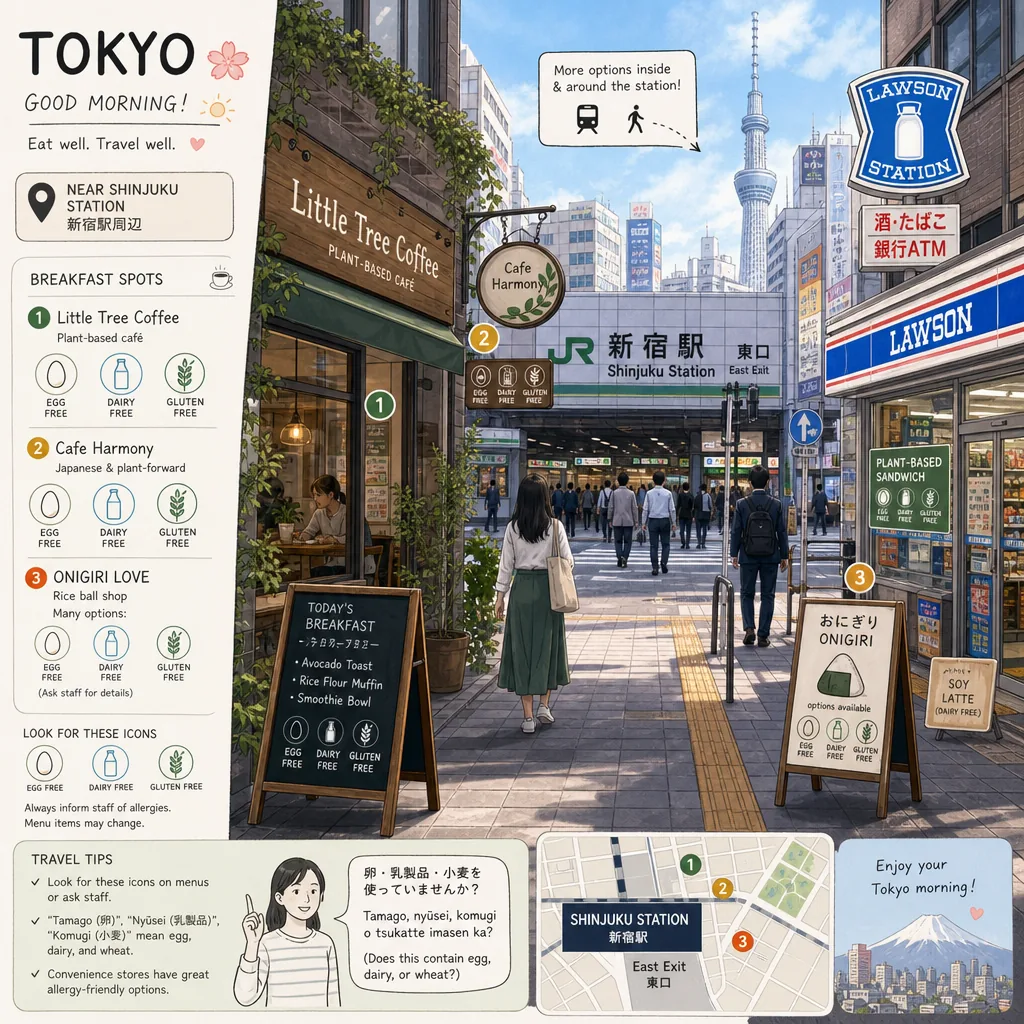
Tokyo’s station neighborhoods are especially useful because they combine convenience with choice. If one café cannot answer your questions, another branch or chain may be only a few minutes away on foot. This is where a city like Tokyo works in your favor: you can compare several breakfast spots in the same district instead of settling for the first place you see.
Cross-contact is the biggest hidden risk in breakfast settings. Even when a menu item does not contain your allergen, shared grills, utensils, toaster racks, blenders, or prep surfaces can still create a problem. That is why official allergen charts are only the first step; you still need to ask how the food is prepared [2][3].
When speaking with staff, confirm:
If the staff cannot answer clearly, pick a simpler food format. Rice balls, plain rice dishes, fruit, yogurt only if dairy is safe for you, or sealed packaged foods with labeling are usually easier to evaluate than mixed breakfast plates. When in doubt, the safest choice is the one with the clearest documentation.
A practical Tokyo breakfast search can be done in 20 to 30 minutes the night before. Start by identifying your hotel district, then search nearby branches of chains that publish allergen charts. If you are staying near Shinjuku or Tokyo Station, you will usually find multiple options within a short train or walk radius [1].
Then follow this simple workflow:
This approach is especially helpful in a city with dense transit and many branch locations. Instead of searching every morning from scratch, you can shortlist a few reliable places in advance and verify them one by one. That is usually the most efficient way to find allergy-friendly breakfast spots in Tokyo while keeping risk low [1][2][3].
In short, Tokyo is manageable for allergy-friendly breakfasts when you use official allergen charts, simple Japanese phrases, and direct confirmation. Start with transparent chains near your hotel or station, check the latest ingredient information, and choose the place that can explain its preparation clearly.
CallButler is a multilingual concierge service that handles research, coordination, and bookings so you do not have to navigate language barriers or unfamiliar systems alone. If you need help related to How can I find allergy-friendly breakfast spots in Tokyo? or the tasks around it, our team can step in to manage the details and keep things moving smoothly.
Find English-friendly yakitori in Osaka after work by targeting Umeda, Namba, and Honmachi, plus booking sites and multilingual menus.
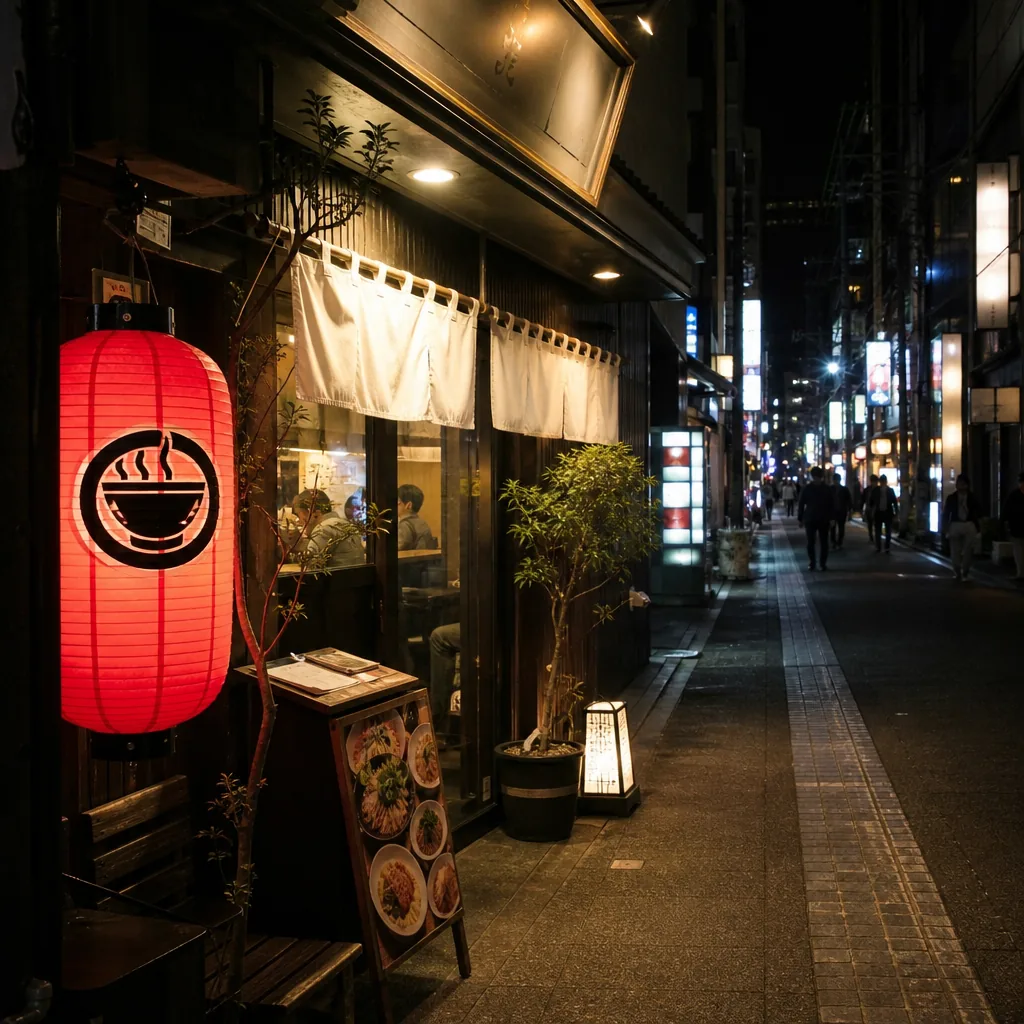
Looking for halal ramen in Kyoto after 10 p.m.? Here’s where to check, which areas are most practical, and how to verify hours and halal status.
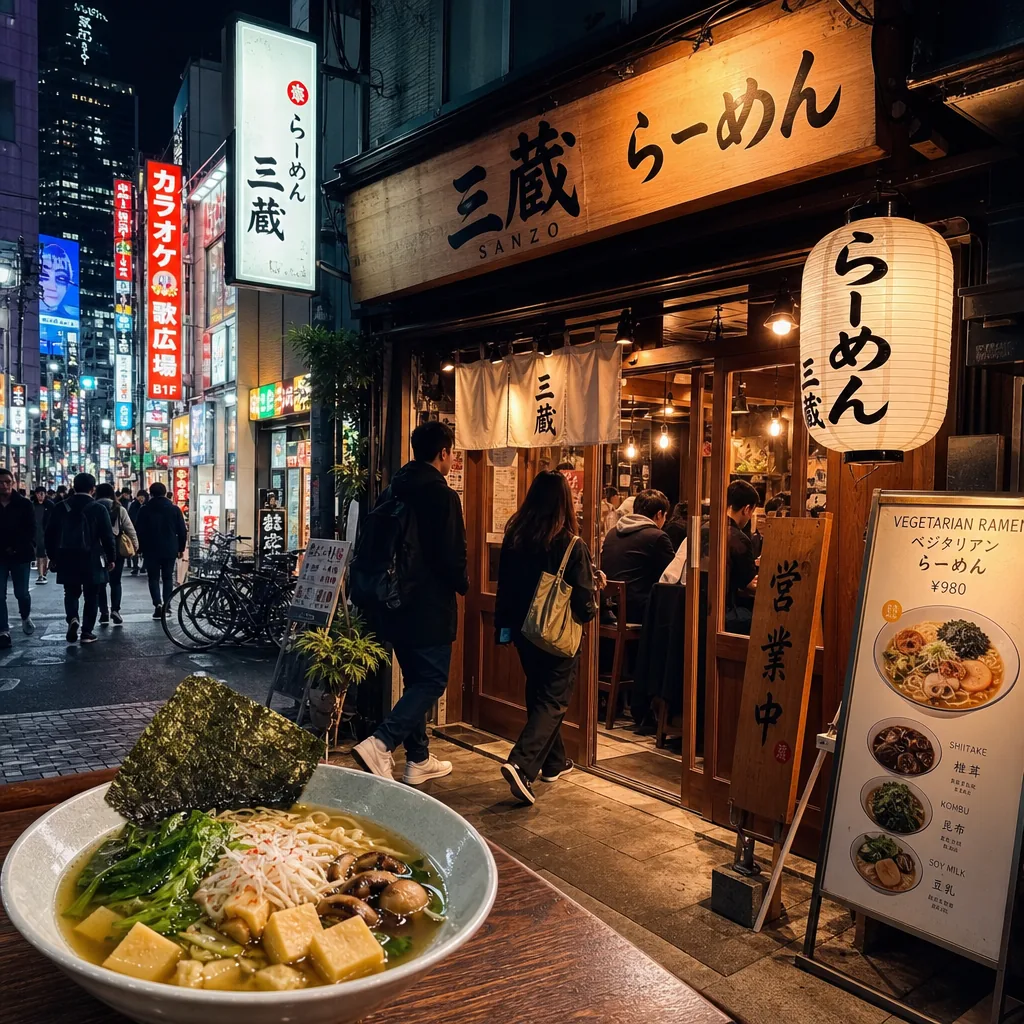
Find late-night vegetarian ramen in Tokyo by focusing on Shibuya, Shinjuku, and Roppongi, then verify broth, hours, and vegan menu details.