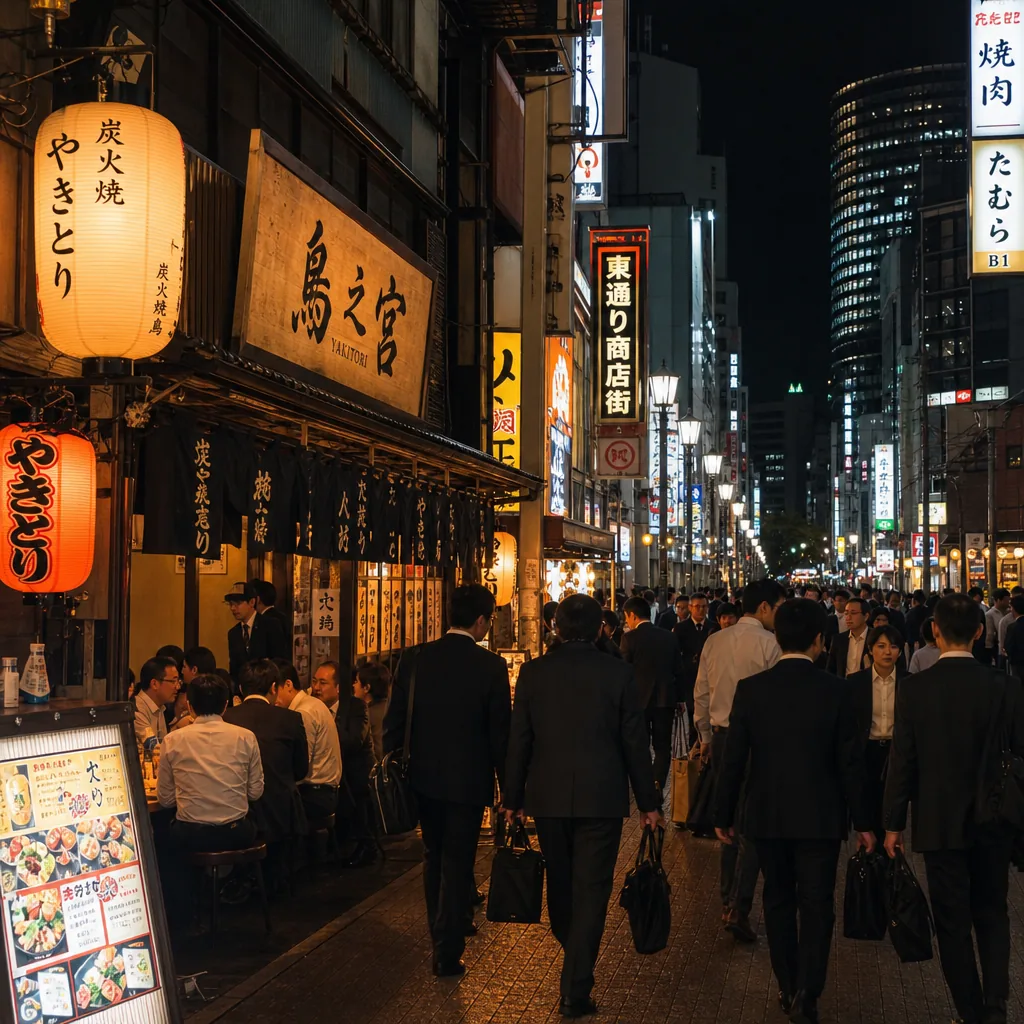
Where can I find english-friendly yakitori in Osaka after work?
Find English-friendly yakitori in Osaka after work by targeting Umeda, Namba, and Honmachi, plus booking sites and multilingual menus.
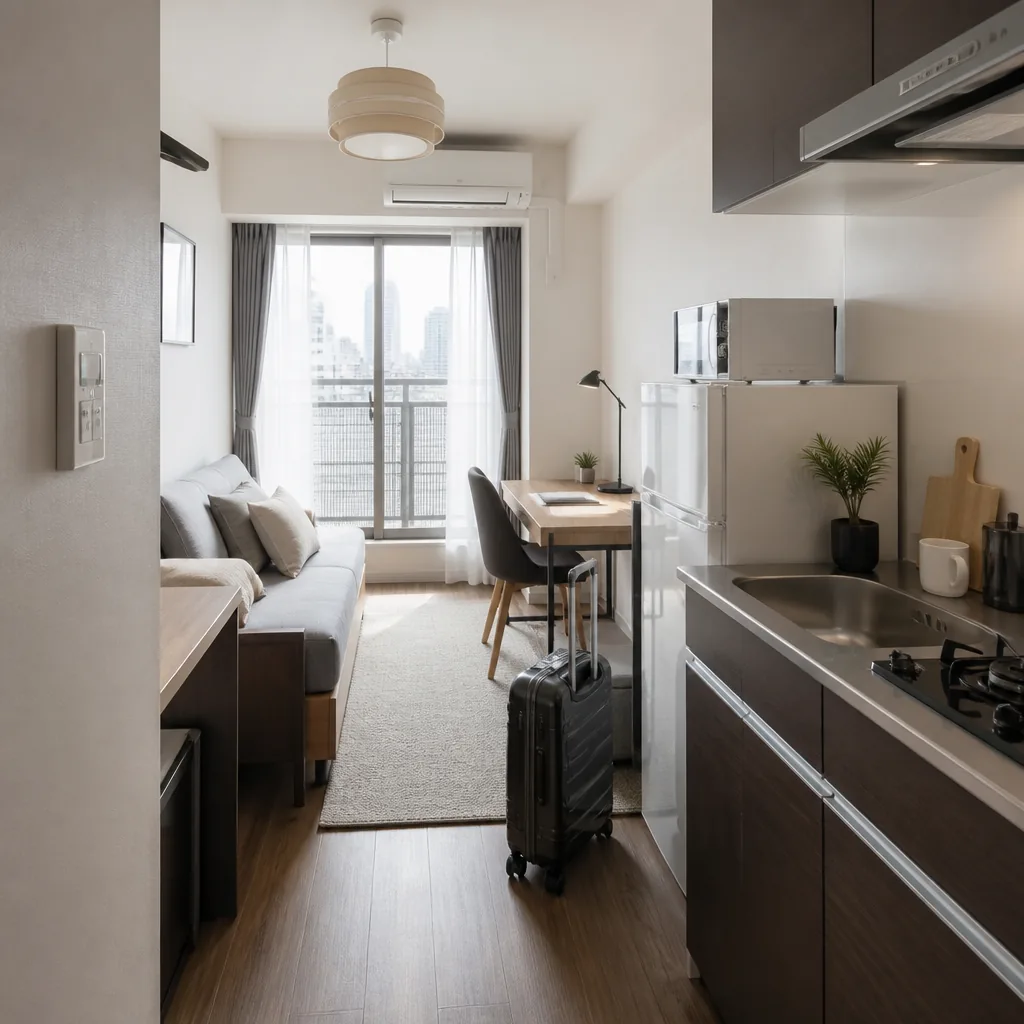
Yes—expats can find furnished monthly rentals in Tokyo quickly by using monthly apartment portals, serviced apartments, and foreigner-friendly housing agencies. The fastest route is usually an English-language platform or agency that lists move-in-ready rooms with clear contract terms, but you should always compare the real monthly total, not just the headline rent [2][5].
In Tokyo, “furnished monthly rental” is not one single product. Listings may appear as monthly apartments, serviced apartments, or furnished rooms, and each can include a different set of basics such as a bed, desk, kitchen items, linens, Wi-Fi, and utilities [2][5]. Tokyo’s tourism and housing guidance also notes that accommodation types vary widely, so the safest approach is to check the exact inclusions before assuming a unit is move-in ready [2].
For expats, the practical difference is simple: a standard monthly apartment is often cheaper, while a serviced apartment is usually easier to move into but costs more. If you need a short stay with minimal setup, serviced apartments are often the most convenient option because they are more likely to bundle furniture and services into one price [2].
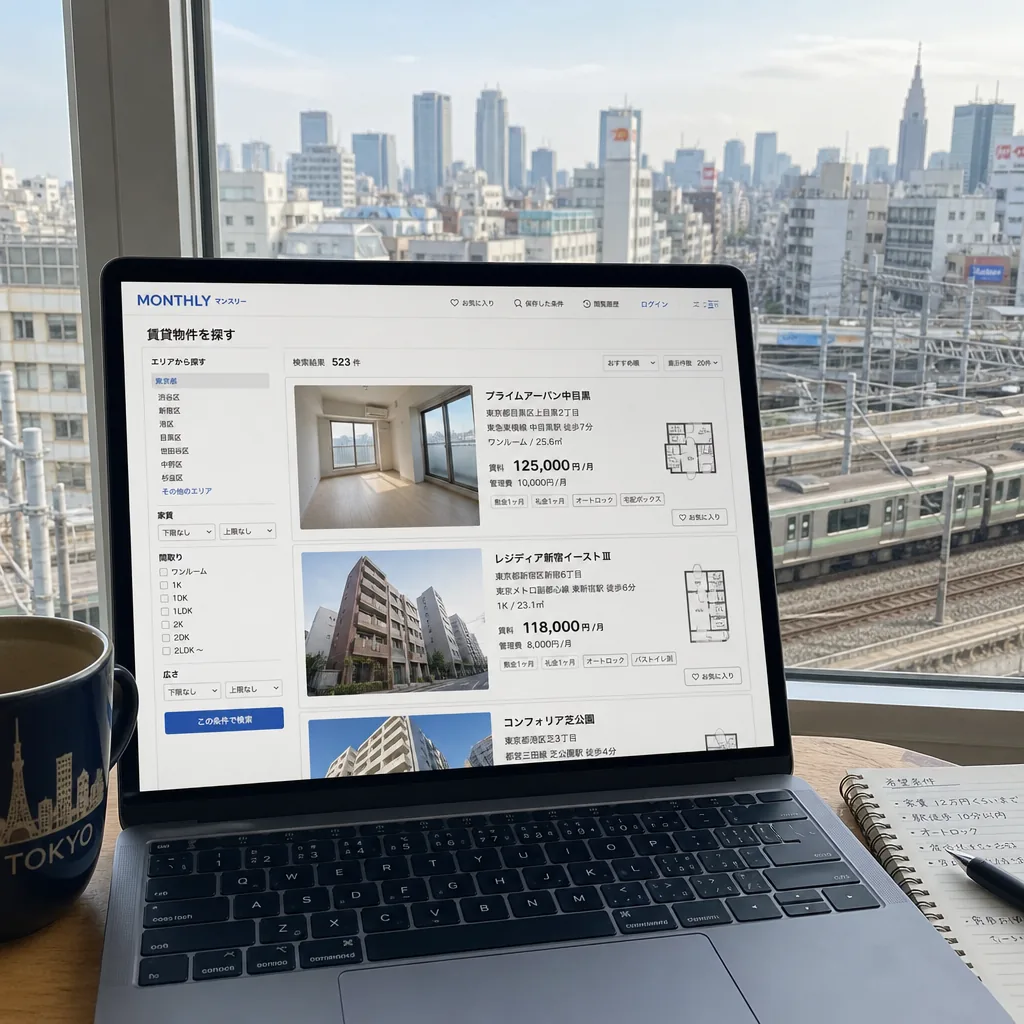
The most efficient way to search in Tokyo is to start online. Tokyo-wide monthly rental portals let you filter by area, price, station access, furnishing level, and move-in date, which is useful if you are searching before arrival [5]. These sites can help you compare options in wards like Shibuya, Shinjuku, Minato, and Setagaya without needing to call multiple offices in Japanese.
Serviced apartment providers are also worth checking if speed matters. Tokyo’s accommodation guidance highlights that the city offers a broad range of lodging styles, and serviced apartments sit at the more “ready-to-live-in” end of that spectrum [2]. For people who want less paperwork, that can be worth the higher monthly cost.
Another useful option is UR Housing, which provides rental housing information for foreign residents in English [4]. UR properties are not always “monthly” in the same way as short-stay portals, but they can be an important backup if you want a more stable longer-term setup and need a foreigner-friendly point of entry [4].
The Tokyo Metropolitan Government also maintains living-in-Tokyo guidance for newcomers, including practical information that can help when you are settling in and comparing housing options [1]. If you are still learning the local process, that government information can reduce confusion about everyday life in the city [1].
Before you pay anything, confirm what is included in the quoted price. In Tokyo, the true monthly cost can change a lot once you add utilities, internet, linens, cleaning, deposits, key money, or other service fees [2][5]. A listing that looks affordable at first glance may become much more expensive once the full move-in package is added.
You should also ask about taxes. Some short stays in Tokyo may be subject to lodging tax, depending on the arrangement and length of stay, so do not assume the advertised price is final [2].
Timing matters too. Ask how soon you can move in, whether same-week move-in is possible, and what ID is required. If you are staying only one to three months, cancellation rules matter just as much as rent. If you may extend, confirm whether the landlord or operator allows it before you book [5].
Tokyo is expensive enough that neighborhood choice can change your budget more than you expect. Central wards improve access to major train lines and work districts, while outer areas can offer larger units for the same price [2][5]. If you work in Marunouchi or Shinjuku, for example, a centrally located unit may save commuting time even if the rent is higher.
Serviced apartments usually cost more than standard monthly apartments, but they reduce setup friction. Monthly apartment portals often offer lower rates, yet you may need to pay separately for utilities, cleaning, bedding, or Wi-Fi [2][5]. That is why the “cheapest” listing is not always the best deal.
Here is a practical way to think about the tradeoff:
If you want a place near transit, compare station access carefully rather than relying only on ward names. Tokyo’s railway network makes station proximity a major factor in daily convenience, especially if you are commuting to offices in Shinjuku, Shibuya, or Minato [1][2].
The biggest mistake expats make is booking from photos without reading the fine print. In Tokyo, furnished listings can still require separate payments for utilities, deposits, or cleaning, and those add-ons can make a short stay much pricier than expected [2][5]. Always ask for a written breakdown in English if you are unsure.
Another common issue is overlooking language support. A foreigner-friendly agency or platform can reduce back-and-forth and speed up the booking process, especially if you are arranging housing from overseas. Tokyo’s official support resources for foreign residents are also useful if you need help understanding local procedures [1][4].
Do not ignore location realism. A larger apartment in a farther suburb may look attractive on paper, but the commute can become tiring fast. If your work or school is in central Tokyo, balance size against access to stations and transfer times [2][5].
If you need housing soon, use a focused one-week plan. Day 1 should be for choosing your budget range and must-have features. Day 2 should be for comparing monthly portals and serviced apartments with English support. By Day 3, shortlist properties in areas that fit your commute and daily needs.
On Day 4, contact providers and ask the same questions for each property: what is included, what taxes apply, how much is due at signing, and whether a guarantor is needed [2][5]. On Day 5, compare the full costs side by side. On Day 6, confirm move-in timing and cancellation terms. On Day 7, book only after you have a written summary of the final amount and the contract conditions.
If you are unsure where to start, begin with a Tokyo-wide monthly portal [5], then cross-check foreign-resident housing guidance from UR [4] and the Tokyo Metropolitan Government [1]. That combination gives you speed, clearer English support, and a better chance of avoiding surprise costs. In Tokyo, that is usually the fastest path to a furnished monthly rental that actually fits your stay.
Useful examples to search: Shinjuku and Shibuya for strong rail access, Minato for business-oriented stays, and Setagaya for more residential options with potentially better value [2][5].
CallButler is a multilingual concierge service that handles research, coordination, and bookings so you do not have to navigate language barriers or unfamiliar systems alone. If you need help related to How can expats find furnished monthly rentals in Tokyo now? or the tasks around it, our team can step in to manage the details and keep things moving smoothly.
Find English-friendly yakitori in Osaka after work by targeting Umeda, Namba, and Honmachi, plus booking sites and multilingual menus.
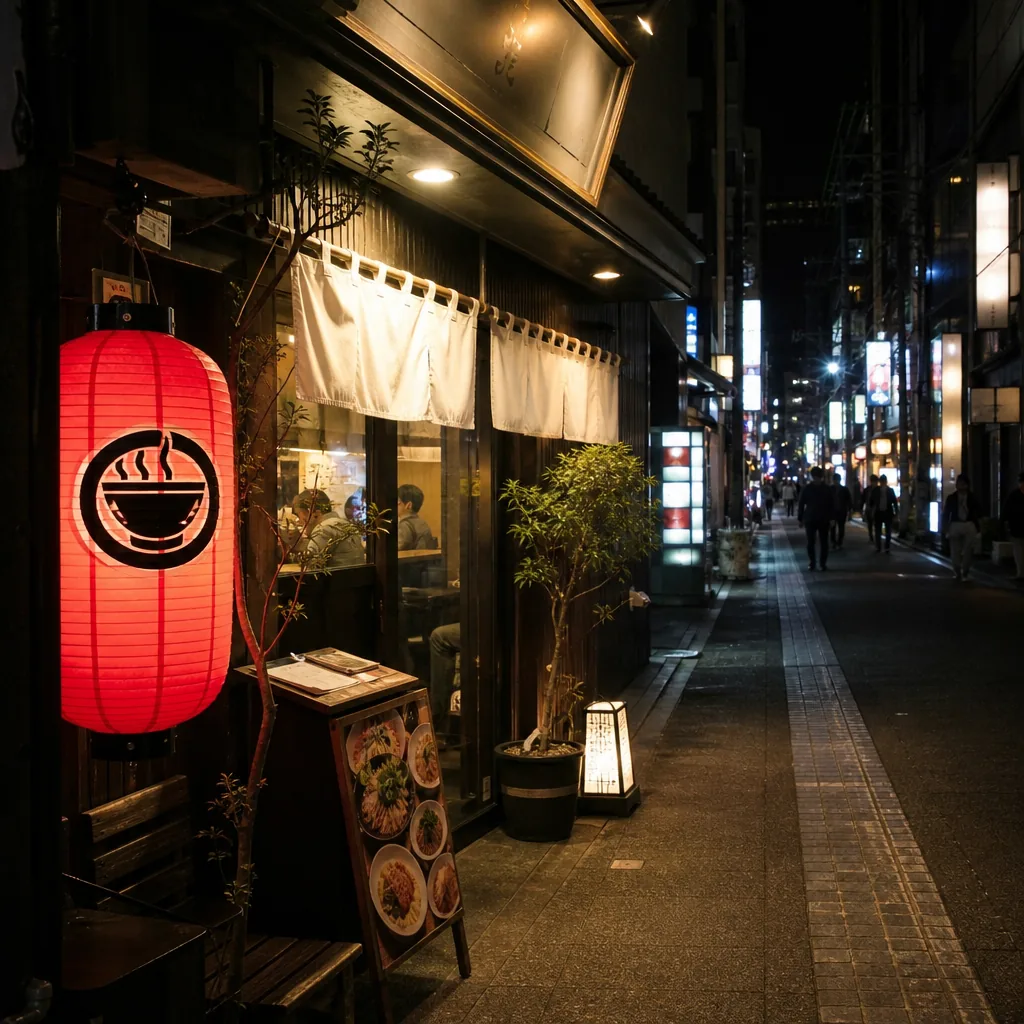
Looking for halal ramen in Kyoto after 10 p.m.? Here’s where to check, which areas are most practical, and how to verify hours and halal status.
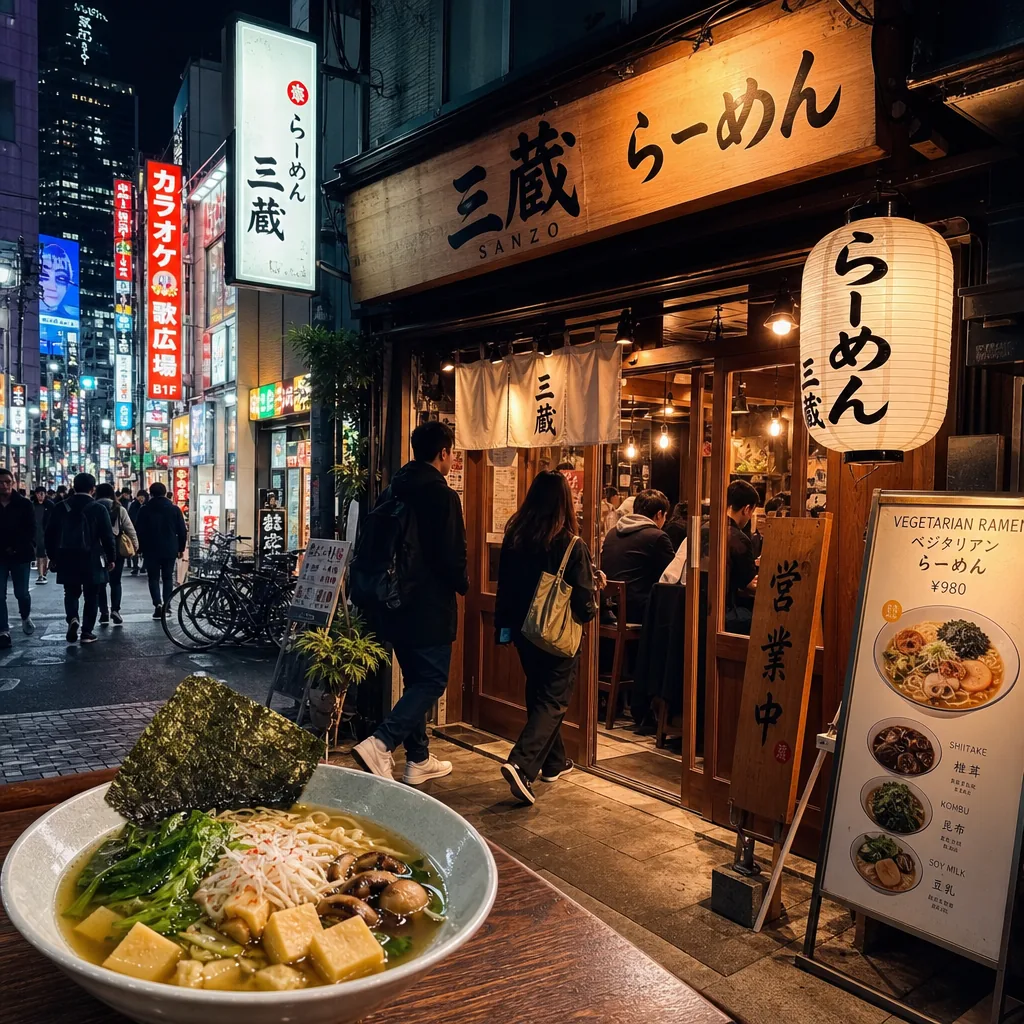
Find late-night vegetarian ramen in Tokyo by focusing on Shibuya, Shinjuku, and Roppongi, then verify broth, hours, and vegan menu details.