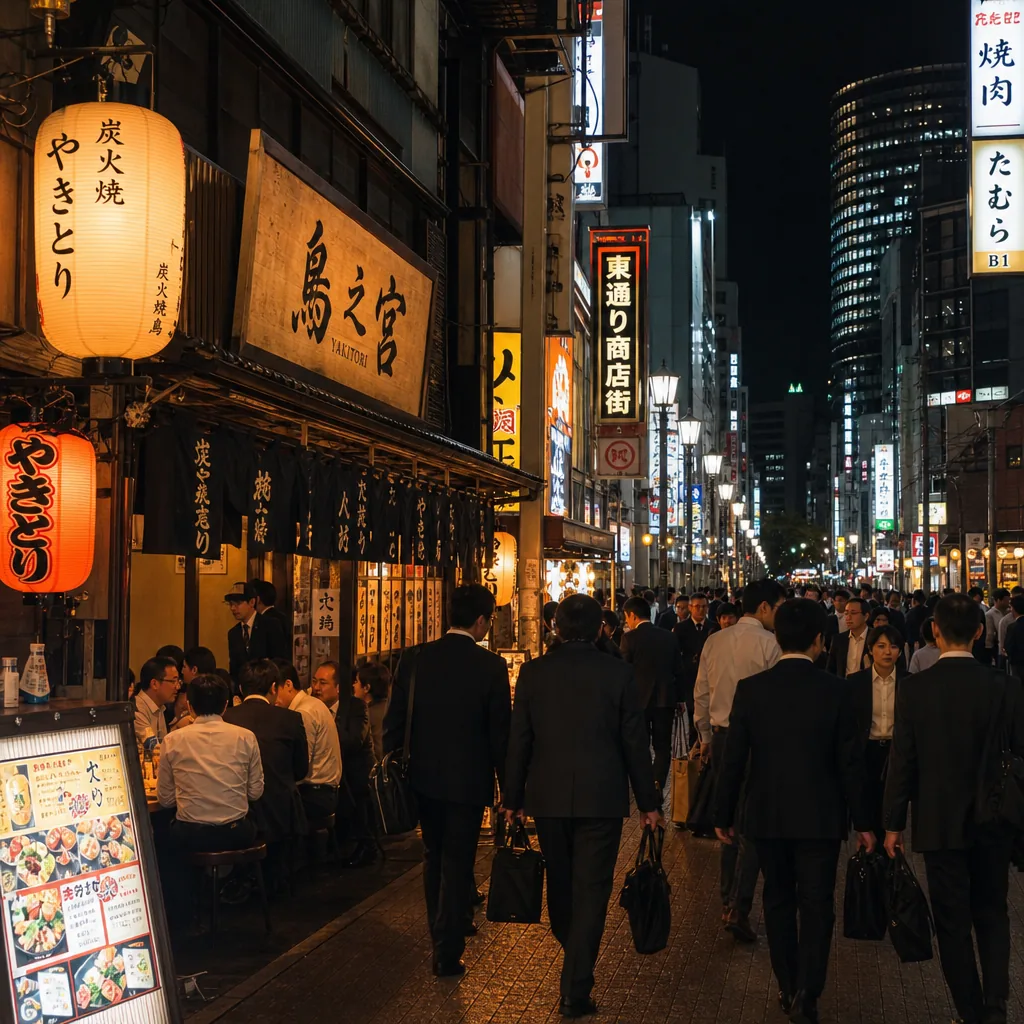
Where can I find english-friendly yakitori in Osaka after work?
Find English-friendly yakitori in Osaka after work by targeting Umeda, Namba, and Honmachi, plus booking sites and multilingual menus.
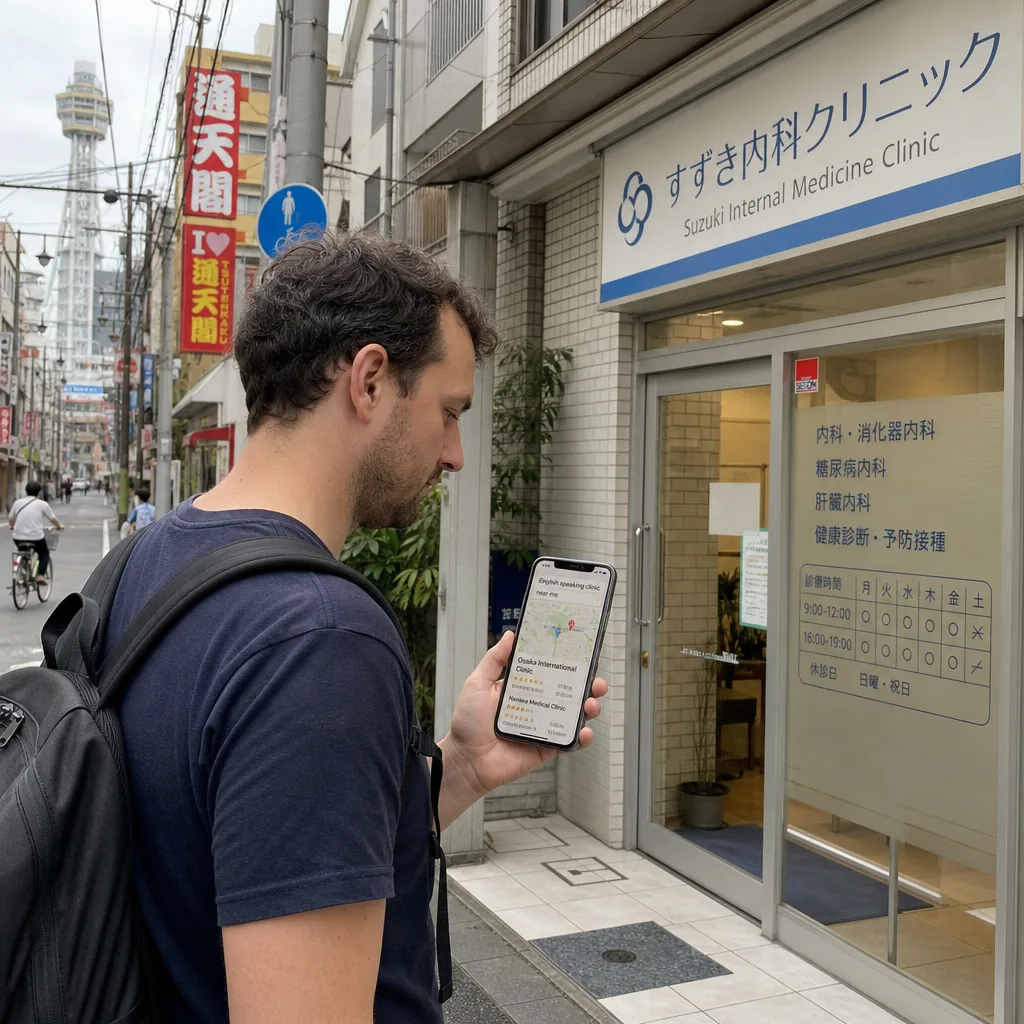
Yes—expats can find an English-speaking clinic in Osaka quickly if they start with official multilingual resources instead of random searches. The fastest route is to use Osaka Prefecture and Osaka City medical guides, then confirm language support, appointment rules, and referral needs before you go [1][2].
In Osaka, not every clinic handles foreign patients the same way. Some facilities can help in English at reception, but only on certain days or with limited staff, and many Japanese clinics still prefer appointments over walk-ins. If you wait until you are already sick to check these details, you may lose time calling multiple places or be sent to a different department.
A practical approach is to decide first whether your issue is routine, semi-urgent, or an emergency. For routine care, a neighborhood clinic is often enough. For sudden fever, severe pain, or symptoms that may need faster evaluation, use public emergency guidance first instead of trying to guess which clinic to visit [5].
The best starting point is the Osaka Emergency and Medical Information Center, operated through Osaka Prefecture. Its multilingual medical information and interpreter support service is designed to help residents understand where care is available and how to access it [1]. For expats, this is useful because it points you toward real facilities rather than relying on unverified listings.
Osaka City also provides a multilingual guide to medical institutions that lets you search for clinics and hospitals by language and area [2]. This is especially helpful if you need something close to home in neighborhoods such as Umeda, Tennoji, Namba, or near your station, because location matters when you are not feeling well.
For broader Japan-wide guidance, AMDA International Medical Information Center offers multilingual support and can explain where foreign residents should seek care [3]. If you want to verify whether a facility exists in the national system before calling, the Ministry of Health, Labour and Welfare’s Search for Medical Institutions tool can help you check hospitals, clinics, and departments [4].
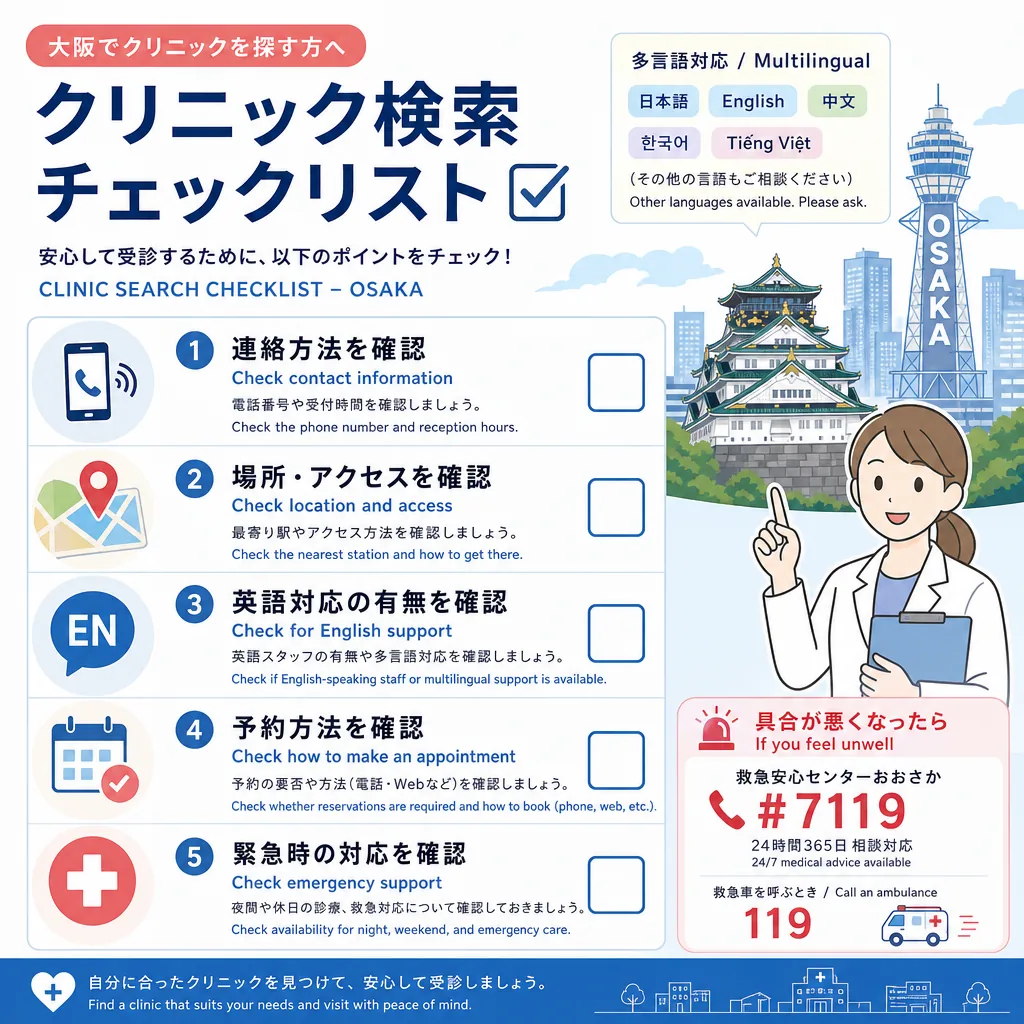
Once you have a shortlist, call or check the clinic’s details before leaving home. The most useful questions are straightforward and concrete:
These details matter because a clinic may appear “foreign-friendly” online but still have limited English support in practice. If you have an existing condition, also ask whether follow-up visits can be arranged in English, and whether the nearby pharmacy can fill prescriptions with any language assistance. A clinic and the pharmacy next door do not always offer the same level of English support.
It also helps to confirm the neighborhood and transport route. Osaka’s larger stations can be crowded, and if you are unwell, a clinic that looks close on a map may still be inconvenient if it requires a long transfer or a busy walk from the station. Pick the most direct option that clearly matches your language needs.
If the situation feels urgent, do not spend too long searching on your own. Osaka City provides emergency medical information and consultation guidance for residents, which is the right starting point when you need fast direction [5]. For severe symptoms, use the proper emergency number first and follow public guidance rather than trying to self-select a clinic.
Use public emergency help when you have symptoms such as trouble breathing, heavy bleeding, chest pain, loss of consciousness, or a rapidly worsening condition. In those cases, the problem is not finding the “best” English-speaking clinic; it is getting the right emergency response as fast as possible. Once you are stabilized, hospital staff or the public information services can help you with the next step.
In practice, the fastest emergency workflow in Osaka is:
Preparing a few items in advance can make a big difference, especially if you are visiting a clinic in Osaka for the first time. Keep your health insurance card, residence card, passport, and a written list of medications in your bag. If you take prescriptions regularly, save the names and doses in English so you can show them quickly.
It also helps to write down the exact symptom onset time. In Japan, doctors may ask when symptoms started, whether you have a fever, and whether you already took any medicine. Having this written out reduces confusion if you are nervous or speaking a second language.
Before you leave, verify three things: the clinic accepts your type of visit, the pharmacy nearby can fill the prescription, and the payment method works for you. Some clinics still prefer cash, and some expect patients to return for test results or specialist referrals rather than handling everything in one visit. Knowing this ahead of time saves a second trip.
For expats in Osaka, the quickest reliable method is not a generic internet search—it is using official city and prefectural medical guides first, then confirming English support by phone or through the clinic’s listing [1][2][4]. If you do that, you can usually narrow the options fast and get to a suitable clinic without unnecessary stress.
CallButler is a multilingual concierge service that handles research, coordination, and bookings so you do not have to navigate language barriers or unfamiliar systems alone. If you need help related to How can expats find English-speaking clinics in Osaka quickly? or the tasks around it, our team can step in to manage the details and keep things moving smoothly.
Find English-friendly yakitori in Osaka after work by targeting Umeda, Namba, and Honmachi, plus booking sites and multilingual menus.
Looking for halal ramen in Kyoto after 10 p.m.? Here’s where to check, which areas are most practical, and how to verify hours and halal status.
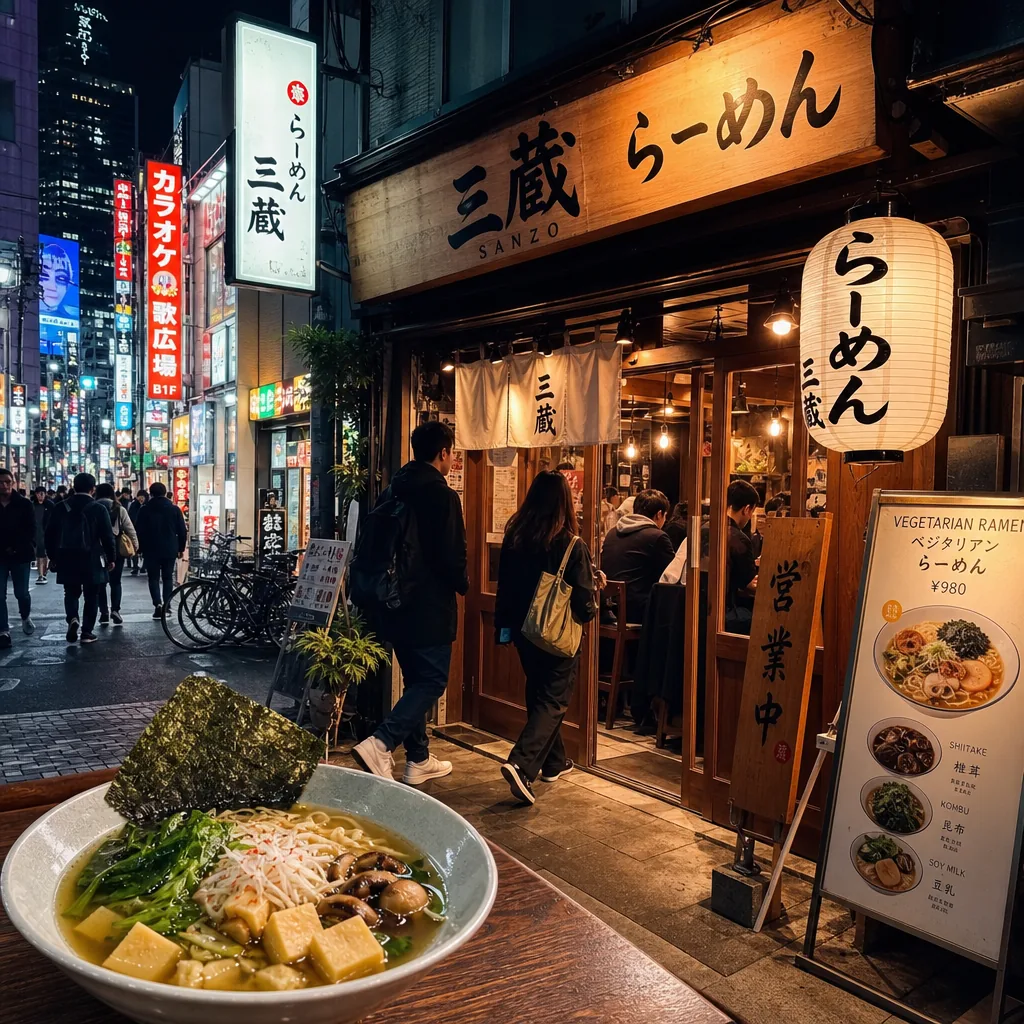
Find late-night vegetarian ramen in Tokyo by focusing on Shibuya, Shinjuku, and Roppongi, then verify broth, hours, and vegan menu details.