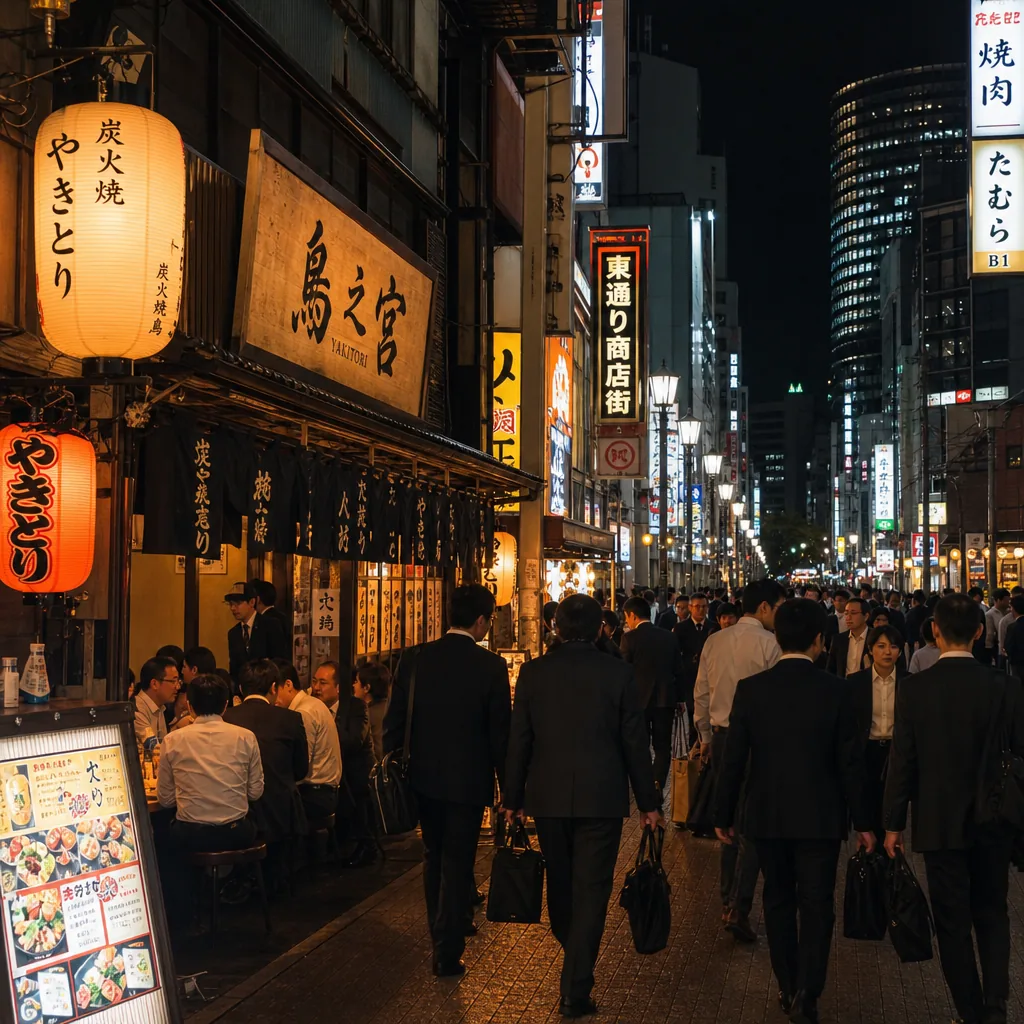
Where can I find english-friendly yakitori in Osaka after work?
Find English-friendly yakitori in Osaka after work by targeting Umeda, Namba, and Honmachi, plus booking sites and multilingual menus.
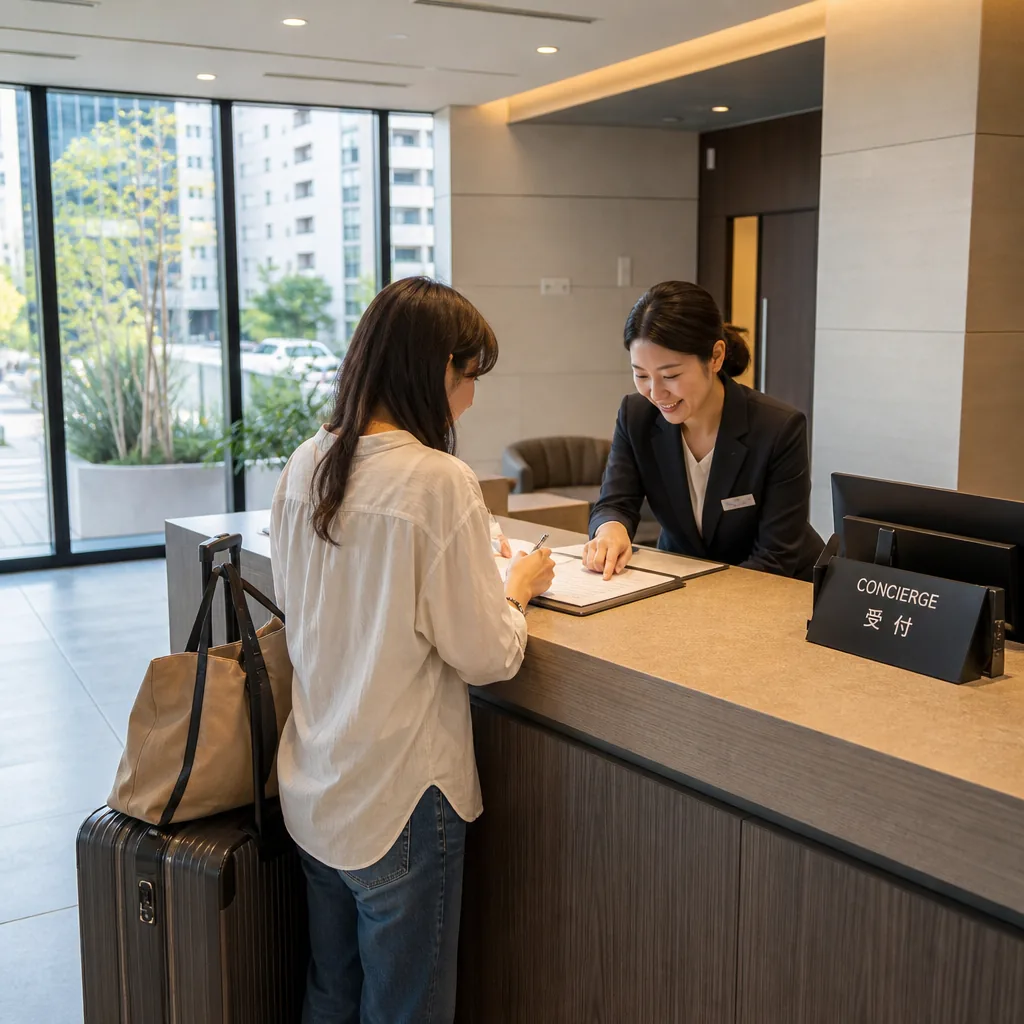
Yes—a concierge or relocation support service can make a Tokyo apartment move-in much smoother by coordinating building rules, utility start-up, and essential paperwork. This is especially helpful if you are new to Japanese rental customs, because many move-in steps in Tokyo require advance notice, local office visits, or Japanese-language instructions [1][3].
In Tokyo, “concierge help” for move-in usually means practical coordination rather than luxury service. A relocation assistant can contact the property manager, help interpret the building’s move-in rules, and align the move with your moving company so you do not get blocked by reserved elevator times or designated moving routes. Tokyo apartments commonly have building-specific requirements, and the Tokyo Metropolitan Government’s living guide emphasizes that daily procedures and community rules can vary by area and housing type [3].
For example, a concierge can confirm whether the building requires advance notice before moving day, whether the service elevator must be booked, and whether cartons or furniture must be moved through a back entrance. In neighborhoods with dense apartment buildings such as Shinjuku and other central wards, these rules are often enforced more strictly because shared spaces are limited [2][3].
The biggest value of concierge help is reducing friction on moving day. In Tokyo, move-in timing often depends on the building office, management company, and the moving carrier all agreeing on the same schedule. A concierge can make sure the move-in plan is set early, then confirm details such as access hours, parking or loading space, and who will receive the keys. That matters because delays can add extra moving-company charges if the crew has to wait.
If you are renting in a tower in areas like Shinjuku, Minato, or Chiyoda, the property may require prior notice for large-item deliveries and use of the elevator. A concierge can help translate those instructions into a checklist and keep every party aligned. This is especially useful if you are arriving from abroad and do not yet know how Japanese apartment management teams prefer to communicate [2][3].
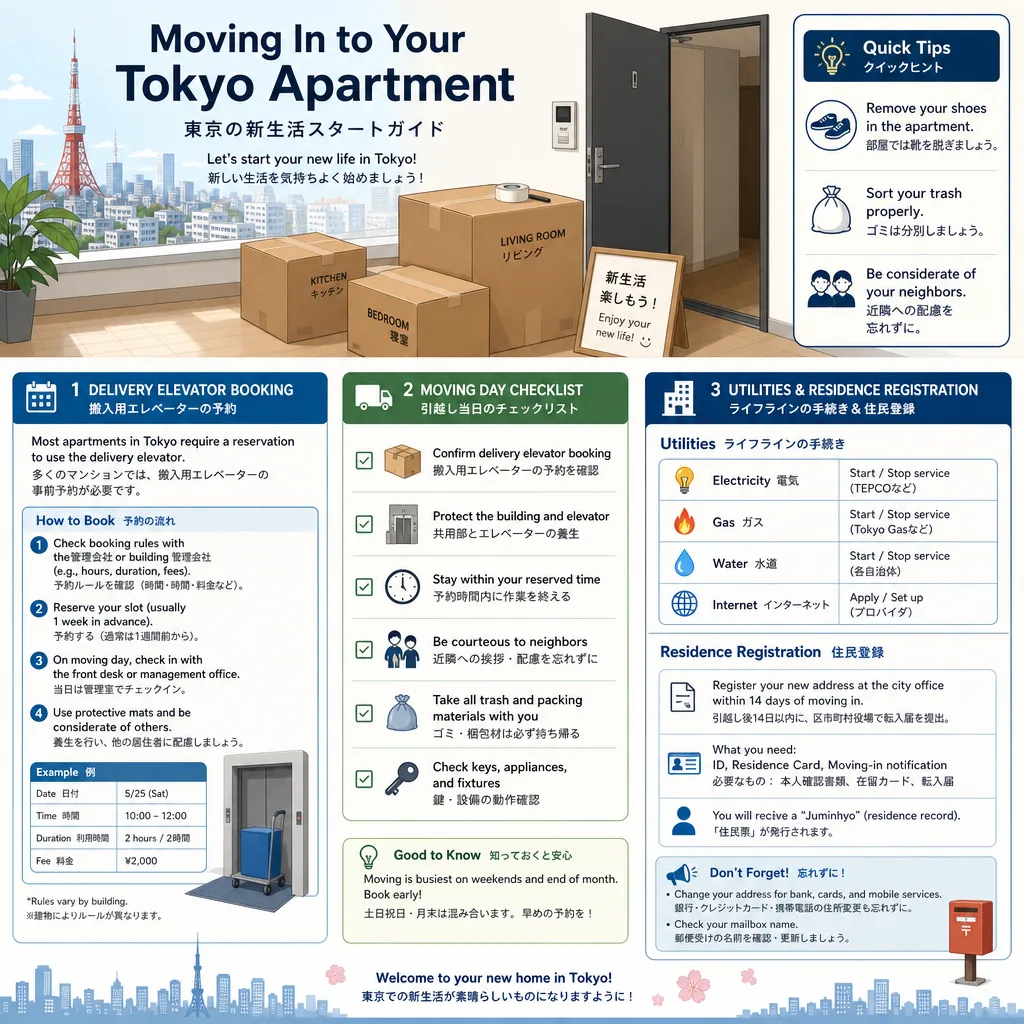
Practical move-in coordination usually includes:
Another common reason to use concierge support is utility activation. Electricity and gas do not always start automatically when you get the keys, and the setup process may require advance contact. TEPCO provides English guidance for starting and stopping electricity service, while Tokyo Gas also offers English customer information for gas-related procedures [4][5].
In practice, a concierge can help you identify which services need to be arranged before move-in, then remind you of the timing so you are not arriving to an empty apartment with no power or hot water. That is especially important in Tokyo, where many residents want basic services ready on the first night. A support service can also help you compare start dates and confirm whether online forms are available in English, which can save time if you are trying to manage everything in one day [4][5].
Internet installation can also be a bottleneck, though exact schedules depend on the provider and building wiring. A concierge cannot speed up every contractor, but they can help you line up appointments early and explain what information a provider will ask for, such as your name as it appears on the lease and the unit number.
After moving in, Tokyo residents must take care of local registration and neighborhood procedures. New residents are generally required to register their address at the ward or city office within 14 days of moving in, and the Tokyo Metropolitan Government’s living guide and foreign-resident resources explain these daily-life procedures [2][3]. A concierge can help you understand which office to visit and what documents to bring.
This support is especially helpful in wards with high numbers of international residents, such as Shinjuku, where the city office provides foreign-resident information in English [2]. If you have just arrived, the difference between a smooth registration visit and a frustrating one often comes down to having the right documents and knowing which counter to use. Concierge help can reduce that confusion by preparing a step-by-step checklist before you go.
Typical post-move tasks a concierge may explain include:
Waste sorting is another place where Tokyo’s local rules matter. The Tokyo Metropolitan Government provides guidance on sorting and disposal of waste, and this can differ by municipality [6]. A concierge can help translate those rules into a household routine—such as which day to put out burnable waste, bottles, or cans—so you do not accidentally miss pickup or break building rules [6].
Concierge assistance is most valuable when the move involves multiple unknowns at once: a new ward, a Japanese-language lease, a large building with strict management rules, or a tight arrival schedule. It is also useful for first-time renters, people moving from abroad, and anyone who wants to avoid last-minute surprises around keys, elevators, or utility start dates [1][3].
If you are deciding whether to hire help, think about your move in three parts: building coordination, utilities, and government procedures. If any one of those feels unfamiliar, concierge support can save time and reduce mistakes. In a city as large and rule-driven as Tokyo, that can be the difference between a stressful first week and a move-in that feels organized from day one [1][3].
For many newcomers, the best approach is to use concierge support for the first move only, then handle later routine tasks yourself once you understand the local system. That way, you get the benefits of expert guidance for the confusing parts while quickly learning how Tokyo apartments, ward offices, and utility providers actually work [2][4][6].
CallButler is a multilingual concierge service that handles research, coordination, and bookings so you do not have to navigate language barriers or unfamiliar systems alone. If you need help related to How can a concierge help with Tokyo apartment move-in tasks? or the tasks around it, our team can step in to manage the details and keep things moving smoothly.
Find English-friendly yakitori in Osaka after work by targeting Umeda, Namba, and Honmachi, plus booking sites and multilingual menus.
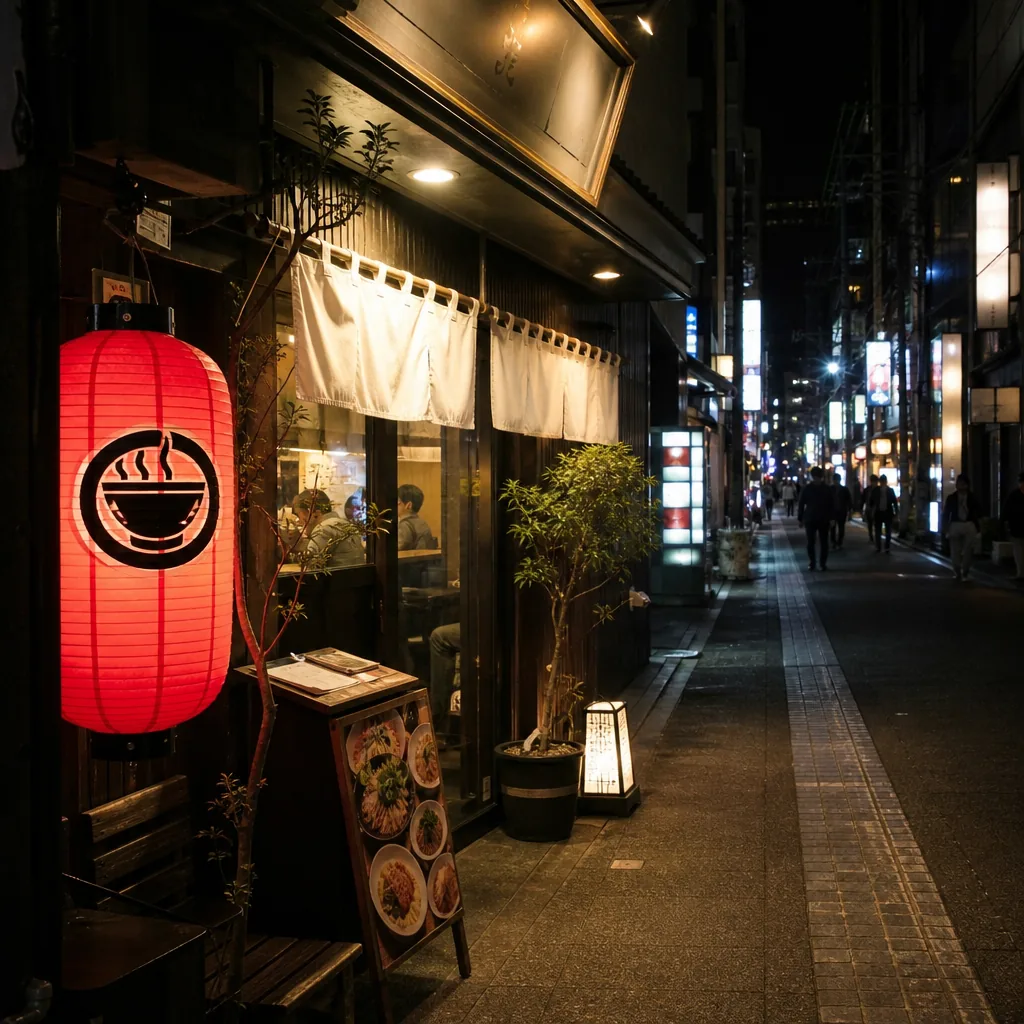
Looking for halal ramen in Kyoto after 10 p.m.? Here’s where to check, which areas are most practical, and how to verify hours and halal status.
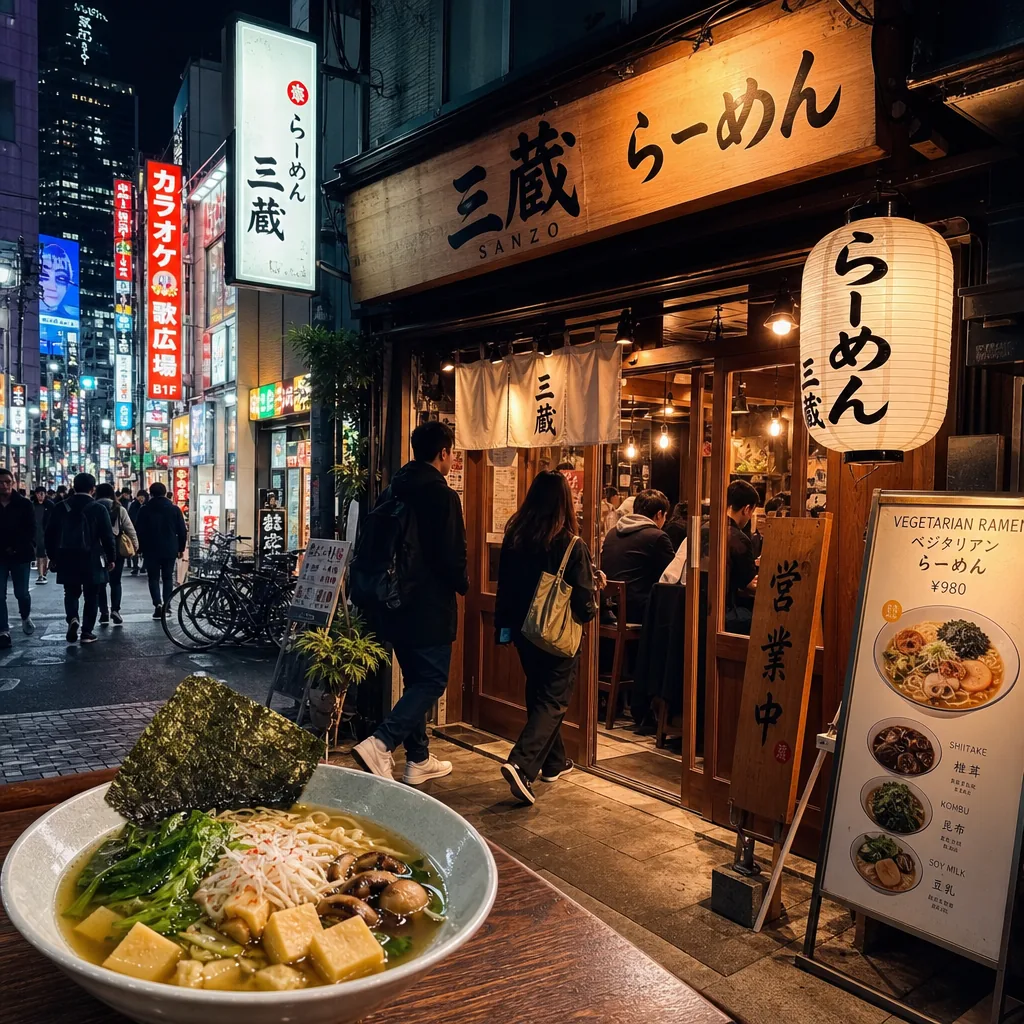
Find late-night vegetarian ramen in Tokyo by focusing on Shibuya, Shinjuku, and Roppongi, then verify broth, hours, and vegan menu details.