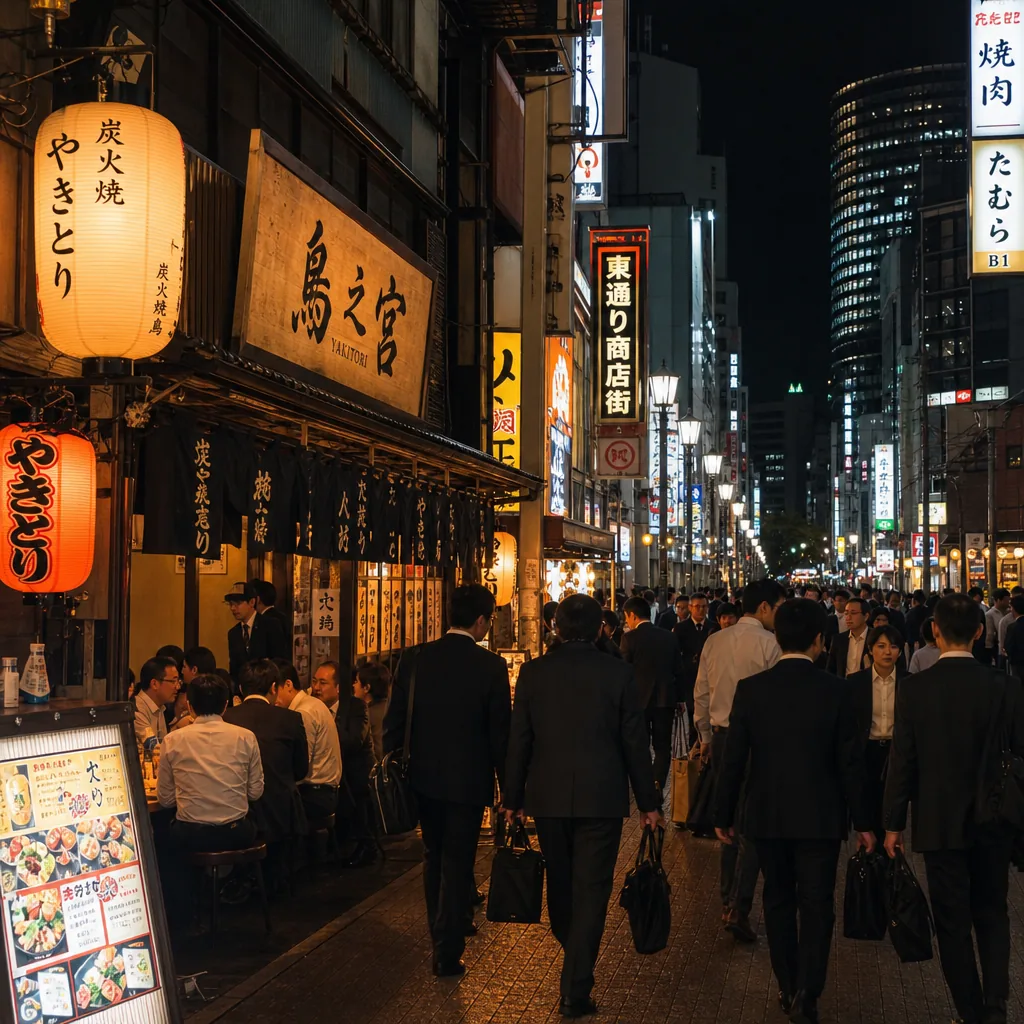
Where can I find english-friendly yakitori in Osaka after work?
Find English-friendly yakitori in Osaka after work by targeting Umeda, Namba, and Honmachi, plus booking sites and multilingual menus.
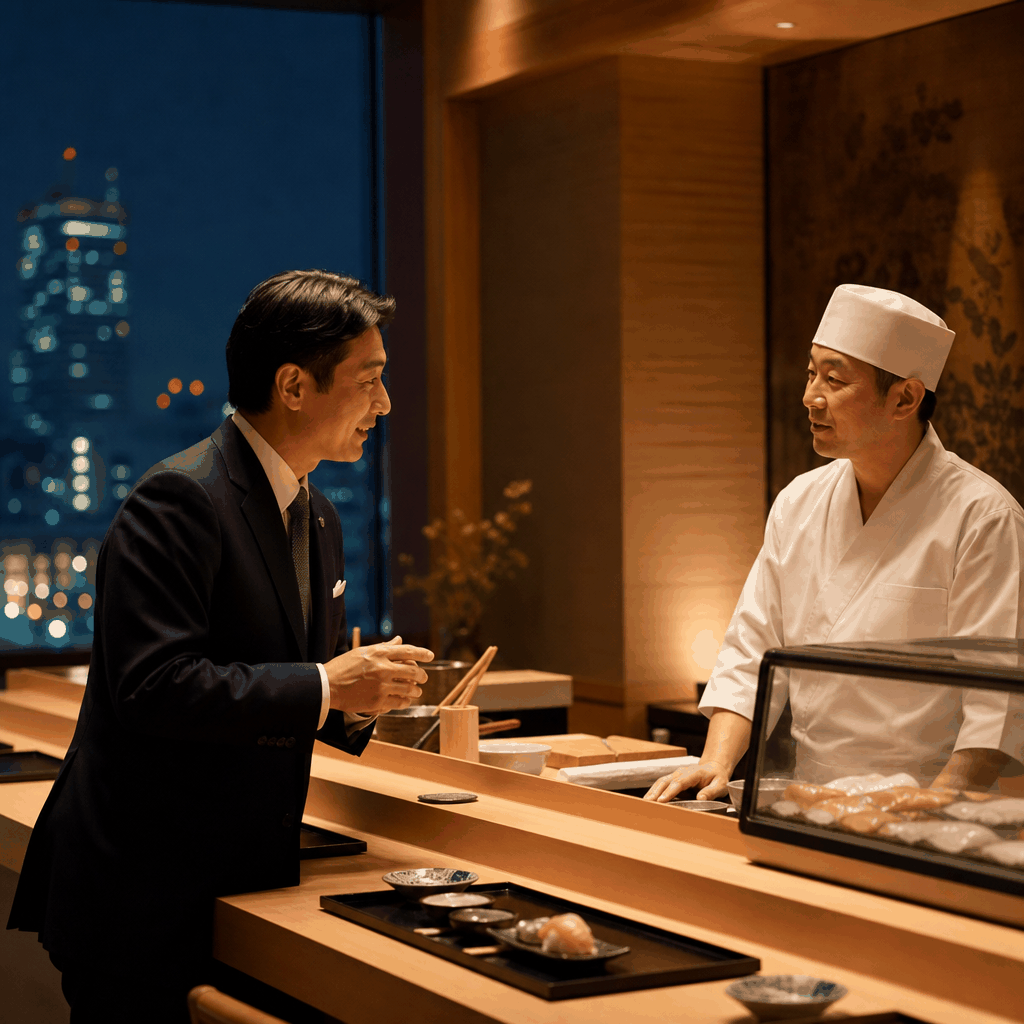
Yes—often, but not automatically. In Tokyo, a concierge can help a sushi restaurant understand dietary needs and decide whether an omakase course can be adjusted, but success depends on the chef’s flexibility, the exact restriction, and how early the request is made. Tokyo’s tourism guidance and Japan’s national travel resources both stress advance communication and clear ingredient disclosure for allergy and diet-related requests [1][2].
“Omakase” literally means leaving the selection to the chef, so the meal is designed around the day’s best ingredients and the restaurant’s standard flow. At a traditional sushi counter in Tokyo, that usually means the menu is not fully customizable in the way a set à la carte dinner might be. The Tokyo Metropolitan Government notes that allergy requests should be discussed directly with restaurants in advance, because even a simple-seeming dish can include hidden ingredients such as broth, sauce, seasoning, or garnish [1].
That matters in Tokyo because omakase often includes more than raw fish and rice. Vinegar for the rice, soy-based sauces, miso, dashi, or pickled side dishes can all contain ingredients that matter for allergies or religious restrictions. JNTO advises travelers to identify the exact foods they must avoid, rather than asking only for a broad label like “allergy” or “no fish” [2].
A hotel or travel concierge can help in three practical ways: they can translate your request into Japanese, ask follow-up questions the restaurant might need answered, and give the chef time to decide whether a safe alternative is possible. That intermediary role is especially useful in Tokyo, where many high-end sushi counters communicate best through a staff member who can handle nuance and ingredient lists accurately [2][3].
In practice, a concierge may be able to secure one of these outcomes:
What a concierge usually cannot guarantee is a fully redesigned omakase menu at a restaurant that does not normally customize. Tokyo’s guidance for visitors with allergies warns that kitchens may not be able to avoid cross-contact, especially in small or specialized restaurants [1][3].
Not all restrictions are treated the same way. In Tokyo, food allergies are generally easier to discuss than preference-based diets because chefs can evaluate a specific ingredient and decide whether it can be removed or isolated [1][2]. Religious dietary needs can also be workable, but they often require the restaurant to check many ingredients carefully. The Ministry of Agriculture, Forestry and Fisheries explains that halal considerations may involve more than the obvious meat component, because sauces, alcohol, and processing methods can matter too [4].
Here is the rough order of practicality for omakase sushi in Tokyo:
For example, a concierge might have better luck with a restaurant agreeing to omit shellfish than with a strict vegan request at a sushi counter that builds its course around fish stock and seasonal seafood. If the restriction is severe, the safest answer may be to choose a different dining format rather than force an omakase reservation [1][2].
Timing is critical. JNTO and Tokyo’s visitor guidance both emphasize advance notice, because same-day requests are much less likely to be accepted at higher-end restaurants [1][2]. If you are staying at a Tokyo hotel, ask the concierge as soon as you know the restaurant you want, ideally several days ahead and earlier for famous counters that book out quickly.
A good request should be specific and written. The concierge should be able to tell the restaurant exactly what you can and cannot eat, in Japanese, before the reservation is confirmed. That should include hidden sources of the ingredient, not just the headline item. For instance, if you avoid gluten, the restaurant should know to check soy sauce, tempura batter, and any seasoned vinegars or sauces; if you avoid alcohol for religious reasons, they should check mirin, sake, and other cooking liquids [2][4].
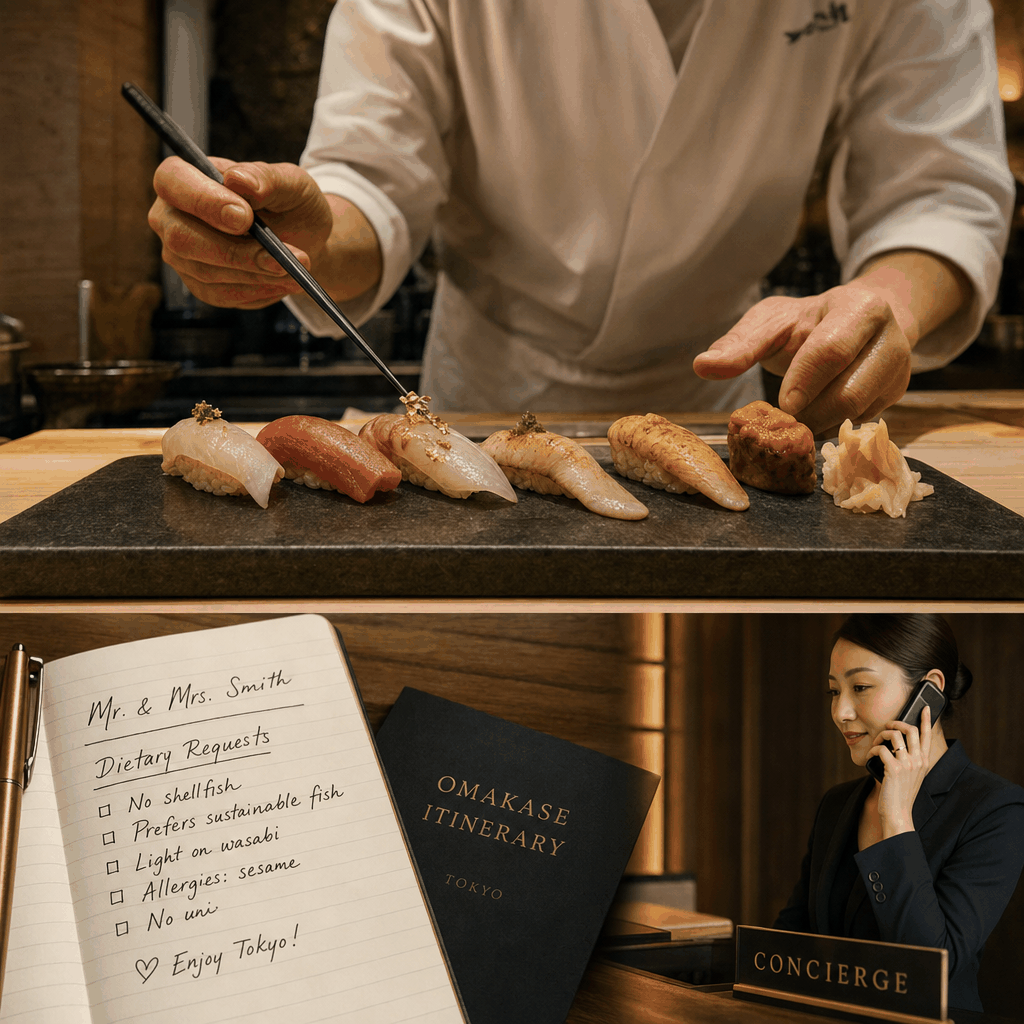
If the concierge can, ask them to confirm the answer in writing from the restaurant. That avoids misunderstandings at the counter and gives you a chance to decide whether the meal is actually safe before you arrive [1][3].
Before you finalize the booking, ask four concrete questions. First, can the restaurant accommodate the specific restriction at all? Second, can it avoid broth, sauce, vinegar, seasoning, and garnish ingredients, not just the main item? Third, can it prevent cross-contact with the allergen or restricted ingredient? Fourth, is the chef comfortable doing this without breaking the omakase format?
These questions matter because a restaurant may say “yes” to an ingredient removal while still using the restricted item elsewhere in the course. For example, a sushi counter may be able to skip a shellfish course but still use fish-based stock or soy sauce in another part of the meal. Tokyo’s allergy resources warn travelers not to assume a dish is safe based only on its visible components [1][3].
If you are requesting halal-compliant dining, ask whether alcohol-based seasonings or non-halal ingredients appear in sauces, marinades, or stock. MAFF’s guidance shows that halal concerns in Japan can extend beyond meat alone [4]. If the restaurant cannot answer clearly, that is a sign to look elsewhere.
Sometimes the best answer is not “try harder,” but “choose another type of restaurant.” In Tokyo, that is especially true for severe allergies, strict vegan diets, or religious requirements that need stronger guarantees than a typical omakase counter can provide [1][2][3].
Consider a different format if:
Tokyo has many dining options beyond traditional sushi counters. A hotel concierge can often steer you toward restaurants that are more flexible while still offering a high-quality Tokyo food experience. That is often the safest path when the omakase format and your dietary needs are not a clean match [1][2].
So, can a concierge book omakase sushi with dietary needs in Tokyo? Yes, especially when the restriction is specific, the request is made early, and the concierge can communicate in Japanese. But the more severe or complex the need, the more important it is to verify ingredients carefully and be ready to choose a different restaurant if the chef cannot accommodate you safely [1][2][3][4].
CallButler is a multilingual concierge service that handles research, coordination, and bookings so you do not have to navigate language barriers or unfamiliar systems alone. If you need help related to Can a concierge book omakase sushi with dietary needs in Tokyo? or the tasks around it, our team can step in to manage the details and keep things moving smoothly.
Find English-friendly yakitori in Osaka after work by targeting Umeda, Namba, and Honmachi, plus booking sites and multilingual menus.
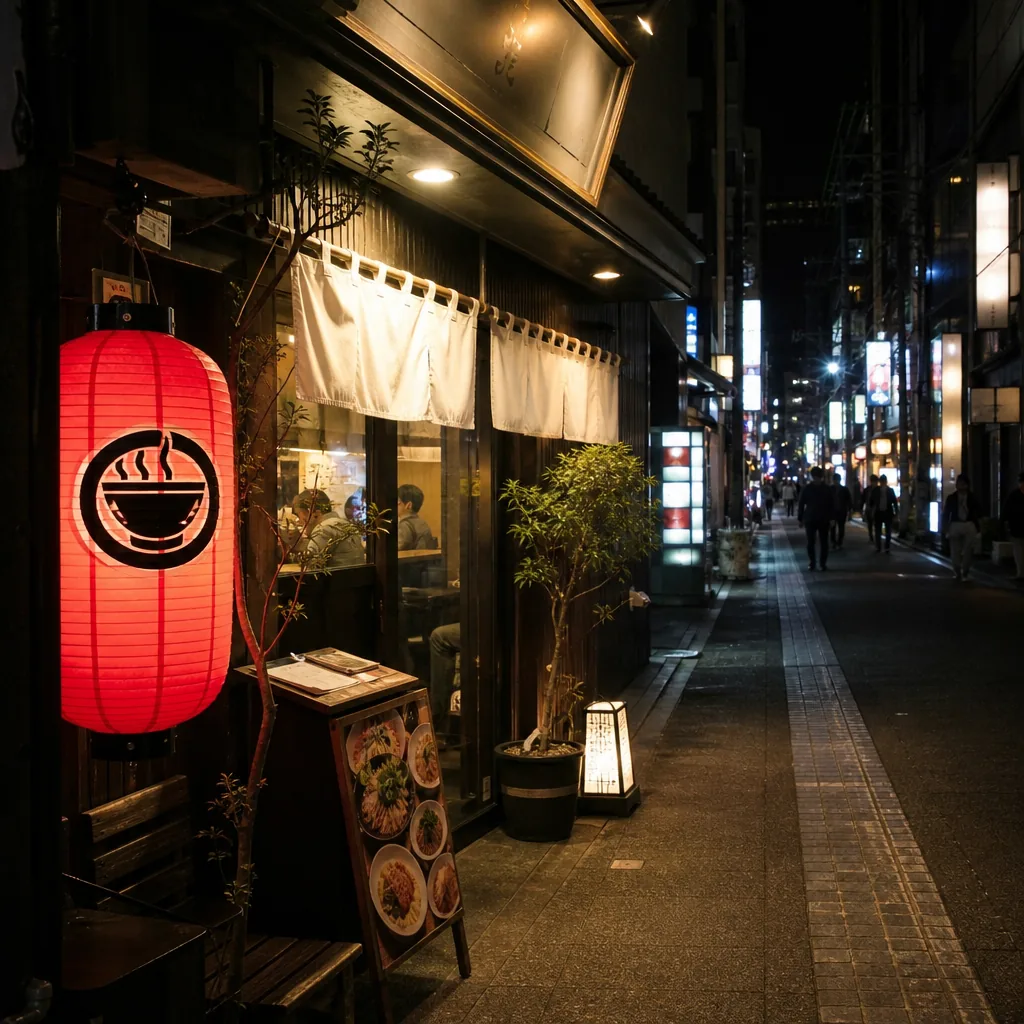
Looking for halal ramen in Kyoto after 10 p.m.? Here’s where to check, which areas are most practical, and how to verify hours and halal status.
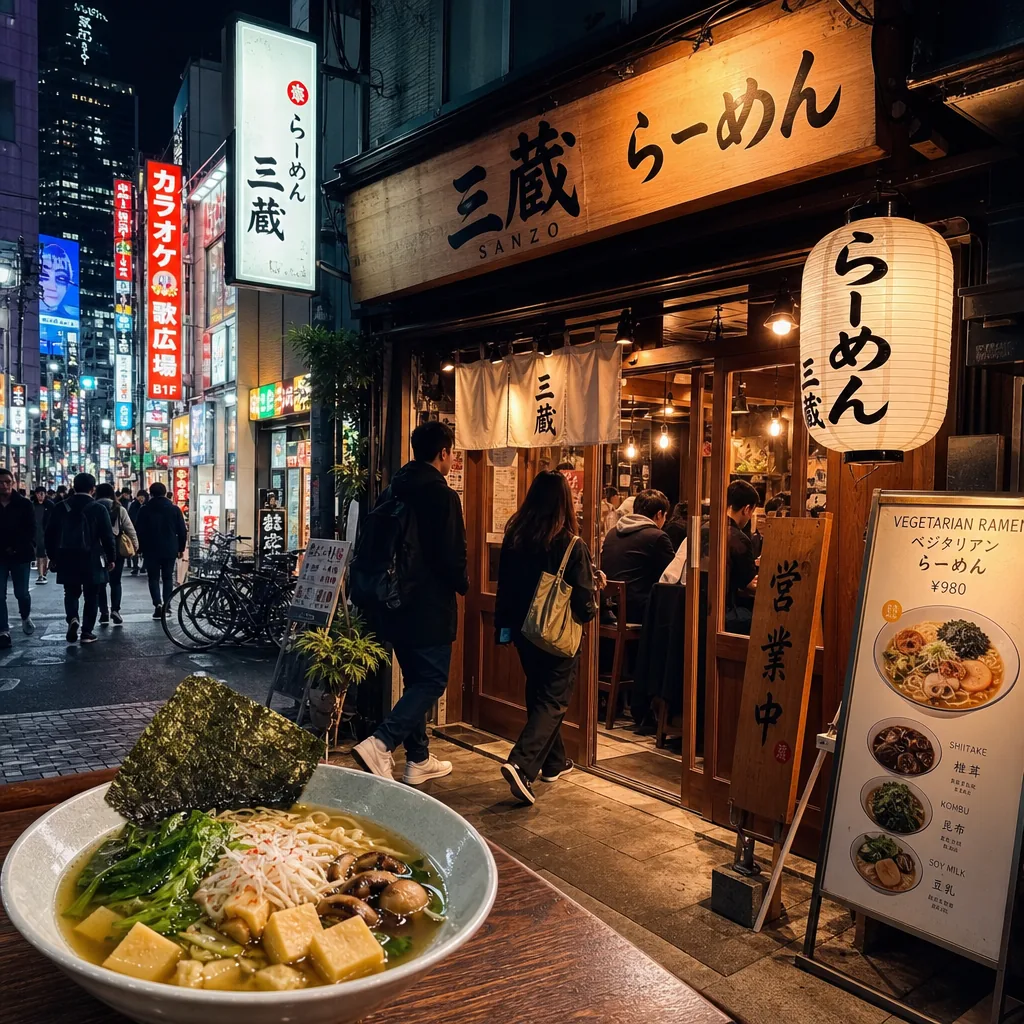
Find late-night vegetarian ramen in Tokyo by focusing on Shibuya, Shinjuku, and Roppongi, then verify broth, hours, and vegan menu details.