Article overview: Halal food guide for expats in Shanghai
Shanghai’s Muslim community and halal food scene are active and varied. This guide explains how to spot 清真 (qīngzhēn) halal labeling, where to find reliable halal restaurants and groceries, which mosques and community resources to consult, and the apps and phrases that make dining easier for expats in Shanghai.
Understanding halal labeling and certification in China
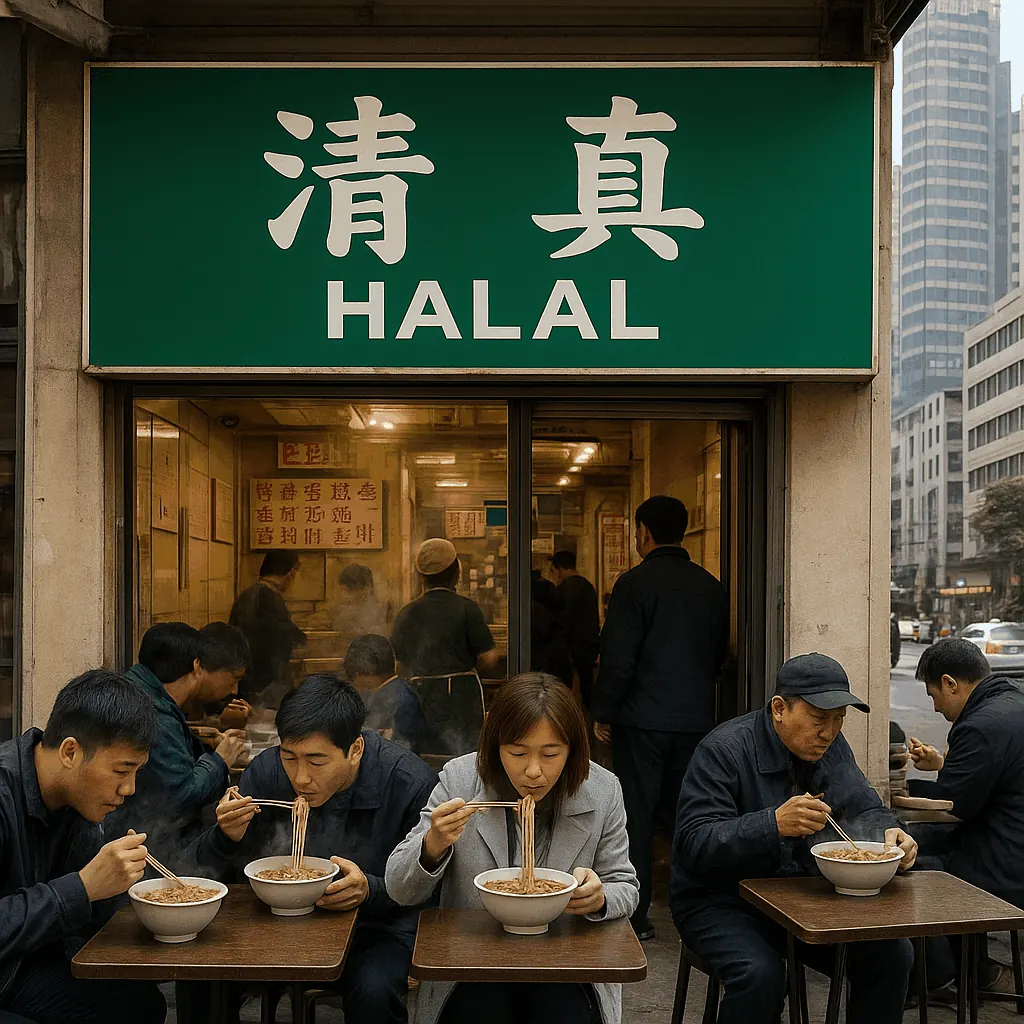
In China the character 清真 (qīngzhēn) is the common signifier for halal on storefronts and menus; many Shanghai businesses use this label rather than an international private certificate. Nationally, the China Islamic Association provides guidance on halal practices and general religious matters; local administration and venue lists are maintained by the Shanghai Municipal Ethnic and Religious Affairs Commission, which records registered mosques and religious venues in the city [2][1]. Expect a mix: officially registered mosques and community canteens will often display administrative listings, while standalone restaurants rely on community reputation and the 清真 label [1][2].
Where to find halal restaurants (neighborhoods and cuisines)
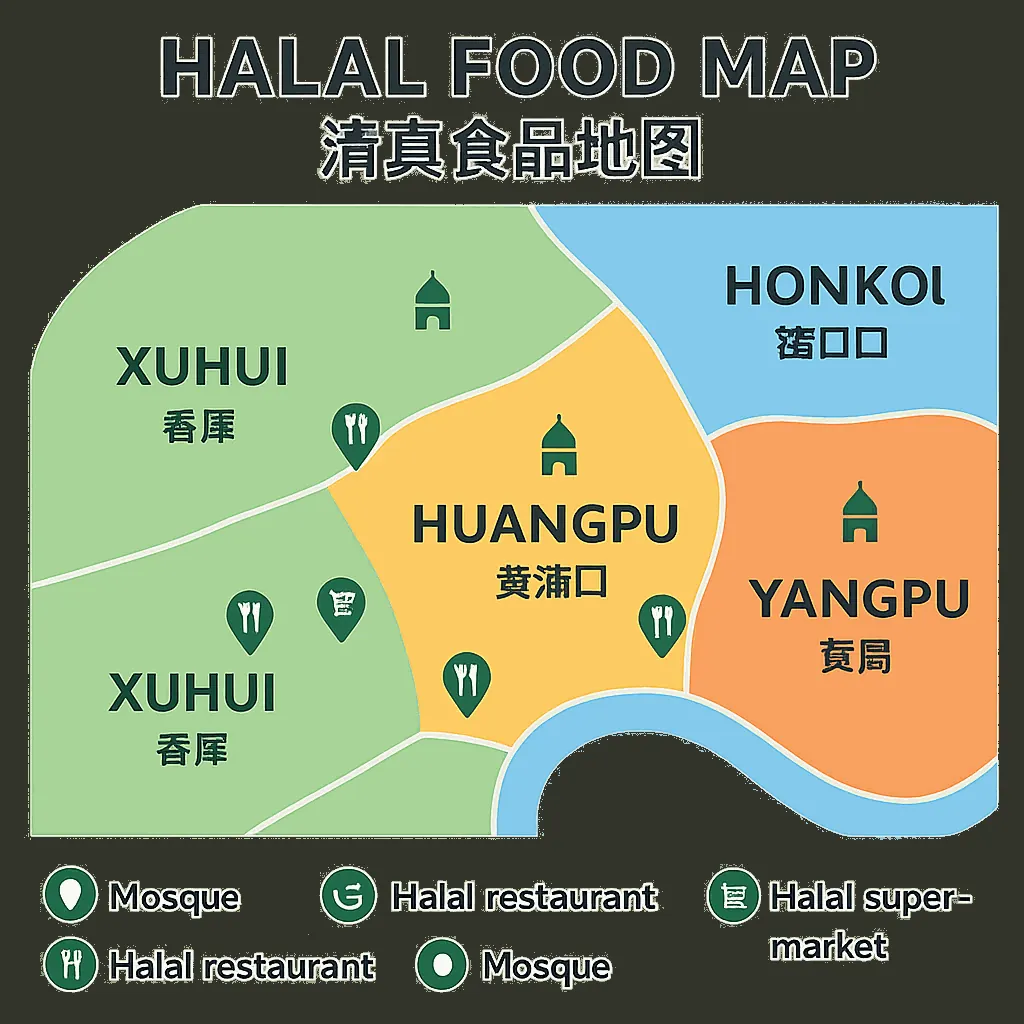
Halal options in Shanghai include northwest Chinese staples (Lanzhou beef noodles 兰州拉面), Uyghur kebabs and breads, Middle Eastern restaurants, and Muslim canteens at university or community centers. TravelChinaGuide lists common halal offerings and notes the variety in the city’s eateries [3]. Popular areas to begin your search are those with longstanding Muslim venues such as the Xiaotaoyuan area in Huangpu and around Hengshan Road in Xuhui, where mosques and associated businesses cluster [1]. Many user-reviewed halal spots also appear near major transport hubs on local platforms [3][4].
Huangpu / Xiaotaoyuan area — look for small family-run 清真 restaurants near the historic Xiaotaoyuan Mosque [1].
Xuhui / Hengshan Road — restaurants and canteens near Hengshan Road Mosque are common starting points for halal options [1].
Near universities and larger transit nodes — search these areas on Dianping to find Muslim canteens and northwest-style noodle shops [4][3].
Mosques and community resources
Registered mosques are an excellent local resource for halal recommendations and Ramadan schedules. Two named venues you can look up on municipal listings are Xiaotaoyuan Mosque (小桃园清真寺) and Hengshan Road Mosque (衡山路清真寺); both are included among the city’s registered religious venues on Shanghai municipal pages [1]. For broader organizational guidance, consult the China Islamic Association for national-level guidance and policy context [2]. Local mosque noticeboards and WeChat groups often announce if a community canteen is serving iftar or charity meals during Ramadan [1][2].
Halal groceries, butchers and supermarkets
Large supermarkets and specialist halal shops in Shanghai stock labeled halal meat and ingredients. Use the 清真 tag on Dianping to find dedicated halal butchers, supermarkets, and shops with user photos and reviews — this crowdsourced route is especially useful for verifying whether a store truly separates halal items rather than just selling imported products [4]. TravelChinaGuide also recommends checking larger markets for ready-made northwest specialties and packaged halal goods [3].
Using local apps and review sites to find halal options
Dianping (大众点评) is the primary local review platform for food and is searchable with the 清真 keyword; it provides user photos, addresses, opening hours and crowd-sourced verification of halal status [4]. For English-language reporting, SHINE / Shanghai Daily often runs local features and can flag noteworthy halal venues or community stories to help expats navigate options [5]. When researching a place, look for multiple recent photos of food and certificates or staff statements in user comments.
Dining tips for expats (language, etiquette, payment)
Practical on-the-ground tips:
Show the character 清真 on your phone or point to the sign — it saves confusion when menus are Chinese-only.
Use the phrase 请问这是清真的吗?(Qǐngwèn zhè shì qīngzhēn ma?) — “Is this halal?” — in messages or when asking staff.
Pointing at menu items or photos works well if there’s a language gap; many restaurants accept mobile payments (WeChat Pay / Alipay) and occasionally cash.
If you need strict separation of pork products, ask to see where meat is stored or picked; reputable halal butchers or canteens will clarify their supply chain when asked.
Ramadan and seasonal considerations
Ramadan dates change each year. Local mosques and community centers typically post updated prayer and iftar schedules — check the Shanghai Municipal Ethnic and Religious Affairs Commission page for registered venues and local notices, and follow mosque WeChat accounts when possible for the fastest updates [1][2]. During Ramadan you may also find more pop-up iftar services and community meals advertised on Dianping or SHINE [4][5].
Quick checklist and contacts
Look for 清真 on signs and menus; search Dianping with 清真 for reviews and photos [4].
Confirm by asking 请问这是清真的吗? if uncertain, and show the character 清真 to staff.
Consult the Shanghai Municipal Ethnic and Religious Affairs Commission listings for registered mosques such as Xiaotaoyuan and Hengshan Road if you need venue or prayer information [1].
Use SHINE / Shanghai Daily for English-language local coverage of halal venues and community announcements [5].
Following these steps will help you find reliable halal food and community support in Shanghai, whether you’re looking for Lanzhou-style noodles, Uyghur bread and kebabs, or a mosque canteen serving community meals during Ramadan. When in doubt, the combination of local administrative listings, the 清真 label, and crowdsourced reviews on Dianping is the most practical verification route for expats [1][2][4][3][5].
How CallButler Can Help
CallButler is a multilingual concierge service that handles research, coordination, and bookings so you do not have to navigate language barriers or unfamiliar systems alone. If you need help related to Halal food guide for expats in Shanghai or the tasks around it, our team can step in to manage the details and keep things moving smoothly.