Article overview: Bangkok street food: top districts, order…
Bangkok’s street food is a living part of the city — fast, affordable, and concentrated in neighborhood clusters where signature dishes and long-running stalls define a local lane. This guide focuses on which districts to prioritize, simple phrases and gestures to speed ordering, practical payment and portion tips, and evidence-backed hygiene practices you can use to eat confidently in Bangkok streets. Sources include local tourism guidance and major food coverage to keep recommendations grounded in what’s actually popular and monitored in the city [1][2][3][4][5].
Why Bangkok street food is essential
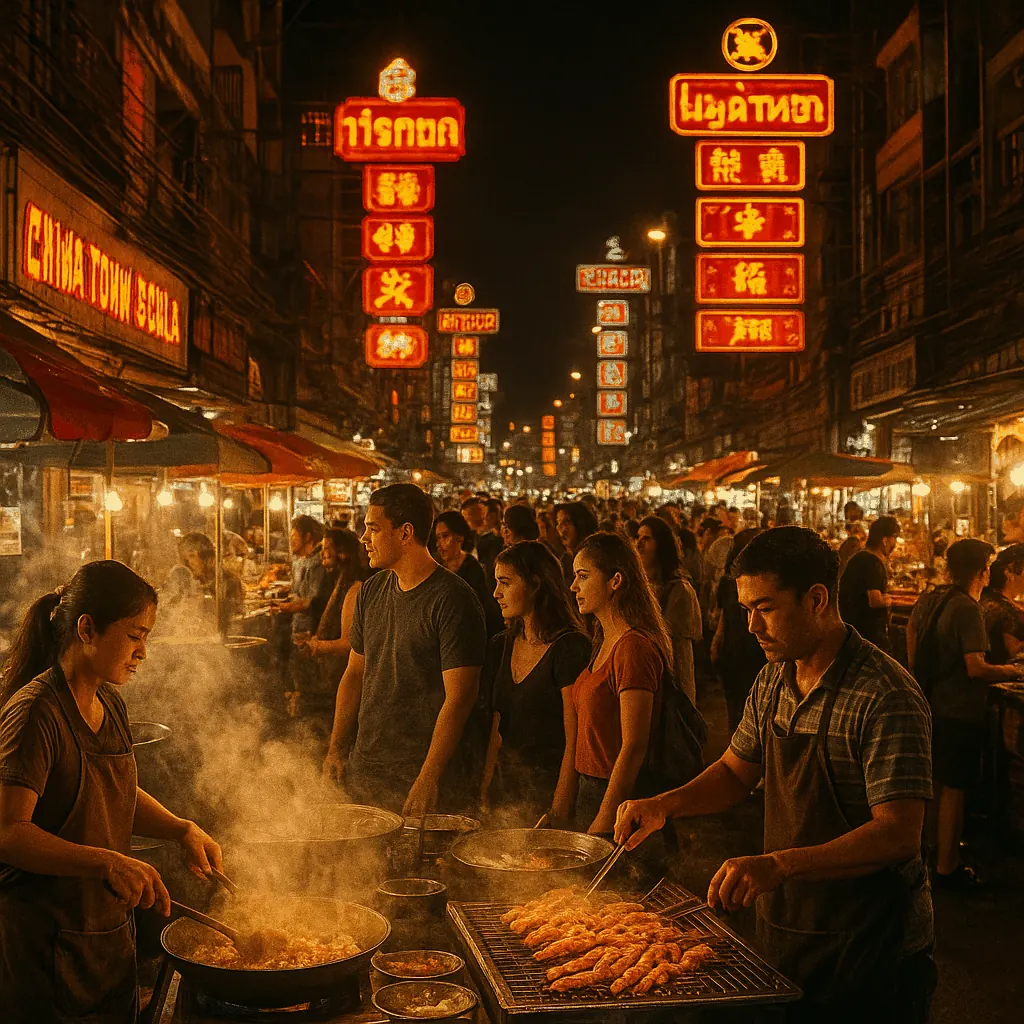
Street food is woven into day-to-day life for many Bangkok residents and remains a major draw for visitors. Neighborhood clusters like Yaowarat (Chinatown) and Victory Monument concentrate vendors and high turnover, which supports fast service and fresh ingredients — a pattern noted in local food coverage [2][3]. The Tourism Authority of Thailand highlights street-food areas as part of cultural tourism in Bangkok [1].
Top districts to try and what to eat there
Focus on these five areas for distinct experiences; each has signature dishes and dense vendor presence documented by major guides:
Yaowarat (Chinatown) — famous for grilled seafood, oyster omelette (ho mok and hoy tod), long evening runs of street stalls along Yaowarat Road and adjoining lanes [2][3].
Victory Monument — a compact concentration of boat-noodle shops and small stalls; vendors here serve rapid bowls that are popular with commuters and reflected in local listings [2][3].
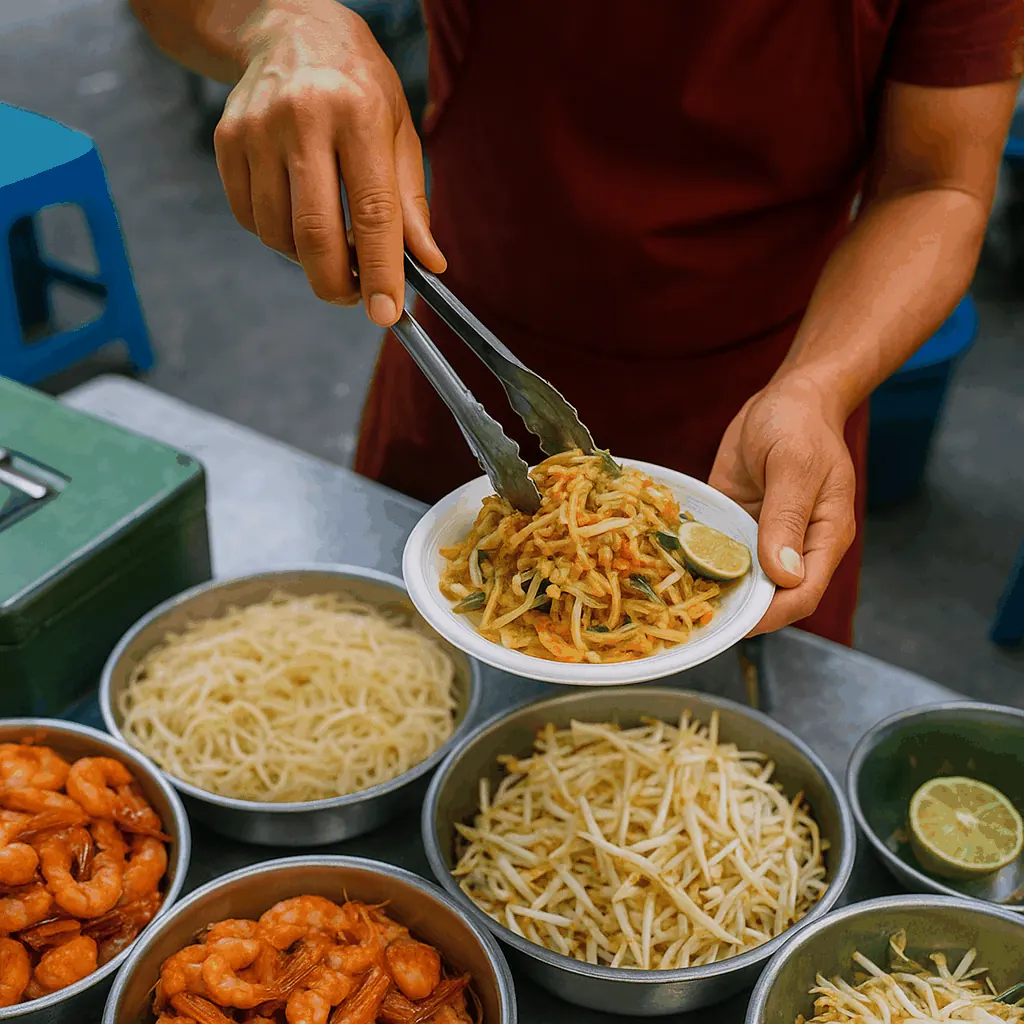
Sukhumvit Soi 38 — a late-night food lane historically known for pad thai, mango sticky rice and quick noodle stalls (coverage cites Soi 38’s role in Bangkok street-food culture) [2][3].
Bangrak / Silom area — Bangrak’s market lanes and Silom side streets offer jok (rice porridge), roast meats and late-afternoon hawker clusters close to office traffic [2][3].
Khao San Road — popular with backpackers; you’ll find pad thai, banana roti, and grilled skewers alongside international snacks in its busy nighttime strip [2][3].
How to order: simple Thai phrases and signals
A few short phrases and a confident point-and-number gesture get you served faster than long explanations. Local food writers and guides recommend quick, direct signals at busy stalls to avoid jams [2]. Use these practical phrases:
"Mai ped" — not spicy.
"Phet nit noi" — a little spicy (tone down heat).
"Ao [dish] khao" — add rice (say the dish name, then 'khao' for rice).
Point at the dish and hold up a finger or two to indicate portions (most vendors expect a number gesture).
For allergies or restrictions, clearly say the ingredient you want omitted (for example, tell a vendor you do not want chicken or seafood); cross-contamination remains a risk so be cautious [4][5].
Payment, portions, and communicating preferences
Most street vendors still prefer cash; carry small bills (20/50/100 THB) and coins for change, as many stalls have limited change and minimal POS setups [2]. QR and mobile payments are growing in Bangkok markets but are not yet universal at small carts [2].
Portions are usually single-serving. If you want less, point and say a number ("1/2" isn’t standard — instead ask for a smaller portion and watch preparation). Vendors are used to adding or omitting condiments on request; say "mai sai" followed by the ingredient to exclude (e.g., "mai sai gai" to indicate no chicken) and confirm by holding up a hand gesture if there’s a language gap [2][5].
Food-safety and hygiene tips for visitors
Health authorities and local coverage emphasize common-sense practices: choose busy stalls, prefer hot-cooked items served immediately, and avoid raw seafood or shellfish at unknown vendors to reduce risk [4]. The Ministry of Public Health promotes measures around food safety that align with these actions, and the Tourism Authority of Thailand supports vendor monitoring in popular markets [4][1].
Choose a stall with a steady local queue — high turnover generally means fresher stock and faster cooking [2][3].
Watch the cooking: if food is cooked through and served hot, bacterial risk is lower than with cooled or standing food [4].
Look for basic hygiene cues: separate utensils for raw and cooked items, use of tongs or ladles rather than bare hands, and an apparent source of clean water for cooking or washing utensils [4][5].
Prefer bottled water and sealed drinks if you’re concerned about tap water; many vendors use bottled water, but confirm if ice is added to drinks [4].
When to go and how crowds affect quality
Peak evenings (roughly 7–10pm) are when many street-food clusters fire up and offer the widest selection; daytime markets can also be excellent for breakfast items like jok or dim sum-style stalls in Bangrak [2][3]. High crowds often mean fast turnover and fresher food, but be ready for lines — using the simple phrases above and pointing clearly will move you through service faster [2].
Practical checklist before you eat
Bring small cash (20–100 THB notes and coins) and one card or phone for larger purchases [2].
Decide the district you’ll visit (Yaowarat, Victory Monument, Soi 38, Bangrak, or Khao San Road) and check opening times — many vendors are busiest after sunset [2][3][1].
Use short Thai phrases and point-and-number gestures to speed orders; confirm spicy level or key exclusions [2][5].
Prefer hot-cooked items, watch preparation, and choose busy stalls to reduce risk; follow Ministry of Public Health guidance on safe food handling when in doubt [4].
Bangkok street food rewards a little preparation: pick a district with the dishes you want to try, bring small cash, and use a handful of phrases and signals to make ordering quicker. With common-sense hygiene checks — busy stalls, hot plates, and visible utensils — you can taste a wide range of Thai specialties confidently and enjoyably [1][2][3][4][5].
How CallButler Can Help
CallButler is a multilingual concierge service that handles research, coordination, and bookings so you do not have to navigate language barriers or unfamiliar systems alone. If you need help related to Bangkok street food: top districts, ordering tips, safety or the tasks around it, our team can step in to manage the details and keep things moving smoothly.