Article overview: Which is the best SIM card for Japan tour…
Yes — for most tourists visiting Tokyo the best SIM option is either a short-term eSIM (if your phone is unlocked and supports eSIM) for immediate convenience, or a prepaid physical “visitor” SIM bought on arrival at Narita or Haneda or from major electronics retailers in the city. Pick an eSIM for instant activation and ease; pick a physical prepaid SIM if your phone lacks eSIM or you want a ready spare with a local number [5][3][2].
Quick recommendation
If you’ll stay mainly in central Tokyo (Shinjuku, Shibuya, Ginza, Akihabara) and need only data for maps and messaging, an eSIM bought before arrival (Airalo or similar) is the fastest choice to get online the moment you land [5]. If you need a physical card, voice/SMS, or prefer in-person help, buy a visitor prepaid SIM at Narita or Haneda arrivals, or at electronics stores such as Bic Camera or Yodobashi in Tokyo [3][2].
How mobile networks and compatibility work in Japan
Japan’s mobile market is dominated by the major carriers (NTT Docomo, KDDI/au, and SoftBank) and many MVNOs that lease their networks. For coverage beyond central Tokyo — into rural prefectures — choose a provider that uses the Docomo or au network since those networks generally offer broader nationwide coverage [2]. Before buying, check your phone is unlocked and supports the LTE/5G bands used by Japanese carriers; many eSIM sellers list compatible device models and bands [5][2].
Options by traveler type
Short trip, light data (3–7 days): Buy an eSIM plan for Japan (buy online via Airalo or other marketplaces) and activate on arrival for instant data in Tokyo [5].
Heavy data or hotspot use: Choose a prepaid SIM with a larger data allowance and explicit tethering policy; check the provider’s terms because some visitor SIMs restrict tethering [2].
Need voice/SMS (local number): Look for “data+voice” visitor SIMs sold at airports and electronics stores — these are contract-free and aimed at tourists, but verify what’s included before purchase [3][2].
Longer stays or travel outside Tokyo: Consider an MVNO plan that leases Docomo/au networks or a longer-term prepaid plan; these typically require more setup but give better rural coverage [2].
eSIM vs physical SIM — pros and cons for Tokyo tourists
eSIM pros: Instant purchase and activation online (Airalo and other marketplaces), no need to queue at the airport, and you can keep your home SIM in the phone if dual-SIM capable [5].
eSIM cons: Requires an unlocked phone with eSIM support; switching carriers may require deleting and re-installing eSIM profiles.
Physical SIM pros: Works with older phones, gives you a physical backup, and in-person staff at Narita/Haneda or stores can help with activation and troubleshooting [3][2].
Physical SIM cons: You may need your passport for purchase/registration, and you’ll need a SIM eject tool or store assistance to install it [3][1].
Where to buy in Tokyo
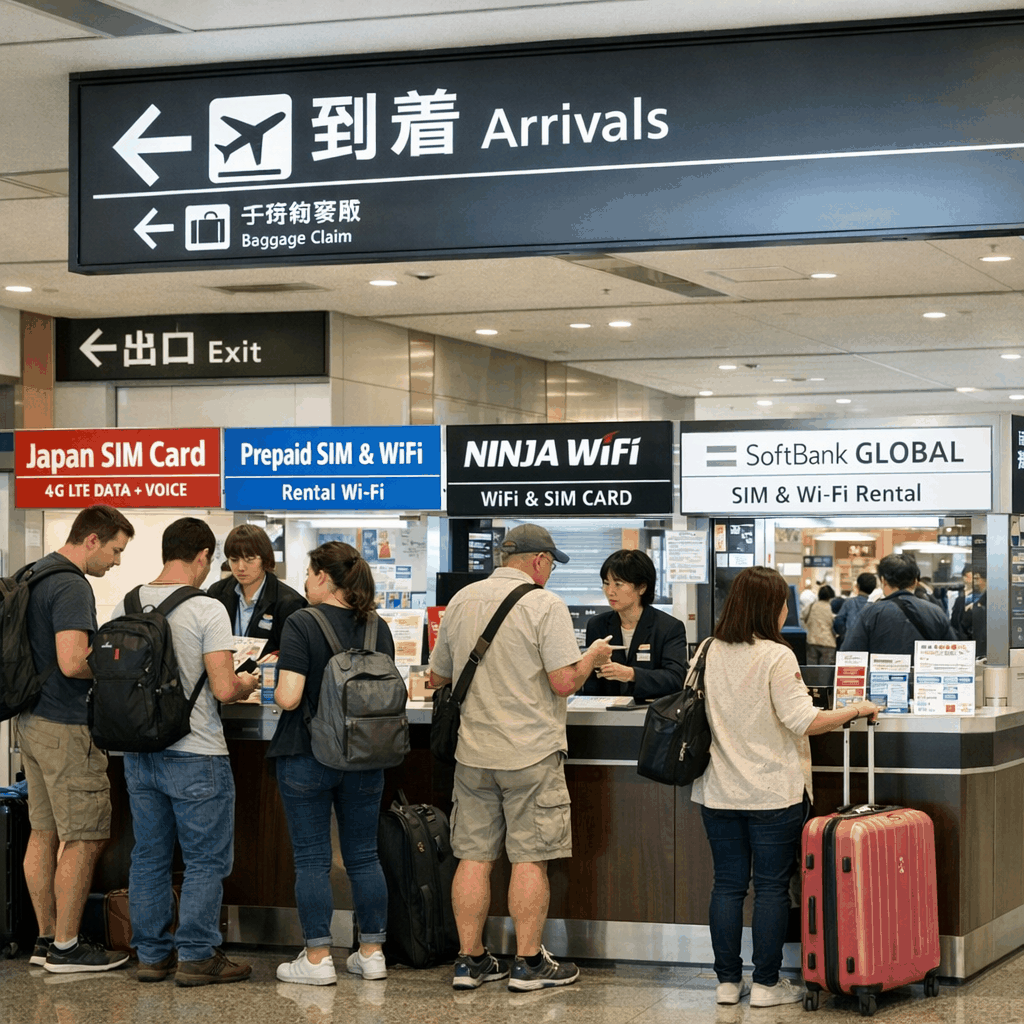
Buy before you land (eSIM) or as soon as you arrive. Narita and Haneda both list rental Wi‑Fi and SIM services at arrivals; many kiosks operate in the arrivals halls for quick purchase [3][2]. Major electronics retailers in central Tokyo sell visitor SIMs too — Bic Camera and Yodobashi are commonly listed as places to buy prepaid cards in the city [2].
Practical pickup points in Tokyo: airport arrival counters at Narita (Terminal shops and kiosks) and Haneda arrivals, plus electronics stores in central districts where staff can help with setup [3][2]. If you buy an eSIM online you can activate it at immigration or in your hotel in neighborhoods like Shinjuku or Ginza the moment you land [5][4].
Top local and international providers to consider
Local airport kiosks and carrier visitor SIMs (sold at Narita/Haneda arrivals) — quick and staffed service for tourists [3].
Electronics retailers: Bic Camera and Yodobashi — sell a range of visitor SIMs and preloaded data plans in Tokyo [2].
eSIM marketplaces such as Airalo — sell Japan eSIM plans you can buy and install before arrival; ideal for instant connectivity on landing in Tokyo [5].
Activation, ID and practical tips in Tokyo
Bring your passport: visitor SIMs and some prepaid registrations require showing ID at purchase — airports and stores will ask for your passport [1][3].
Check validity and data limits: visitor SIMs specify a validity period (e.g., 7/14/30 days) and total data allowance — compare price per usable GB and whether tethering is allowed [2].
English support: airport kiosks and big stores (Bic Camera, Yodobashi) generally offer some English help; online eSIM platforms show English descriptions and device compatibility before purchase [3][2][5].
If you’ll travel outside Tokyo, favor plans tied to Docomo/au networks for broader coverage across prefectures [2].
Final checklist before you buy
Confirm your phone is unlocked and supports eSIM if you plan to buy an eSIM [5].
Compare data allowance, validity days, tethering rules, and whether voice/SMS is included — don’t buy on headline price alone [2].
Bring passport for airport or in-store purchases; consider buying eSIM ahead if you want connectivity the moment you land in Tokyo [3][1][5].
If you’ll travel beyond central Tokyo, prioritize carriers or MVNOs that use Docomo/au networks for better rural coverage [2].
Tokyo’s central districts have excellent LTE and growing 5G coverage, so for most short tourist stays an eSIM or a short-term visitor SIM from Narita/Haneda or Bic Camera/Yodobashi will cover your needs with minimal fuss — choose based on device capability, trip length, and whether you need a local voice number [4][3][2][5].
How CallButler Can Help
CallButler is a multilingual concierge service that handles research, coordination, and bookings so you do not have to navigate language barriers or unfamiliar systems alone. If you need help related to Which is the best SIM card for Japan tourists in Tokyo? or the tasks around it, our team can step in to manage the details and keep things moving smoothly.