Article overview: When should I visit Arashiyama Bamboo Gro…
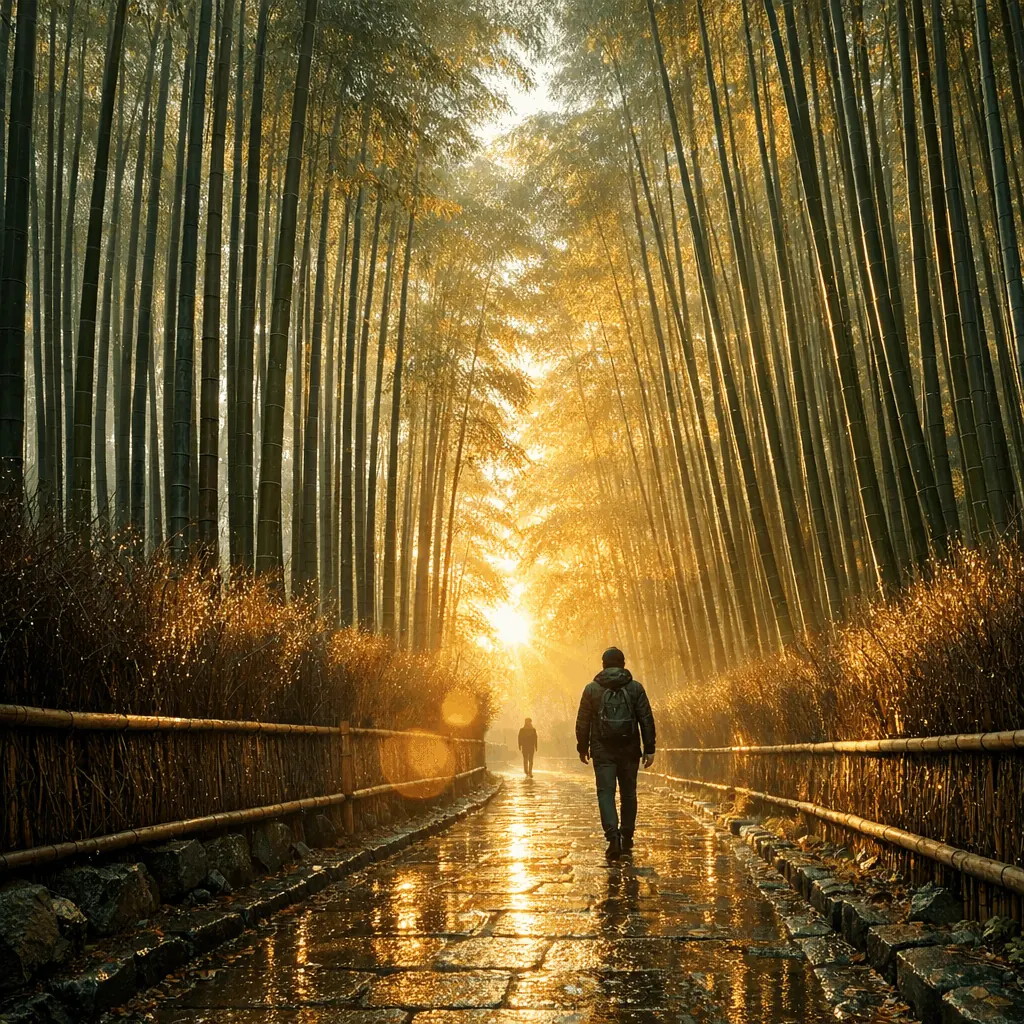
Yes — to avoid crowds at Arashiyama Bamboo Grove, go on a weekday early morning, ideally arriving at or before sunrise. Avoid peak seasons (late March–April for cherry blossom and mid-November for autumn colors) and national holiday periods like Golden Week or Obon for the quietest experience.
Why Arashiyama Bamboo Grove gets crowded
The grove sits at the heart of the Arashiyama / Sagano tourist district in western Kyoto and is compact, so even modest visitor numbers feel dense. Key nearby draws include Tenryu-ji temple and the Togetsukyo Bridge, which concentrate visitors into the same short routes and access points [1][2]. Media coverage and local reports also note overtourism pressures in Kyoto and surrounding areas, prompting occasional crowd-control measures by local authorities [4].
Best time of day to visit (hours and rationale)
Arrive at or before sunrise for the lowest visitor counts and the best light for photos. Depending on season, that means roughly 5:00–7:00. Mid-morning to mid-afternoon (about 09:00–16:00) is when tour groups, day-trippers from Osaka/Tokyo, and packaged itineraries converge on the grove [1]. Weekday mornings — especially Tuesday–Thursday — are consistently quieter than weekends.
Best seasons and months to avoid crowds
The two unmissable Kyoto peaks are also the busiest times at Arashiyama. Cherry blossom season (late March–April) and autumn foliage peak (mainly mid-November) bring far higher visitor numbers; if avoiding crowds is your priority, skip those windows [1][2]. Conversely, winter months (December–February), excluding the New Year holiday, typically have lower visitor volume and can offer a calmer visit.
Days and dates to avoid (weekends, national holidays)
Avoid weekends and Japan’s major holiday periods. Golden Week (late April–early May), Obon (mid-August), and the New Year holiday generate heavy domestic travel that fills Kyoto’s attractions and transportation hubs; JNTO and Kyoto City recommend checking holiday calendars when planning trips [3][2]. Local coverage has shown that authorities sometimes implement crowd measures during peak periods, so plan around national holiday weeks [4].
Practical tips: transport, routes, and behavior
Train arrival: Take an early train to Saga-Arashiyama Station (JR) or Hankyu Arashiyama Station and walk toward the grove before the main flows arrive; arriving on the first or second train out of Kyoto city helps you beat most day-trippers [1].
Approach from the west (Saga/Tenryu-ji side): Entering the grove from the Tenryu-ji / Saga side usually distributes visitors more evenly than approaching from the main tourist streets around Togetsukyo Bridge [1][2].
Combine visits with early-open sites: Start at the grove at sunrise, then visit nearby Tenryu-ji (confirm current opening hours on the Kyoto Official Travel Guide) or stroll along Togetsukyo Bridge before shops and crowds build [2].
Pack light and move steadily: The path is narrow. Keep belongings compact and avoid long posed photo sessions in the densest stretches to respect other visitors and keep flow moving [1].
Check local advisories: Use Kyoto.travel and JNTO for event dates, temporary closures, or official crowd-control notices before you go [2][3].
Sample low-crowd morning itineraries for Kyoto
Pre-dawn arrival: Catch an early JR train to Saga-Arashiyama Station (aim for first trains departing Kyoto Station), walk to the western entrance of the grove, and enjoy the bamboo at sunrise. After the grove, head to Tenryu-ji for a calm temple visit (confirm opening time) and then across Togetsukyo Bridge as shops open [1][2].
Full morning loop: Start with the grove at first light, take the quieter back paths into the Sagano area, visit smaller gardens on the west side, and return via the riverside for breakfast at a local café near Hankyu Arashiyama Station — this keeps you ahead of the mid-morning crowds [1][2].
Off-peak season plan: If traveling in winter, a 07:00–10:00 slot offers peaceful bamboo photos and a later start for other Kyoto neighborhoods, since foliage and cherry crowds are absent [1].
Monitoring crowds and official guidance
Before you go, check these sources: Japan-Guide for practical access and route notes around Arashiyama and Saga [1]; Kyoto Official Travel Guide for current visitor guidance, temple hours, and local notices [2]; and JNTO for national holiday calendars and travel advisories [3]. NHK and local media report on overtourism and temporary measures (e.g., entry controls or one-way routes) that can affect timing and access — consult them if you’re traveling during a busy season [4].
Bottom line: for the quietest Arashiyama Bamboo Grove visit in Kyoto, plan a weekday early-morning arrival at or before sunrise, travel outside late March–April and mid-November, and avoid national holiday weeks. Combine an early grove visit with nearby Tenryu-ji and a riverside walk to maximize a calm, low-crowd experience [1][2][3][4].
How CallButler Can Help
CallButler is a multilingual concierge service that handles research, coordination, and bookings so you do not have to navigate language barriers or unfamiliar systems alone. If you need help related to When should I visit Arashiyama Bamboo Grove in Kyoto to avoid crowds? or the tasks around it, our team can step in to manage the details and keep things moving smoothly.