Article overview: What's the best kamakura day trip itinera…
Yes — the best Kamakura day-trip itinerary is a compact, walkable loop: start at Kamakura Station, visit Tsurugaoka Hachimangu and Komachi-dori for breakfast, then head south to Hase-dera and Kotoku-in (the Great Buddha), using the Enoshima Electric Railway (Enoden) to save time and enjoy coastal views. Plan 6–8 hours to cover three temples and two food stops without rushing.
Overview: Why Kamakura for a day trip
Kamakura is a small city with a dense cluster of major shrines and temples within roughly 1–2 km of Kamakura Station, making it ideal for a single-day visit from Tokyo. Key highlights are Tsurugaoka Hachimangu in central Kamakura [4], Hase-dera with its gardens and sea views [3], and Kotoku-in's Great Buddha near Hase Station [2]. The short, scenic Enoden line connects Kamakura, Hase and Enoshima and is itself part of the experience [5].
Getting there and getting around
From central Tokyo, take the JR Yokosuka Line to Kamakura Station — typical travel time is about 50–70 minutes depending on your start station [1]. Once in Kamakura, the city is largely walkable; use the Enoden (Enoshima Electric Railway) for scenic 10–20 minute hops between Kamakura, Hase and Enoshima to save walking time and to enjoy coastal views [5]. Many visitors combine walking with one or two short Enoden rides to move between the main clusters of sights [1][5].
Morning: Tsurugaoka Hachimangu and Komachi-dori breakfast
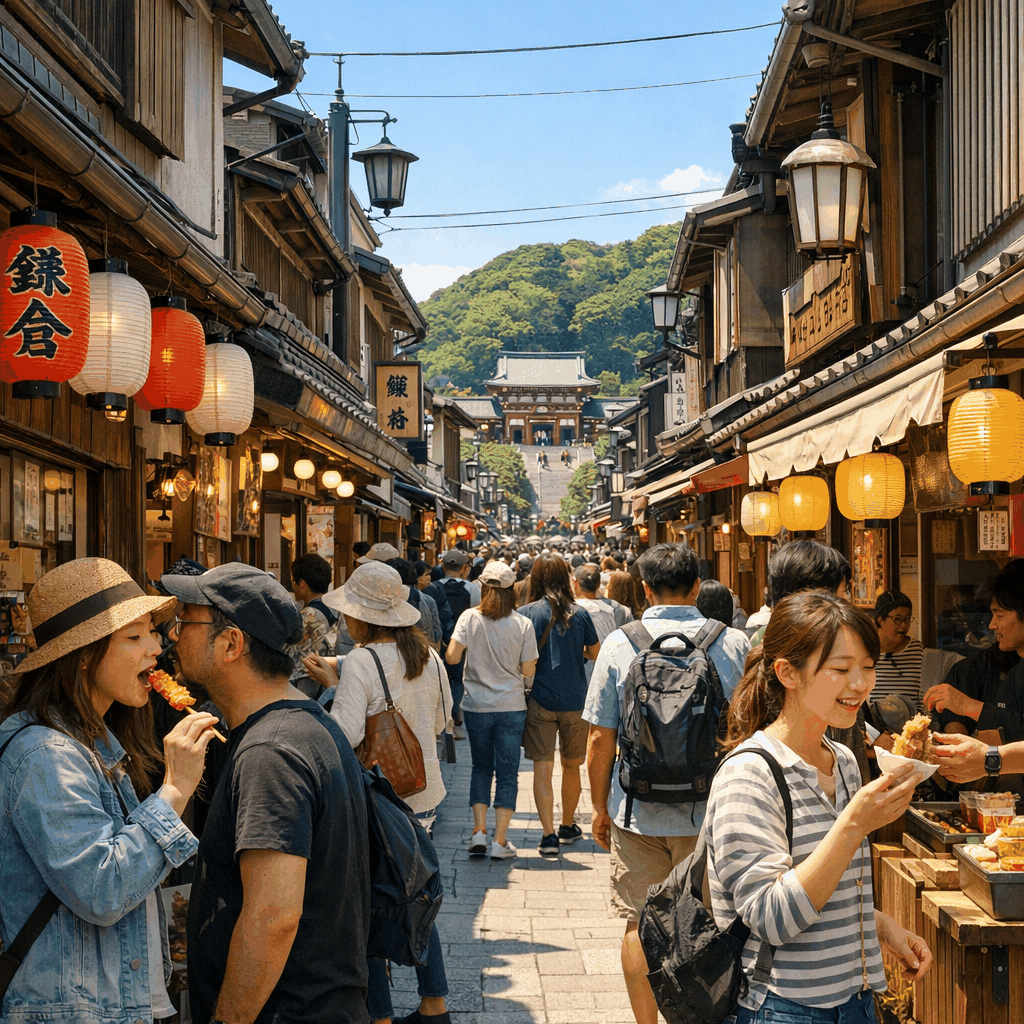
Start at Kamakura Station and walk north to Tsurugaoka Hachimangu, Kamakura's principal shrine located on a gentle approach from the station [4]. Arriving early (shortly after opening) reduces crowds and gives you time to explore the shrine grounds, the approach avenue, and nearby small museums. After the shrine, walk back toward Komachi-dori for breakfast or morning snacks: this street is lined with bakeries, tea shops and specialty stands selling matcha sweets and local bites [1]. Try local offerings such as matcha confections or small tempura snacks along Komachi-dori (shops change, but the street is the reliable place for morning eats) [1].
Late morning: Hase-dera and the Great Buddha (Kotoku-in)
From Komachi-dori head south by foot (a pleasant 25–40 minute walk depending on route) or take the Enoden one stop to Hase Station to save time [5]. Hase-dera is famous for its hydrangea season and layered temple gardens with views over Sagami Bay; check the official Hase-dera page for seasonal exhibits and access details [3]. After Hase-dera, the Great Buddha at Kotoku-in sits a short walk away; it’s an outdoor, easily accessed bronze statue and the temple’s official site has visitor information including current access notes [2]. Visiting these two makes for a focused late-morning cultural pair without backtracking.
Lunch: local specialties near Hase or back on Komachi-dori
For lunch, you have two clear choices: eat near Hase Station (many small restaurants and shirasu — local whitebait — stands near the Hase/Enoshima corridor) or return toward Komachi-dori for more variety and sit-down restaurants [1]. Shirasu-don (whitebait over rice) is a regional specialty sold in small eateries near Hase and along the coast; Japan Guide lists shirasu and seaside restaurants as a Kamakura/Enoshima specialty [1]. Choose a quieter sit-down place if you want to relax, or pick several small stalls on Komachi-dori to sample multiple items.
Afternoon: temple circuit or seaside stroll
After lunch, pick one focused circuit depending on your energy: the northern Zen-temple circuit (Engaku-ji and Kencho-ji) for larger temple complexes and forested walks, or linger near the Hase/Enoshima coast for a seaside stroll and harbor views [1]. Kencho-ji (one of the major Zen temples) and Engaku-ji are within a reasonable bus or taxi ride from Kamakura Station if you prefer less walking; otherwise, map a 1–2 hour walking loop that fits your pace [1].
Late afternoon: Enoshima or sweets and shopping
If you still have energy, ride the Enoden to Enoshima for sunset on the shoreline (Enoden schedules and fares are on the official site) [5]. Alternatively, return to Komachi-dori for more matcha sweets, rice crackers and souvenir shops before heading back to the station [1]. Keep in mind many temple gates close in the late afternoon, so plan the Great Buddha and Hase-dera earlier in the day [2][3].
Practical tips: timing, tickets and walking distances
Allocate 6–8 hours for a relaxed itinerary: 3–4 main temple stops plus two food breaks is achievable without rushing [1].
Use Enoden for scenic short hops (Kamakura↔Hase↔Enoshima); check the Enoden site for realtime service and fares [5].
Confirm opening times and any entry fees on official pages (Tsurugaoka Hachimangu, Hase-dera, Kotoku-in) before you go [4][3][2].
Bring comfortable shoes: paths include stone steps and uneven temple approaches — many major sites are within 1–2 km of each other but involve ups and downs [1].
Sample timed itinerary (hour-by-hour)
08:30 — Arrive Kamakura Station; walk to Tsurugaoka Hachimangu (morning shrine visit) [4].
09:30 — Komachi-dori breakfast and quick browsing for matcha sweets or snacks [1].
10:30 — Walk or Enoden to Hase Station; visit Hase-dera (gardens, views) [3].
12:00 — Kotoku-in Great Buddha visit and short exploration (nearby lunch options) [2].
13:30 — Lunch (shirasu or Komachi-dori specialties) [1].
14:30 — Choose Kencho-ji/Engaku-ji circuit or Enoshima shore walk; use Enoden if needed [5][1].
16:30 — Return to Komachi-dori for sweets/shopping, then head to Kamakura Station for departure.
Maps, transport links and further reading
Check the Kamakura travel overview on Japan Guide for maps and suggested routes [1]. For official visitor details and opening notes use the temple and shrine sites: Kotoku-in (Great Buddha) [2], Hase-dera [3], and Tsurugaoka Hachimangu [4]. For Enoden schedules and station locations consult the Enoshima Electric Railway official site [5]. These sources will help you confirm seasonal hours, special events, and any service advisories before you travel.
How CallButler Can Help
CallButler is a multilingual concierge service that handles research, coordination, and bookings so you do not have to navigate language barriers or unfamiliar systems alone. If you need help related to What's the best kamakura day trip itinerary to enjoy temples and food? or the tasks around it, our team can step in to manage the details and keep things moving smoothly.