The keys to a successful day at Universal Studios Japan in Osaka are quite simple once you get the hang of it! With the crowds and the general "day-of" excitement, it's easy to overlook the simple things that can take your day from "great" to "amazing". Here are just a few things to do that could make your Universal Trip a day to remember: Prebook the right tickets (park admission plus Express or timed-entry for high-demand attractions), arrive early at Universal-City Station, and prioritize headline rides like The Flying Dinosaur and Super Nintendo World.
With informed prebooking and a clear rope-drop plan, you can avoid the longest waits and fit top attractions into a single day.[1][2]
Quick facts & access (Osaka)
Universal Studios Japan (USJ) is located in Konohana Ward of Osaka and the park entrance is about a five-minute walk from JR Universal-City Station on the JR Yumesaki (Sakurajima) Line; consult JR schedules for train times and connections from Osaka Station or Namba [1][3]. The official USJ site lists park hours, attraction notices, and daily availability for timed-entry areas and Express Passes — check it the morning of your visit for real-time changes [1]. The Osaka Convention & Tourism Bureau also maintains practical route info for visitors arriving by train or car [3].
When to go: crowd patterns and seasonal peaks
Crowds are highest on Osaka weekends, national holidays, and during peak seasons such as Golden Week (late April–early May), summer school holidays, and year-end/New Year. Cherry blossom season in late March–April and Halloween events also draw big crowds. On those dates park tickets and Express Pass options often sell out; buy in advance if your visit falls on a listed busy date [1][4]. If you can, choose a weekday outside major holidays to minimize queues.
Tickets and must-book items
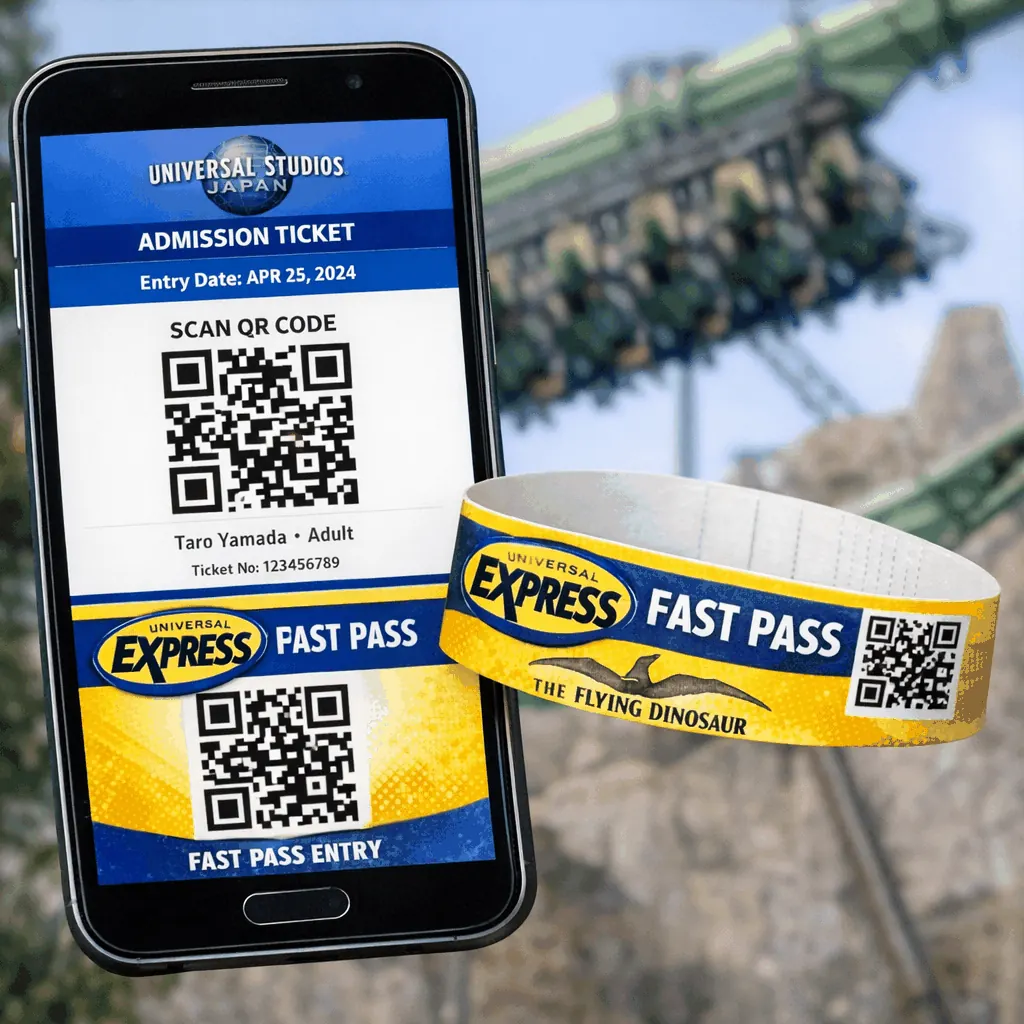
Buy your USJ park admission in advance through the official ticket page to avoid sell-outs on busy days; same-day tickets can be unavailable for peak dates [1]. Universal Express is a paid add-on with multiple variants that cover different attraction lists and availability changes by date — purchase the Express type you need ahead of time when crowds are expected [2].
Park admission: reserve an entry date ticket via USJ’s official site to guarantee entry [1].
Universal Express: choose the variant that includes The Flying Dinosaur, Hollywood Dream — The Ride, or Super Nintendo World (Mario Kart) depending on your priorities; Express types and capacity differ by date and can sell out [2].
Timed-entry/virtual queue: Super Nintendo World sometimes uses timed-entry or a virtual queue on busy days — confirm the system and reserve via the USJ app or website before or during your visit [1][6].
Top-priority rides and how to prioritize them
Target these headline attractions first; they typically generate the longest waits and are frequently included in Express products or timed-entry lists [1]:
The Flying Dinosaur — a high-capacity coaster but a long-wait headliner; Express options or early rope-drop are the fastest ways to ride [1][2].
Hollywood Dream — The Ride (and Hollywood Dream – Backdrop) — coaster favorites often with long lines; Express or early arrival recommended [1][2].
Super Nintendo World (Mario Kart/1-UP Factory, plus timed entries) — capacity-managed area that may require timed-entry or virtual queue on busy days; check the app and secure your slot first thing [1][6].
The Amazing Adventures of Spider-Man — popular simulator often included in Express lists [1][2].
Line-saving tactics: Express Pass, single rider, child swap,...
Combine the following tactics depending on your party and budget:
Universal Express: the most reliable way to cut waits; buy the Express variant covering the attractions you most want to avoid long lines for — options and prices vary by date and inventory can sell out [2].
Single-rider lines: available on selected rides and can save substantial time when open; availability changes by ride and by day — confirm via the official attraction pages or the USJ app on the day [1].
Child-swap: offered on many attractions so adults can take turns without requeuing; check the attraction notice boards or app for eligibility and procedure [1][6].
Timed-entry/virtual queue: essential for Super Nintendo World on busy days — reserve your slot in the morning via the app or website to guarantee access [1][6].
Arrival and transit: best timing and station access
Arrive at Universal-City Station 30–60 minutes before the published park opening on busy days to be among early entrants at rope drop; early morning is the most effective non-Express strategy to ride a top attraction with minimal waits [4]. From Osaka Station, take the JR Osaka Loop Line to Nishikujo, then transfer to the JR Yumesaki (Sakurajima) Line for Universal-City — total travel time depends on connections, so check JR schedules the day before [3].
Sample half-day and full-day strategies for different crowd levels
Moderate crowd (weekday outside peak):
Arrive 30 minutes before opening, rope-drop Super Nintendo World or Flying Dinosaur, then use the app to pick the next high-demand ride.
Use single-rider where offered (e.g., some coasters) and fill midday with indoor shows like The Amazing Adventures of Spider-Man to avoid heat or rain [1].
High crowd (weekend/holiday/peak season):
Prebook park tickets and an Express Pass that covers at least one or two headline attractions (e.g., Flying Dinosaur and Hollywood Dream) [2].
Reserve any Super Nintendo World timed-entry via the app immediately upon park opening or beforehand if offered; plan to use Express for remaining top rides and single-rider to fill gaps.
Final tips and official resources
Always check USJ’s official pages and the mobile app for daily attraction notices, express availability, and timed-entry rules the morning of your visit [1][2][6]. Use Osaka resources such as the Osaka Convention & Tourism Bureau for station maps and local transit guidance [3], and consult Japan Guide for practical rope-drop and crowd-management tips from experienced visitors [4]. With prebooked tickets, an early arrival, and a clear priority list (Flying Dinosaur, Hollywood Dream, Super Nintendo World), you’ll maximize rides and minimize time spent in queues.
How CallButler Can Help
CallButler is a multilingual concierge service that handles research, coordination, and bookings so you do not have to navigate language barriers or unfamiliar systems alone. If you need help related to Universal Studios Japan: ride strategy, crowds, and must-book items or the tasks around it, our team can step in to manage the details and keep things moving smoothly.