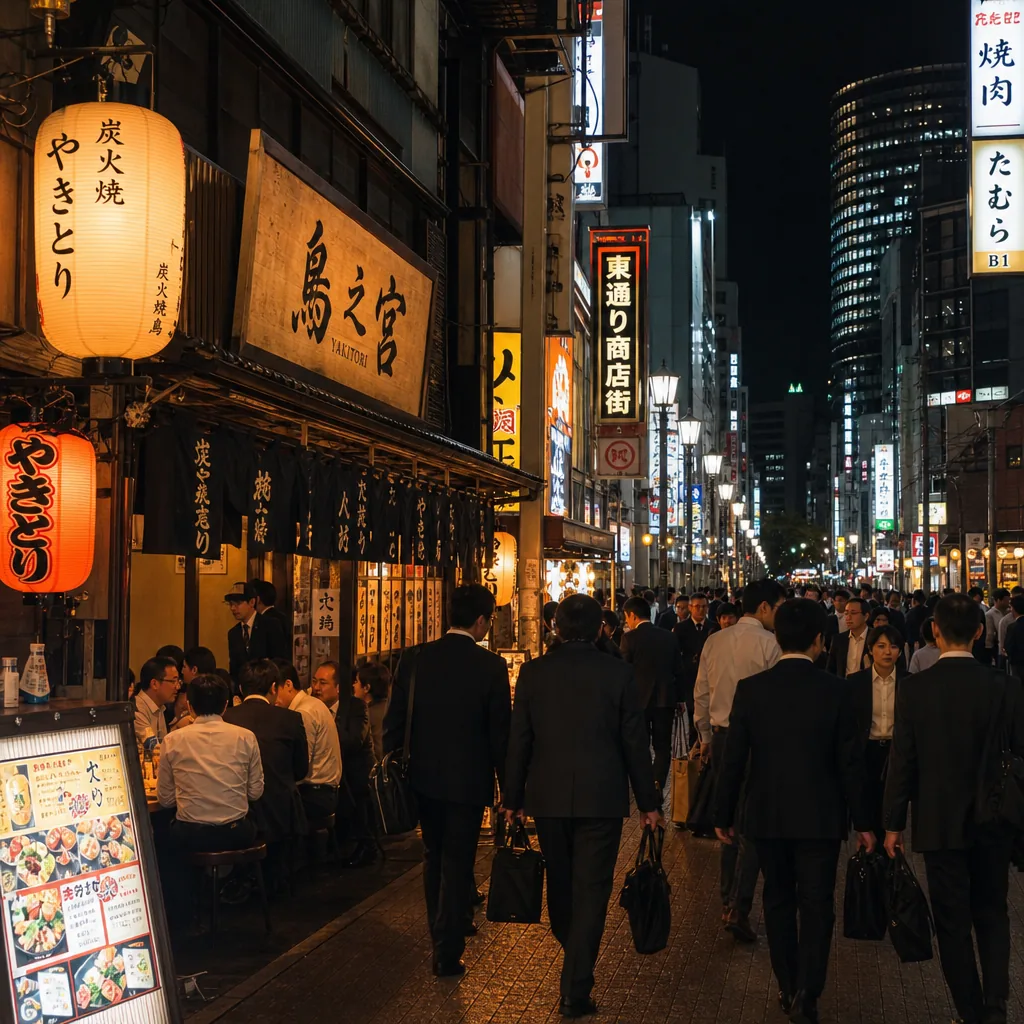
Where can I find english-friendly yakitori in Osaka after work?
Find English-friendly yakitori in Osaka after work by targeting Umeda, Namba, and Honmachi, plus booking sites and multilingual menus.
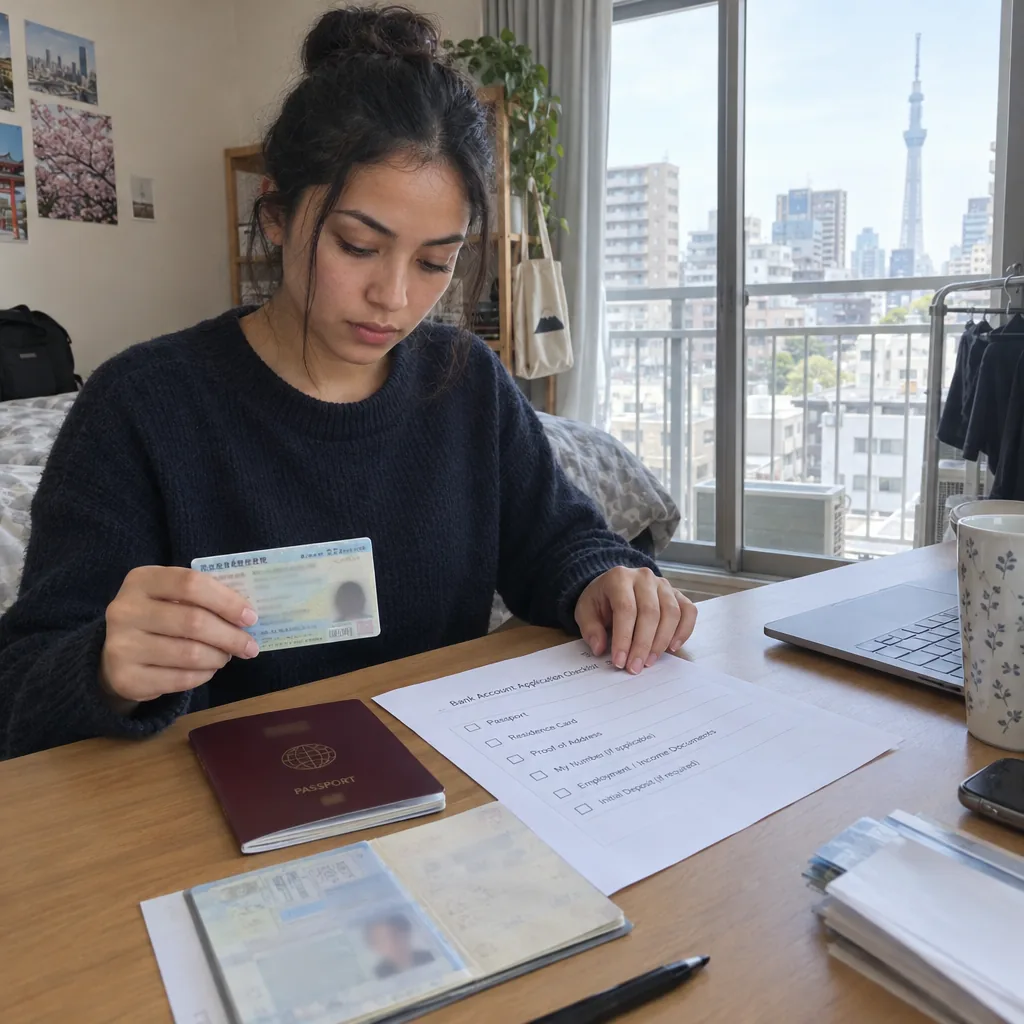
Expats can get a bank account in Tokyo by registering their residential address, preparing identification, and applying to a bank whose eligibility rules they meet. Some newcomers can apply soon after arrival: the often-mentioned six-month rule is not a universal waiting period, although employment status, residency classification, and bank policy affect approval. Japan Post Bank and SMBC Trust Bank PRESTIA are options to investigate, not guaranteed routes to acceptance.[1][2][3]
Possibly, but do not plan on leaving the airport and opening a usable account that afternoon. Banks need to verify your identity, address, and circumstances; a hotel booking alone should not be treated as proof that you meet their residential-address requirements. Screening and delivery of account materials can also take time.[1][2][3]
Your first practical step is to ask your employer or university which banks work with newly arrived international staff or students. Request any supporting documents they can provide. Those documents can explain your circumstances, but the bank still decides whether to accept your application.[1][2]
Register your Tokyo residential address at the ward or municipal office serving your home. Mid- to long-term residents generally must notify the municipality within 14 days of establishing their residence. Complete this before applying so your residence card carries your current address.[1]
Next, check the selected bank’s current document list rather than relying on another expat’s experience. Prepare the following as applicable:[1][2][3]
Do not assume a My Number card is mandatory for every basic account. Ask which identification is accepted and whether My Number documentation is needed for a particular service, such as overseas remittances.[1][2]
The six-month issue concerns Japan’s foreign-exchange residency framework, not simply whether you hold a residence card. Foreign nationals who have been in Japan for less than six months are generally classified as non-residents under that framework. Employment at an office in Japan can change that classification, so a newly arrived employee should explain their employment circumstances to the bank.[1]
That does not mean employment automatically guarantees an account. Banks apply their own eligibility checks alongside the legal framework. Ask two separate questions: “Am I treated as a resident for foreign-exchange purposes?” and “Do I meet your account-opening requirements?” Students should not assume enrollment alone creates the same exception as employment.[1][2][3]
Japan Post Bank publishes account-opening guidance specifically for foreign nationals. Check its identification requirements and any additional evidence required because of your residence status or remaining period of stay. Its multilingual application support can help with preparation, but does not replace screening.[2]
SMBC Trust Bank PRESTIA provides English-language account-opening information and banking services. Review its residence eligibility, application routes, identification requirements, and account-maintenance fee conditions before choosing it. English support does not mean every newly arrived applicant qualifies.[3]
For a Tokyo branch visit, consult PRESTIA’s official branch information for named locations such as Shinjuku Branch, Hiroo Branch, and Ginza Branch. Confirm the current location, opening hours, and account-opening arrangements before travelling; do not assume every counter can complete your application immediately.[3]
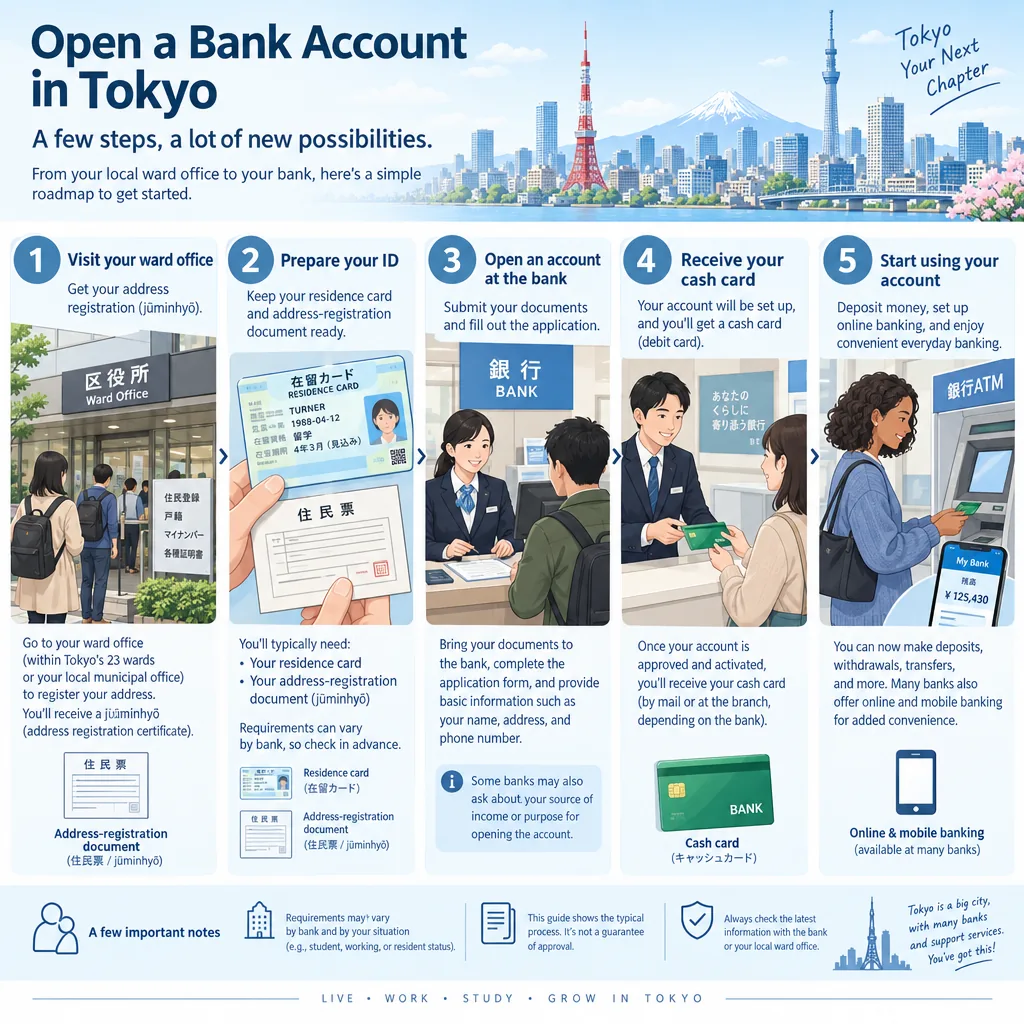
Use only the application route available for your circumstances. Online applications may have different identification or verification requirements from branch applications. Read the bank’s instructions first, then gather everything before starting the form or booking a visit.[2][3]
A submitted application or completed branch appointment is not a promise of same-day access. Keep another way to pay essential expenses while screening and delivery are pending.[2][3]
Before giving account details to payroll, confirm that the account can receive the payments you need. Japan Post Bank accounts classified as non-resident can face restrictions and different treatment for certain transfers. Ask specifically about salary receipts, domestic transfers, and any required procedures or charges.[2]
For PRESTIA, check the current monthly account-maintenance fee and waiver conditions, plus any ATM and transfer charges relevant to your routine. Choose based on your expected balance and transactions, not just the availability of English support.[3]
Ask whether the problem involves missing documents, address verification, immigration status, remaining stay, or the bank’s eligibility policy. The bank may not disclose its full screening reasons, but a document problem may be correctable. Otherwise, investigate another institution rather than assuming every bank requires six months in Japan.[1][2][3]
After opening an account, keep your address, residence status, and period-of-stay information updated. Never sell or lend your account, cash card, or online banking credentials, even if someone offers payment or describes it as helping a friend.[1]
CallButler is a multilingual concierge service that handles research, coordination, and bookings so you do not have to navigate language barriers or unfamiliar systems alone. If you need help related to How can expats get a bank account in Tokyo after landing? or the tasks around it, our team can step in to manage the details and keep things moving smoothly.
Find English-friendly yakitori in Osaka after work by targeting Umeda, Namba, and Honmachi, plus booking sites and multilingual menus.
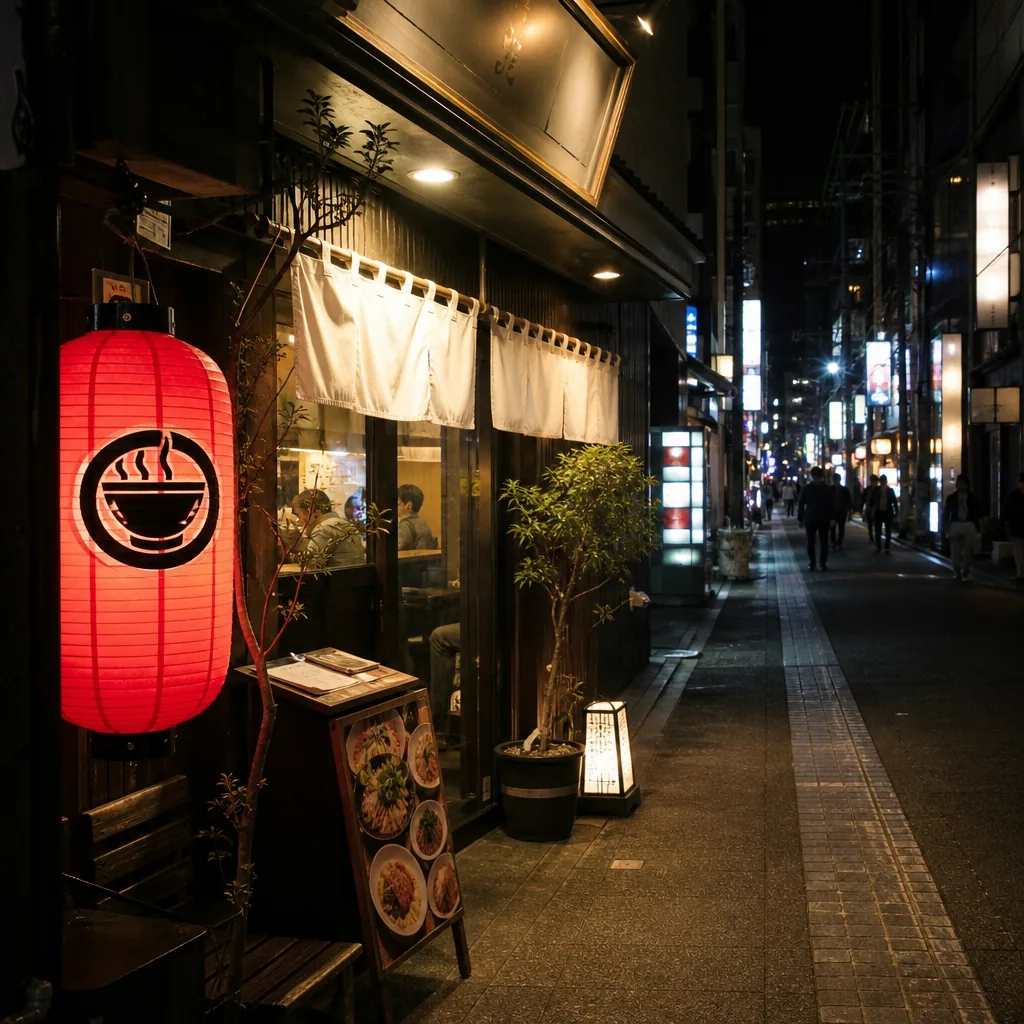
Looking for halal ramen in Kyoto after 10 p.m.? Here’s where to check, which areas are most practical, and how to verify hours and halal status.
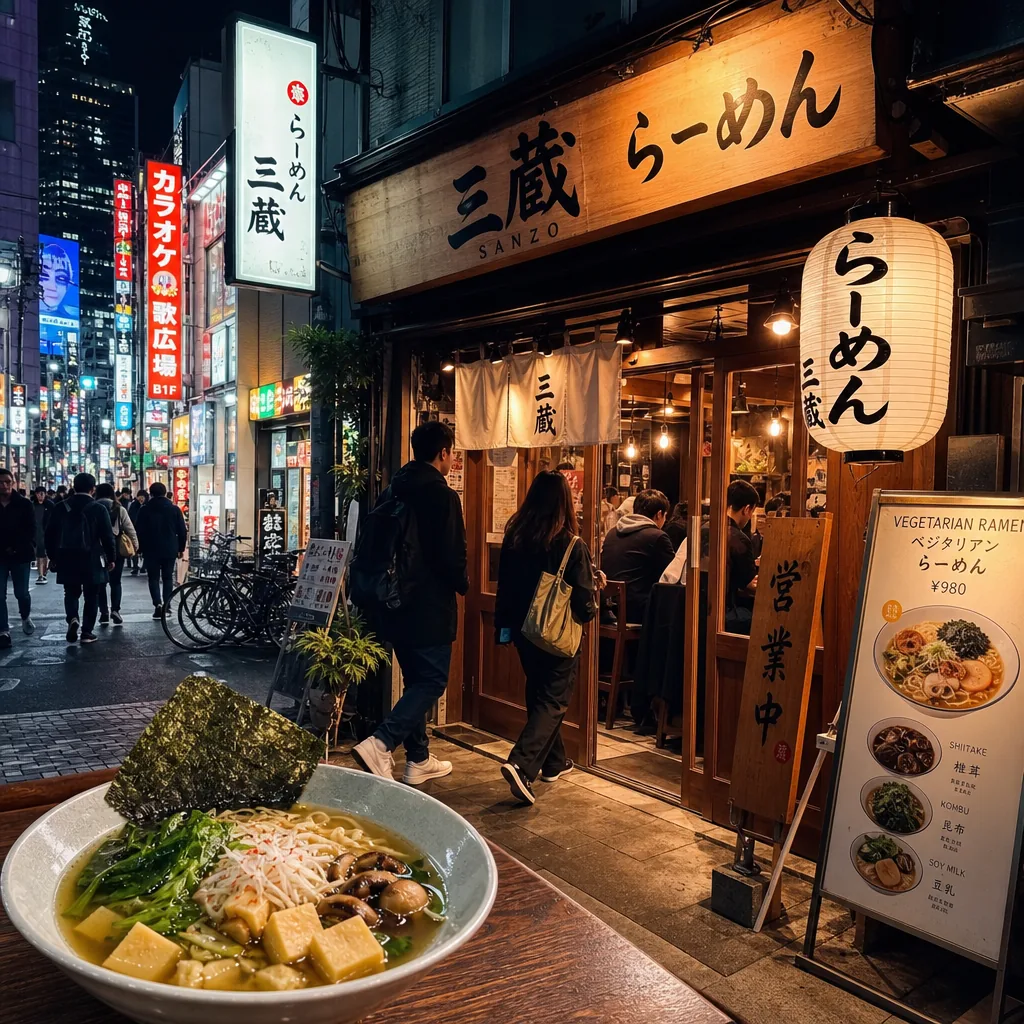
Find late-night vegetarian ramen in Tokyo by focusing on Shibuya, Shinjuku, and Roppongi, then verify broth, hours, and vegan menu details.