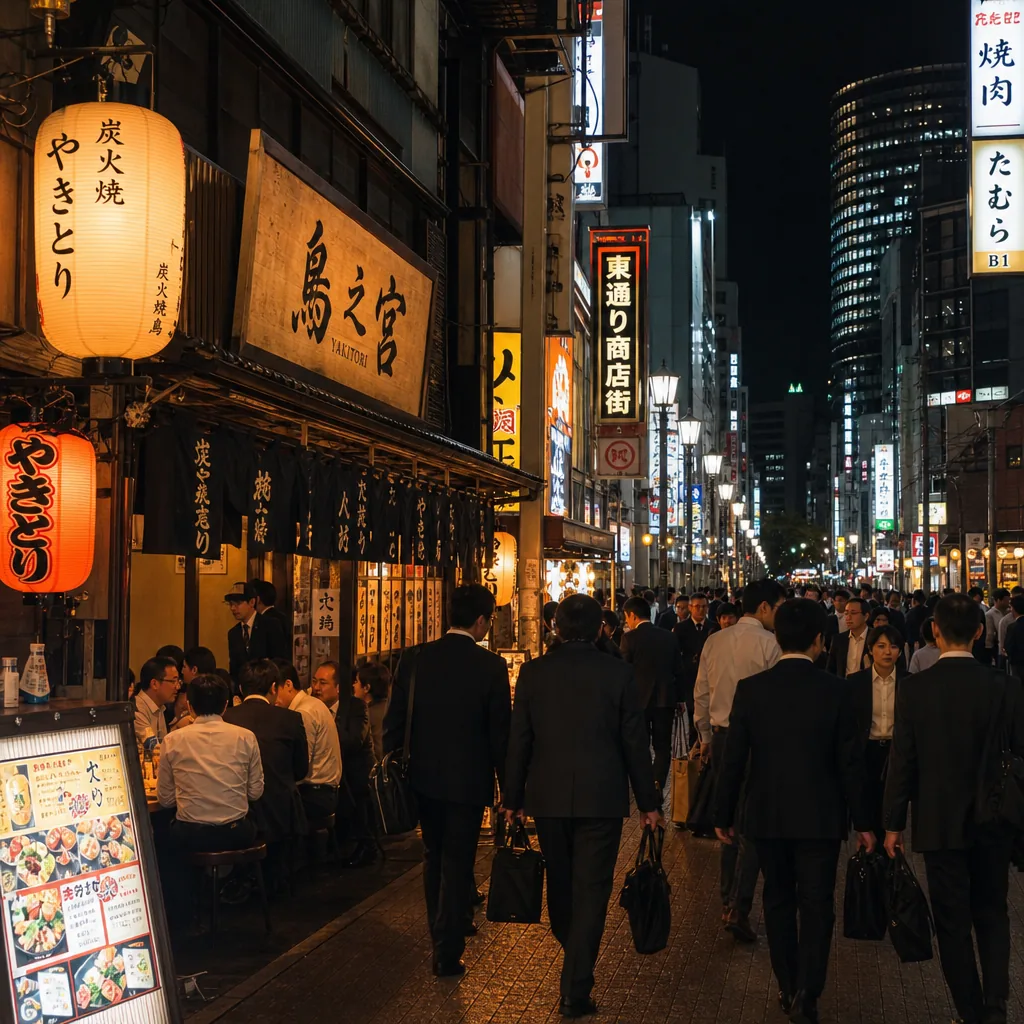
Where can I find english-friendly yakitori in Osaka after work?
Find English-friendly yakitori in Osaka after work by targeting Umeda, Namba, and Honmachi, plus booking sites and multilingual menus.
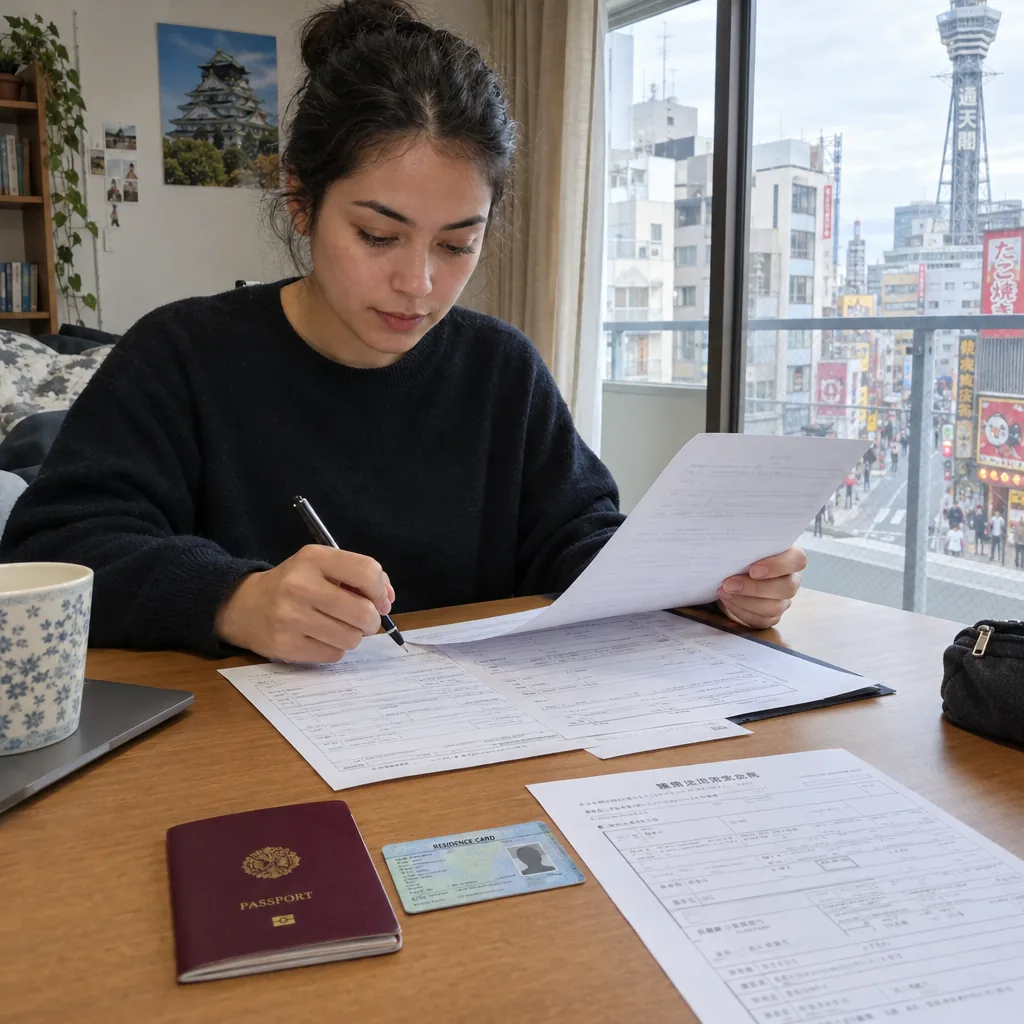
Expats can get a bank account in Osaka by registering their residential address, checking a bank’s eligibility rules, and applying with the required identification. Japan Post Bank is worth checking early, while SBI Shinsei Bank offers English-language guidance; approval and access to transfers depend on your circumstances and the bank’s screening. [1][2][3]
Start at the ward office responsible for your Osaka home. Foreign residents subject to address notification generally must report their address within 14 days of establishing their residence. Complete this before applying so your residence card shows your current address. The Immigration Services Agency’s guide explains address registration and other procedures for newly arrived residents. [4]
Your home address determines the office: for example, someone living in Kita Ward should use Kita Ward Office, while someone living in Naniwa Ward should use Naniwa Ward Office. Do not choose an office simply because it is near your workplace. Follow the address-notification procedure for your place of residence. [4]
Keep your address consistent across the bank application and supporting documents. If you are still arranging accommodation, ask the bank which address evidence it accepts rather than assuming a temporary booking is sufficient. [1][2]
“You must wait six months” is not a universal rule prohibiting newcomers from opening accounts. Foreign-exchange residency classification and a bank’s own eligibility requirements are separate questions. Japan Post Bank explains account handling for foreign nationals, including circumstances in which customers are treated as non-residents. [2]
A foreign national who has lived in Japan for less than six months may qualify as a resident for foreign-exchange purposes if employed at an office in Japan. The bank assesses the circumstances and may request employment evidence; having student status alone does not establish this employment exception. [2][4]
When contacting a bank, explain your arrival date, residence status and employment situation. Ask two questions: “Am I eligible to open this account?” and “Will it be handled as a resident or non-resident account?” These answers affect both whether you can apply and which services you can use. [2][3]
Japan Post Bank publishes account-opening guidance for foreign nationals and provides an online application-form preparation service. Preparing a form is not approval and does not mean your account has been opened; you still need to follow the bank’s application and identity-checking process. [1][2]
For an Osaka application, begin by checking a Japan Post Bank service counter near your home or workplace. Before travelling, confirm whether that location handles new accounts, whether an appointment is necessary, and what documents apply to your residence status. Do not assume every postal counter provides the same banking services. [1][2]
SBI Shinsei Bank is another option to investigate because it provides English-language PowerFlex information. Its guidance distinguishes applicants who have lived in Japan for at least six months from applicants working in Japan. Check the current eligibility conditions, accepted employment evidence and application route before choosing it. [3]
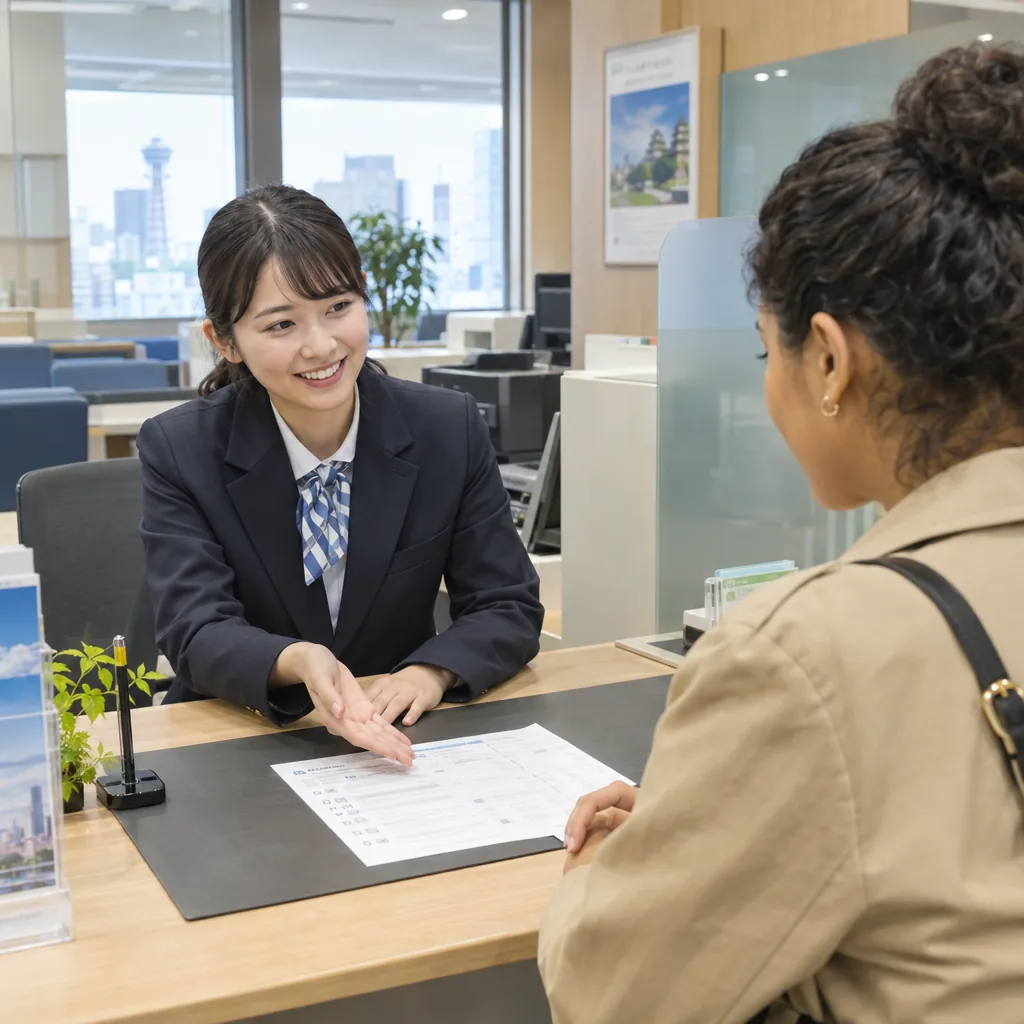
Use the chosen bank’s checklist, not a generic list shared by another newcomer. Japan Post Bank’s foreign-national guidance identifies residence-card checks and additional documents that may be required according to the applicant’s circumstances. [2]
Use exactly the name format required by the bank, including the treatment of middle names. Ask how that registered name should appear on payroll and direct-debit forms. Also confirm whether a cash card will arrive by post and ensure you can receive mail at your registered address. [1][2][3]
An approved account does not necessarily provide immediate access to every payment or transfer service. In particular, customers treated as non-residents can face different handling of transfers. Before relying on the account, ask about the transactions you actually need. [2]
Ask your employer whether it recommends a payroll bank and can supply employment documentation. A recommendation does not guarantee approval. Check the bank’s current fee schedule and service conditions rather than assuming an account-opening decision also confirms every transaction will be available or free. [2][3][4]
The Osaka International House Foundation provides information and consultation services for foreign residents through International House, Osaka. Check its current languages, hours and consultation arrangements before visiting. It is a useful local starting point if you need help understanding administrative procedures or identifying where to ask a question. [5]
Bring the bank’s checklist or any request for additional documents so you can explain the problem precisely. Consultation staff cannot override bank screening: your next step should be to obtain the missing evidence, clarify the eligibility decision, or check another bank’s published conditions. [1][2][3]
CallButler is a multilingual concierge service that handles research, coordination, and bookings so you do not have to navigate language barriers or unfamiliar systems alone. If you need help related to How can expats get a bank account in Osaka after arriving? or the tasks around it, our team can step in to manage the details and keep things moving smoothly.
Find English-friendly yakitori in Osaka after work by targeting Umeda, Namba, and Honmachi, plus booking sites and multilingual menus.
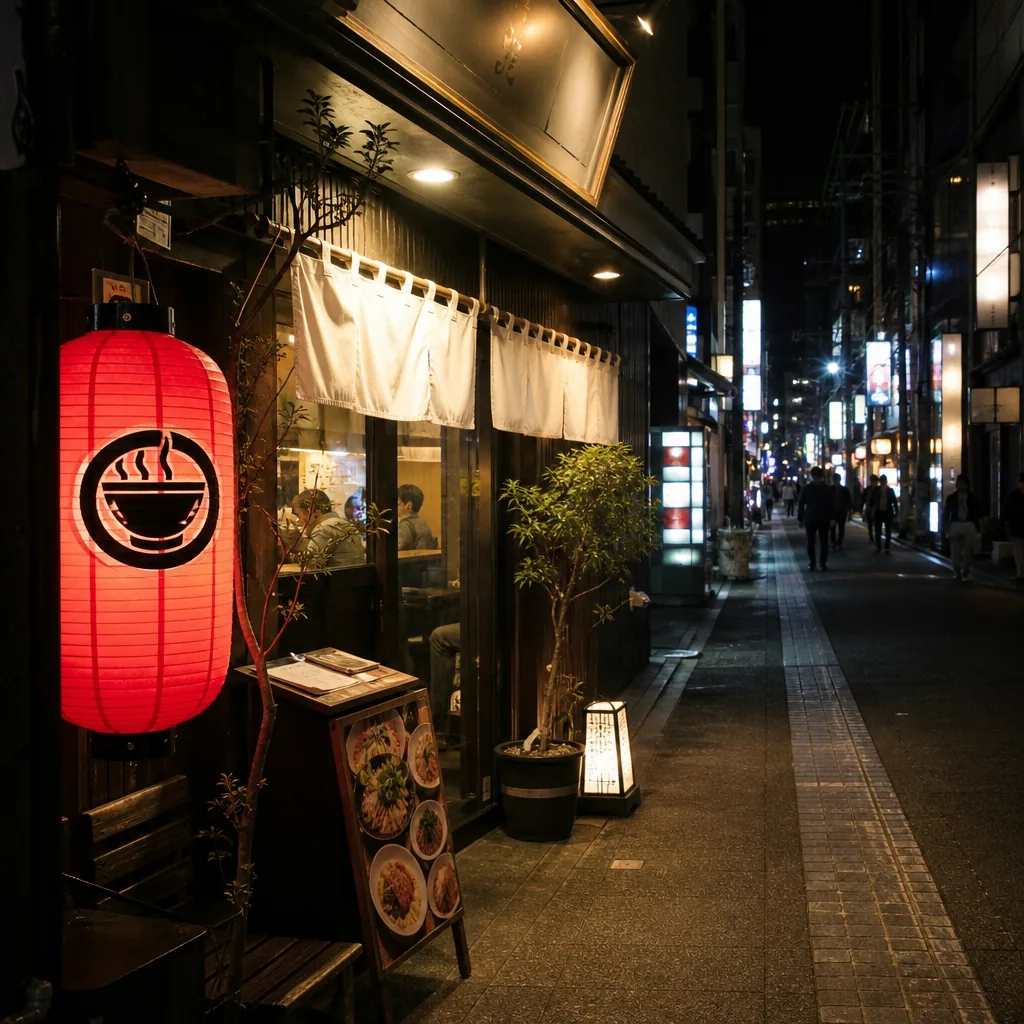
Looking for halal ramen in Kyoto after 10 p.m.? Here’s where to check, which areas are most practical, and how to verify hours and halal status.
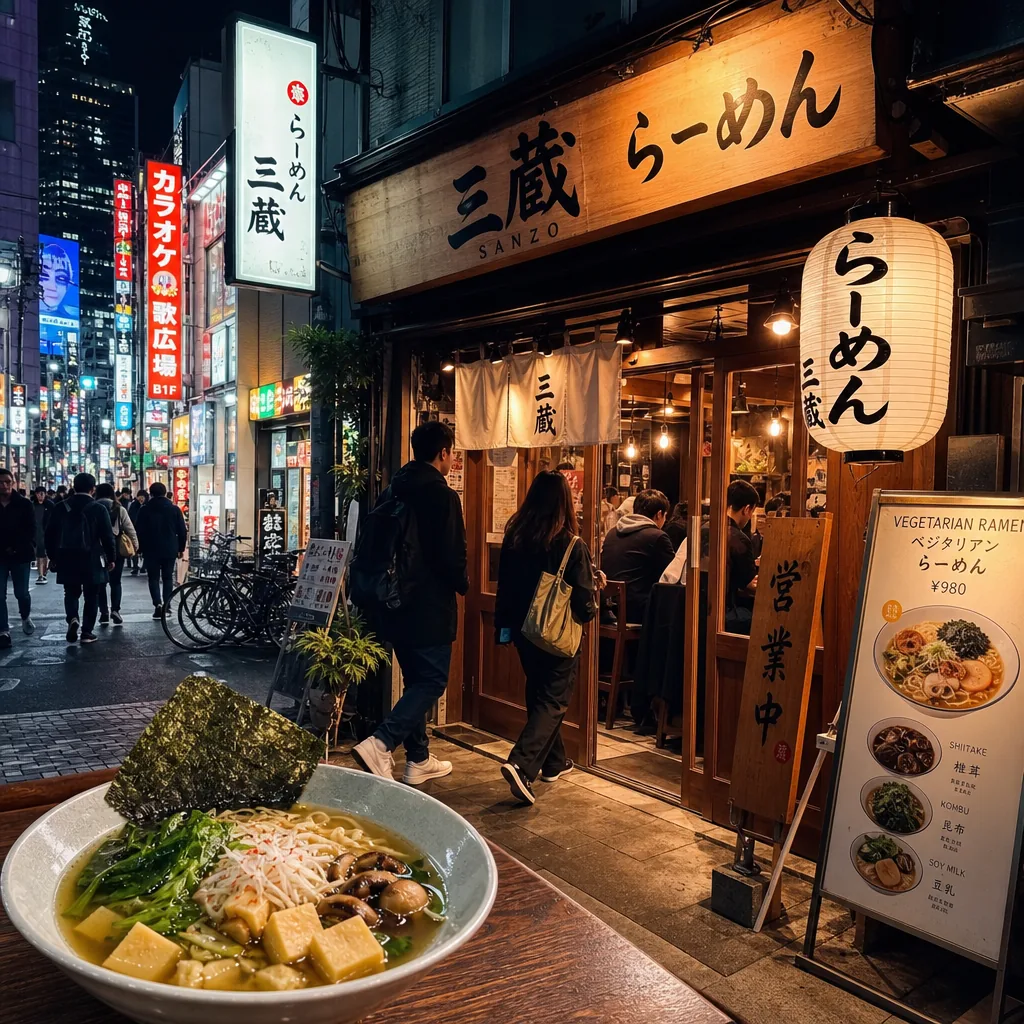
Find late-night vegetarian ramen in Tokyo by focusing on Shibuya, Shinjuku, and Roppongi, then verify broth, hours, and vegan menu details.