Article overview: How can a concierge handle JR Pass guide …
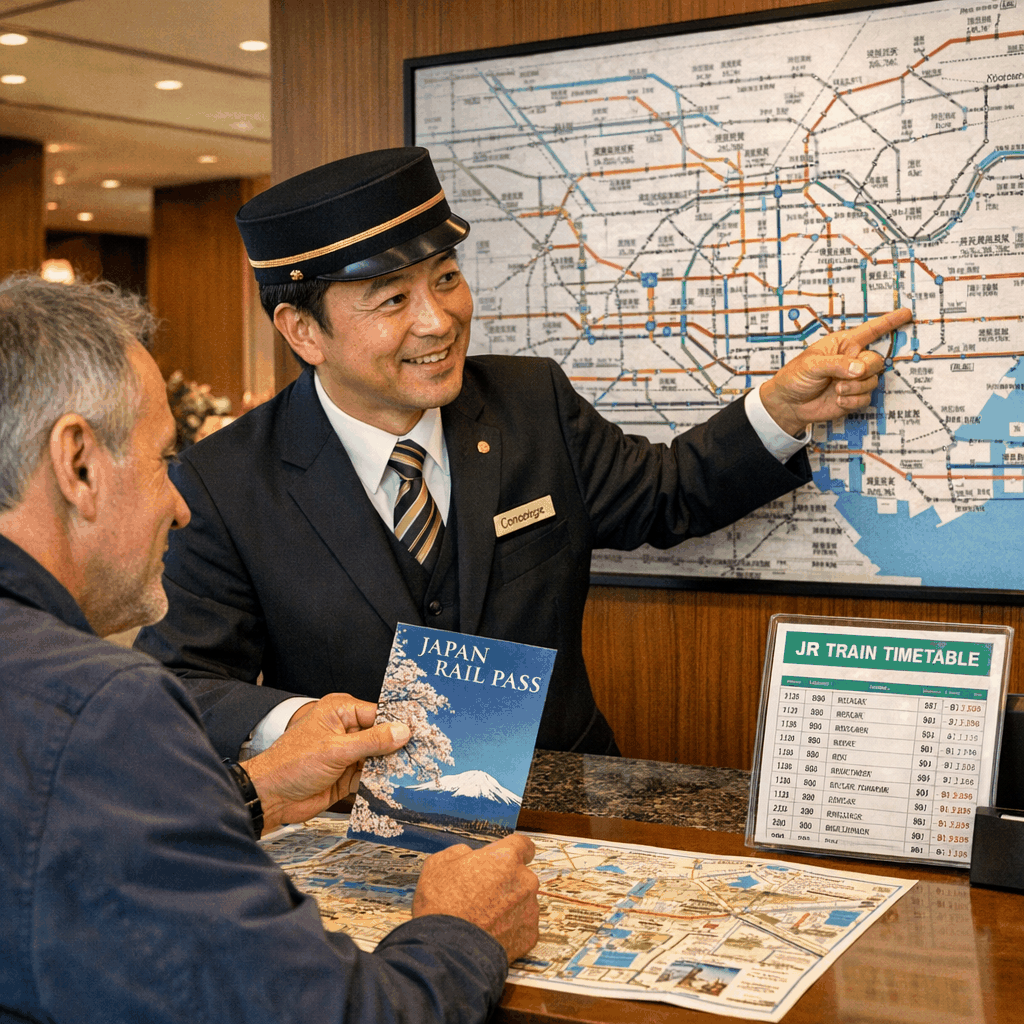
Yes — a concierge in Tokyo can fully handle JR Pass guide tasks for guests by exchanging/activating their Exchange Orders, making seat reservations at JR counters, planning JR routes within Tokyo, and coordinating non-JR legs (IC cards) and luggage forwarding. This post gives concrete, station- and service-specific steps concierges can follow to deliver reliable JR Pass support in Tokyo.
Overview: What the JR Pass covers and the concierge role
The Japan Rail Pass (JR Pass) covers most JR lines across Japan including JR East services and the Narita Express, but excludes Nozomi and Mizuho services on the Tokaido/Sanyo Shinkansen lines [1]. As concierge you are the guest’s on-the-ground interpreter: verify coverage, exchange/activate the pass using the guest’s passport, reserve seats when needed, and advise on non-JR connections such as Tokyo Metro or private railways.
Exchange and activation: airports and major stations in Tokyo
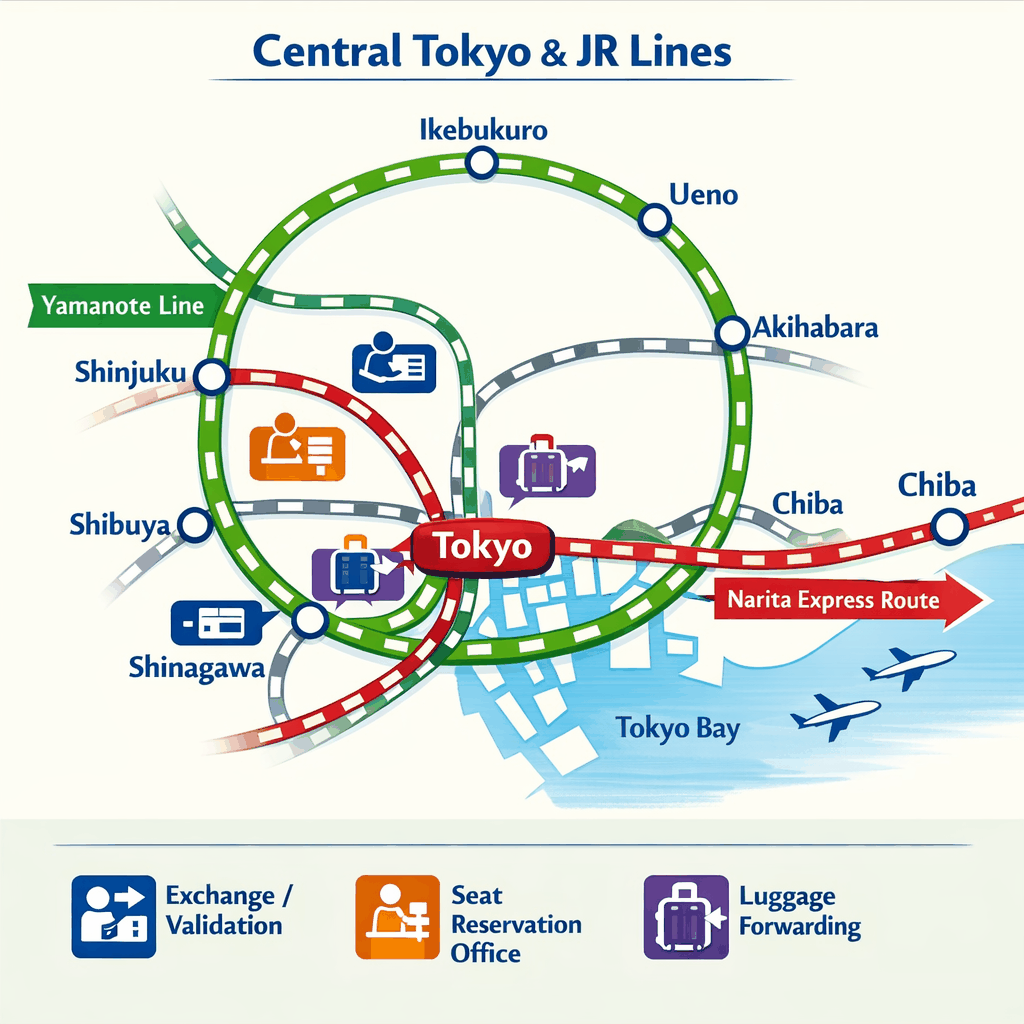
Exchange Orders must be exchanged and activated in person; the passport presented must match the one used to buy the Exchange Order [1]. In Tokyo the most common exchange/activation points are Narita Airport and Tokyo Station. Narita has JR East counters and the Narita Express connection that JR Pass holders often use to reach central Tokyo [3]. Tokyo Station’s ticket offices and travel service counters handle exchanges and inquiries for guests arriving in the city [5].
Seat reservations and where to make them
Seat reservations are free for JR Pass holders and should be made at Midori no Madoguchi ticket offices or JR East Travel Service Centers—available at major stations such as Tokyo Station and at airport counters [1][5]. When booking, confirm the train name (e.g., Tokaido Shinkansen vs. Nozomi) and platform. For Narita Express reservations from Narita Airport into Tokyo, use the airport JR counters or the Narita Express desk at the station [3][5].
Common restrictions and line exceptions to check
Do not attempt to book Nozomi or Mizuho services with the JR Pass; these are excluded [1].
Local private lines and subways (Tokyo Metro, Toei) are not covered—recommend a Suica or PASMO for those legs [2].
Check train names and operators so guests don’t board non-JR services by mistake (e.g., private Odakyu or Keio lines) [1][4].
Local transfers: Suica/PASMO and non-JR operators
For non-JR travel inside Tokyo advise guests to carry a Suica or PASMO prepaid IC card. Suica is issued by JR East and usable on Tokyo Metro, Toei, buses, and many private railways; it can be purchased and topped up at ticket machines and JR East counters [2]. Concierges should offer to buy and load these cards so guests can transfer seamlessly from JR stations to subways or private lines.
Arrival handling: Narita and Haneda access and first-mile support
For arrivals at Narita, the Narita Express (NEX) is JR-operated and covered by the JR Pass; reservations are available at the airport JR counters and are often the fastest direct rail route to Tokyo Station or Shinagawa [3][1]. For Haneda arrivals, some airport transfer options are JR-operated (e.g., via Tokyo Monorail to Hamamatsucho) but others are private—confirm the best route and whether IC cards are needed for final legs [3][4].
Managing luggage and special requests (takkyubin, oversized items)
Many guests prefer to forward luggage between airport and hotel or between hotels to travel light on trains. Yamato Transport’s takkyubin luggage delivery is widely used in Tokyo and can send bags next-day to most hotels and airports; concierges can arrange pick-up from the hotel front desk and provide tracking information [6]. For oversized items or same-day requirements, coordinate directly with Yamato or other courier desks located at major hotels and stations.
Tools, signage, language tips and concierge checklists
Use the official sites and station maps when planning: Japan Rail Pass official pages for coverage details, JR East for Suica information, and Narita Airport’s rail access pages for airport-specific routing [1][2][3]. Always carry the guest’s destination written in Japanese, the JR train name, and the relevant platform number when possible. Many JR ticket offices provide English service, but having printed itineraries and Japanese station names reduces confusion [5][2].
Sample concierge script and quick-check checklist
Use this short script and checklist when handing over JR Pass tasks.
Script: "I will exchange/activate your JR Pass at [Narita/Tokyo Station]. May I have the passport used to purchase the Exchange Order? I will also reserve seats for your Shinkansen to Kyoto at the Midori no Madoguchi."
Script: "I'll prepare a Suica card for local travel and arrange Yamato takkyubin to send your luggage to your next hotel if you prefer to travel light."
Checklist: Passport used to purchase Exchange Order, physical Exchange Order, preferred activation date [1].
Checklist: Destination station name in Japanese, train name to avoid (Nozomi/Mizuho), seat reservation confirmations/printouts from Midori no Madoguchi or JR East counters [1][5].
Checklist: Suica/PASMO prepared and topped up, luggage forwarding arranged with Yamato including recipient address and contact [2][6].
Following these station-specific steps — using Tokyo Station ticket services, Narita Express counters at Narita Airport, JR East Suica facilities, and Yamato for luggage — lets concierges provide fast, reliable JR Pass support for guests in Tokyo while avoiding common pitfalls such as Nozomi bookings or unmet non-JR legs [1][3][2][5][6].
How CallButler Can Help
CallButler is a multilingual concierge service that handles research, coordination, and bookings so you do not have to navigate language barriers or unfamiliar systems alone. If you need help related to How can a concierge handle JR Pass guide tasks in Tokyo? or the tasks around it, our team can step in to manage the details and keep things moving smoothly.