Article overview: Can I use cards or cash at Tsukiji Outer …
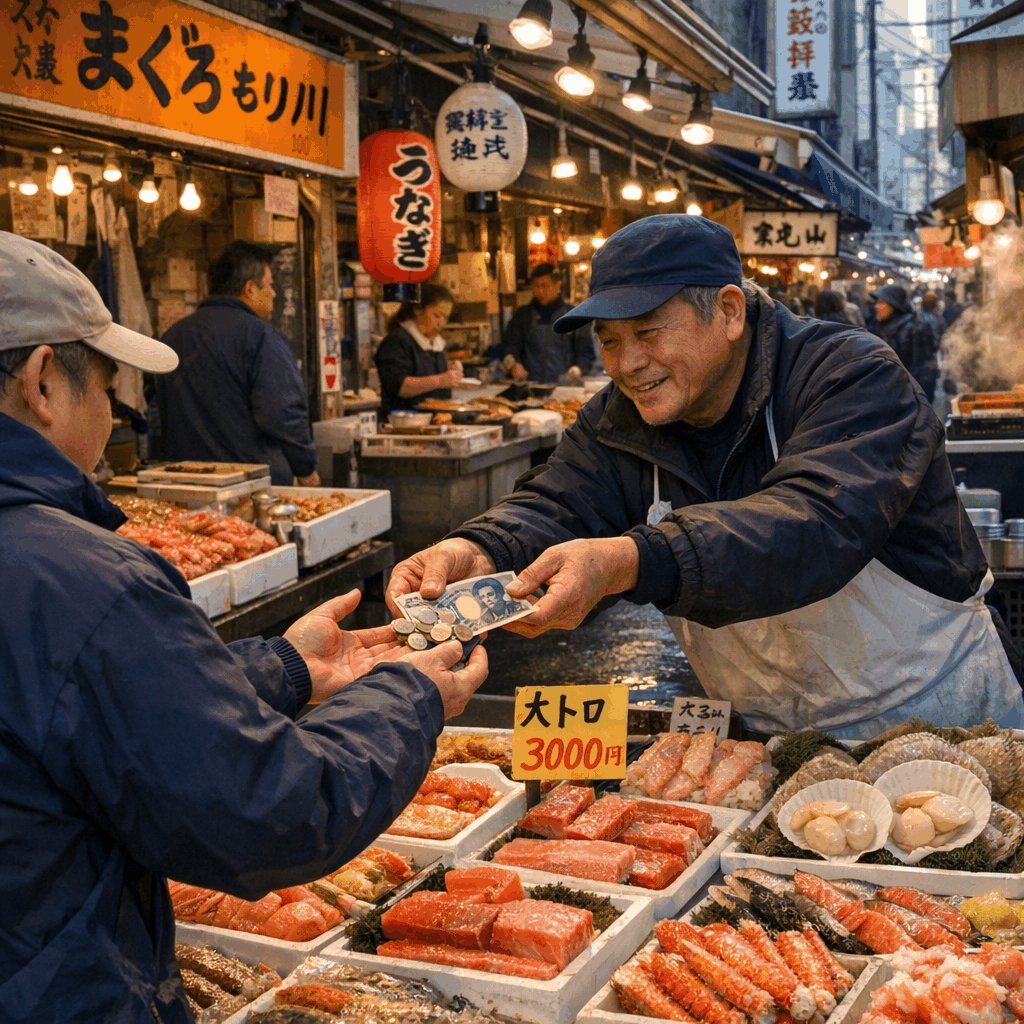
Yes. Cash remains the most reliable payment method at Tsukiji Outer Market in Tokyo, though some larger sushi restaurants and specialty shops accept credit/debit cards, IC transit cards (Suica/Pasmo) or QR payments like PayPay. Bring enough small bills and coins and plan to use convenience-store ATMs (Seven Bank at 7‑Eleven) if you need yen on arrival.
Payment landscape at Tsukiji Outer Market
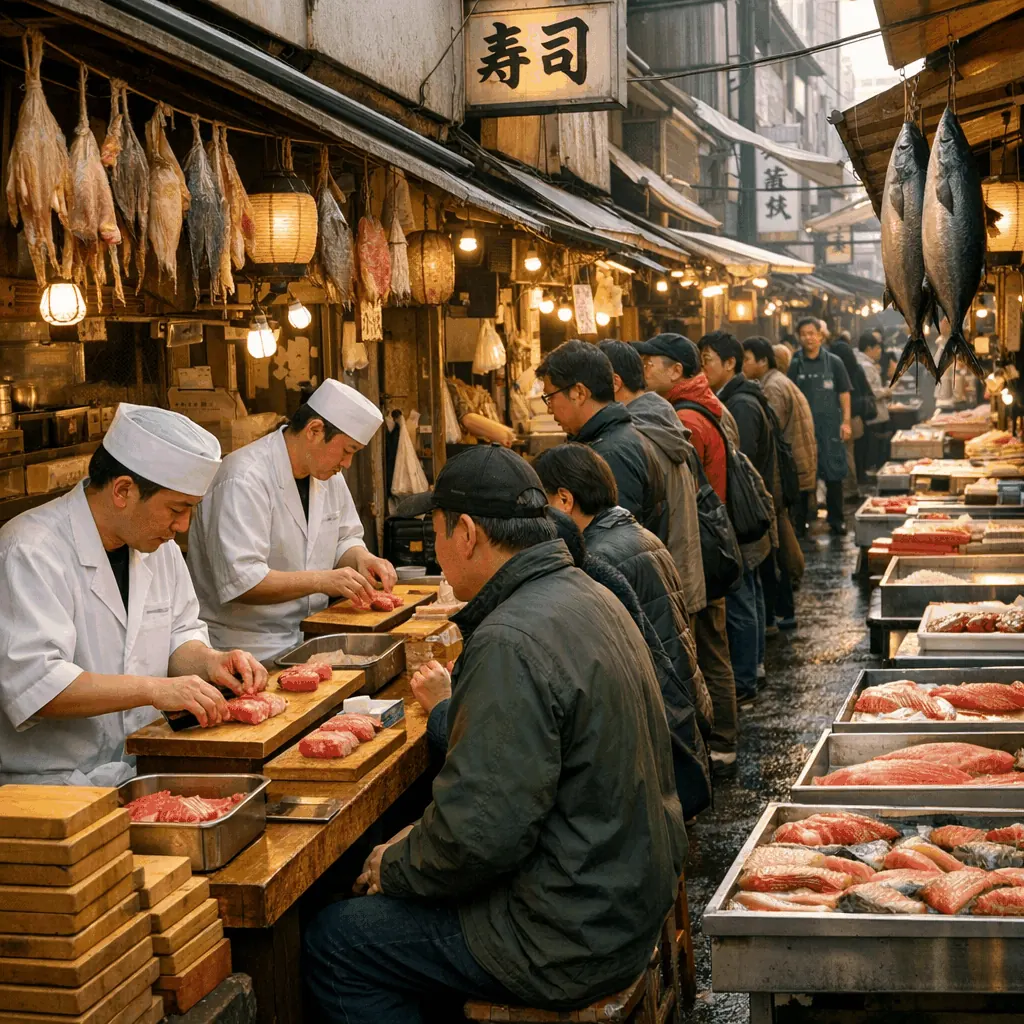
Tsukiji Outer Market is a collection of roughly 400 shops and restaurants clustered around the former wholesale fish market area; the mix ranges from tiny street-food stalls and fishmongers to established sushi counters and kitchenware shops [1][2]. According to guides for visitors, many of the smaller vendors are cash-first or cash-only, while an increasing number of restaurants and retail stores accept cards or IC payment — but acceptance is uneven, and there's no single standard across the market [2][3].
Which types of vendors accept cards
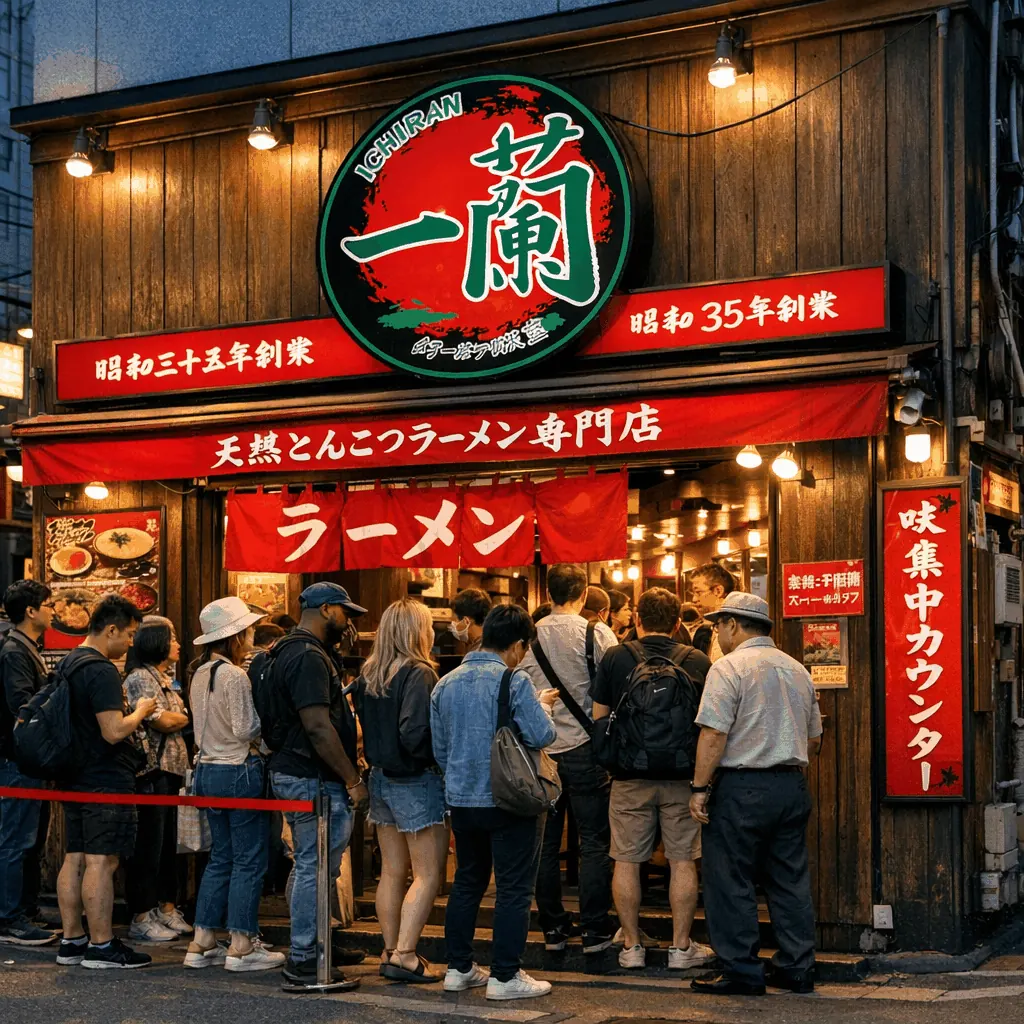
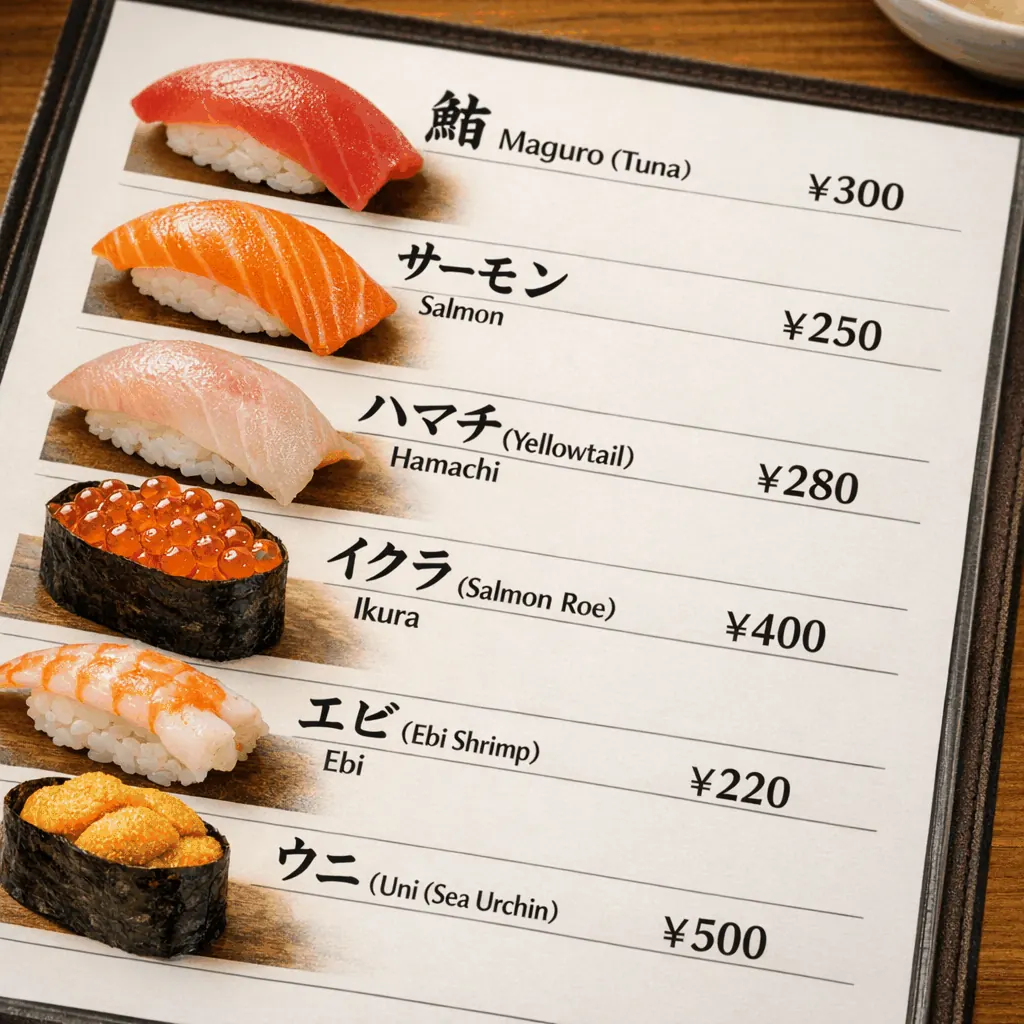
Expect variation by vendor size and type. For concrete examples, the best-known long-line sushi counters historically associated with Tsukiji—Sushi Dai and Daiwa Sushi—are examples of small counters that have traditionally run on cash and early-morning queues; guidebooks note that these counters operate differently from larger sit-down restaurants and may not reliably accept cards during peak service [3].
Larger sit-down restaurants, established specialty retailers selling knives, ceramics or packaged goods, and some long-running storefronts in the Outer Market more commonly accept major credit/debit cards and sometimes IC cards. However, even when a shop lists card acceptance, staff may prefer cash for small transactions; always confirm before ordering or ask to see the payment terminal [2][3].
IC cards (Suica/Pasmo) and QR payments
IC transit cards such as Suica and Pasmo are widely used in Tokyo for trains and many retail purchases. Some kiosks and shops in the Outer Market accept IC cards, especially those that also serve as tourist-facing retail outlets, but acceptance is not universal among tiny food stalls or wholesale counters [3].
QR-code payments (PayPay, LINE Pay and similar) have expanded rapidly across Japan and you will find them at a growing number of market retailers, particularly at newer shops and chains. Still, QR acceptance at the Outer Market is uneven—smaller stalls may not be set up for it, so treat QR options as a convenience when available, not a guarantee [2][3].
Where to get cash (ATMs and hours) in central Tokyo
If you need yen, use convenience-store ATMs operated by Seven Bank (found inside 7‑Eleven stores). Seven Bank ATMs accept many international ATM/debit and credit cards and operate 24 hours, making them the most convenient cash source near Tsukiji [4]. There are several 7‑Eleven and FamilyMart locations within a short walk of Tsukiji Station and the Outer Market area; consult a map for the nearest machine before you go [2][4].
Tokyo bank branches and counters often close earlier in the day than convenience-store ATMs; if you arrive late morning or afternoon and need cash, a Seven Bank ATM is the most predictable option. Note that ATMs may charge withdrawal fees and that your home bank may also add charges—check your bank's fee schedule before travel [4].
Practical tips for visitors
Carry small denominations: bring plenty of 1,000-yen notes and coins (100, 500 yen). Typical street-food items and individual fish or vegetable purchases are low value, and many vendors cannot break large notes [3].
Ask before you order: before ordering at a stall or sitting down at a sushi counter, confirm payment methods—say “card possible?” or show the card/phone screen. If in doubt, pay cash to avoid holding up a busy stall [2][3].
Use nearby ATMs early: if you need cash after arrival, use a Seven Bank ATM at a nearby 7‑Eleven — they are 24/7 and accept foreign cards [4].
Plan timing around opening hours: many Outer Market shops open in the morning and close by early afternoon; sushi counters like Sushi Dai and Daiwa Sushi attract queues very early, so arrive early both for availability and to confirm payment options before long lines form [3][5].
No tipping and clear payment: Japan does not follow tipping customs; paying the exact amount (or close to it) avoids confusion. Using cash can make quick transactions easier at crowded stalls [2][3].
Summary
At Tsukiji Outer Market, cash is still the safest, most accepted payment method—especially at small stalls and fishmongers [1][2][3]. Some larger restaurants and retail shops increasingly accept credit/debit cards, Suica/Pasmo IC cards and QR payments like PayPay, but acceptance is uneven, so always ask first. If you need cash, use Seven Bank ATMs inside 7‑Eleven (24/7, international card support) and carry small bills and coins to make purchases move quickly [4]. For schedules and vendor lists, consult the official Tsukiji Outer Market site and visitor pages before you go [1][2][5].
How CallButler Can Help
CallButler is a multilingual concierge service that handles research, coordination, and bookings so you do not have to navigate language barriers or unfamiliar systems alone. If you need help related to Can I use cards or cash at Tsukiji Outer Market in Tokyo? or the tasks around it, our team can step in to manage the details and keep things moving smoothly.