Article overview: What's the ideal sunrise plan for Fushimi…
Yes — the ideal sunrise plan for Fushimi Inari Taisha in Kyoto is to arrive 30–60 minutes before sunrise via JR Inari Station, walk the torii path up to the Yotsutsuji/summit loop, and time your return so the 1.5–2 hour circuit finishes after first light [1][2][4]. This balances low crowds, blue-hour photography, and respect for worshippers while using reliable access from Kyoto Station [2].
Why do sunrise at Fushimi Inari?
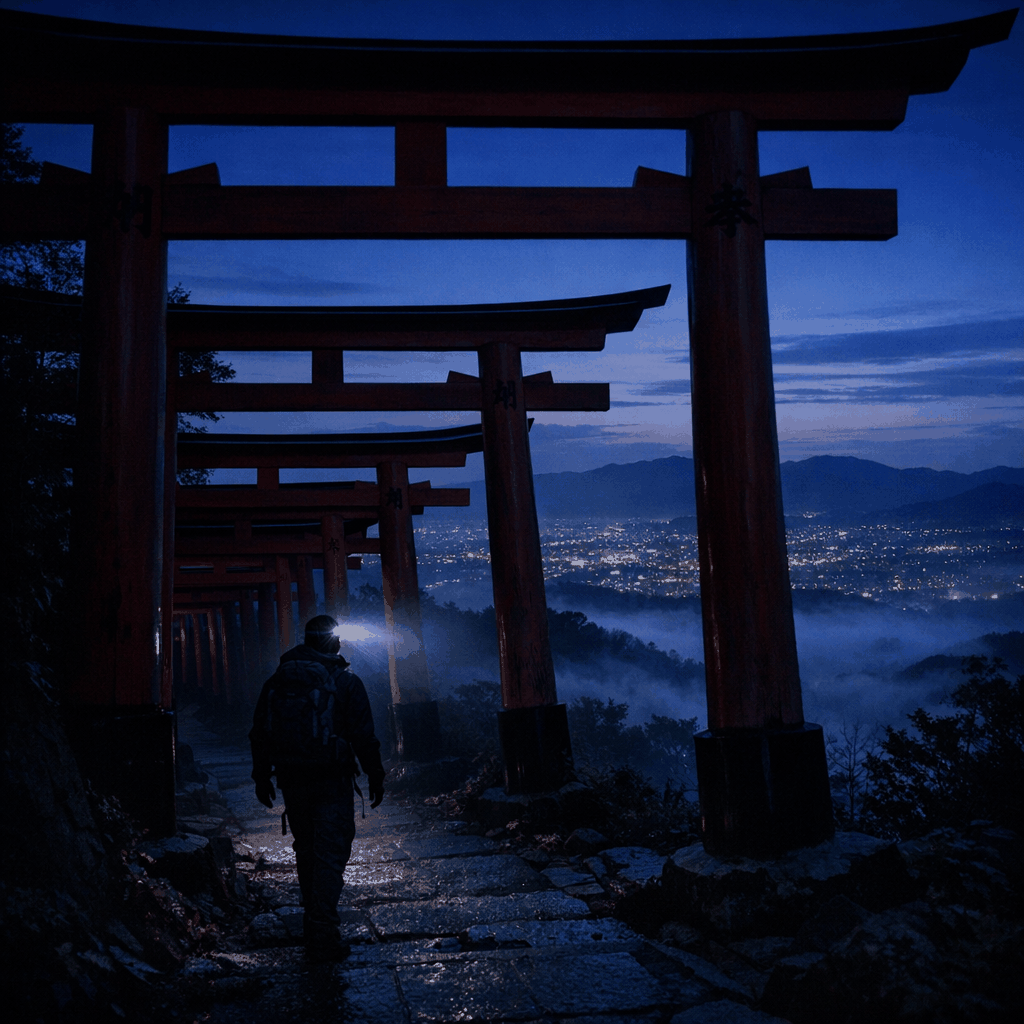
Fushimi Inari Taisha’s thousands of vermilion torii gates and the mountain trail become dramatically backlit at dawn: you get long shadows, cool blue-hour tones before sunrise, and soft warm side-light in early golden hour. The shrine is effectively open 24 hours, so a pre-dawn visit is permitted — check the shrine’s official page for special events or temporary closures [1]. Early arrival also reduces interaction with daytime tour groups and lets you experience the site in a quieter, devotional atmosphere [1][2].
Practical facts: hours, access, and timing
Opening: Fushimi Inari’s grounds are accessible day and night; consult the official site for event notices or restricted areas [1].
Nearest station: JR Inari Station on the Nara Line — a roughly 2–5 minute walk from the shrine and an easy transfer from Kyoto Station, making a dawn approach practical even from central Kyoto [2].
Plan the circuit: A full circuit to the mountain summit and back commonly takes about 1.5–2 hours — include this when plotting arrival and return times so you reach your chosen viewpoint exactly at sunrise [2].
Check sunrise: Use a reliable sunrise calculator for Kyoto (timeanddate.com or a local weather app) to know exact sunrise on your date and adjust arrival 30–60 minutes earlier by season and crowd level [4].
When to arrive: seasonal timing and a simple rule
Simple rule: arrive 30–60 minutes before the published sunrise time for Kyoto; add extra buffer (30+ minutes) during peak cherry blossom and autumn foliage weekends. Use timeanddate.com for that day’s sunrise and civil twilight time so you can exploit blue hour lighting for photos and orientation [4]. In winter, civil twilight is earlier and temperatures are colder — wear warmer layers and allow more time for footing.
Route and pacing: lower torii, mid-mountain, summit loop
Start at the main approach (Romon gate) and pass the inner shrine — take photos briefly but keep moving to avoid blocking worshippers [1][2].
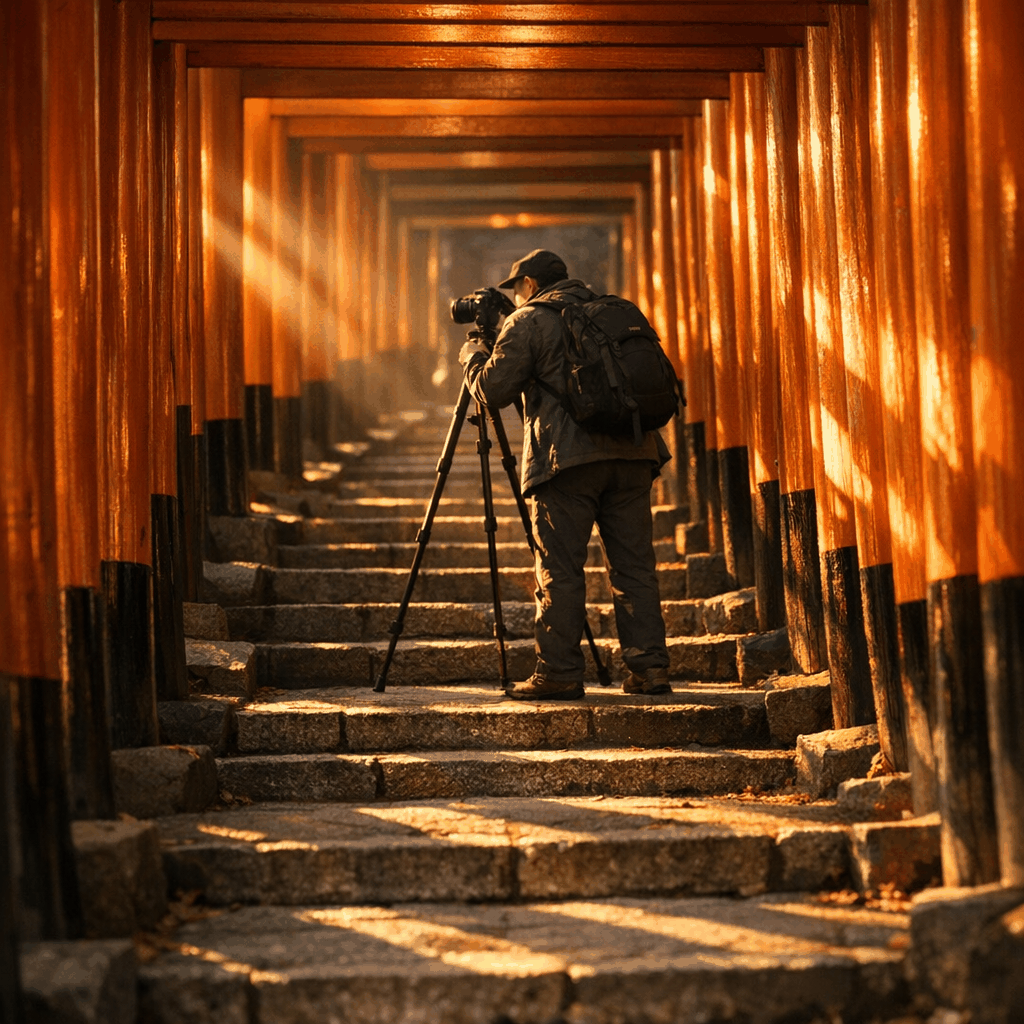
Walk the lower torii corridor slowly for compositions; if you want an iconic tunnel shot, aim to be in that section 30–45 minutes before sunrise when fewer people are present [2].
Continue up toward the mid-mountain Yotsutsuji viewpoint (the four-way junction roughly halfway up). Yotsutsuji offers a classic overlook of Kyoto and is a common sunrise vantage — many hikers pause here for the sun to clear the horizon [2].
If you plan to reach the summit loop, pace to complete the ascent so you’re at a chosen high viewpoint at sunrise; remember the full circuit is 1.5–2 hours, so time your start accordingly [2].
On descent, follow the same torii route back; keep to the left where foot traffic narrows and be patient on stairs and single-lane sections [2].
What to bring and safety tips for pre-dawn hiking
Small headlamp or flashlight (red mode if possible) — paths are dim and uneven before civil twilight.
Comfortable, grippy shoes; expect stairs and narrow cobbled slopes on the mountain trail [2].
Light layers for seasonal temperatures (Kyoto can be cold before sunrise in winter) and a small bottle of water.
Allow extra time for narrow sections and to let others pass; factor the 1.5–2 hour circuit into your arrival and onward travel plans [2].
Check trains if returning to Kyoto Station early — trains serve Inari Station from early morning, but confirm schedules the day before.
Etiquette at the shrine and photo rules
Fushimi Inari is an active Shinto shrine: keep voices low, step aside for worshippers at small worship areas, and follow any signs or staff directions from the shrine’s administration [1]. For aerial photography or drones, consult the shrine’s official guidance and local regulations; when in doubt, avoid flying near shrine buildings and crowds and check national/local restrictions ahead of your visit [1][3].
Sample sunrise itineraries
Quick (60–75 minutes): Arrive 45–60 minutes before sunrise, walk the lower torii corridor and up to Yotsutsuji, photograph the sunrise, and return — good for travelers with a tight schedule [2][4].
Moderate (1.5–2 hours): Arrive 60 minutes before sunrise, move through the torii, pause at Yotsutsuji for sunrise, continue to the summit loop, then descend — completes the full circuit at a relaxed pace [2].
Photo-focused (2+ hours): Arrive 60+ minutes before sunrise for blue-hour shots in the lower gates, then time a slow ascent to capture golden-hour side-light on the mid-mountain gates; expect to spend additional time composing and waiting for low crowds [2][4].
After sunrise: nearby breakfast and onward plans
After your visit, you can stroll to JR Inari Station and return to Kyoto Station for early cafes and bakeries around the station area, or extend your morning to nearby Tōfuku-ji for its temple grounds (both easily reachable from the Fushimi area) — check the Kyoto tourism guide for recommended morning itineraries and transit options [3]. If you want fewer crowds, consider wandering small streets around Fushimi Inari for local shops open after first trains depart [3].
Final reminders
Confirm that sunrise times for Kyoto on your chosen date (timeanddate.com) match your plan [4], consult the shrine’s official site for notices or closures [1], and pace your ascent to arrive at your chosen viewpoint at first light — that timing, combined with respectful behavior, makes for the ideal Fushimi Inari sunrise experience [2][3][4].
How CallButler Can Help
CallButler is a multilingual concierge service that handles research, coordination, and bookings so you do not have to navigate language barriers or unfamiliar systems alone. If you need help related to What's the ideal sunrise plan for Fushimi Inari in Kyoto? or the tasks around it, our team can step in to manage the details and keep things moving smoothly.