Article overview: Japan eSIM vs pocket WiFi: which should I…
Answer: For most solo or short-stay travelers in Osaka, an eSIM is the simplest and cheapest option if your phone supports it; for groups, families, or older phones, a pocket WiFi rental usually works out cheaper per person and is easier to share. This post explains how each works in Osaka, where to get them (Kansai Airport, Umeda, Namba), and practical steps to choose and use one safely.
Why your choice of mobile data matters in Osaka
Osaka is dense and well-covered by mobile networks across tourist hubs like Dotonbori, Osaka Castle, and business/shopping districts in Umeda and Namba, so both eSIMs and pocket WiFi will work reliably in central areas [4]. Your choice matters because it affects device compatibility, cost per person, battery management, and whether you need a local phone number or only data [2][3].
What is an eSIM (and who it suits)?
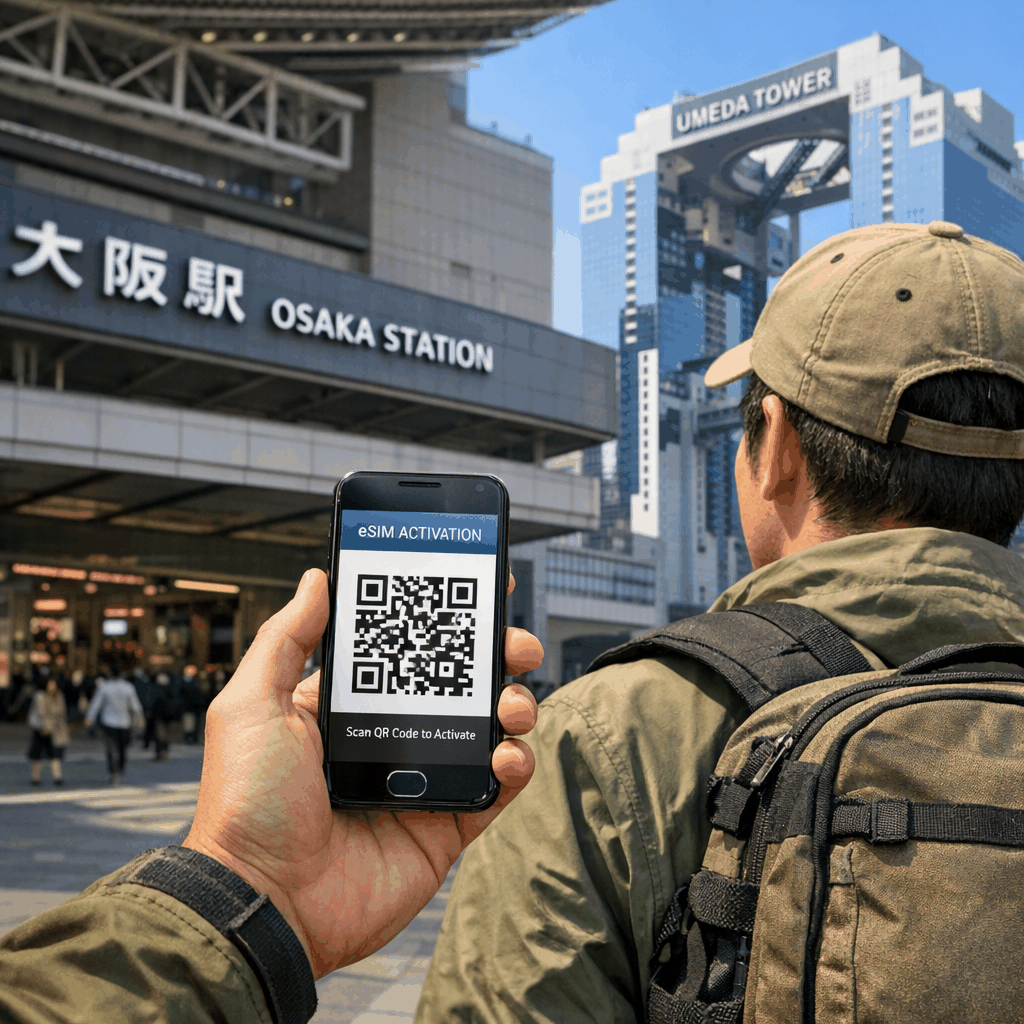
An eSIM is a digital SIM profile you install directly on an eSIM-capable phone (modern iPhones and many Android models) without a physical card [1]. Tourist eSIM plans sold for Japan are typically data-only and activate by scanning a QR code or using an app; activation can be immediate which makes pre-purchase and same-day use convenient [1][2].
Who it suits:
Solo travelers or couples with eSIM-capable, unlocked phones (iPhone XS and later, many newer Androids) [1].
Short stays (a few days to a few weeks) who need simple setup and no device to carry or return [2].
People who need low friction and immediate activation on arrival in Osaka (no airport queue) [5].
What is pocket WiFi (and who it suits)?
Pocket WiFi is a rented portable hotspot that creates a local Wi‑Fi network for multiple devices; the unit itself connects to Japanese carriers' networks and shares that connection with phones, tablets, and laptops [3]. It requires charging and physical pickup/return but lets several people share one data pool.
Who it suits:
Groups, families, or friends traveling together: cheaper per person when split between 2+ users [3].
Travelers with older or locked phones that cannot use an eSIM or who prefer not to change phone settings.
Trips where multiple devices (camera, tablet, laptop) all need concurrent internet access.
Coverage and speed in Osaka — practical expectations
In Osaka’s urban core (Umeda, Namba, Tennoji, Dotonbori and around Osaka Castle) both eSIM data via major carriers and pocket WiFi rentals provide strong coverage and good speeds; carriers prioritize metro areas and tourist districts, so expect reliable service for navigation, streaming maps, and localization apps [4][3]. Coverage can vary in outlying Kansai locations (rural coastlines or mountain areas), so check route-specific coverage if you plan day trips outside the city [3].
Cost, data limits and typical pricing patterns
Exact prices depend on vendor and data allowance, but general patterns are consistent: prepaid eSIM or tourist SIM plans tend to be cheapest for single travelers on short stays, while pocket WiFi can be more cost-effective when costs are shared among 2+ people [2][3]. Many tourist offers are data-only — if you need a Japanese phone number or voice calls, confirm the plan supports that or arrange a separate solution [2].
Convenience: pickup, activation, battery and device requirements
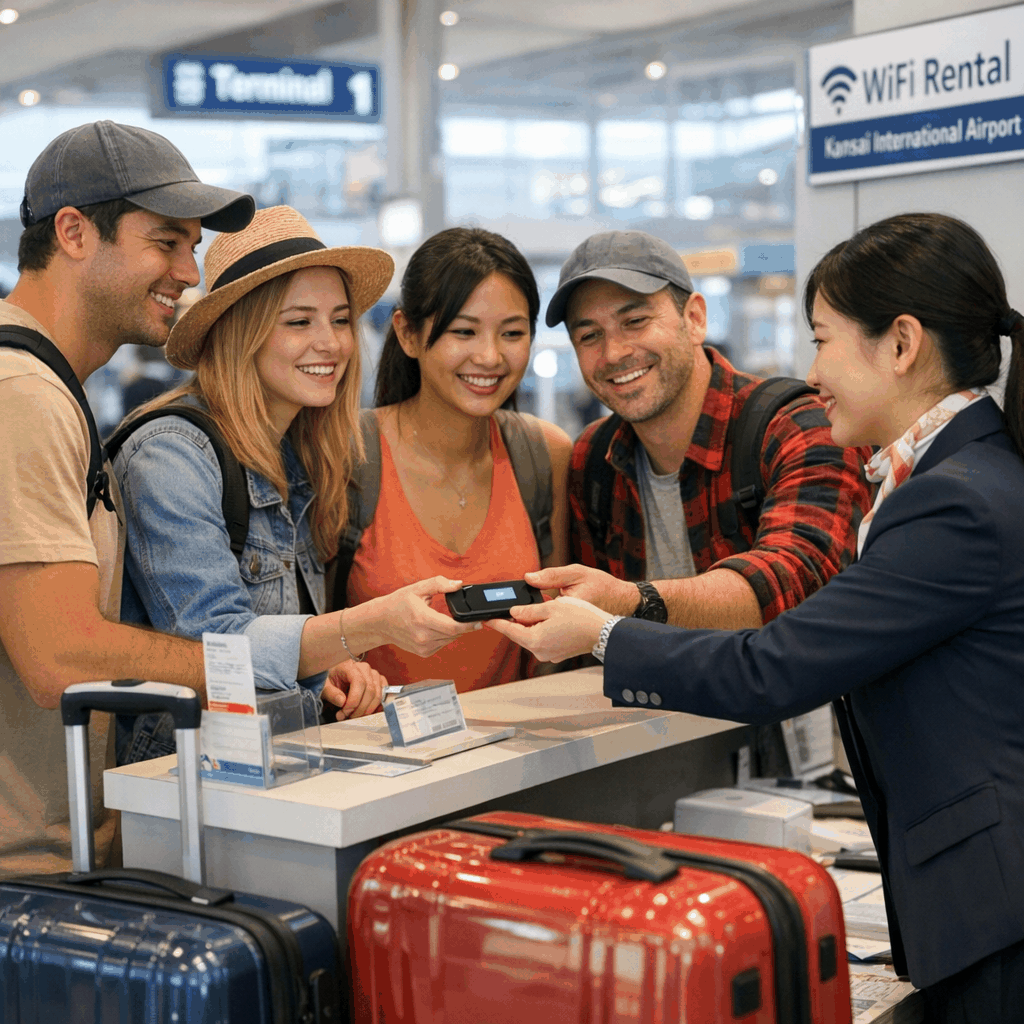
eSIM setup requires an unlocked, eSIM-capable device and following a QR/app activation process; check device compatibility before purchase using Apple’s eSIM guidance or your phone maker’s support pages [1]. Pocket WiFi requires pickup and return: counters at Kansai International Airport (KIX) handle on-arrival rentals, and many vendors offer hotel delivery or city pickup points in Osaka [5][2][3]. Battery life for pocket WiFi varies — bring a power bank if you rely on it all day.
Where to rent or buy in Osaka (Kansai Airport, Umeda, Namba)
At Kansai International Airport (KIX) you can often rent pocket WiFi or pick up pre-booked devices at dedicated rental counters in the arrival/concourse areas; KIX recommends pre-booking during busy travel seasons to guarantee availability [5]. In Osaka city centers look for hotel delivery, major electronics shops or pickup counters near Umeda station and Namba (Nankai/Osaka Metro areas) — these neighborhoods are common pickup points for both pocket WiFi and tourist SIM/eSIM voucher collection [4][3].
Concrete pickup strategies:
Pre-book an eSIM online and receive a QR code to activate on arrival — no airport queue, instant setup if your phone supports eSIM [1][2].
Pre-book pocket WiFi for KIX pickup or hotel delivery; collect at KIX counters operated by rental companies or pick up in Umeda/Namba storefronts if you arrive later [5][3].
If you need voice or a local number, verify plan details before buying — many tourist data plans are data-only [2].
Which to choose: quick rules for common traveler types
Solo short-stay traveler with recent iPhone/Android: eSIM for ease and lower cost [1][2].
Couples or groups of 2–4: pocket WiFi often cheaper per person and simpler to share [3].
Older phone or long stay needing a local number: consider a physical tourist SIM or local plans — pocket WiFi won’t provide a phone number [2][3].
Practical tips and final checklist
Before you leave for Osaka, check these items: verify your phone is unlocked and eSIM-capable (see Apple’s eSIM page) [1]; pre-book in high season or if arriving late at night to guarantee a KIX pickup [5]; confirm whether your plan is data-only and whether you need a Japanese voice number [2]; bring a power bank for pocket WiFi units; and choose pickup points in Umeda or Namba if you prefer city collection over airport counters [4][3]. With these checks you’ll get reliable, cost-effective connectivity for Osaka’s neighborhoods and attractions.
How CallButler Can Help
CallButler is a multilingual concierge service that handles research, coordination, and bookings so you do not have to navigate language barriers or unfamiliar systems alone. If you need help related to Japan eSIM vs pocket WiFi: which should I rent in Osaka? or the tasks around it, our team can step in to manage the details and keep things moving smoothly.