Article overview: How can a concierge help with Japan train…
Yes — a concierge can be very helpful with Japan train etiquette in Tokyo by giving short, practical briefings, demonstrating platform routines, and providing on-the-ground guidance during transfers or ticketing. These services reduce social missteps and speed up navigation of busy hubs such as Tokyo Station, Shinjuku Station and Shibuya.[2][3]
Why train etiquette matters in Tokyo
Tokyo’s rail network is high-capacity and operates on tight schedules across multiple operators (JR East, Tokyo Metro and private lines). Small etiquette differences — waiting in line, keeping phones silent, where to place luggage — help keep passenger flows moving and avoid accidental offense. Official operator guides and maps are widely available to plan itineraries ahead of time [1][2].
Common Tokyo train etiquette rules visitors should know
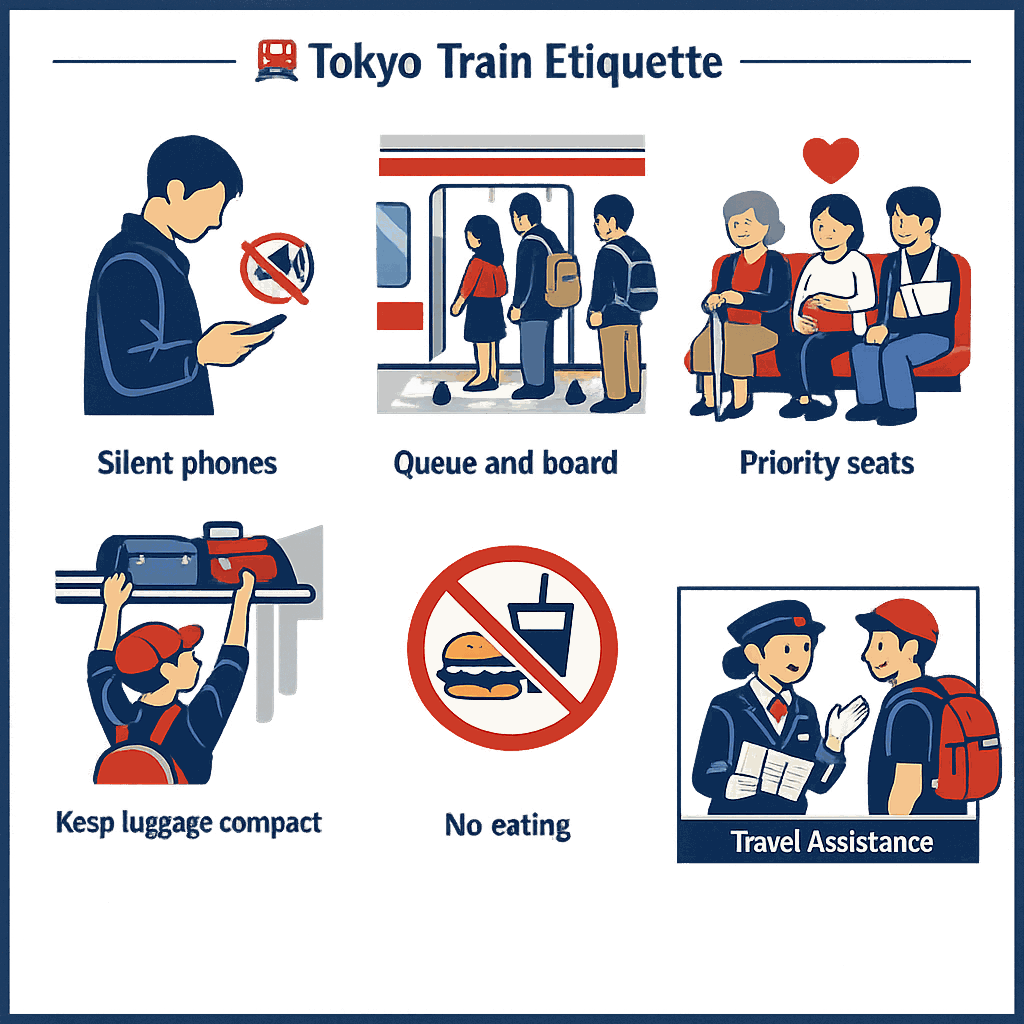
Let passengers disembark before boarding and stand to the side of marked car-door spots on platforms (look for white/yellow door markers on Tokyo Metro platforms) [1].
Keep phones on silent and avoid loud conversations; priority seating is for elderly, pregnant, injured and caregivers — offer seats politely if needed [1][2].
Use IC cards (Suica or Pasmo) for most Tokyo travel to avoid repeated ticket purchases; these cards are accepted on JR East and Tokyo Metro services [2][1].
Keep luggage out of aisles; for long luggage use end cars or luggage areas on limited express services and ride at off-peak times when possible [2].
Pre-trip concierge services: briefings and digital prep
A concierge can provide a 20–45 minute pre-trip briefing that covers the exact routes and transfers you’ll use, shows screenshots of ticket machine flows, and practices buying an IC card. They can prepare printed or digital one-page itineraries using Tokyo Metro route maps and JR East timetables so clients know platform names (for example, Marunouchi Line platforms at Ikebukuro or Ginza) and transfer corridors in stations like Tokyo Station [1][2].
Station- and platform-level assistance from a concierge
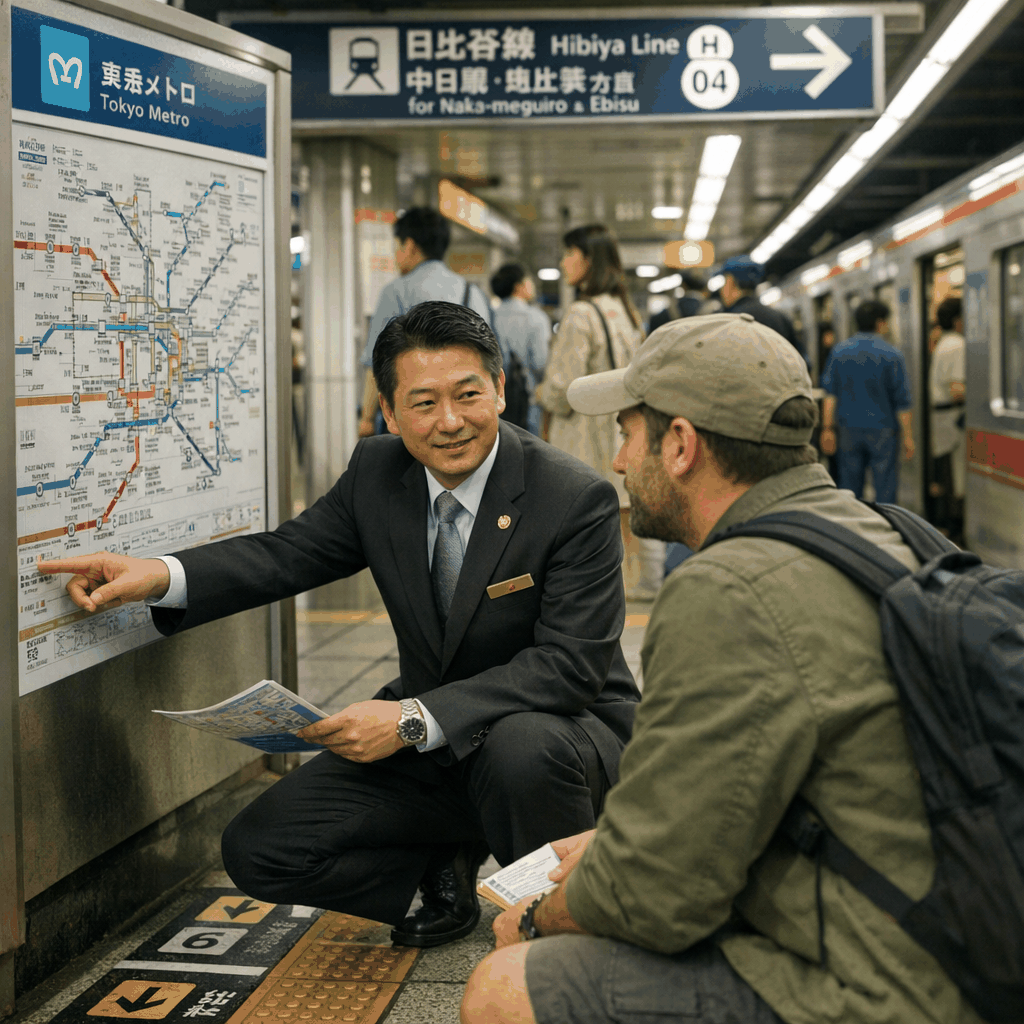
At large interchanges such as Tokyo Station (for Shinkansen and JR lines), Shinjuku Station (large commuter hub) and Shibuya Station (complex multi-operator layout), concierges can escort clients between lines, point out elevator routes, and demonstrate where to queue at platform door markers. They can also identify station offices and “eki-in” counters to ask staff questions or report lost items [2][3].
In-transit support: etiquette, accessibility and safety
Onboard, concierges can coach discreet behaviors: stand clear of doors, keep bags on laps or to your side, and move toward carriage ends if you need space. For travelers with reduced mobility, concierges will locate accessible elevator routes and call station assistance in advance — JR East and MLIT provide station assistance and barrier-free facility info that concierges commonly use to plan routes [2][4].
Handling awkward situations and complaints
If a ticket issue, JR/Pasmo balance problem or language barrier arises, concierges can translate, direct clients to manned ticket offices (Midori no Madoguchi on JR East lines), or ask station staff to intervene. For delays that affect connections, concierges can replan routes using JR East and Tokyo Metro route finders in real time and, when relevant, advise about Japan Rail Pass restrictions for certain non-JR subways or private lines [2][1][5].
Tools and materials concierges use (apps, maps, cards)
Tokyo Metro official English maps and station guides for platform layouts and transfer corridors [1].
JR East route information and station assistance pages (including Suica card details — Suica requires a refundable deposit) for JR services and Shinkansen connections at Tokyo Station [2].
Go Tokyo visitor pages for neighborhood-specific tips in Shinjuku, Shibuya and Asakusa when planning last-mile walking routes and busiest station entrances [3].
Japan Rail Pass guidance for travelers using the pass alongside Tokyo’s private subway network (clarifies where the pass applies and where IC cards are needed) [5].
Sample concierge checklist for a Tokyo rail trip
Confirm arrival station (e.g., Narita or Haneda) and first railway leg; note whether Suica/Pasmo or JR ticket is needed [2][5].
Prepare a single-sheet itinerary with station names in English and Japanese and the correct exit (for example, Marunouchi South Exit at Tokyo Station) [1][2].
Run a 10–15 minute rehearsal: buy a Suica/Pasmo (500 yen deposit typically required), touch-in/touch-out and read platform signs [2].
Walk transfers once with the client at off-peak times (identify elevators, restrooms, and staff help counters) [2][4].
Provide a one-tap contact method so the concierge can meet at a specific landmark (ticket gate, platform number, or store inside the station) in case of confusion [3].
Further reading and official resources
For route maps and station layouts consult Tokyo Metro’s English site [1]. For JR network, timetables, Suica details and station assistance consult JR East [2]. Go Tokyo provides neighborhood and arrival tips for visitors in Shinjuku and Shibuya [3], and MLIT publishes accessibility and passenger guidance for Japanese railways [4]. For pass-specific rules use Japan Rail Pass guidance [5].
How CallButler Can Help
CallButler is a multilingual concierge service that handles research, coordination, and bookings so you do not have to navigate language barriers or unfamiliar systems alone. If you need help related to How can a concierge help with Japan train etiquette in Tokyo? or the tasks around it, our team can step in to manage the details and keep things moving smoothly.