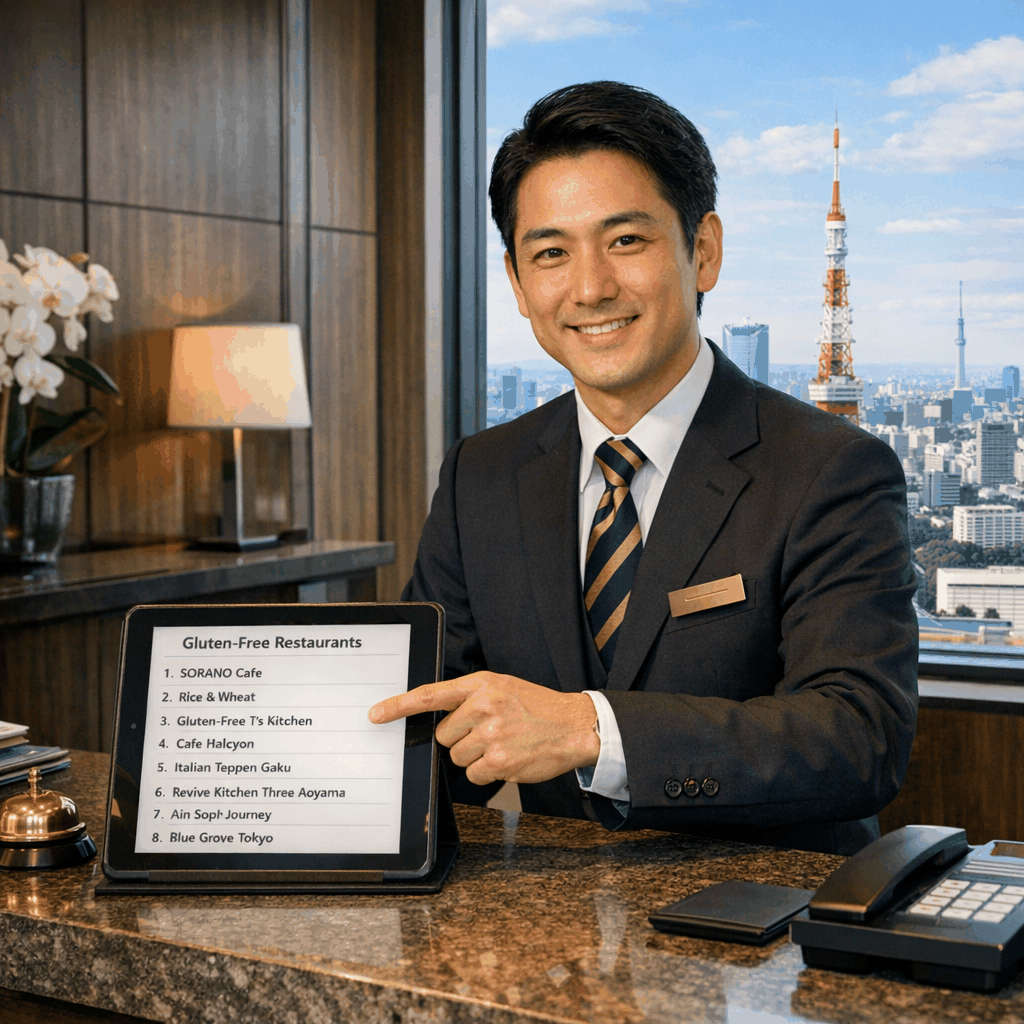
Article overview: Can a concierge coach me on Japan public …
Yes. In Kyoto hotel concierges, staffed tourist information centers and station staff can brief and coach visitors on public-transport etiquette, show how to use an IC card like ICOCA, and even accompany a first short transfer if requested. These frontline teams base their advice on the same guidance published by Kyoto tourism offices, JR West and national tourism bodies so what you learn will match official rules [1][2][3].
How concierges and tourist centers in Kyoto can help
Concierges at full-service hotels (and staffed tourist information counters at Kyoto Station and Karasuma/Oike tourist centers) commonly provide practical, on-the-ground coaching: they outline route options to places such as Kyoto Station, Gion and Kiyomizu‑dera, explain ticketing, demonstrate how to tap an IC card, and review local manners you should follow on buses and trains [1][5]. Many will print a short etiquette sheet or point to English guidance from JR West and JNTO so your instructions match official operator expectations [2][3].
Key Kyoto public-transport etiquette rules to expect
Keep noise low and avoid phone calls on trains and buses — speak softly or step off at the next station to take a call [2][4].
Do not eat on most local trains and buses; bottled drinks are normally acceptable but full meals are discouraged except on long limited‑express services [2][4].
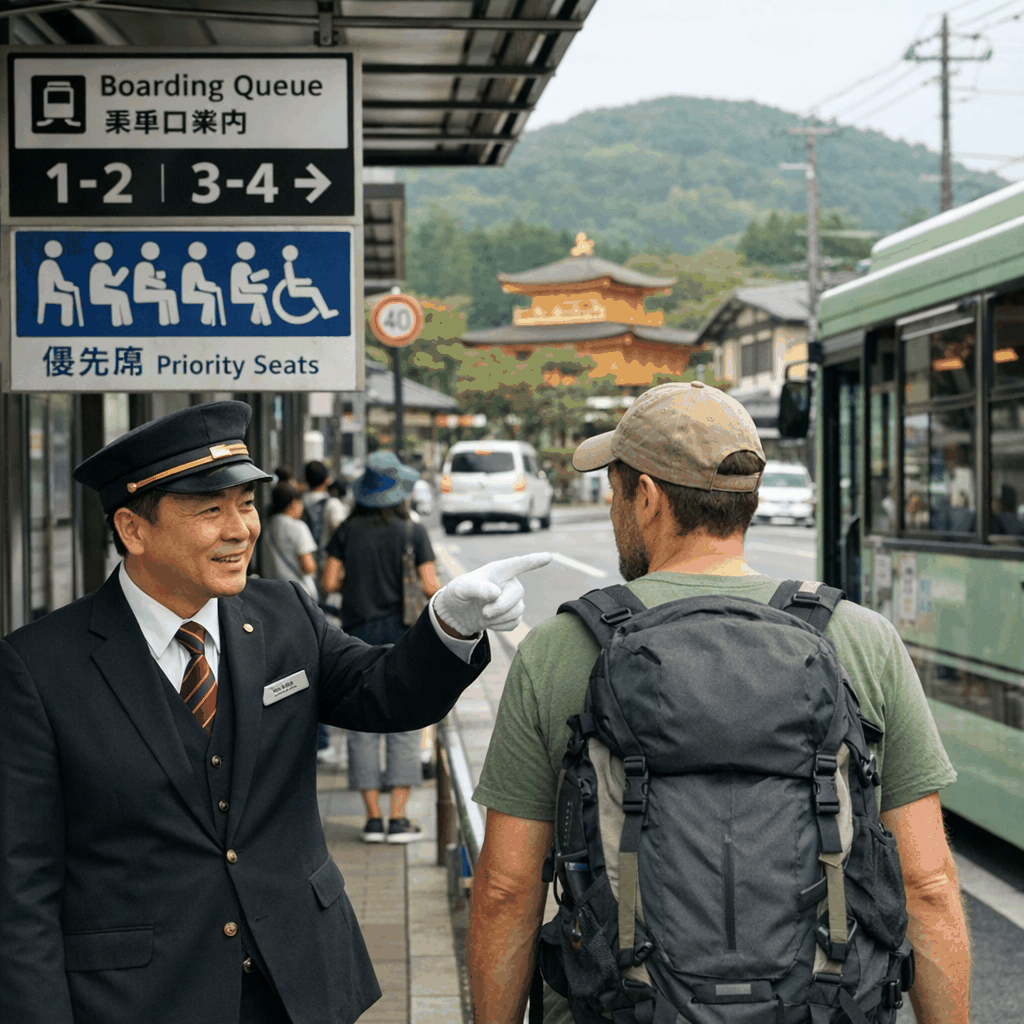
Give up priority seats to elderly, disabled, pregnant passengers or those with infants; priority seats are clearly marked on Kyoto City buses and in train cars [1][4].
Queue and board in an orderly way at marked stops — Kyoto municipal bus stops and many stations have boarding lines or platform markings, so follow local queues [1][5].
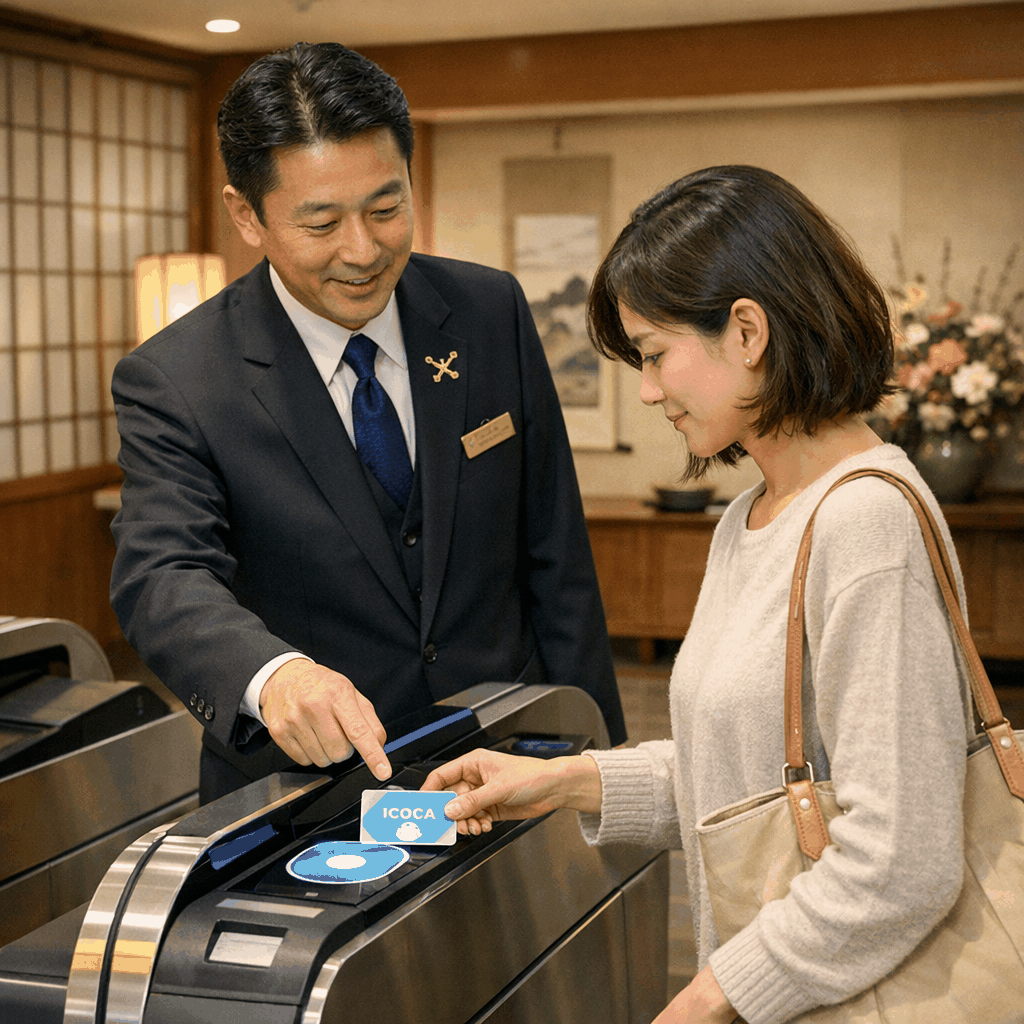
Use IC cards (ICOCA is widely accepted in Kyoto) and learn basic tap‑in/tap‑out routine to avoid delays at gates; JR West provides English guidance on ICOCA and station gate use [3].
Practical coaching a concierge can provide
Ask for short, practical demonstrations rather than abstract advice. Typical concierge services include:
Route walkthroughs: a printed route with transfers, station names in kanji and romaji, and estimated ride time for trips to Kyoto Station, Gion (Hanamikoji Street) or Kiyomizu‑dera approaches [1][5].
IC card demo: watch staff tap an ICOCA card at a ticket gate and practice tapping with their guidance so you know whether to touch the reader once or twice for a transfer [3].
Role‑play boarding and seating: a short simulation of queuing, boarding, putting luggage away and offering a seat can reduce first‑ride anxiety — many hotel concierges will do this in English [1][2].
Accompanied transfer: some hotels will accompany guests on a first short transfer (for example: hotel → Kyoto Station) or call station staff to meet you at the gate; request this in advance so staff can schedule it [3][5].
How to request transit‑coaching at Kyoto hotels and tourist centers
When you check in or visit a tourist information center (for example the Kyoto Station Tourist Information Center), say clearly what you need: route to a specific shrine or neighborhood (e.g., Kiyomizu‑dera, Gion), a demo of ICOCA taps, or an accompanied transfer. If you need language support or wheelchair assistance, ask the concierge to contact JR West station staff or Kyoto City bus personnel in advance; JR West notes that station staff can assist passengers when informed [3]. Tourist counters at Kyoto Station and major terminals list hours on the Kyoto City travel pages — check opening times and bring the destination name in kanji to speed communication [1][5].
When to consult official operators and local resources
Concierges will forward or echo operator guidance, but consult these sources for operator rules and real‑time updates: JR West‘s English travel pages for station procedures and ICOCA information, Japan National Tourism Organization (JNTO) for national etiquette norms, and Kyoto City/Kyoto Prefecture tourism sites for local bus/subway details and facility access [2][3][1][5]. If you have mobility needs, contact station staff through JR West or the bus operator ahead of arrival to arrange elevators, ramps or staff assistance [3][5].
Quick checklist to practice before your first Kyoto trip
Ask your hotel concierge or the Kyoto Station Tourist Information Center for a printed route and the station names in kanji (e.g., 京都駅 — Kyoto Station) [1].
Watch a concierge or staffer tap ICOCA at a gate and practice once with them — note that JR West has step‑by‑step guidance online [3].
Memorize basic etiquette: no loud calls, no eating on local trains/buses, give up priority seats and queue politely [2][4].
If you want accompaniment, request it at check‑in and confirm the meeting place and time (many concierges will accompany a short first transfer) [1][3][5].
If you need extra help, ask the concierge to contact station staff or a multilingual tourist center in advance; they can arrange assistance at busy hubs like Kyoto Station [3][1].
With a short, practical session from a Kyoto concierge or a staffed tourist counter, you can arrive at Kyoto Station or local stops confident about tapping an ICOCA, boarding at the right spot, and following local manners at sites such as Gion and Kiyomizu‑dera. For operator rules and any special assistance, keep JR West, JNTO and Kyoto tourism pages handy so your concierge’s coaching matches current guidance [3][2][1].
How CallButler Can Help
CallButler is a multilingual concierge service that handles research, coordination, and bookings so you do not have to navigate language barriers or unfamiliar systems alone. If you need help related to Can a concierge coach me on Japan public transport etiquette in Kyoto? or the tasks around it, our team can step in to manage the details and keep things moving smoothly.