Article overview: When is the best time to visit Tokyo Skyt…
Yes — to avoid crowds at Tokyo Skytree, go on a non-holiday weekday, ideally Tuesday–Thursday, either right after opening or late in the evening within an hour of closing; buy a timed-entry ticket in advance on the official site to lock in a low-crowd slot and check the day's visibility forecast before you go [1][3]. These windows consistently show the lightest visitor density compared with weekends, Golden Week, Obon, New Year, or clear sunny days that draw sightseers [1][3][4].
Why Tokyo Skytree gets crowded
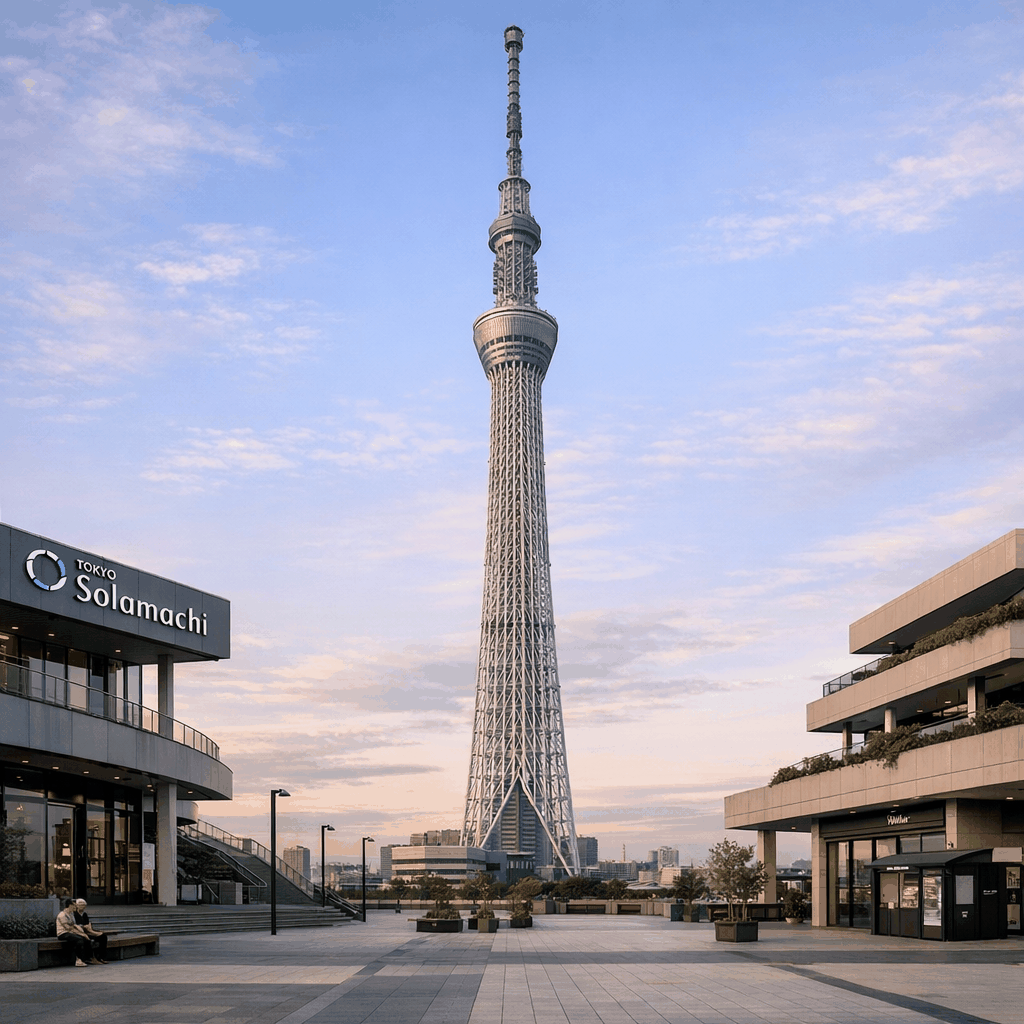
Tokyo Skytree is both a high-profile observation tower and a shopping/entertainment hub (Tokyo Solamachi), so it attracts daytime tourists, local families, and evening skyline watchers. The tower's main draws are the Tembo Deck and Tembo Galleria observation floors with long-range views of Tokyo, and the integrated Tokyo Solamachi complex which includes restaurants and attractions such as the Sumida Aquarium — all of which concentrate visitors in the same vertical circulation paths and platforms [1][2][3].
Days of the week: best and worst days to visit
Best days: weekdays, especially Tuesday–Thursday. Weekdays have fewer day-trippers and family groups than weekends, and mid-week tends to be quietest for both the tower and Tokyo Solamachi pedestrian areas [3].
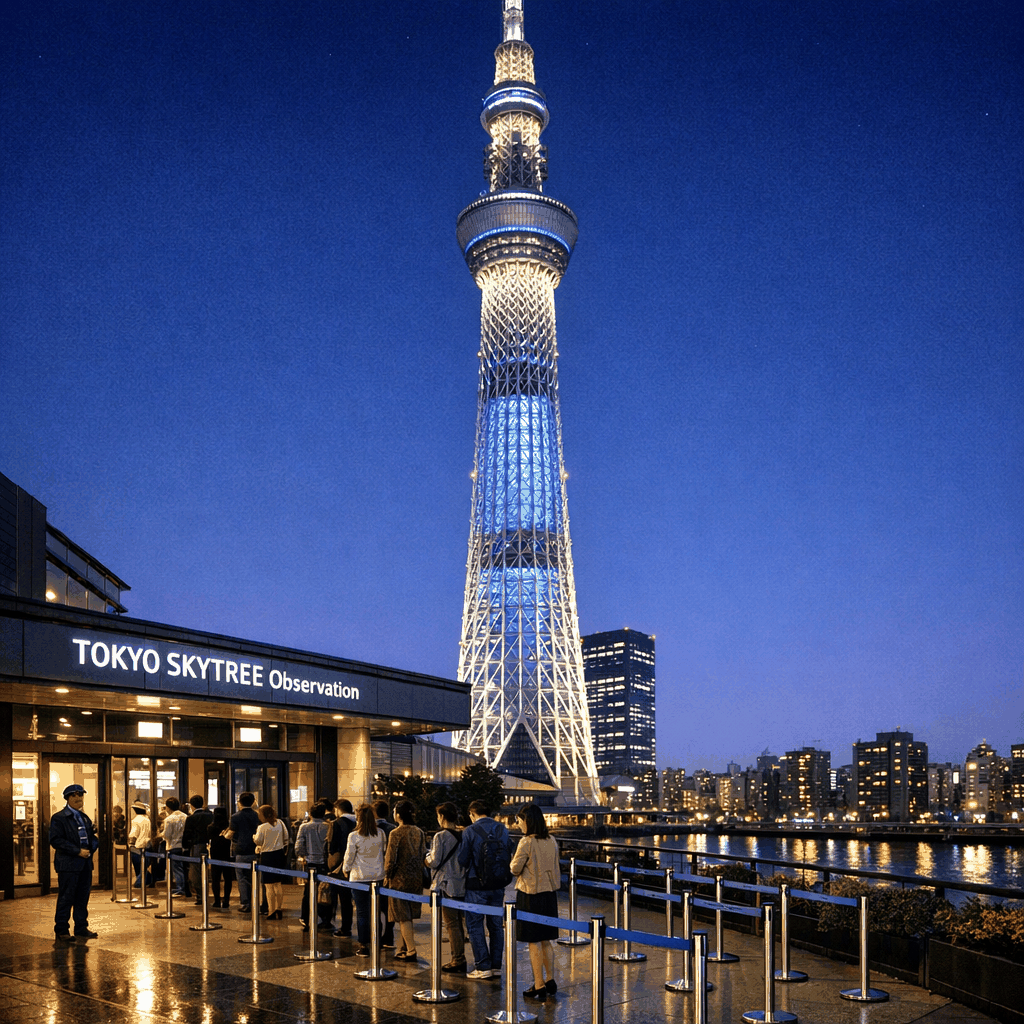
Worst days: Saturdays and Sundays, public holidays, and long-weekend days during Golden Week — these are when timed slots sell out and walk-up queues form at the ticket desk [1][3]. If you must visit on a weekend, use the timed-entry system and choose the first or last available slot to reduce time in lines [1].
Times of day with the fewest visitors
Morning just after opening — first two entry waves. The first timed-entry slots have fewer people and cleaner viewing windows before midday crowds arrive [1].
Late evening within an hour or so of closing — the second low-crowd window. Many families and day-trip groups leave by early evening; check the day's closing time on the official site because hours change seasonally [1].
Months and seasons to avoid (and when it's quieter)
Avoid the peak sightseeing months: late March–April for cherry blossoms and late November for autumn foliage, when both domestic and international visitors flock to viewpoints like Skytree for panoramic views [4]. Summer weekends will see higher foot traffic around Tokyo Solamachi and the Tembo Deck, especially in clear-weather stretches. Conversely, rainy or hazy days outside those peak windows are typically quieter, but of course visibility is compromised [2][4].
Major holiday periods and crowd spikes
Expect heavy crowds during Japan’s concentrated holiday clusters: Golden Week (late April–early May), Obon (mid-August), and the New Year period (late December–early January). These periods are frequently cited by travel authorities as the busiest domestic travel windows, and Tokyo Skytree and its access points (Oshiage (Skytree) Station) fill quickly [4][1]. If your trip overlaps these dates, prioritize advance timed tickets and the earliest/last time slots.
Practical steps to avoid lines and crowded viewing
Buy a timed-entry ticket in advance from the official Tokyo Skytree website — this guarantees entry at your chosen time and is recommended to avoid long queues at the ticket counter [1].
Target weekday mornings (right after opening) or late evenings (within an hour of closing). Check the tower’s current opening and closing times on the official site because they change for events and seasons [1].
Travel via Oshiage (Skytree) Station for the most direct access and arrive 10–20 minutes before your slot to be among the first ticketed groups; this reduces time in elevator queues [2].
Avoid visiting on clear forecast days if your prime goal is a low-crowd experience—good visibility draws significantly more visitors to the observation decks [2][3].
If you must go on a weekend or holiday, book the earliest or latest timed slots and consider splitting activities: visit the deck during a low-crowd slot and return to Tokyo Solamachi for shopping or dining when it’s less crowded later in the evening [1][2].
Quick checklist for a low-crowd Skytree visit
Pick a weekday (Tue–Thu) and avoid Golden Week, Obon, and New Year dates [4].
Reserve a timed-entry ticket on Tokyo Skytree’s official site before travel [1].
Choose early morning or late evening slots and confirm opening/closing times the day before [1].
Arrive via Oshiage (Skytree) Station and plan to be at the tower 10–20 minutes before your slot [2].
Check weather visibility forecasts the morning of your visit — clear days increase crowds; poor visibility reduces them but also limits views [2][3].
Following these city-specific, practical steps will give you the best chance of enjoying Tokyo Skytree's views with minimal crowds. For live ticket availability, up-to-date hours, and special event notices, always refer to the official Tokyo Skytree website before you go [1].
How CallButler Can Help
CallButler is a multilingual concierge service that handles research, coordination, and bookings so you do not have to navigate language barriers or unfamiliar systems alone. If you need help related to When is the best time to visit Tokyo Skytree to avoid crowds? or the tasks around it, our team can step in to manage the details and keep things moving smoothly.