How does luggage forwarding Japan work for a Tokyo hotel stay?

Article overview: How does luggage forwarding Japan work fo…

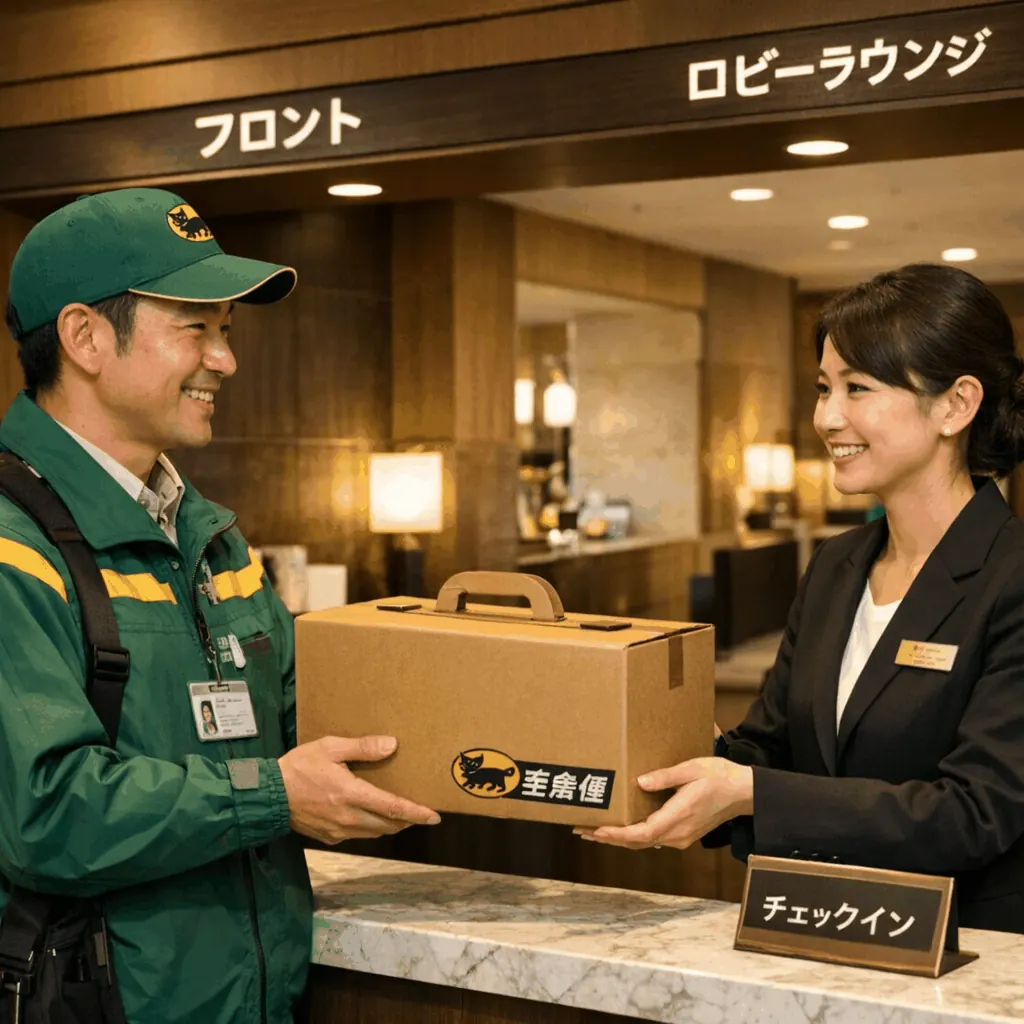
Hotel front desk in Tokyo receiving a TA-Q-BIN luggage delivery

Yes — you can reliably forward luggage to and from a Tokyo hotel using Japan’s takuhaibin services; most deliveries are next‑day within the Greater Tokyo area and hotels commonly accept guest shipments if you confirm policy in advance and label them with your name and arrival date [1][3][4]. Use major carriers (Yamato TA‑Q‑BIN or Japan Post Yu‑Pack) or convenience‑store dropoff, keep the tracking number, and schedule delivery for 1–3 days before arrival for smooth handling [1][5][3].

What is luggage forwarding (takuhaibin)?

Takuhaibin (宅配便) is Japan’s domestic door‑to‑door parcel and luggage delivery service for items from single boxes to full suitcases. Carriers offer counter dropoff, home pickup, and convenience‑store acceptance; common brands are Yamato Transport (TA‑Q‑BIN) and Japan Post (Yu‑Pack) [1][5]. Tourist guidance pages note takuhaibin is meant for sending baggage ahead to hotels, airports, or between cities to avoid hauling bags on trains [3][4].

Major providers and options in Tokyo

  • Yamato Transport — TA‑Q‑BIN: counter service, convenience‑store acceptance, same‑day or next‑day options in metro areas; English info available on the Yamato site [1][2].
  • Japan Post — Yu‑Pack: nationwide parcel service available at post offices across Tokyo, with standard next‑day and other speed options [5].
  • Airport and hotel counters: many airports (Haneda, Narita) and large hotels coordinate with carriers — JNTO recommends airport–hotel forwarding for inbound travelers [3].

Step‑by‑step: Sending luggage to a Tokyo hotel

  1. Confirm hotel policy: Email or call your Tokyo hotel (e.g., confirm front‑desk acceptance and earliest date). Many hotels will accept shipments if labeled with guest name and arrival date — but policies vary, so confirm before sending [3][4].
  2. Decide carrier and service level: Choose Yamato (TA‑Q‑BIN) or Japan Post (Yu‑Pack) and decide on next‑day vs. standard service; within Tokyo next‑day is commonly available [1][5][4].
  3. Fill the form: At carrier counter or convenience store, fill sender and recipient (hotel) details, arrival date, and your name as the guest. Request the delivery date to be the day you check in (or 1 day earlier if hotel prefers) and keep the tracking number [1][5].
  4. Label clearly: Write the hotel name and full address in English and add your name plus “Arriving [date] – Guest” (see labeling best practices below) [3][4].
  5. Pay and retain receipt: Pay at the counter, convenience store, or to the pickup driver. Keep the receipt/tracking number and confirm tracking updates online or by phone [1][5].

Sending luggage from a Tokyo hotel when you depart

Hotels in Tokyo typically hold luggage until check‑out, and many will prepare parcels for carrier pickup from the front desk. To send your bags from the hotel:

  • Ask the front desk to hold luggage until pickup and confirm a pickup time window with the carrier (Yamato or Japan Post) [3].
  • Either bring your filled carrier form to the desk or request the carrier to bring forms; some hotels have TA‑Q‑BIN forms available at reception [1][3].
  • Schedule the pickup at least the morning of departure or earlier; if you must get to Narita or Haneda the same day, arrange express or same‑day options where offered [1][3].

Costs, delivery times and cutoffs (Tokyo examples)

Typical one‑way prices depend on size and distance. Short‑haul deliveries inside the Tokyo metro are commonly in the lower price tiers (many domestic parcels range roughly in the several‑hundred to a few‑thousand yen band depending on size) — carriers publish size‑based tariffs and convenience‑store attendants can advise exact cost [1][5][4]. Next‑day delivery across major cities is standard; same‑day services exist for some intra‑metro routes via TA‑Q‑BIN or special airport counters but have cutoffs and higher fees [1][3]. For airport delivery, schedule earlier‑day dropoff or book next‑day delivery to align with your flight time [3].

Hotel acceptance policies and labeling best practices

Always contact your specific Tokyo hotel to confirm policy (many central hotels accept packages but have limits and hold times). Labeling rules to reduce problems:

  • Write hotel full name and address in English; add your full name and the arrival date (e.g., “Jane Smith — Arriving 2026‑05‑10”) so staff know whom to allocate the parcel to [3][4].
  • If possible, add the reservation confirmation number or “Guest” next to your name. Keep the tracking number and send a heads‑up email to the hotel for large or multiple boxes [3].
  • For deliveries to airports like Haneda or Narita, label the flight and pick‑up terminal when using airport pickup services [3].

Packing, prohibited items, insurance and claims

  • Carriers list prohibited items (flammables, strong‑smelling perishables, certain batteries). Check Yamato’s or Japan Post’s prohibited list before sending [1][5].
  • Declare valuables and consider optional declared value insurance; carriers have compensation rules for loss/damage — retain receipts and photos for claims [1][5].
  • Use sturdy suitcases or cardboard boxes and seal liquids; fragile items should be marked and insured.

Practical tips and common mistakes

  • Send 1–3 days before arrival for hotels in Shinjuku, Ginza or near Tokyo Station to avoid late delivery; next‑day works but earlier gives flexibility [1][3][4].
  • If traveling through Tokyo by train, consider sending bags to your final Tokyo hotel rather than local luggage storage at stations; major hubs like Tokyo Station have many nearby TA‑Q‑BIN counters [1][4].
  • Keep receipts and tracking, and confirm pickup times with the hotel when departing for Narita or Haneda to match your flight schedule [3].
  • Ask the hotel in advance whether they charge a handling fee — some smaller properties may charge for receiving or storing packages (confirm on booking).

Using takuhaibin in Tokyo is a reliable way to move luggage ahead of or after hotel stays — pick a major carrier (Yamato TA‑Q‑BIN or Japan Post Yu‑Pack), confirm the hotel policy, label clearly with your name and arrival date, and book next‑day service where possible to make city travel lighter and faster [1][5][3][4].
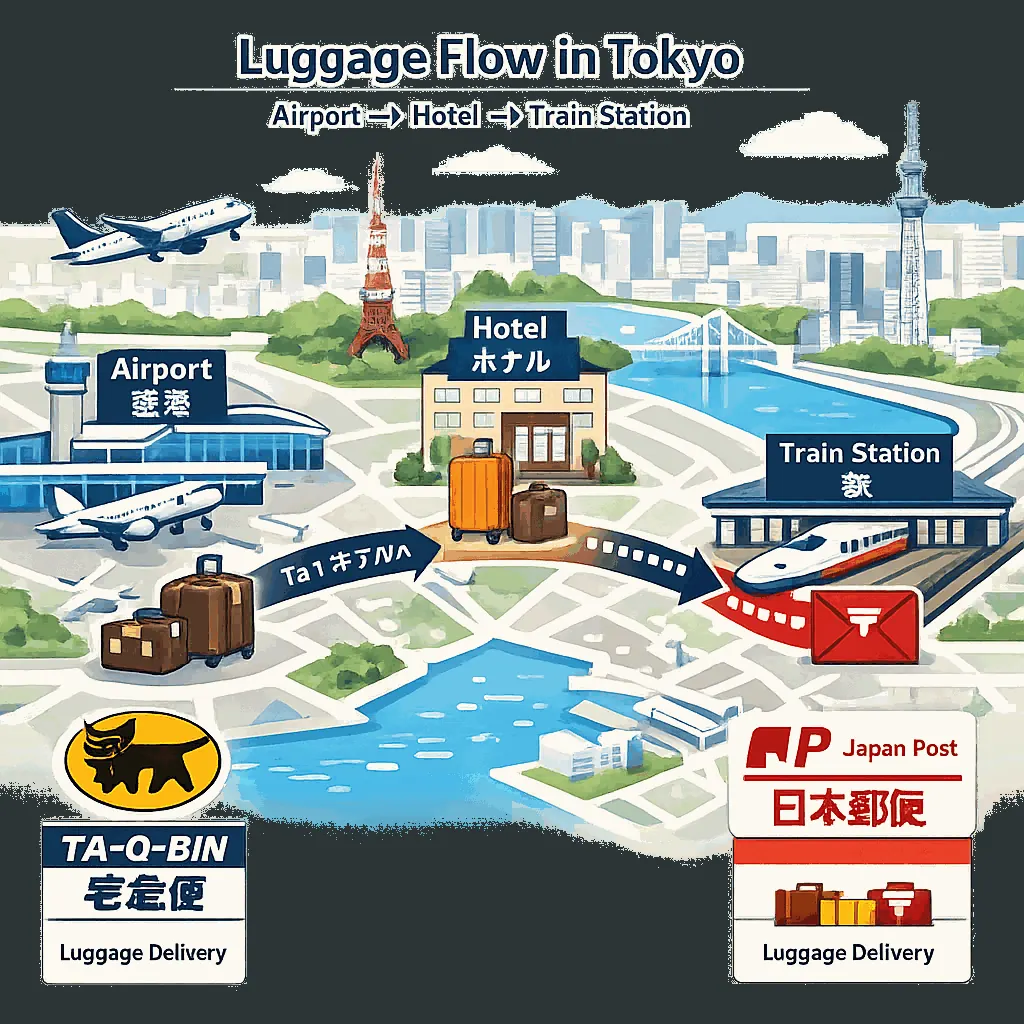
TA-Q-BIN delivery van parked near Tokyo Station with packed suitcases

How CallButler Can Help

CallButler is a multilingual concierge service that handles research, coordination, and bookings so you do not have to navigate language barriers or unfamiliar systems alone. If you need help related to How does luggage forwarding Japan work for a Tokyo hotel stay? or the tasks around it, our team can step in to manage the details and keep things moving smoothly.

Sources

  1. TA-Q-BIN (Yamato Transport) — Send services (English)
  2. ヤマト運輸(宅急便)ホームページ (Yamato Transport - Japanese)
  3. Baggage delivery service — Japan National Tourism Organization (JNTO)
  4. Takuhaibin (luggage forwarding) — Japan Guide
  5. Domestic Parcel Services (Yu-Pack) — Japan Post (English)